Expansion Sleeve Couplings
Expansion sleeve couplings stand as pivotal keyless connecting components in modern mechanical transmission systems, engineered to bridge shafts and hubs efficiently while addressing the limitations of traditional keyed connections. Unlike conventional coupling mechanisms that rely on keyways and shear forces for torque transmission, these components operate on the core principles of mechanical elastic deformation and friction drive, creating a tight, uniform connection between mating surfaces to deliver reliable power transfer. This unique operational logic underpins their widespread adoption across diverse industrial sectors, where precision, durability, and adaptability are non-negotiable. Delving into their intrinsic structure, performance attributes, distinct classifications, and practical applications reveals why they have become a cornerstone of modern mechanical design, offering tailored solutions for an array of operational demands and environmental conditions.
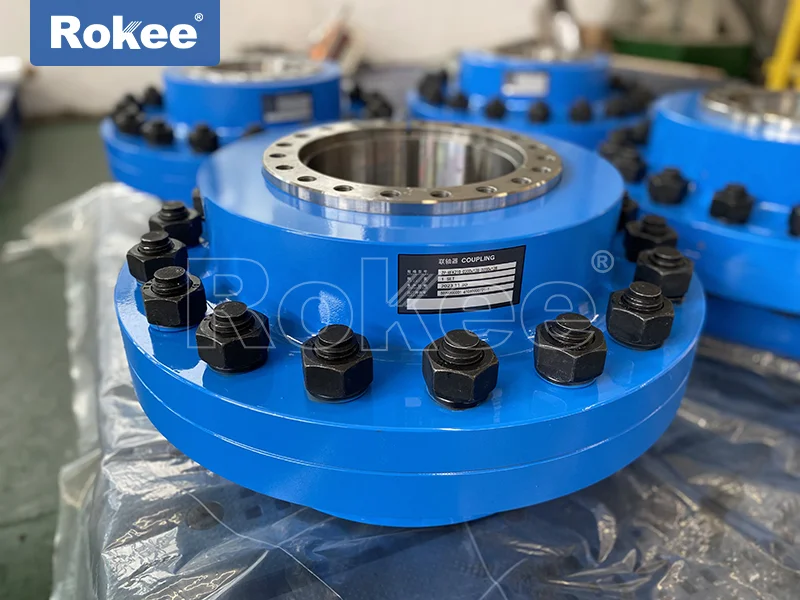
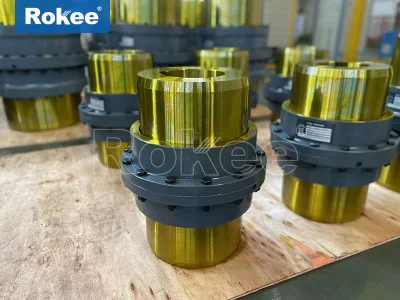
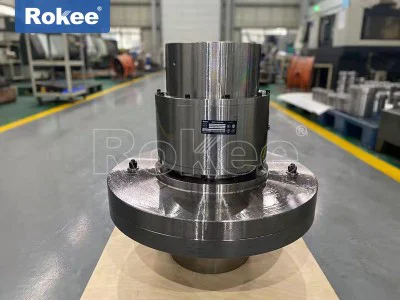
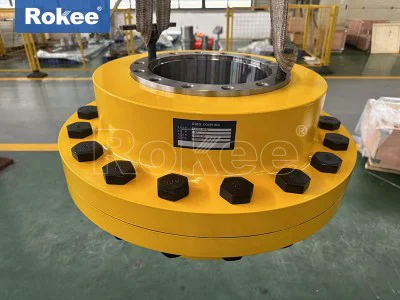
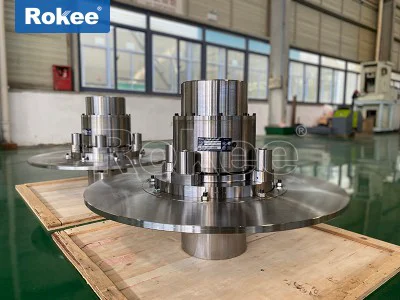
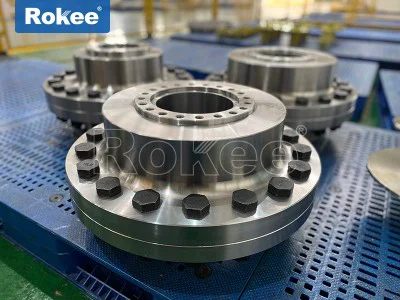
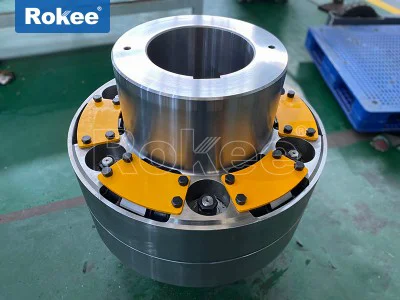
At its core, the structure of an expansion sleeve coupling is elegantly engineered, with a streamlined assembly of precision-machined parts that work in synergy to achieve optimal functionality. The primary components typically include an inner tapered sleeve, an outer tapered sleeve, high-strength locking bolts, and auxiliary clamping or positioning elements, with no redundant parts that could compromise stability or increase wear. The inner sleeve is crafted to fit snugly around the shaft, while the outer sleeve interfaces seamlessly with the inner bore of the hub; both feature precisely calibrated tapered surfaces that match one another, forming a conical fit that is central to the coupling’s operation. When the circumferentially arranged locking bolts are tightened evenly, axial force is exerted on the tapered sleeves, triggering radial deformation: the inner sleeve contracts to grip the shaft firmly, while the outer sleeve expands to press tightly against the hub. This dual-sided radial compression generates immense contact pressure between the coupling, shaft, and hub, creating substantial frictional forces that facilitate torque and axial force transmission without slippage. The structural design prioritizes uniform stress distribution across all contact surfaces, eliminating localized stress concentrations that plague keyed connections, where notches and grooves often become fatigue failure points under prolonged cyclic loads. Additionally, the precision machining of mating surfaces ensures exceptional coaxiality between the shaft and hub, minimizing radial runout and enhancing the overall stability of rotating assemblies, even at elevated operating speeds.
Material selection is integral to the structural integrity and performance of expansion sleeve couplings, with manufacturers opting for high-grade alloy steels and specialized metals tailored to withstand rigorous operational stresses. Common materials include quenched and tempered alloy steels with balanced hardness and toughness, such as medium carbon alloy steels that offer high tensile strength, excellent fatigue resistance, and reliable friction coefficients under varying loads. These materials undergo rigorous heat treatment and surface finishing processes to boost wear resistance, corrosion resistance, and dimensional stability, ensuring the coupling maintains its performance integrity over extended service life. The thickness and geometric parameters of the tapered sleeves are meticulously calculated based on intended load capacities, with thicker wall sections used for heavy-duty applications to handle higher radial pressures and torque loads. Some variants feature reinforced end plates or anti-loosening washers to enhance bolt retention, preventing bolt slackening caused by vibration or thermal cycling, a common challenge in high-dynamic transmission systems. This thoughtful structural configuration not only simplifies installation and disassembly but also ensures the coupling can withstand repeated assembly and disassembly cycles without sacrificing fit accuracy or load-bearing capacity, a stark contrast to keyed connections that often suffer from irreversible wear or damage during maintenance.
The performance characteristics of expansion sleeve couplings are what set them apart from traditional connecting components, encompassing load-bearing capacity, precision, durability, environmental adaptability, and ease of maintenance. Foremost among these is exceptional torque transmission capability, enabled by the high frictional forces generated via radial compression. Unlike keyed connections that rely on a small contact area for force transfer, expansion sleeve couplings utilize the full circumferential contact between sleeves, shaft, and hub, enabling them to transmit far higher torque and axial loads relative to their compact size. This makes them ideal for heavy-duty transmission scenarios where space is limited but load requirements are stringent. Equally notable is their zero-backlash transmission performance, a critical asset for precision machinery. The tight interference fit eliminates any rotational clearance between connected parts, ensuring instantaneous torque transfer without lag or play, which is indispensable for applications demanding high positional accuracy and repetitive motion precision.
Another standout performance trait is superior alignment compensation and vibration damping capacity. The uniform radial expansion and contraction of the sleeves allow the coupling to accommodate minor radial, angular, and axial misalignments between the shaft and hub, which are often unavoidable due to manufacturing tolerances, thermal deformation, or operational wear. This self-centering capability reduces additional stress on bearings and shafts, lowering the risk of premature component failure and extending the service life of the entire transmission system. Furthermore, the frictional contact and elastic deformation of the sleeves absorb shock loads and dampen mechanical vibration, reducing noise levels and enhancing the smoothness of operation, particularly in equipment subject to frequent start-stop cycles or fluctuating loads. In terms of durability, these couplings exhibit excellent fatigue resistance, capable of withstanding millions of cyclic loads without cracking, deformation, or loss of clamping force. Their robust material composition and stress-free design also grant broad environmental adaptability, functioning reliably across a wide temperature range, resisting moderate corrosion, and performing consistently in dusty, humid, or lightly abrasive industrial environments, provided the mating surfaces remain clean and free of contaminants.
Ease of installation, disassembly, and maintenance further elevates their practical performance value. Unlike keyed connections that require precise keyway machining, complex alignment, and often forceful assembly or disassembly that risks damaging shafts or hubs, expansion sleeve couplings feature a tool-friendly design. Installation involves simply positioning the coupling between the shaft and hub and tightening bolts in a diagonal, sequential pattern to achieve uniform compression; disassembly is equally straightforward, requiring only gradual bolt loosening to release radial pressure without damaging mating components. This eliminates the need for specialized heating or pressing equipment, reducing downtime during maintenance or component replacement. Additionally, these couplings are virtually maintenance-free under normal operating conditions, with no need for lubrication or regular adjustments, as long as bolt tightness is periodically checked to counteract minor relaxation from prolonged vibration. Collectively, these performance attributes make expansion sleeve couplings a versatile, cost-effective alternative to traditional connecting methods, addressing pain points across countless mechanical transmission setups.
Expansion sleeve couplings are categorized into distinct types based on structural design, load-bearing specifications, and functional features, each engineered to cater to specific application scenarios and operational requirements. The most common classification is based on tapered surface configuration, which divides them into single-cone and double-cone expansion sleeve couplings. Single-cone variants feature a single set of tapered sleeves, with a simplified structure that reduces production complexity and installation time. They are lightweight and compact, making them suitable for light to medium-duty applications with moderate torque requirements, limited space constraints, and low-to-moderate operating speeds, such as small conveyor systems, light industrial machinery, and precision instruments. While efficient for basic tasks, single-cone designs have relatively lower load capacity and may require slightly more force for disassembly compared to their double-cone counterparts.
Double-cone expansion sleeve couplings, by contrast, incorporate dual nested tapered sleeves, a design that optimizes force distribution and enhances both torque transmission and disassembly ease. The dual conical surfaces reduce the radial force required for deformation, lowering the torque needed to tighten bolts and simplifying disassembly without compromising clamping strength. This design boasts higher load-bearing capacity, better alignment compensation, and improved fatigue resistance, making it the preferred choice for medium to heavy-duty applications, including large industrial machinery, heavy conveyor systems, and high-speed rotating equipment. Beyond cone configuration, these couplings are also classified by load capacity into standard-duty, heavy-duty, and extra-heavy-duty variants. Standard-duty models are designed for general industrial use, handling moderate torque and speed levels with reliable performance; heavy-duty variants feature thicker sleeves, higher-strength materials, and reinforced bolts to handle extreme torque loads and harsh operating conditions; extra-heavy-duty models are engineered for the most demanding scenarios, such as large-scale mining equipment, marine propulsion systems, and heavy metallurgical machinery, capable of transmitting massive torque loads over prolonged periods.
Specialized functional classifications further expand their utility, including high-speed balanced variants, corrosion-resistant variants, and miniature precision variants. High-speed models undergo precision dynamic balancing to minimize rotational imbalance, reducing vibration and ensuring stable operation at extremely high rotational speeds, making them ideal for machine tool spindles, turbo machinery, and high-speed automation equipment. Corrosion-resistant variants utilize stainless steel or alloy materials with protective surface treatments, resisting degradation from moisture, chemicals, and salt spray, suitable for marine equipment, food processing machinery, and chemical processing systems. Miniature precision variants are compactly designed for small-scale precision devices, such as medical instruments, optical equipment, and micro-automation systems, delivering zero-backlash performance and high precision in confined spaces. Each type retains the core advantages of expansion sleeve couplings while tailoring specific traits to meet niche operational demands, ensuring versatility across industrial landscapes.
The practical applications of expansion sleeve couplings span nearly every sector of modern industry, thanks to their adaptable design and multifaceted performance benefits, replacing traditional keyed connections in countless critical transmission systems. In the field of precision manufacturing and machine tools, they are extensively used in CNC machine tools, machining centers, grinding machines, and lathes, where zero-backlash transmission and high coaxiality are paramount. By eliminating the clearance and stress concentrations of keyed connections, they enhance machining accuracy, improve surface finish quality of workpieces, and reduce wear on spindles and bearings, boosting overall equipment lifespan and production efficiency. In automation and robotic systems, these couplings play a vital role in connecting motor shafts, reducers, and actuators, ensuring precise motion control, rapid response times, and reliable performance in repetitive, high-precision tasks such as assembly lines, pick-and-place robots, and automated packaging equipment.
Heavy industrial sectors, including mining, metallurgy, and construction machinery, rely heavily on heavy-duty expansion sleeve couplings to handle extreme torque loads and harsh operating conditions. They are used in conveyors, crushers, ball mills, and rolling mills, where their high load-bearing capacity, shock resistance, and fatigue durability ensure uninterrupted operation in environments with heavy vibration, dust, and intermittent impact loads. In wind power generation equipment, they facilitate the connection between gearboxes and generators, withstanding alternating wind loads, thermal deformation, and high-altitude environmental stresses, delivering stable power transmission and reducing maintenance needs in hard-to-access wind turbine nacelles. The transportation industry also benefits significantly: in automotive manufacturing, they are used in engine and transmission components; in marine engineering, they connect propulsion shafts and auxiliary machinery, offering corrosion resistance and reliable performance in marine environments.
Additional applications extend to food and beverage processing, packaging machinery, textile equipment, and medical devices, where hygiene, precision, and low maintenance are critical. In food processing lines, corrosion-resistant variants maintain cleanliness and resist degradation from washdowns and food contaminants; in medical equipment, miniature precision variants ensure reliable, noise-free operation in diagnostic and therapeutic devices. Even in conventional industrial machinery such as pumps, fans, compressors, and gearboxes, expansion sleeve couplings improve operational efficiency, reduce downtime, and lower maintenance costs compared to keyed connections. Their ability to accommodate minor misalignments also simplifies equipment installation, reducing alignment time and labor costs during initial setup or retrofitting.
In summary, expansion sleeve couplings represent a refined evolution of mechanical transmission connecting components, merging a compact, stress-optimized structure with exceptional performance, diverse classifications, and unparalleled application versatility. Their departure from traditional keyed connection design eliminates inherent flaws like stress concentration, backlash, and difficult maintenance, while delivering superior torque transmission, precision alignment, and durability. As industrial technology advances toward higher precision, heavier loads, and greater automation, the role of expansion sleeve couplings continues to expand, with ongoing refinements in materials and design further enhancing their performance and adaptability. Whether in precision micro-equipment or heavy industrial machinery, they remain a reliable, efficient solution for shaft-hub connections, embodying the core principles of modern mechanical design: efficiency, durability, and practicality. Their widespread adoption across global industries underscores their status as an indispensable component, driving the reliability and performance of countless mechanical systems worldwide.