Flexible Plum Blossom Couplings
In the realm of mechanical power transmission, flexible couplings serve as indispensable components that bridge driving and driven shafts, mitigating misalignment, absorbing vibration, and ensuring smooth torque delivery across diverse industrial systems. Among these critical components, the Flexible Plum Blossom Coupling stands out as a widely adopted solution, celebrated for its balanced blend of simplicity, resilience, and functional versatility. Unlike rigid couplings that demand perfect shaft alignment and offer no tolerance for operational deviations, this type of coupling integrates flexible elements into its core design, enabling it to adapt to dynamic working conditions while maintaining reliable power transmission. Its unique structural configuration, tailored performance attributes, diverse classifications, and broad application scope have solidified its position as a staple in modern mechanical engineering, catering to the evolving needs of low, medium, and high-speed transmission setups alike.
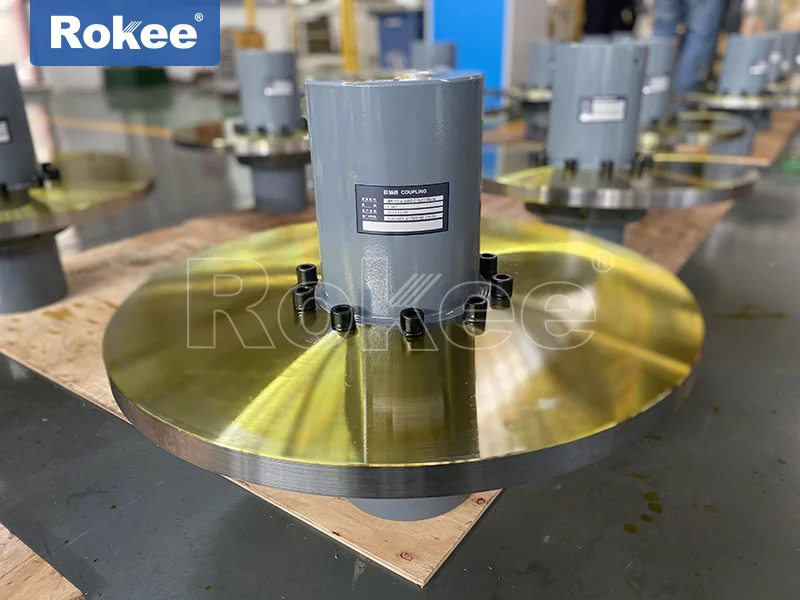
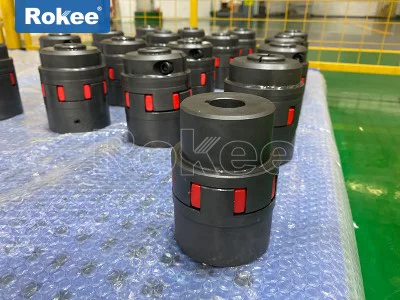
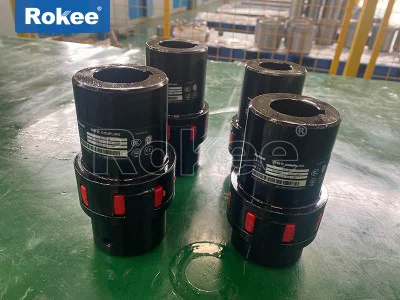
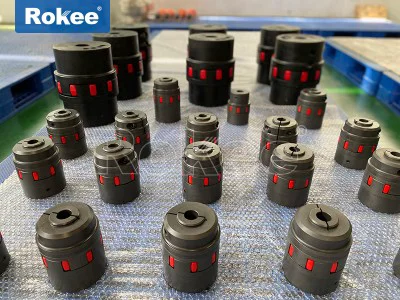
At its core, the Flexible Plum Blossom Coupling features a streamlined yet robust structural composition, consisting of two key metallic components and a central elastic element, with no overly complex parts that would complicate manufacturing, installation, or maintenance. The two metallic halves, commonly referred to as jaw hubs or semi-couplings, are precision-engineered from high-strength materials such as carbon steel, alloy steel, or lightweight aluminum alloy, depending on the intended load capacity and operational environment. Each semi-coupling is machined with evenly spaced, protruding claw-like structures on its inner end face, arranged in a radial pattern to form a symmetrical interlocking framework. These claws are designed with smooth contours and optimized contact surfaces to distribute stress evenly, preventing localized wear and ensuring prolonged service life. Nestled between the two intermeshing semi-couplings is the plum blossom-shaped elastic spider, the defining feature of this coupling; this elastic component is crafted from high-performance polymer materials, typically polyurethane, nitrile rubber, or other engineered elastomers, molded into a multi-petaled structure that mirrors the shape of a plum blossom. The petals of the elastic spider fit snugly into the gaps between the claws of the two metallic hubs, creating a tight, shock-absorbent connection that facilitates torque transfer through compressive deformation rather than rigid mechanical engagement. This fundamental structure eliminates the need for lubrication during operation, a key advantage that reduces ongoing maintenance requirements and minimizes downtime in industrial settings, while also delivering effective electrical insulation between the connected shafts to prevent stray current damage to sensitive machinery components.
The performance characteristics of the Flexible Plum Blossom Coupling are directly shaped by its structural design and material selection, making it highly adaptable to a spectrum of mechanical transmission demands. Foremost among its performance traits is its exceptional misalignment compensation capability, a critical attribute for real-world industrial applications where perfect shaft alignment is often unattainable due to installation errors, thermal expansion, mechanical wear, or operational vibrations. The elastic nature of the central plum blossom spider allows the coupling to accommodate three primary types of shaft misalignment: axial displacement, radial deviation, and angular misalignment. Axial displacement, the back-and-forth movement of shafts along their central axis, is absorbed by the axial flexibility of the elastic petals, preventing excessive thrust loads on bearings and drive components. Radial deviation, the parallel offset between the central lines of the driving and driven shafts, is mitigated by the lateral compressibility of the elastomer, maintaining consistent torque transmission even with moderate offset values. Angular misalignment, the slight tilting of the two shafts relative to one another, is compensated by the rotational flexibility of the petal structure, avoiding the binding and premature wear that plague rigid couplings in misaligned conditions. Collectively, these compensation abilities protect connected equipment from unnecessary stress, extending the service life of motors, gearboxes, pumps, and other drive system components.
Beyond misalignment compensation, the Flexible Plum Blossom Coupling excels in vibration damping and shock absorption, making it ideal for applications involving frequent start-stop cycles, rapid speed reversals, or intermittent load fluctuations. The elastic polymer material of the plum blossom spider acts as a natural shock absorber, dissipating kinetic energy from sudden impacts and reducing the transmission of vibrational forces between shafts. This damping effect not only smoothens power delivery but also reduces noise levels in the transmission system, creating a quieter and more stable operational environment. Additionally, the coupling exhibits excellent torsional rigidity paired with controlled flexibility, meaning it can transmit rated torque efficiently without excessive wind-up, while still retaining the give needed to handle dynamic loads. Its rotational balance is finely tuned during manufacturing, allowing it to operate reliably at medium to high rotational speeds without generating harmful centrifugal forces or wobble; this balance, combined with its low moment of inertia due to the compact, lightweight design, makes it suitable for high-speed drive systems where precision and stability are paramount. Durability is another cornerstone of its performance, with the metallic semi-couplings resisting deformation under heavy loads and the elastic spider offering resistance to common industrial stressors such as oil contamination, moisture, and moderate temperature fluctuations. While the elastic element is the primary wear component and may require periodic replacement, the ease of this replacement—often achievable without full disassembly of the shaft system in advanced designs—further enhances the coupling’s overall operational efficiency and cost-effectiveness over its lifespan.
The Flexible Plum Blossom Coupling is available in a range of classifications, each engineered to address specific operational requirements, installation constraints, and functional needs, ensuring compatibility with diverse mechanical systems. These classifications are primarily differentiated by structural modifications, elastic element properties, and auxiliary features, rather than arbitrary sizing, allowing engineers to select the optimal variant for their unique application. The most common category is the standard basic type Flexible Plum Blossom Coupling, which features a compact, two-hub design with a conventional plum blossom elastic spider. This variant is the most widely used, offering a universal balance of performance and affordability for general-purpose transmission tasks, such as connecting standard motors to pumps, fans, and conveyors in light to medium-duty operations. It is characterized by its simple installation process, minimal radial footprint, and reliable core performance traits, making it a go-to choice for routine industrial setups with standard alignment and load requirements.
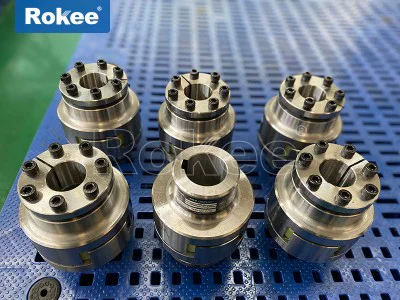
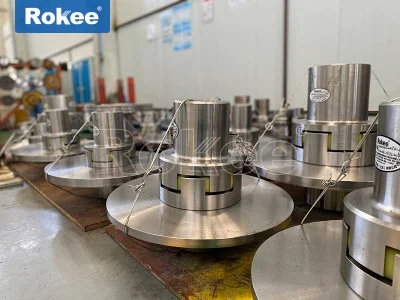
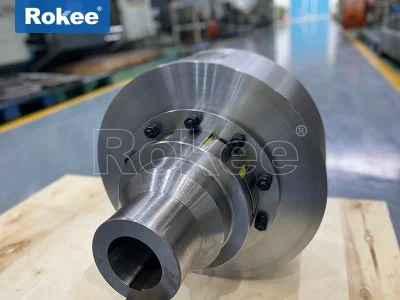
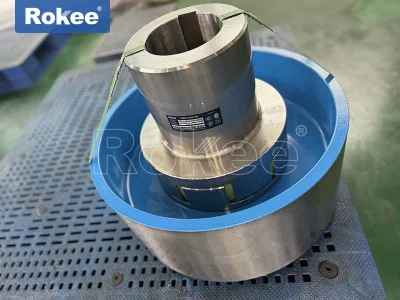
A second prominent classification is the flange-mounted Flexible Plum Blossom Coupling, which incorporates single or double flange structures into the semi-coupling design to facilitate easier installation and disassembly, particularly in confined spaces or systems where axial movement of shafts is restricted. The flange integration eliminates the need to shift the entire drive system axially when replacing the elastic spider, a significant advantage in large-scale or fixed machinery where downtime must be minimized. This variant maintains the same core performance as the standard type but adds practicality for maintenance-heavy environments, making it suitable for production lines, industrial machinery, and marine drive systems where accessibility is limited. For applications that demand integrated braking functionality alongside power transmission, the brake wheel or brake disc equipped Flexible Plum Blossom Coupling is the preferred classification. This variant features a built-in brake wheel or disc attached to one of the semi-couplings, combining the torque transmission and misalignment compensation of the plum blossom coupling with reliable braking performance. It is engineered to withstand the thermal and mechanical stress of frequent braking, making it ideal for cranes, hoists, conveyor systems, and machine tools where controlled stopping and positioning are critical.
Classifications can also be distinguished by the material and hardness of the central elastic plum blossom spider, a key variable that tailors the coupling’s damping, load-bearing, and temperature resistance properties. Standard hardness elastomers are suitable for general industrial use, offering a balanced mix of flexibility and durability for moderate loads and temperatures. High-hardness elastic spiders are designed for heavy-duty applications with higher torque requirements, providing increased load-bearing capacity and reduced deformation under heavy stress, though with slightly lower vibration damping. Low-hardness elastomers, by contrast, prioritize shock absorption and vibration reduction, making them perfect for delicate equipment, precision machinery, or systems with extreme dynamic loads and frequent impacts. Additionally, specialized elastic materials are available for extreme environmental conditions, such as high-temperature resistant polymers for industrial furnaces, low-temperature elastomers for refrigeration and cold storage equipment, and oil-resistant compounds for manufacturing environments with heavy lubricant exposure. This material-based classification ensures that the coupling can perform reliably across a broad range of operating temperatures and environmental conditions, from sterile manufacturing facilities to harsh industrial worksites.
The versatility of the Flexible Plum Blossom Coupling’s structure and performance translates to an extensive array of practical applications across nearly every sector of mechanical engineering, spanning light-duty precision equipment to heavy-duty industrial machinery. In the manufacturing and processing industry, it is extensively used in conveyor systems, packaging machinery, textile equipment, and printing presses, where its vibration damping properties preserve print and product quality, and its misalignment compensation keeps production lines running smoothly with minimal downtime. The pump and fan industry relies heavily on this coupling for centrifugal pumps, axial fans, blowers, and compressors, where it isolates motor vibration from the fluid handling components, reduces noise, and prevents damage from shaft misalignment caused by pipeline pressure or thermal expansion. In the machine tool sector, including lathes, milling machines, drilling equipment, and CNC machinery, the coupling’s precise torque transmission and high-speed stability support machining accuracy, while its shock absorption protects delicate tooling and control systems from sudden load changes during cutting or shaping operations.
The automotive and transportation industries also leverage the Flexible Plum Blossom Coupling in various auxiliary systems, such as engine accessories, hydraulic pumps, and cooling system drives, where its compact design fits within tight engine compartments and its resilience withstands the vibrational stress of vehicle operation. In the field of material handling and construction machinery, including cranes, forklifts, excavators, and conveyor belts, the brake-equipped variants deliver reliable power transmission and controlled braking, while the heavy-duty classifications handle the high torque and harsh operating conditions of construction sites. Additionally, it finds critical use in food and beverage processing, pharmaceutical manufacturing, and other hygienic industries, where its lubrication-free design prevents product contamination, and its easy-to-clean structure complies with strict sanitary standards. Even in renewable energy systems, such as small-scale wind turbines and solar tracking mechanisms, the coupling’s durability and low maintenance requirements make it a reliable choice for remote or hard-to-access installations, ensuring consistent power transmission with minimal upkeep.
What makes the Flexible Plum Blossom Coupling truly stand out in the competitive landscape of power transmission components is its ability to balance simplicity and performance, adaptability and reliability. Unlike more complex flexible couplings that require specialized manufacturing or maintenance, it offers a cost-effective, user-friendly solution without compromising on core functional capabilities. Its ability to compensate for misalignment, dampen vibration, transmit torque efficiently, and adapt to diverse operating conditions addresses the most common pain points in mechanical drive systems, making it a versatile workhorse for engineers and technicians worldwide. While it is not designed for extreme heavy-duty, ultra-high torque applications that demand specialized rigid or gear couplings, its sweet spot in medium-load, medium-to-high speed, and general-purpose systems cements its status as an essential component in modern mechanical design.
As industrial technology continues to advance and machinery demands grow more stringent, the Flexible Plum Blossom Coupling remains a relevant and evolving component, with ongoing refinements to material science and structural design enhancing its performance even further. Advances in elastomer technology have led to more durable, temperature-resistant, and wear-resistant elastic spiders, extending replacement intervals and boosting overall service life. Precision machining techniques have improved the dimensional accuracy of the metallic semi-couplings, enhancing fit, balance, and load distribution. These continuous improvements ensure that the coupling will retain its position as a preferred choice for power transmission, adapting to emerging industry trends such as automation, miniaturization, and sustainable manufacturing. In essence, the Flexible Plum Blossom Coupling is more than just a mechanical component; it is a testament to thoughtful engineering design, where simplicity, functionality, and adaptability converge to solve real-world industrial challenges, supporting the seamless operation of countless mechanical systems across the globe.