Cross Joint Couplings
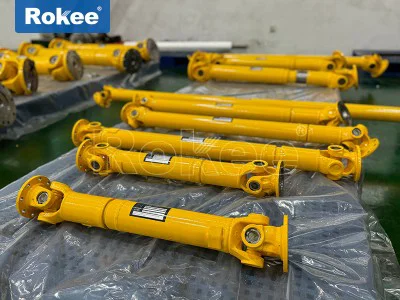
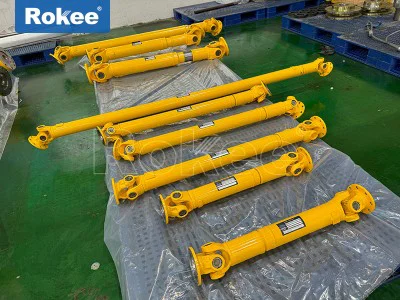
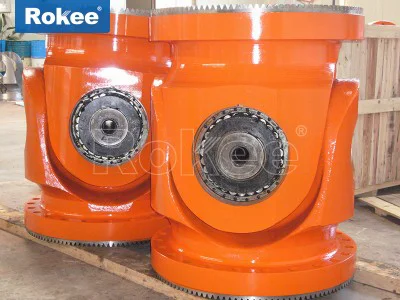
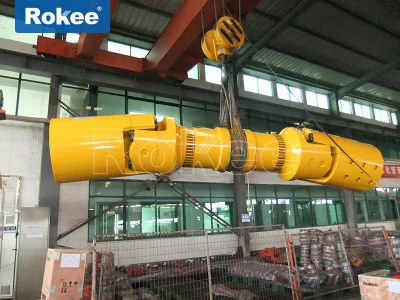
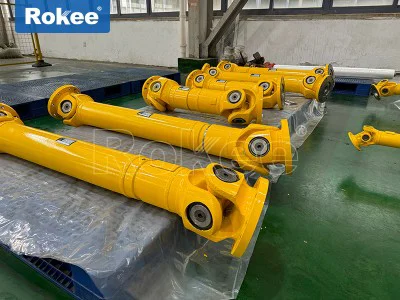
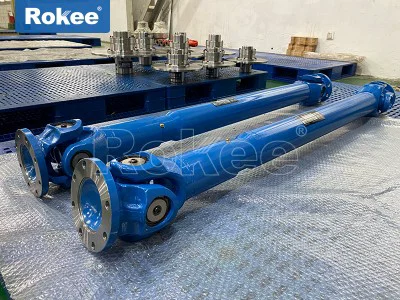
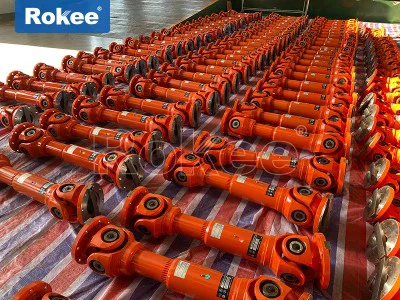
In the realm of mechanical power transmission, cross joint couplings stand as one of the most versatile and widely utilized components, engineered to bridge the gap between driving and driven shafts while accommodating misalignment and transferring torque efficiently. Unlike rigid couplings that demand perfect shaft alignment, cross joint couplings are designed with inherent flexibility, making them indispensable in machinery where shaft displacement, angular deviation, or axial movement is unavoidable during operation. Their structural design revolves around a central cross-shaped core, commonly referred to as a spider, which connects two yoke assemblies attached to the respective shafts, with precision bearing elements integrated to minimize friction and ensure smooth rotational transfer. This fundamental structure not only defines their core performance traits but also gives rise to a diverse range of variants tailored to distinct operational demands, spanning light-duty precision systems to heavy-duty industrial machinery operating under extreme loads and harsh conditions.
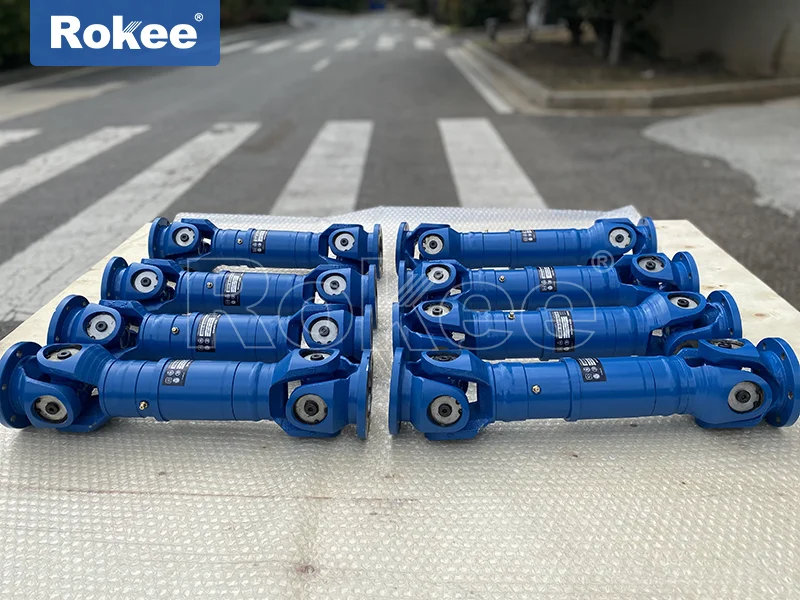
The structural performance of cross joint couplings is defined by a set of core mechanical attributes that dictate their suitability for specific applications, with each characteristic shaped by material selection, manufacturing precision, and design engineering. Foremost among these is angular misalignment compensation, a defining feature that allows the coupling to transmit torque even when the driving and driven shafts intersect at a moderate to significant angle. Standard cross joint configurations typically accommodate angular offsets ranging from 5 degrees to 45 degrees, with specialized heavy-duty models engineered to handle even greater angular deviations without compromising power transmission efficiency. This capability stems from the articulated design of the cross spider and yoke assembly, which pivots freely to adjust to shaft angles, eliminating the mechanical stress that would damage rigid couplings or cause premature wear in other flexible coupling types. Closely linked to angular compensation is radial misalignment tolerance, as cross joint couplings can also offset minor radial displacements between shafts, a common occurrence in machinery subjected to vibration, thermal expansion, or operational wear over time.
Torque transmission capacity is another critical performance metric, varying widely based on the coupling’s size, material composition, and structural reinforcement. Cross joint couplings are crafted to handle both steady-state torque and intermittent peak loads, with high-strength alloy steel being the preferred material for heavy-duty variants due to its exceptional tensile strength, fatigue resistance, and ability to withstand repeated stress cycles without deformation. The cross spider, as the load-bearing core, is often subjected to specialized heat treatments such as carburizing and quenching to enhance surface hardness and wear resistance, while precision-machined needle roller bearings are integrated at the pivot points to reduce frictional losses and extend service life. This combination of robust materials and precision engineering enables these couplings to transmit substantial torque across rotating shafts, making them suitable for high-load applications where power transfer reliability is non-negotiable. Additionally, cross joint couplings exhibit notable axial displacement adaptability, with many designs featuring splined connections or telescopic elements that accommodate small to moderate axial movements, whether from thermal expansion of shafts, mechanical settling of equipment, or dynamic operational shifts.
Operational smoothness and vibration damping are also key performance aspects, though these traits vary across different cross joint coupling types. Basic cross joint designs may introduce minor velocity fluctuations during rotation, a natural byproduct of their articulated structure, especially when operating at larger shaft angles. However, advanced configurations mitigate this issue through optimized geometry and dual-joint setups, ensuring consistent rotational speed and minimizing torsional vibration that could disrupt machinery performance or damage sensitive components. Durability and longevity further define their structural performance, as these couplings are built to resist wear, corrosion, and fatigue in diverse operating environments, from dry industrial settings to humid or mildly corrosive spaces. Proper lubrication of the bearing and pivot points enhances their resilience, reducing friction-induced wear and extending the interval between maintenance cycles, while sealed designs prevent contamination from dust, debris, or moisture, preserving internal components and sustaining performance over prolonged use.
Cross joint couplings are categorized into distinct types based on structural design, operational functionality, and intended use cases, each with unique performance profiles tailored to specific mechanical requirements. The most prevalent classification is based on the number of cross spider assemblies, dividing the range into single cross joint couplings and double cross joint couplings. Single cross joint couplings represent the simplest and most cost-effective variant, featuring a single cross spider connecting two yokes. This design excels in applications with moderate angular misalignment and low to medium torque loads, offering compact dimensions and straightforward installation. While efficient for basic power transmission, single cross joints exhibit slight velocity variations during rotation at sharper shaft angles, making them ideal for light to medium-duty machinery where precise rotational uniformity is not a critical requirement. Common use cases for single cross joint couplings include small-scale industrial equipment, agricultural machinery, light automotive components, and portable power tools, where simplicity, compactness, and cost efficiency take precedence over ultra-smooth power delivery.
Double cross joint couplings, also known as dual cross joint or universal joint assemblies, feature two interconnected cross spider elements linked by an intermediate yoke or shaft segment. This dual-joint design eliminates the velocity fluctuations inherent to single cross joints, delivering consistent, constant-speed torque transmission even at significant angular offsets. The enhanced structural complexity translates to superior performance, including greater angular misalignment tolerance, higher torque-carrying capacity, and improved operational stability. Double cross joints are engineered to maintain smooth power transfer across varying shaft angles, making them indispensable for applications demanding precision and rotational uniformity. They are also more resilient to heavy loads and repetitive stress, with reinforced components that withstand the rigors of heavy-duty operation. This type of cross joint coupling is widely adopted in high-performance automotive drivetrains, heavy construction machinery, industrial manufacturing equipment, precision machining tools, and marine propulsion systems, where reliable, vibration-free power transmission is essential for operational efficiency and equipment longevity.
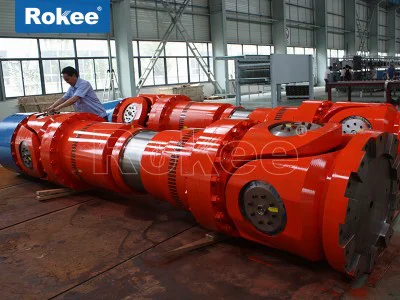
Beyond single and double configurations, cross joint couplings are further segmented by structural specialization and application-specific design, including constant velocity cross joint couplings, heavy-duty reinforced cross joints, compact precision cross joints, and corrosion-resistant cross joint variants. Constant velocity (CV) cross joint couplings represent a premium iteration of the double cross joint design, optimized to maintain perfect rotational synchronization between input and output shafts regardless of angular displacement. Featuring advanced ball-bearing or cage-guided cross spider mechanisms, CV couplings eliminate even minor torsional vibrations, delivering ultra-smooth power transfer ideal for high-speed, high-precision equipment. Heavy-duty reinforced cross joint couplings are built with thickened alloy steel components, oversized cross spiders, and heavy-duty needle bearings to handle extreme torque loads, shock impacts, and harsh operating conditions typical in mining, metallurgy, and large-scale industrial processing machinery. These couplings prioritize strength and durability over compactness, with rugged construction that resists bending, cracking, or wear under sustained heavy use.
Compact precision cross joint couplings are engineered for space-constrained applications, featuring miniaturized components, streamlined yoke designs, and reduced overall dimensions without sacrificing core performance. These couplings maintain reliable torque transmission and misalignment compensation in tight mechanical envelopes, making them suitable for precision instruments, small-scale automation systems, medical equipment, and compact automotive assemblies. Corrosion-resistant cross joint couplings, meanwhile, are constructed with specialized alloys, stainless steel components, or protective surface coatings to withstand exposure to moisture, chemicals, saltwater, and other corrosive agents. This design variation is tailored for marine equipment, offshore machinery, chemical processing plants, and agricultural operations where standard steel couplings would succumb to rust and degradation. Each specialized type retains the core cross joint structural framework but is modified to address unique operational challenges, ensuring optimal performance in niche environments that demand more than standard coupling designs can provide.
The widespread adoption of cross joint couplings across countless industries stems from their unparalleled combination of flexibility, torque capacity, durability, and adaptability, with each type finding dedicated use cases aligned with its performance strengths. In the automotive and transportation sector, cross joint couplings are integral components of drivetrain systems, connecting transmission shafts to differential assemblies and wheel axles. Single cross joints are commonly used in light passenger vehicles and commercial trucks for basic power transfer, while constant velocity double cross joints are employed in front-wheel-drive vehicles, high-performance sports cars, and heavy-duty trucks to ensure smooth, stable power delivery even when steering angles shift or suspension movement causes shaft displacement. In agricultural machinery, cross joint couplings are ubiquitous in tractors, harvesters, and tillage equipment, linking power take-off (PTO) shafts to implement drives. Their ability to accommodate angular and radial misalignment is critical here, as agricultural equipment operates on uneven terrain, causing constant shaft movement and vibration that would disable rigid coupling systems.
The industrial manufacturing and heavy machinery sector relies heavily on heavy-duty cross joint couplings for a vast array of equipment, including rolling mills, conveyor systems, crushers, mixers, and pumping stations. These couplings withstand the high torque, shock loads, and continuous operation demands of industrial production lines, compensating for shaft misalignment caused by machine vibration, thermal expansion, and structural settling. Double cross joint couplings are particularly favored in industrial settings for their smooth power transmission, reducing downtime and minimizing wear on connected machinery components. In construction machinery, such as excavators, cranes, bulldozers, and concrete mixers, cross joint couplings facilitate power transfer between engine-driven shafts and hydraulic or mechanical drive systems. Their rugged construction and misalignment tolerance make them ideal for the harsh, high-impact conditions of construction sites, where equipment is subjected to constant movement, vibration, and heavy loads.
Marine and offshore engineering represents another key application area, where corrosion-resistant cross joint couplings are used in propulsion systems, steering mechanisms, and auxiliary equipment. Seawater-resistant materials and sealed bearing designs prevent corrosion and contamination, ensuring reliable performance in saltwater environments. Precision cross joint couplings find their place in aerospace and defense equipment, automation and robotics systems, and precision machining tools, where compact size, smooth operation, and accurate torque transmission are paramount. In aerospace applications, these couplings support flight control systems and auxiliary power units, operating with minimal friction and maximum reliability under stringent performance standards. In industrial automation and robotics, compact cross joints enable precise movement of robotic arms and automated assembly systems, compensating for minor misalignments and ensuring consistent, repeatable motion.
Beyond these core industries, cross joint couplings are also utilized in renewable energy equipment, such as wind turbine drive systems and solar tracking mechanisms, where they transfer rotational power while accommodating shaft movement caused by wind loads and structural flexing. They are also found in material handling equipment, printing machinery, textile manufacturing equipment, and a host of other mechanical systems where flexible, reliable power transmission is required. The broad utility of cross joint couplings lies in their ability to adapt to diverse operational conditions, with each structural variant addressing specific challenges, from high-precision motion control to heavy-load industrial torque transfer. Unlike specialized coupling types that are limited to narrow applications, cross joint couplings offer a universal solution for shaft connection and power transmission, making them a staple in mechanical engineering across every sector that relies on rotating machinery.
When selecting the appropriate cross joint coupling for a specific application, engineers must evaluate a combination of performance factors to ensure optimal functionality and longevity, including torque requirements, shaft speed, misalignment magnitude, operating environment, and spatial constraints. Matching the coupling’s torque capacity to both steady-state and peak operational loads prevents overloading and premature failure, while aligning angular and radial misalignment tolerance with real-world shaft displacement ensures stress-free operation. Considering environmental factors such as temperature extremes, moisture, and corrosive agents dictates whether a standard, corrosion-resistant, or heavy-duty sealed coupling is required, while space limitations guide the choice between compact, standard, or extended-length designs. Proper installation and routine maintenance, including lubrication of bearing components and inspection for wear or damage, further enhance the performance and service life of cross joint couplings, ensuring they continue to deliver reliable power transmission throughout the lifespan of the machinery they serve.
In summary, cross joint couplings are foundational components in mechanical power transmission, distinguished by their articulated cross-spider structure, exceptional misalignment compensation, and versatile performance characteristics. The diverse range of types, from basic single cross joints to advanced constant velocity and heavy-duty variants, caters to every conceivable mechanical application, balancing simplicity, strength, precision, and durability as needed. Their widespread use across automotive, agricultural, industrial, marine, aerospace, and automation sectors underscores their irreplaceable role in modern machinery, enabling efficient torque transmission even in the most challenging operational conditions. As mechanical engineering and manufacturing technologies continue to evolve, cross joint coupling designs will advance alongside them, with enhanced materials, precision manufacturing, and optimized geometries further boosting their performance, efficiency, and adaptability. Regardless of technological progress, the core principles of cross joint coupling design—flexibility, reliability, and robust power transfer—will ensure their continued dominance as a go-to solution for shaft connection and mechanical power transmission across global industries.