Plum Couplings
In the realm of mechanical power transmission, couplings serve as indispensable connectors that link rotating shafts, transfer torque, and mitigate the adverse effects of misalignment and vibration. Among the diverse array of coupling types, the plum coupling, also widely referred to as the jaw-plum coupling, stands out as a highly versatile and widely adopted flexible coupling, renowned for its straightforward design, reliable performance, and broad adaptability across countless industrial scenarios. Unlike rigid couplings that demand perfect shaft alignment and offer no tolerance for operational deviations, the plum coupling integrates elastic elements to deliver a balanced blend of torque transmission, displacement compensation, and vibration damping, making it a cornerstone component in medium and light-duty mechanical systems.
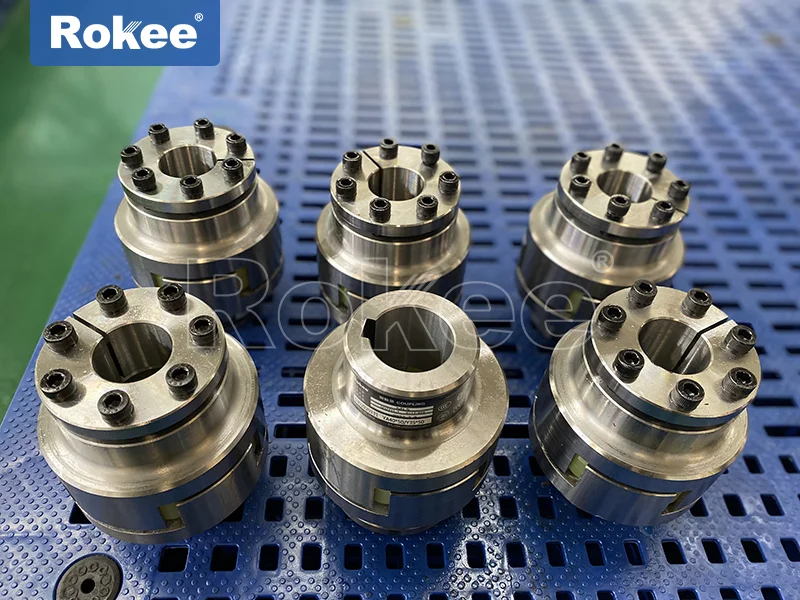
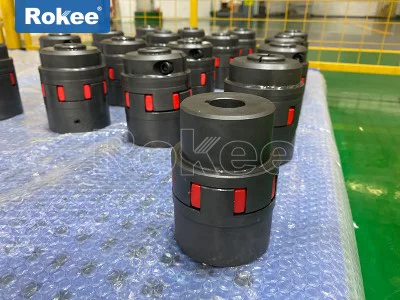
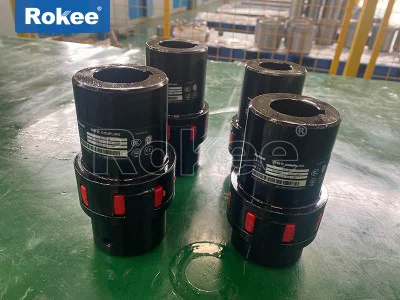
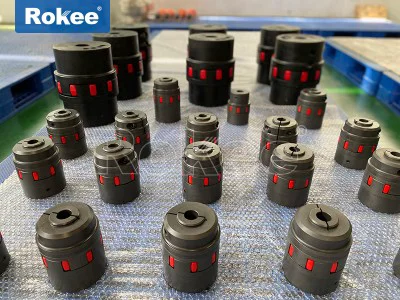
At its core, the plum coupling boasts a minimalist yet robust structural composition, consisting of three fundamental components: two metallic half-couplings and a central elastic plum-shaped insert, commonly known as the spider. The two half-couplings are precision-machined components, each featuring a set of evenly spaced, protruding claw-like teeth arranged radially around the hub. These claws are designed to interlock with the petals of the elastic insert, creating a secure interlocking mechanism that facilitates torque transfer. The hubs of the half-couplings are equipped with shaft bores, which are tailored to fit the diameters of the driving and driven shafts, and are typically secured via keyways, set screws, or clamping mechanisms to prevent slippage during rotation and ensure efficient power delivery. The material selection for the half-couplings is tailored to operational demands: carbon steel is favored for its high strength, durability, and cost-effectiveness in heavy-load, high-torque environments; aluminum alloy is preferred for its lightweight properties, low rotational inertia, and corrosion resistance, making it ideal for high-speed, precision-driven systems; and stainless steel is utilized in harsh operating conditions where corrosion resistance, such as exposure to moisture, chemicals, or extreme temperatures, is a critical requirement.
The elastic plum insert is the heart of the coupling, defining its flexible and damping characteristics. Shaped with multiple petal-like lobes (commonly six or eight lobes in standard designs) that fit snugly between the claws of the two half-couplings, this insert is crafted from high-performance elastic materials, primarily polyurethane, natural rubber, or synthetic elastomers like Hytrel. Each material variant imparts unique mechanical properties to the coupling: polyurethane inserts offer exceptional wear resistance, oil resistance, and load-bearing capacity, along with moderate elasticity, making them suitable for general industrial applications with consistent loads; rubber inserts provide superior vibration damping and shock absorption, along with enhanced flexibility for misalignment compensation, though they are less resistant to oil and high temperatures; high-performance synthetic elastomers bridge the gap between polyurethane and rubber, delivering a balanced mix of elasticity, durability, and environmental resistance for specialized operating conditions. The structural design of the insert ensures that torque is transmitted through compressive force between the claws and the petals, rather than shear force, which enhances the component’s service life and reduces the risk of premature failure. Notably, the plum coupling is a maintenance-friendly component, as it requires no lubrication during operation, eliminating the need for regular greasing or oiling and minimizing long-term maintenance workloads.
The performance characteristics of the plum coupling are directly shaped by its structural design and material composition, making it uniquely suited for a wide spectrum of mechanical transmission tasks. One of its most prominent performance traits is its ability to compensate for multiple forms of shaft misalignment, a critical feature in real-world industrial setups where perfect alignment is rarely achievable. It can effectively accommodate radial displacement (perpendicular offset between shafts), angular displacement (tilt between shaft axes), and axial displacement (endplay along the shaft axis), preventing excessive mechanical stress on bearings, gears, and other transmission components that would otherwise lead to premature wear and failure. This misalignment compensation is made possible by the elastic deformation of the central insert, which flexes to absorb deviations without compromising torque transmission efficiency.
Beyond misalignment compensation, the plum coupling excels in vibration damping and shock absorption, a key advantage for systems subjected to fluctuating loads, sudden starts, or intermittent impacts. The elastic insert acts as a natural shock absorber, dissipating vibrational energy generated during operation and reducing the transmission of noise and vibration between the driving and driven ends. This not only improves the smoothness of equipment operation but also protects sensitive mechanical parts from damage caused by resonant vibrations, extending the overall service life of the entire transmission system. Additionally, the coupling exhibits stable torque transmission performance, with minimal backlash in precision-engineered variants, ensuring consistent power delivery and positional accuracy, which is vital for precision machinery and automated systems. The compact radial size and low rotational inertia of the plum coupling further enhance its performance, allowing it to operate efficiently at medium to high rotational speeds without imposing excessive centrifugal loads on the system. It also features reliable electrical insulation properties in standard configurations, preventing the transfer of electrical currents between shafts, which is beneficial in applications where electrical interference or stray currents could disrupt equipment functionality.
While adhering to a core structural framework, plum couplings are categorized into distinct types based on structural modifications, claw designs, and functional enhancements, each tailored to address specific operational requirements and installation constraints. The most basic and widely used variant is the standard plum coupling, featuring straight, symmetrical claw teeth and a conventional multi-lobe elastic insert. This type is engineered for general-purpose applications, offering balanced misalignment compensation, torque transmission, and damping performance, and is the go-to choice for most light to medium-duty mechanical systems where no specialized features are needed. It is characterized by its simple installation process, compact footprint, and cost-effective design, making it a staple in general industrial machinery.
A second major classification is the curved-claw plum coupling, which features precision-machined curved or concave claw surfaces instead of straight claws. This design modification increases the contact area between the claw teeth and the elastic insert petals, distributing compressive forces more evenly and enhancing the coupling’s torque-carrying capacity. The curved claw design also reduces stress concentrations on the elastic insert, improving its durability and resistance to deformation under heavy loads, while maintaining excellent misalignment compensation and damping properties. This variant is particularly suitable for applications with higher torque demands or moderate shock loads, where the standard straight-claw design may be insufficient.
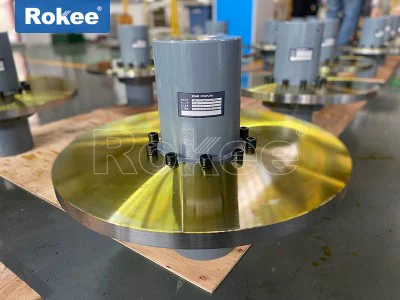
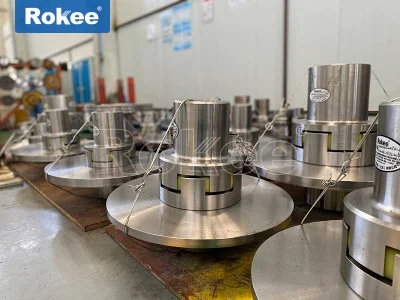
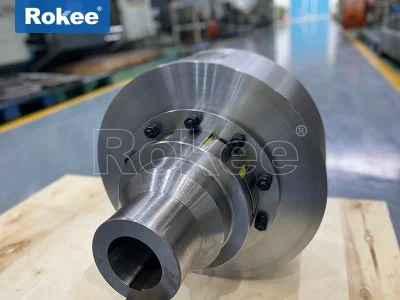
Flange-equipped plum couplings represent another important category, designed to address installation and maintenance challenges in confined spaces or complex mechanical setups. These couplings are available in single-flange and double-flange configurations, integrating a flange connection between the two half-couplings. The key benefit of flange-equipped models is that they allow for the replacement of the worn elastic insert without the need to axially disassemble or move the half-couplings or connected equipment, significantly simplifying maintenance procedures and reducing equipment downtime. This makes them highly suitable for applications where regular maintenance access is limited, such as in integrated production lines, enclosed machinery, or large-scale industrial equipment.
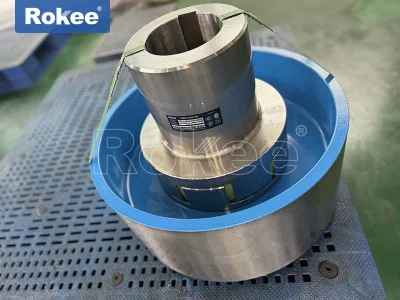
Additionally, there are specialized plum coupling variants designed for braking applications, featuring integrated brake wheels or brake discs. These couplings combine the power transmission and misalignment compensation functions of a standard plum coupling with a braking mechanism, eliminating the need for a separate brake component and streamlining the mechanical system design. The brake wheel or disc is rigidly attached to one of the half-couplings, enabling efficient braking when paired with external brake calipers, making these variants ideal for equipment that requires frequent starting, stopping, or speed regulation, such as conveyor systems, material handling machinery, and precision machine tools. Other specialized modifications include miniature plum couplings for small-scale precision equipment, high-temperature resistant variants for extreme thermal environments, and corrosion-resistant models for marine, chemical, or food processing applications, each tailored to meet the unique demands of niche industrial scenarios.
The combination of versatile performance, diverse classifications, and user-friendly design positions the plum coupling as one of the most widely applied flexible couplings across nearly every branch of modern industry. Its adaptability stems from its ability to balance performance and practicality, making it suitable for an extensive range of equipment and systems. In the general machinery sector, it is extensively used in pumps, including centrifugal pumps, vacuum pumps, and gear pumps, as well as fans, blowers, and compressors, where it ensures smooth power transmission, dampens pump and fan vibration, and compensates for minor installation misalignments, enhancing the operational stability of fluid handling and air movement equipment.
In the machine tool and precision manufacturing industry, the plum coupling plays a pivotal role in CNC machine tools, milling machines, lathes, grinding machines, and automated assembly equipment. The low backlash, high precision, and vibration damping properties of precision-grade plum couplings ensure accurate positional control and smooth motion transmission, critical for achieving high machining precision and surface finish. The lightweight aluminum alloy variants are especially favored in high-speed spindle drives and robotic arm transmissions, where low inertia and responsive motion are essential for efficient and precise operation.
The packaging and printing industry also relies heavily on plum couplings, utilizing them in filling machines, labeling machines, packaging sealers, printing presses, and paper conveying systems. The coupling’s ability to absorb shock during intermittent operation and compensate for minor shaft deviations ensures consistent, reliable performance in high-speed packaging and printing lines, reducing downtime and improving production efficiency. Its maintenance-free design is particularly valuable in continuous production environments where equipment uptime is a top priority.
In the realm of material handling and logistics, plum couplings are integrated into belt conveyors, chain conveyors, elevators, and hoisting equipment, providing reliable torque transmission while dampening the shock loads generated by the start-stop cycles and uneven material loads. Flange-equipped and brake-integrated variants are especially prevalent here, offering easy maintenance and efficient braking capabilities to enhance operational safety and control. Additionally, the coupling finds widespread use in automotive manufacturing equipment, textile machinery, food processing equipment, and small-scale power generation systems, adapting to the unique operational conditions of each industry, from hygienic, low-friction environments in food processing to heavy-load, continuous-operation settings in automotive production.
Beyond these core industries, the plum coupling is also employed in various other mechanical systems, including medical equipment, textile machines, woodworking machinery, and agricultural equipment, showcasing its unparalleled versatility. Its enduring popularity is rooted in its ability to deliver consistent performance, simplify system design, and reduce maintenance burdens, addressing key engineering challenges in power transmission. While it is most commonly utilized in medium and light-duty applications, specialized reinforced variants can also handle heavier loads and more severe operating conditions, further expanding its operational scope.
In summary, the plum coupling stands as a paradigm of efficient, practical mechanical design, merging a simple structural layout with high-performance functional attributes to meet the diverse needs of modern industrial power transmission. Its well-engineered structure, encompassing durable metallic half-couplings and high-performance elastic inserts, delivers exceptional misalignment compensation, vibration damping, and reliable torque transfer. The diverse classifications of the coupling, from standard straight-claw models to curved-claw, flange-equipped, and brake-integrated variants, ensure that there is a suitable plum coupling for nearly every operational scenario. Its widespread applications across countless industrial sectors underscore its irreplaceable role in enhancing equipment reliability, extending service life, and optimizing operational efficiency. As industrial technology continues to evolve and mechanical systems demand higher precision, greater durability, and more flexible performance, the plum coupling will remain a vital component, adapting to emerging engineering needs and continuing to serve as a foundational element in the global landscape of mechanical power transmission.