Brake Drum Geared Couplings
In the field of mechanical power transmission, the brake drum geared coupling stands out as a highly versatile and functional component that integrates two core functions: torque transmission between rotating shafts and reliable braking support for mechanical systems. Unlike standard geared couplings that only focus on power transfer, this specialized coupling merges the structural advantages of drum gear couplings with the practicality of a brake drum, creating a compact and efficient solution for heavy-duty and precision-controlled transmission scenarios. It is widely adopted across diverse industrial sectors due to its robust load-bearing capacity, excellent misalignment compensation, and seamless braking compatibility, making it an indispensable part of modern mechanical drive systems.
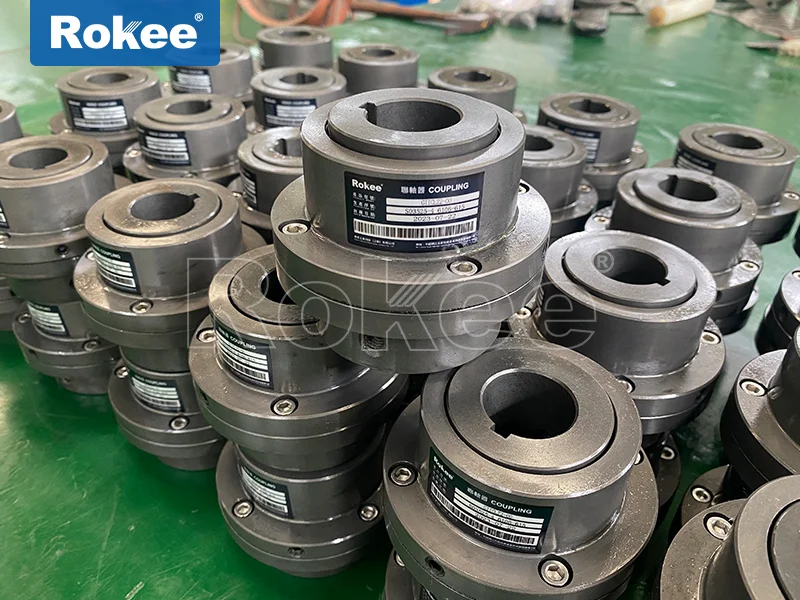
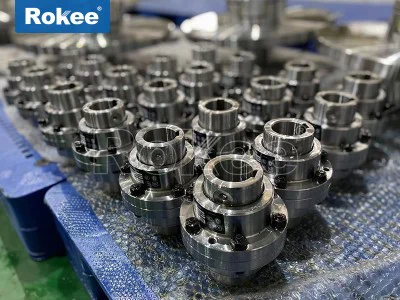
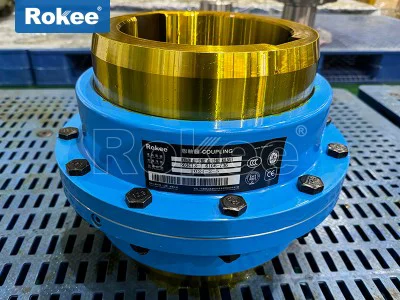
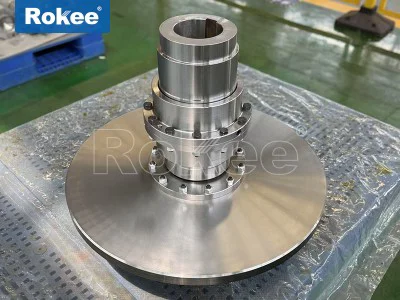
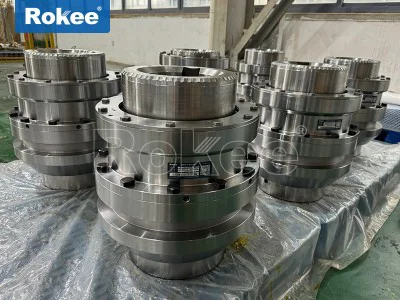
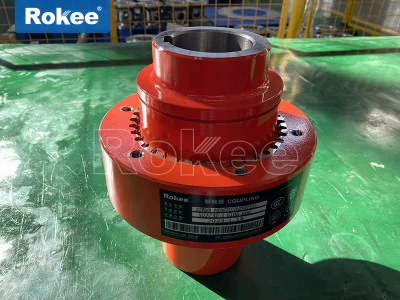
At its core, the brake drum geared coupling features a well-engineered structural design that balances strength, flexibility, and braking functionality, with every component crafted to work in harmony for optimal performance. The primary structure consists of two key half-coupling units, an integrated brake drum assembly, internal and external gear meshing pairs, sealing components, and lubrication retention parts, all manufactured with high-precision machining to ensure tight fit and stable operation. The external gear sleeves are the core torque-transmitting elements, typically designed with crowned spherical teeth where the center of the sphere aligns with the gear axis; this unique drum-shaped tooth profile distinguishes it from straight-tooth couplings, enabling greater angular, radial, and axial displacement compensation while maintaining efficient power transfer. The internal gear rings are matched to the external teeth with precise tooth clearance, which not only ensures smooth meshing but also accommodates slight shaft misalignments caused by installation errors, thermal expansion, or mechanical vibration during operation. The brake drum is rigidly connected to one of the half-couplings, either through integral forging and casting or high-strength bolt fastening, forming a unified rotating component that rotates synchronously with the transmission shaft; its outer surface is treated with specialized hardening processes to enhance wear resistance and friction performance, critical for consistent braking efficiency over prolonged use. Sealing elements are strategically installed at both ends of the coupling assembly to prevent the leakage of internal lubricating grease and block the ingress of external dust, moisture, and debris, which protects the gear meshing surfaces from premature wear and corrosion. Unlike complex transmission components with redundant parts, this structure eliminates the need for separate brake mounting brackets or additional shaft extensions, simplifying the overall transmission system layout and reducing the spatial footprint, a key advantage in equipment with limited installation space.
The performance attributes of the brake drum geared coupling are directly derived from its optimized structural design, making it suitable for harsh operating conditions that demand high torque, stability, and durability. One of its most prominent performance features is its exceptional heavy-load transmission capacity, supported by the large contact area of the drum-shaped gear teeth and high-strength alloy steel construction; this allows it to transmit substantial torque even at low rotational speeds, a trait that is highly valued in heavy industrial machinery. Compared with other types of couplings, it exhibits superior misalignment compensation performance, effectively handling radial, angular, and axial deviations between connected shafts without compromising transmission efficiency or causing excessive stress on the shafting system. This flexibility reduces the risk of component damage, bearing failure, and system vibration, thereby extending the service life of both the coupling and the connected equipment. The integrated brake drum design delivers reliable braking functionality, with the wear-resistant outer surface providing stable friction performance for brake shoes or braking mechanisms, enabling rapid deceleration and safe stopping of rotating shafts when required; this dual-function design eliminates the need for independent braking components, streamlining system assembly and reducing maintenance points. Additionally, the coupling offers excellent operational stability and low noise output, thanks to the precise gear meshing and balanced rotating structure; even under continuous high-load operation, it runs smoothly with minimal vibration, creating a more stable working environment for the entire transmission system. It also boasts strong environmental adaptability, performing reliably in extreme temperature conditions, dusty workshops, humid industrial sites, and other challenging settings, as the sealed structure protects internal gears from environmental damage. Long service life is another notable performance merit, as the wear-resistant gear surfaces and effective lubrication retention minimize friction and wear, reducing the frequency of maintenance and replacement, which in turn lowers the overall operational cost of mechanical systems. Furthermore, it features high rotational balance accuracy, making it suitable for applications that require relatively high operating speeds alongside heavy-load transmission, bridging the gap between low-speed heavy-duty and moderate-high-speed transmission needs.
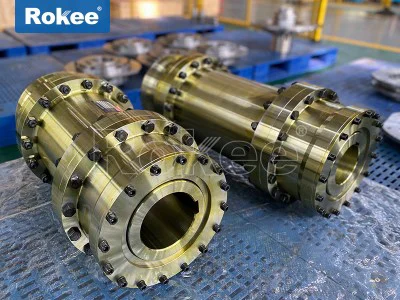
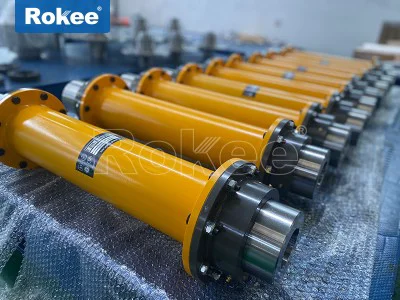
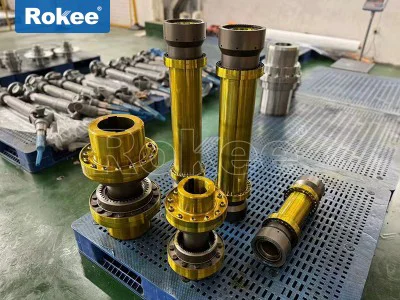
Brake drum geared couplings are categorized into distinct types based on structural variations, braking mode compatibility, and application-specific design adjustments, each tailored to meet unique transmission and braking requirements in different industrial scenarios. The most common classification is based on the braking interface design, dividing them into brake wheel type and brake disc type variants, each with unique structural traits and operational advantages. The brake wheel type, also referred to as brake drum type, features a cylindrical outer braking surface designed for use with shoe brakes, where the brake shoes press against the curved drum surface to generate friction and achieve braking; this type offers a larger friction contact area, delivering stronger braking torque and stable braking force, making it ideal for heavy machinery that requires high braking reliability. The brake disc type features a flat circular braking disc integrated with the coupling, designed for disc brake systems that clamp the disc from both sides; this type provides faster braking response, more precise speed control, and better heat dissipation during repeated braking, suitable for equipment that demands rapid stopping and accurate speed regulation. Another classification approach is based on the internal structural layout and shaft connection design, distinguishing between integral half-coupling type and split sleeve type variants. The integral half-coupling type features a unified structure for the gear sleeve and shaft connection end, offering higher rigidity and torque transmission capacity, ideal for heavy-load, low-speed transmission systems with minimal misalignment. The split sleeve type adopts a non-toothed sleeve structure on one half-coupling, simplifying installation and disassembly while providing stable braking performance, though it offers slightly lower misalignment compensation, making it suitable for systems with precise shaft alignment and frequent maintenance needs. Additionally, these couplings can be grouped by load capacity and size specifications, ranging from small-scale models for light to medium-load transmission in precision machinery to large-scale heavy-duty models for ultra-high torque transmission in heavy industrial equipment; the size and tooth modulus are customized to match the torque requirements, rotational speed, and shaft diameter of the target equipment, ensuring a perfect fit for diverse operational demands. There are also specialized variants designed for specific installation scenarios, such as vertical transmission models for vertically arranged shaft systems and intermediate shaft models for long-distance torque transmission, further expanding the applicability of the brake drum geared coupling across different mechanical layouts.
The unique combination of torque transmission, misalignment compensation, and braking functionality makes the brake drum geared coupling a widely utilized component across numerous industrial sectors, addressing critical transmission and control needs in various heavy-duty and precision mechanical systems. In the lifting and hoisting machinery industry, it is extensively applied in cranes, hoists, winches, and elevators, where reliable torque transfer and safe braking are paramount; these machines require instant and secure stopping to prevent load slippage or equipment accidents, and the coupling’s heavy-load capacity and stable braking performance ensure safe and efficient operation in construction sites, ports, warehouses, and manufacturing facilities. In the heavy machinery and equipment manufacturing sector, it is integrated into rolling mills, forging machines, press equipment, and conveyor systems, which operate under continuous high-load and low-speed conditions; the coupling’s ability to transmit large torque and compensate for shaft misalignment caused by heavy mechanical stress reduces downtime and maintenance, boosting production efficiency. In the mining and quarrying industry, it serves in crushers, conveyors, and mining hoists, where harsh working conditions, heavy loads, and frequent braking demands test the limits of transmission components; the sealed, wear-resistant structure of the coupling withstands dust, debris, and extreme loads, maintaining stable performance in rugged mining environments. It also plays a vital role in the marine and shipbuilding industry, used in marine propulsion systems, deck machinery, and auxiliary equipment, where compact design, corrosion resistance, and reliable braking are essential for offshore operations; the coupling’s robust build and environmental adaptability make it suitable for the demanding marine working environment. Additionally, it is applied in material handling equipment, textile machinery, packaging machinery, and various industrial transmission lines that require both efficient power transfer and precise braking control. In automated production lines, it supports the coordinated operation of motors, reducers, and working actuators, ensuring smooth torque transmission and accurate stopping for precise production processes. Across all these applications, the brake drum geared coupling’s ability to combine dual functions into a single compact component not only optimizes the mechanical structure but also enhances the overall reliability and safety of the equipment, solidifying its status as a core transmission component in modern industrial manufacturing.
In summary, the brake drum geared coupling represents a refined and practical innovation in mechanical power transmission, merging the robust torque transmission and misalignment compensation capabilities of drum gear couplings with the essential braking function of a dedicated brake drum. Its well-designed structural composition delivers exceptional performance in heavy-load operation, misalignment adaptation, and braking reliability, while its diverse classified variants cater to the unique needs of different industrial equipment and working scenarios. From lifting machinery to heavy industrial equipment, from mining operations to automated production lines, it consistently provides stable and efficient transmission and braking support, playing an irreplaceable role in ensuring the smooth operation of mechanical systems. As industrial technology continues to advance and mechanical equipment evolves towards higher loads, greater precision, and more compact designs, the brake drum geared coupling will continue to be optimized and upgraded, further enhancing its performance and expanding its application scope. Its enduring popularity stems from its ability to solve practical engineering challenges, simplify system design, and improve operational efficiency, making it a timeless and essential component in the ever-evolving landscape of mechanical power transmission.