Curved Tooth Coupling Is Indispensable For Efficient Transmission Scheme Of Sandwich Panel Manufacturing Line
The modern sandwich panel manufacturing industry stands as a core pillar of the green building and prefabricated construction sector, undertaking the critical task of producing high-performance thermal insulation, fireproof, and weather-resistant building panels that meet the diverse construction needs of industrial plants, commercial complexes, and residential prefabricated projects. A complete sandwich panel manufacturing line is a highly integrated continuous production system composed of multiple sequential and coordinated mechanical units, including raw material unwinding pretreatment, core material cutting and shaping, surface layer rolling and coating, continuous pressing and bonding, fixed-length cutting, edge sealing processing, and finished product conveying and stacking. Every production link in this streamlined operation relies on stable, continuous, and high-power mechanical power transmission to ensure synchronous operation of upstream and downstream equipment, consistent production rhythm, and uniform product processing quality. Any slight fluctuation, transmission interruption, or power output deviation in the power transmission process will directly trigger a series of production problems such as inconsistent panel bonding strength, uneven surface coating thickness, inaccurate cutting dimensional tolerance, and unordered production line shutdowns, which not only reduce overall production efficiency and increase unnecessary production loss and equipment maintenance workload but also lead to unstable finished product performance and failure to meet subsequent construction application standards. In the entire mechanical transmission system that supports the long-term stable operation of the sandwich panel manufacturing line, various types of transmission connecting components play a fundamental supporting role, among which the curved tooth coupling has gradually become an irreplaceable core transmission component in the efficient transmission scheme of the production line by virtue of its unique structural design, excellent torque transmission performance, reliable shaft deviation compensation capability, and strong adaptability to harsh industrial production working conditions. It is no exaggeration to say that the stable and efficient operation of every key transmission node in the sandwich panel manufacturing line is inseparable from the reliable support of curved tooth couplings, and the rational selection and scientific application of curved tooth couplings have become a key prerequisite for manufacturing enterprises to achieve high-yield, high-quality, and low-consumption sandwich panel production.
To understand the indispensable value of curved tooth couplings in sandwich panel manufacturing line transmission systems, it is first necessary to clarify the special operating characteristics and transmission challenges faced by the production line in actual industrial production environments. Unlike intermittent and low-load mechanical processing equipment, the sandwich panel manufacturing line belongs to typical continuous cyclic production equipment, which needs to maintain long-term uninterrupted operation for dozens of hours or even longer in most production scenarios to meet large-scale market order demands. During the continuous production process, the production line will inevitably be affected by multiple complex external and internal interference factors. On the one hand, the long-term high-load operation of various mechanical equipment will cause inevitable mechanical vibration and equipment operation fatigue, and the rotating shafts of driving motors, reduction gearboxes, pressing rollers, conveying rollers, and other core power components will produce different degrees of radial displacement, axial displacement, and angular deflection after long-term operation. These shaft misalignment deviations are unavoidable objective phenomena in mechanical equipment operation, and ordinary traditional transmission connecting components often cannot effectively adapt to such deviations, resulting in excessive tooth surface friction, local stress concentration, accelerated component wear, and even frequent transmission failure and equipment shutdown. On the other hand, the production environment of the sandwich panel manufacturing line is relatively harsh compared with ordinary mechanical production workshops. The on-site production process will generate a certain amount of dust, fiber debris, and tiny chemical coating particles, and the continuous pressing and bonding process will produce continuous mechanical impact and alternating load changes. These harsh environmental conditions and variable load requirements put forward extremely high standards for the wear resistance, impact resistance, structural stability, and transmission efficiency of transmission connecting components. In addition, the production rhythm of the sandwich panel manufacturing line requires strict synchronization of the operating speed and power output of each upstream and downstream equipment unit. Once the power transmission between adjacent equipment is not smooth or the torque transmission is unstable, the operating speed of each production link will be out of sync, resulting in problems such as core material dislocation, surface layer wrinkling, and insufficient bonding pressure of the sandwich panel, seriously affecting the yield and qualified rate of finished products. Faced with these multiple transmission difficulties and harsh working condition requirements, ordinary couplings with simple structures and single performance are difficult to meet the long-term stable and efficient operation needs of the production line, while the curved tooth coupling perfectly adapts to all kinds of complex working conditions and transmission requirements of the sandwich panel manufacturing line by virtue of its optimized curved tooth meshing structure and excellent comprehensive mechanical properties, making it the optimal core component for building an efficient and reliable production line transmission scheme.
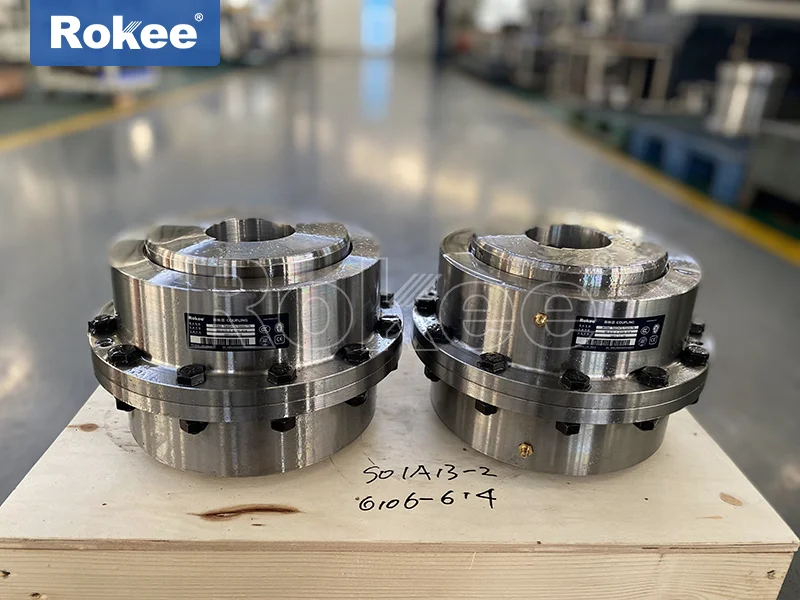
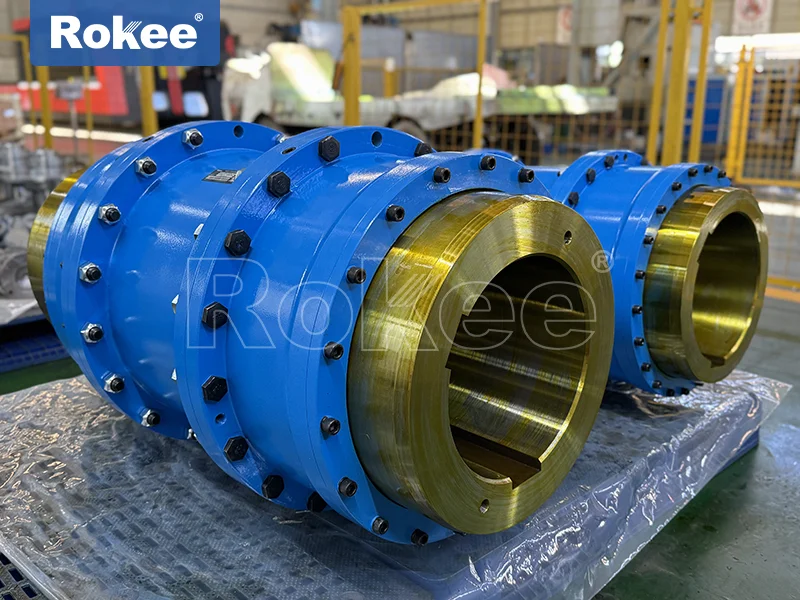
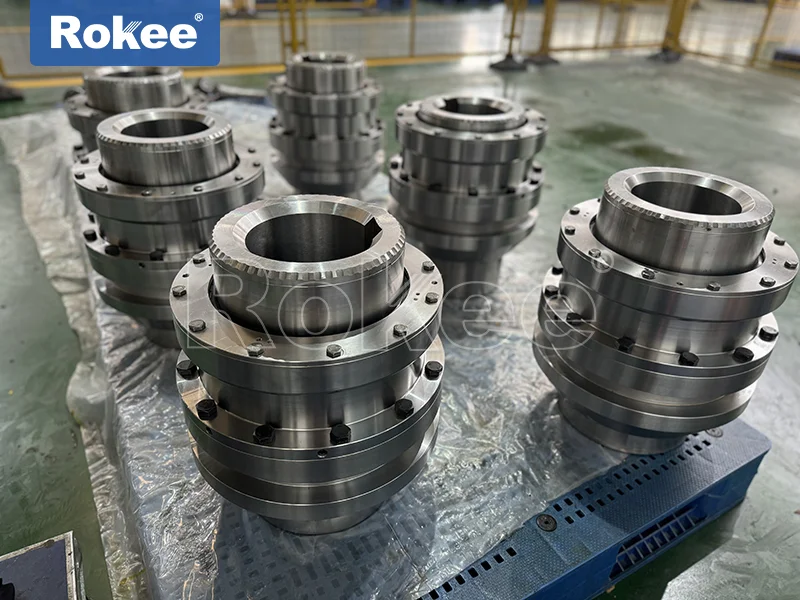
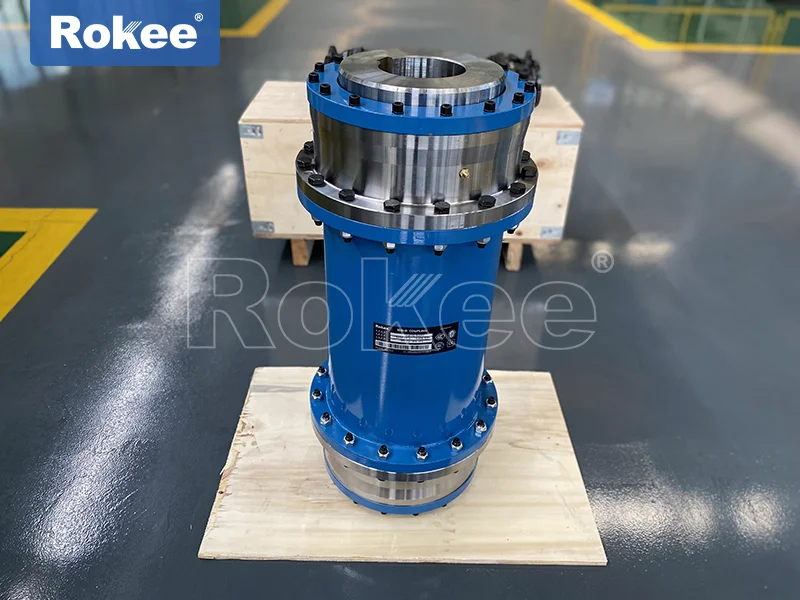
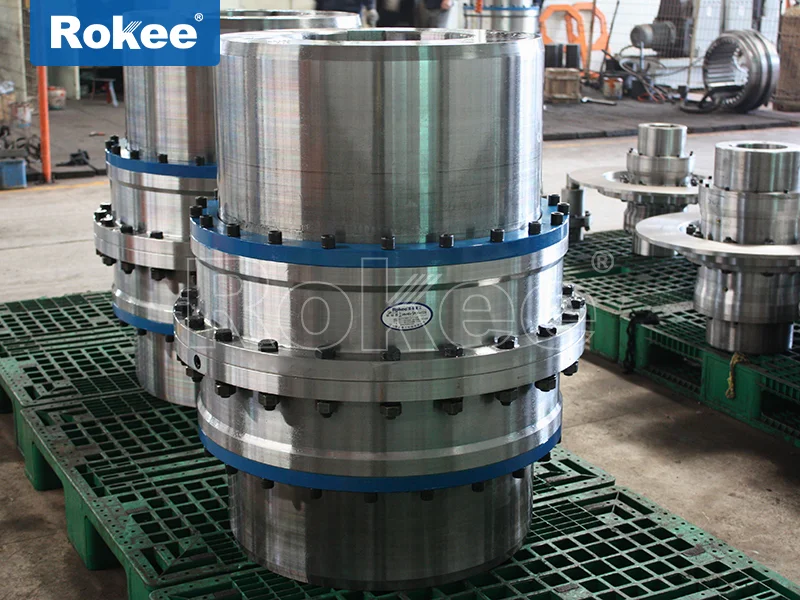
The core working principle and unique structural design of curved tooth couplings lay a solid technical foundation for their excellent transmission performance and wide adaptability in sandwich panel production lines. The basic structure of a curved tooth coupling is mainly composed of two gear hubs with external curved teeth and an outer sleeve with internal teeth, forming a compact and integrated gear meshing transmission structure. Different from the straight tooth design adopted by ordinary gear couplings, the tooth profile of the external gear hub of the curved tooth coupling adopts a special curved arc design, which enables the internal and external teeth to achieve optimal surface contact state during the torque transmission process rather than linear contact or local edge contact. When the driving shaft of the production line power equipment rotates and outputs torque, the gear hub connected to the driving shaft rotates synchronously, and the curved external teeth mesh stably with the internal teeth of the outer sleeve. The rotational power and torque are efficiently transmitted from the driving end to the driven end through the uniform meshing action between the teeth, and then the torque is transmitted to the driven shaft connected with the production line processing equipment, realizing the synchronous rotation and power output of the driving and driven equipment. This unique curved tooth meshing design fundamentally optimizes the contact condition between the internal and external teeth during operation, effectively avoiding the edge extrusion and local excessive pressure problems that are prone to occur in straight tooth couplings when angular displacement and shaft misalignment occur. Even if the rotating shafts of the production line equipment produce a certain degree of radial, axial, and angular deviation due to long-term operation and mechanical vibration, the curved tooth profile can still maintain a stable and uniform meshing state between the teeth, without generating additional friction and stress concentration, ensuring that the torque transmission process is always smooth and stable. At the same time, the overall structural rigidity of the curved tooth coupling is high, and it does not rely on elastic deformation to compensate for shaft deviation, so it can maintain precise torque transmission accuracy while having strong flexibility and deformation compensation capability, perfectly matching the dual requirements of the sandwich panel production line for transmission accuracy and deviation compensation.
The excellent comprehensive performance advantages of curved tooth couplings in torque transmission efficiency, load bearing capacity, and service life make them far superior to other types of couplings in the actual operation of sandwich panel manufacturing lines. First of all, the curved tooth coupling has extremely high power transmission efficiency, which can reach an extremely high level in actual long-term operation, minimizing the power loss in the torque transmission process. For the sandwich panel manufacturing line that requires long-term continuous high-power operation, low transmission power loss means that the power output of the driving motor can be more fully applied to the actual production and processing links, avoiding energy waste caused by transmission loss, helping production enterprises reduce long-term energy consumption and production operation costs, and improving the overall energy utilization efficiency of the production line. Secondly, the curved tooth coupling has strong overload resistance and high torque bearing capacity. The curved tooth meshing structure increases the contact area between the teeth, enabling the coupling to bear large instantaneous impact loads and alternating variable loads generated during the starting, stopping, and pressing bonding stages of the sandwich panel production line. In the continuous pressing process of the production line, the pressing roller equipment will generate instantaneous large load changes due to the thickness deviation of raw materials and the bonding pressure adjustment, and the curved tooth coupling can effectively buffer and bear these load fluctuations without tooth surface damage or transmission failure, ensuring that the pressing process is carried out stably and the bonding quality of the sandwich panel is consistent. In addition, the curved tooth coupling is made of high-strength alloy materials and processed through precise heat treatment processes, which has excellent wear resistance, high temperature resistance, and fatigue resistance. The production environment of the sandwich panel line has inevitable dust and debris erosion, and the long-term continuous operation will generate continuous friction and temperature rise. The curved tooth coupling can maintain stable structural performance under such working conditions, not easy to wear, deform or fail, and has a long service life, reducing the frequency of regular replacement and maintenance of transmission components, avoiding production line shutdown losses caused by coupling replacement and maintenance, and greatly improving the overall operation rate of the production line.
In each key transmission node of the sandwich panel manufacturing line, the practical application value of curved tooth couplings is fully reflected, becoming an indispensable guarantee for the synchronous and efficient operation of each production link. In the raw material unwinding and pretreatment stage of the production line, the metal surface plate unwinding equipment and the core material feeding equipment need to maintain a constant and synchronous feeding speed. The power transmission shaft between the driving motor and the unwinding and feeding reduction gearbox needs to bear stable torque and compensate for the slight shaft misalignment caused by the frequent start and stop of the equipment. The application of curved tooth couplings ensures that the raw material feeding speed is uniform and consistent, avoiding raw material tension fluctuation and feeding deviation caused by unstable transmission, and preventing the surface plate from wrinkling and core material feeding dislocation in the subsequent processing process. In the core material cutting and surface layer coating stage, the cutting roller and coating roller equipment have high requirements for rotating speed stability and transmission synchronization. Slight transmission jitter or speed fluctuation will lead to inaccurate cutting size and uneven coating distribution of the core material. Curved tooth couplings rely on stable and precise torque transmission performance to ensure that the rotating speed of the cutting and coating rollers is always stable, the cutting dimensional accuracy of the core material is guaranteed, and the surface coating of the sandwich panel is uniform and flat, laying a good foundation for the subsequent bonding and forming process. In the core continuous pressing and bonding forming stage, which is the core link of sandwich panel production, the pressing unit bears the largest working load and the most frequent load changes. The transmission system of the pressing roller group needs to transmit large torque while adapting to the mechanical vibration and shaft deviation generated by long-term pressing operation. Curved tooth couplings play a core transmission compensation role here, effectively resisting impact loads, compensating for shaft displacement deviations, ensuring that the pressing pressure of the upper and lower pressing rollers is balanced and the operation is synchronous, so that the core material and the surface layer can be closely bonded together stably, avoiding product quality problems such as hollow bonding and delamination of finished sandwich panels. In the final fixed-length cutting, edge sealing and finished product conveying and stacking stage of the production line, the transmission equipment needs to operate stably at a constant speed to ensure accurate cutting length and orderly conveying and stacking of finished products. Curved tooth couplings ensure the stable operation of the subsequent transmission links, avoid equipment operation jitter and transmission failure, and ensure that the finished products are neatly processed and stacked, which is convenient for subsequent storage and transportation.
Compared with other traditional coupling types that are optionally used in industrial transmission systems, curved tooth couplings show more obvious application advantages and higher matching degree in the sandwich panel manufacturing line. Elastic couplings commonly used in some light-load production equipment have good vibration damping and buffering effects, but their structural rigidity is low, torque transmission capacity is limited, and they are easy to age and damage under long-term high-load and high-temperature working conditions, unable to adapt to the high-power and long-term continuous operation requirements of sandwich panel production lines. Straight tooth gear couplings have high structural rigidity and torque transmission capacity, but their straight tooth design cannot effectively compensate for shaft angular displacement, and they are prone to edge wear and local stress concentration during operation, resulting in short service life and frequent failures, requiring frequent maintenance and replacement, which seriously affects the continuous production efficiency of the production line. In contrast, curved tooth couplings combine high structural rigidity, large torque bearing capacity, reliable shaft deviation compensation performance, and long service life, without the defects of easy aging of elastic couplings and easy wear of straight tooth couplings. They can adapt to the high-load, continuous, and harsh working conditions of sandwich panel production lines, reduce equipment maintenance costs and shutdown time, and comprehensively improve production line operation efficiency and product quality stability. For sandwich panel manufacturing enterprises pursuing long-term stable production and efficient production benefits, choosing curved tooth couplings as the core transmission component of the production line transmission scheme is not only a necessary measure to ensure stable equipment operation, but also an important part of optimizing the overall production cost and improving market competitiveness.
With the continuous upgrading of the prefabricated construction industry and the increasing market demand for high-performance sandwich panels, the sandwich panel manufacturing line is developing in the direction of larger-scale production, higher processing accuracy, and longer continuous operation time, which puts forward higher and stricter requirements for the performance and stability of the production line transmission system. As the core key component of the efficient transmission scheme of the sandwich panel manufacturing line, curved tooth couplings will play an increasingly important role in the future development of the industry. Mechanical transmission design and production line transformation and upgrading work of sandwich panel manufacturing enterprises need to always take the matching application of curved tooth couplings as an important part, scientifically select the appropriate specification and model according to the actual transmission load, operating speed, and working condition characteristics of each production link, and do a good job in daily simple maintenance and lubrication work of the couplings to give full play to its excellent transmission performance. Only by relying on the reliable transmission guarantee of curved tooth couplings can the sandwich panel manufacturing line maintain long-term efficient, stable, and low-failure operation, continuously produce high-quality and high-performance sandwich panel products, meet the growing market demand for green prefabricated building materials, and promote the steady and high-quality development of the entire prefabricated construction and sandwich panel manufacturing industry.