Tooth Gear Couplings
In the field of mechanical power transmission, the tooth gear coupling stands as a fundamental and widely applied component, serving as a critical bridge between driving and driven shafts to facilitate efficient torque transfer while addressing common operational challenges such as shaft misalignment, vibration, and mechanical shock. Unlike simple rigid couplings that offer no flexibility or compensation capabilities, tooth gear couplings integrate precision gear meshing structures to balance high load-bearing performance and adaptive flexibility, making them indispensable in heavy-duty, high-speed, and complex industrial transmission systems.
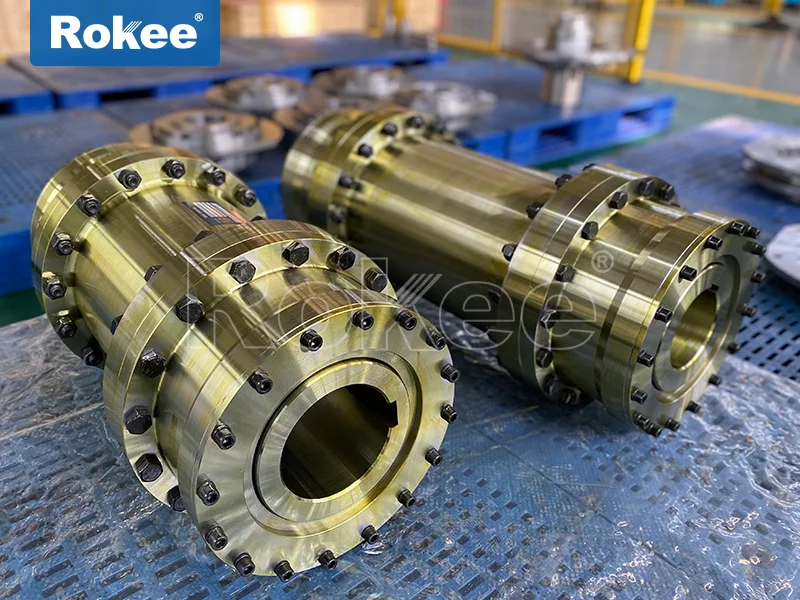
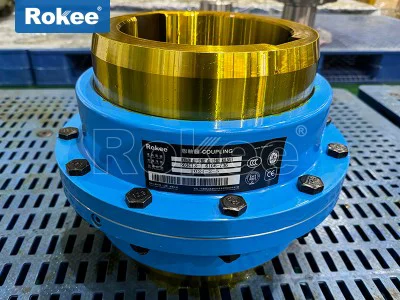
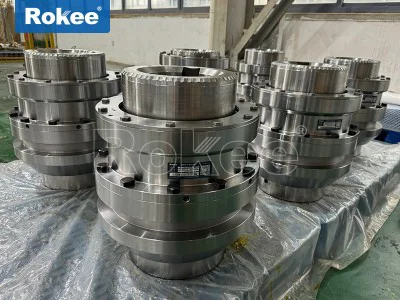
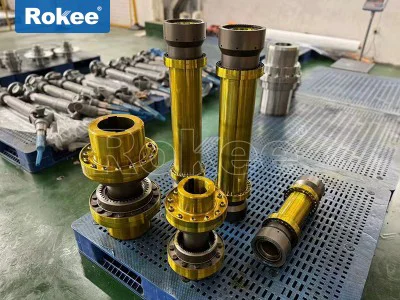
At its core, the tooth gear coupling features a compact and robust structural design centered on gear meshing, with a standardized configuration that consists of several key integrated components, each fulfilling a distinct and irreplaceable role. The primary elements include two external gear hubs, one or two internal gear sleeves, sealing components, and fastening connectors. The external gear hubs are precisely mounted on the ends of the driving and driven shafts, typically secured via interference fit, keyway connection, or clamping mechanisms to ensure zero relative slip between the hub and the shaft during torque transmission, thereby guaranteeing the integrity of power delivery. The internal gear sleeves are engineered with internal teeth that match the tooth profile and quantity of the external gear hubs, forming a closed meshing pair that enables the transfer of rotational force and torque through the precise engagement of inner and outer teeth. Sealing components, usually positioned at the joint gaps between the internal sleeves and external hubs, play a vital role in preventing the leakage of lubricating medium and blocking the intrusion of external contaminants such as dust, moisture, and abrasive particles, which is essential for maintaining stable internal operating conditions and prolonging the service life of gear surfaces. Fastening connectors, including high-strength bolts and nuts, ensure the tight assembly of all structural parts, resisting axial displacement and radial impact under heavy loads to maintain the overall structural stability of the coupling.
A defining feature of the tooth gear coupling’s structure is the design of its gear teeth, which directly dictates the component’s performance limits and adaptive capacity. Broadly speaking, the external teeth on the hubs are categorized into two primary profiles: straight teeth and drum-shaped teeth. Straight tooth designs feature a linear tooth flank along the axial direction, with a simple processing technology and lower manufacturing costs, making them suitable for basic transmission scenarios with minimal misalignment requirements. In contrast, drum-shaped teeth adopt a spherical curved profile, with the center of the spherical surface aligned with the coupling’s axis, creating a larger tooth side clearance and a more uniform contact area between inner and outer teeth during operation. This curved tooth design eliminates edge stress concentration that commonly occurs in straight teeth under angular misalignment, distributes load pressure evenly across the tooth flank, and significantly enhances the coupling’s ability to compensate for shaft deviations. The structural optimization of drum-shaped teeth also reduces friction and wear between meshing surfaces, lowers energy loss due to sliding friction, and suppresses noise generation during high-speed rotation, marking a substantial upgrade in both performance and durability compared to straight tooth counterparts. Beyond tooth profile design, the overall structural compactness of tooth gear couplings allows them to deliver exceptional torque density, meaning they can transmit extremely high levels of torque within a relatively small spatial footprint, a critical advantage in equipment with limited installation space.
The performance attributes of tooth gear couplings are a direct reflection of their optimized structural design, encompassing high load-bearing capacity, superior misalignment compensation, stable transmission efficiency, and strong environmental adaptability, all of which make them stand out among various coupling types. Foremost among these is their exceptional torque transmission capability, engineered to handle heavy-duty operational loads that far exceed those of elastic couplings or flexible pin couplings. The gear meshing structure distributes torque across multiple engaged teeth simultaneously, preventing localized overloading and ensuring reliable power transfer even under peak load conditions, whether in low-speed heavy-duty machinery or high-speed rotating equipment. This high torque density enables tooth gear couplings to maintain stable performance without compromising on load capacity, even in compact installation spaces, addressing the spatial constraints prevalent in modern industrial equipment design.
Another pivotal performance advantage is the comprehensive misalignment compensation function, which addresses the inevitable shaft deviations that occur in practical engineering due to installation errors, thermal expansion and contraction, mechanical deformation under load, and operational vibration. Tooth gear couplings can effectively compensate for three primary types of shaft misalignment: angular misalignment, radial misalignment, and axial misalignment. Drum-shaped tooth models, in particular, offer enhanced compensation ranges, accommodating larger angular deviations without sacrificing transmission stability or accelerating wear. This adaptive capability reduces the strict alignment requirements during equipment installation, lowers the risk of premature component failure caused by excessive stress on shafts and bearings, and improves the overall operational reliability of the entire transmission system. Additionally, tooth gear couplings exhibit excellent damping and shock absorption properties, absorbing instantaneous impact loads generated during machine startup, shutdown, or load fluctuations, preventing shock waves from propagating throughout the transmission chain and protecting core equipment components such as motors, reducers, and working machines from damage.
In terms of operational stability and longevity, tooth gear couplings demonstrate remarkable performance when maintained properly. The uniform load distribution across gear teeth minimizes localized wear and fatigue damage, while effective sealing and lubrication systems prevent corrosion, pitting, and abrasive wear on tooth surfaces. These couplings can adapt to a wide range of operating temperatures and environmental conditions, from ordinary indoor workshops to harsh outdoor industrial sites with dust, humidity, and moderate chemical exposure, as long as the sealing structure remains intact and lubrication is regularly replenished. They also maintain high transmission efficiency across a broad speed range, with minimal energy loss even at elevated rotational speeds, making them suitable for both low-speed heavy-load applications such as mining machinery and high-speed transmission scenarios such as turbine-driven equipment. It is important to note that optimal performance relies on adequate lubrication; a consistent lubricating film between meshing teeth reduces friction, dissipates heat generated by operation, and prevents direct metal-to-metal contact, which is essential for sustaining long-term stable performance and extending service life.
Tooth gear couplings are classified into distinct types based on structural configuration, tooth profile design, application scope, and functional features, each tailored to meet specific operational needs and transmission conditions, ensuring targeted adaptability across diverse engineering scenarios. The most common classification is based on tooth profile, dividing couplings into straight tooth gear couplings and drum-shaped tooth gear couplings, as previously outlined. Straight tooth models are cost-effective and easy to process, ideal for scenarios with minimal misalignment, low to moderate speeds, and light to medium loads, such as small-scale conveyor systems, general-purpose pumps, and auxiliary mechanical equipment. Drum-shaped tooth models, with their superior misalignment compensation, wear resistance, and load capacity, are the preferred choice for heavy-duty, high-speed, and high-misalignment applications, dominating in core industrial equipment where reliability and durability are non-negotiable.
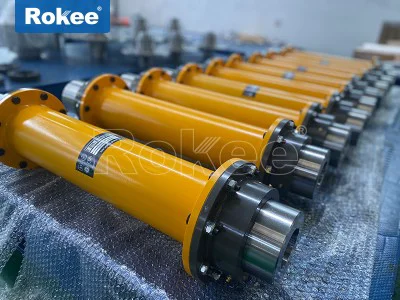
Classification based on structural assembly and functional design yields additional key types, including full gear couplings, half gear couplings, floating shaft gear couplings, and continuous sleeve gear couplings. Full gear couplings feature two external gear hubs and a single double-sided internal gear sleeve, providing balanced flexibility and misalignment compensation on both shaft ends, making them suitable for general heavy-duty transmission systems where both connected shafts require adaptive support. Half gear couplings combine one external gear hub with one rigid hub, offering flexibility only on one side while maintaining rigid connection on the other, ideal for scenarios where one shaft is fixed and requires minimal compensation, such as in certain pump and fan assemblies where alignment stability is prioritized on one end. Floating shaft gear couplings incorporate an intermediate shaft between two sets of gear coupling components, designed to bridge large distances between driving and driven machinery, commonly used in long-span transmission systems such as offshore drilling equipment, large-scale conveyor lines, and marine propulsion systems where direct shaft connection is unfeasible. Continuous sleeve gear couplings feature a single extended internal sleeve that encloses both external hubs, providing enhanced protection against contaminants and improved structural rigidity, making them suitable for harsh environments with high levels of dust, debris, or moisture, such as mining, metallurgy, and construction machinery.
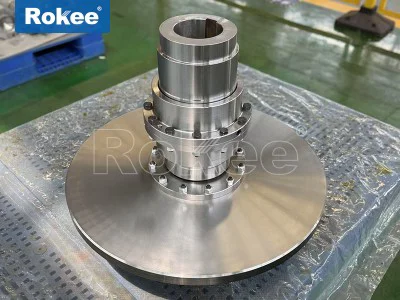
Further classification can be made based on application-specific design variations, including standard general-purpose couplings, high-speed balanced couplings, and heavy-duty reinforced couplings. Standard general-purpose tooth gear couplings cater to the majority of conventional industrial transmission needs, offering a balanced blend of performance and cost-effectiveness for everyday machinery. High-speed balanced couplings undergo precision dynamic balancing treatment to minimize rotational imbalance and vibration, making them suitable for high-speed rotating equipment such as gas turbines, steam turbines, and high-speed compressors where operational smoothness is critical. Heavy-duty reinforced couplings feature thicker gear teeth, high-strength alloy materials, and reinforced structural components, engineered to withstand extreme loads, frequent impact shocks, and prolonged heavy-duty operation, serving core equipment in heavy industries such as steel rolling mills, mining crushers, and large-scale lifting machinery. Each type is engineered with targeted structural optimizations to align with the unique load, speed, misalignment, and environmental demands of its intended application, ensuring optimal performance and reliability.
The exceptional combination of structural robustness, high performance, and adaptive versatility positions tooth gear couplings as a cornerstone component across nearly all heavy industrial sectors, with applications spanning metallurgy, mining, power generation, oil and gas, marine engineering, lifting and transportation, and general manufacturing. In the metallurgical industry, tooth gear couplings are integral to core equipment such as rolling mills, continuous casting machines, and sintering equipment, where they endure extreme heavy loads, continuous operation, and frequent impact shocks, reliably transmitting high torque while compensating for thermal deformation and mechanical misalignment inherent in high-temperature metallurgical processes. Their ability to maintain stable performance under harsh conditions ensures uninterrupted production flow, a critical factor in metallurgical manufacturing efficiency.
In the mining industry, where equipment operates in abrasive, dusty, and heavy-load environments, tooth gear couplings are widely used in crushers, grinders, conveyors, and hoisting machinery. Their rugged construction resists wear and contamination, while superior load-bearing capacity handles the intermittent heavy shocks typical of mineral processing, ensuring reliable operation in challenging underground and surface mining conditions. In the power generation sector, including thermal, hydro, and wind power facilities, tooth gear couplings connect turbines, generators, and drive shafts, facilitating efficient power transmission in both high-speed turbine systems and low-speed heavy-duty generator sets. Their misalignment compensation and damping properties protect precision power generation equipment from vibration and alignment-related damage, supporting stable and efficient power output.
The oil and gas industry relies on tooth gear couplings for critical equipment such as pumps, compressors, and drilling rigs, where they perform reliably in high-pressure, high-temperature, and corrosive offshore and onshore environments. Sealed designs prevent lubricant leakage and contaminant ingress, while high torque capacity ensures consistent power delivery for oil extraction, transportation, and refining processes. In marine engineering, including commercial vessels, offshore platforms, and port machinery, tooth gear couplings are used in propulsion systems, deck machinery, and auxiliary equipment, offering resistance to salt spray corrosion, vibration damping, and reliable torque transmission for maritime operations. Lifting and transportation equipment, such as cranes, elevators, and large conveyor systems, depend on tooth gear couplings for their heavy load capacity and shock absorption, ensuring safe and stable material handling in ports, factories, logistics hubs, and construction sites.
Beyond these heavy industrial sectors, tooth gear couplings find extensive use in general manufacturing equipment, including machine tools, textile machinery, printing machinery, and rubber processing equipment, providing stable and efficient torque transmission for precision manufacturing processes. Their adaptability to varying load and speed conditions, coupled with compact design, makes them suitable for both large-scale industrial production lines and specialized precision machinery. As industrial technology advances and equipment demands for higher loads, faster speeds, and greater reliability intensify, the application scope of tooth gear couplings continues to expand, with ongoing design optimizations focusing on enhanced wear resistance, extended service life, reduced maintenance needs, and improved environmental adaptability.
In summary, the tooth gear coupling is a highly optimized power transmission component that integrates rational structural design, exceptional performance attributes, diverse functional types, and extensive industrial applicability. Its core gear meshing structure delivers high torque density and comprehensive misalignment compensation, addressing key pain points in mechanical transmission systems, while its varied classifications cater to the unique demands of different operating scenarios. From heavy-duty industrial machinery to precision manufacturing equipment, tooth gear couplings play an irreplaceable role in ensuring efficient, stable, and reliable power transmission. As engineering technology evolves, continuous improvements in material science, processing technology, and structural design will further elevate the performance of tooth gear couplings, reinforcing their status as a vital component in the global mechanical transmission industry and supporting the advancement of modern industrial manufacturing toward higher efficiency, durability, and adaptability.
Coupling Categories
Links:
Related Articles
- Aug 10, 2026Crowned Tooth Gear Coupling
- Oct 23, 2025Curved Tooth Gear Couplings
- Aug 16, 2023RODM Torsion Protection Curved-tooth Gear Coupling
- Aug 16, 2023RODV Vertical Installation Curved-tooth Gear Coupling
- Aug 16, 2023RODU Brake Wheel Curved-tooth Gear Coupling
- Aug 16, 2023RODW Brake Wheel Curved-tooth Gear Coupling
- Aug 16, 2023RODF Split Brake Disc Curved-tooth Gear Coupling
- Jun 16, 2020RODX Intermediate Shaft Curved-tooth Gear Coupling
- Jun 16, 2020RODT Indirect Tube Curved-tooth Gear Coupling
- Jun 16, 2020RODP Brake Disc Curved-tooth Gear Coupling
- Jun 16, 2020RODA Curved-tooth Gear Coupling