Barrel Gear Coupling Ensures Continuous Operation Of Sandwich Panel Lines Without Interruption
In the modern manufacturing industry, the continuous operation of production lines is the core guarantee for improving efficiency, reducing costs and ensuring product quality, especially for sandwich panel production lines. These lines integrate multiple complex processes, from raw material unwinding and surface pretreatment to forming, foaming, compounding, fixed-length cutting and stacking packaging, each link is closely connected, and any interruption in the operation of key components will lead to the stagnation of the entire production line, resulting in huge economic losses and production delays. Among the numerous components that support the stable operation of sandwich panel lines, the barrel gear coupling plays an irreplaceable role as a key transmission part. It undertakes the important task of connecting the power input shaft and the driven shaft, transmitting torque stably, compensating for shaft misalignment, and absorbing operational shocks, thus ensuring that the sandwich panel line can operate continuously and stably for a long time without interruption. Understanding the structural characteristics, working principle and practical application value of the barrel gear coupling in sandwich panel production lines is of great significance for optimizing production efficiency, reducing maintenance costs and promoting the high-quality development of the sandwich panel manufacturing industry.
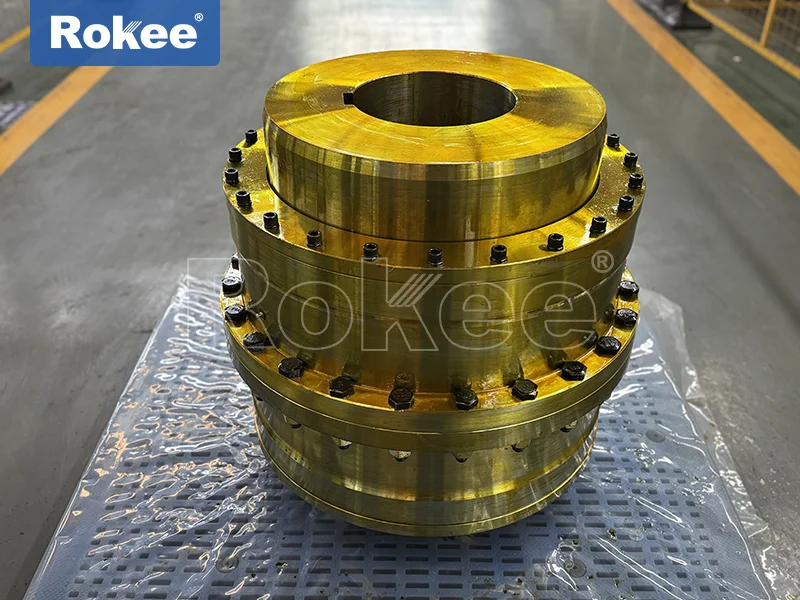
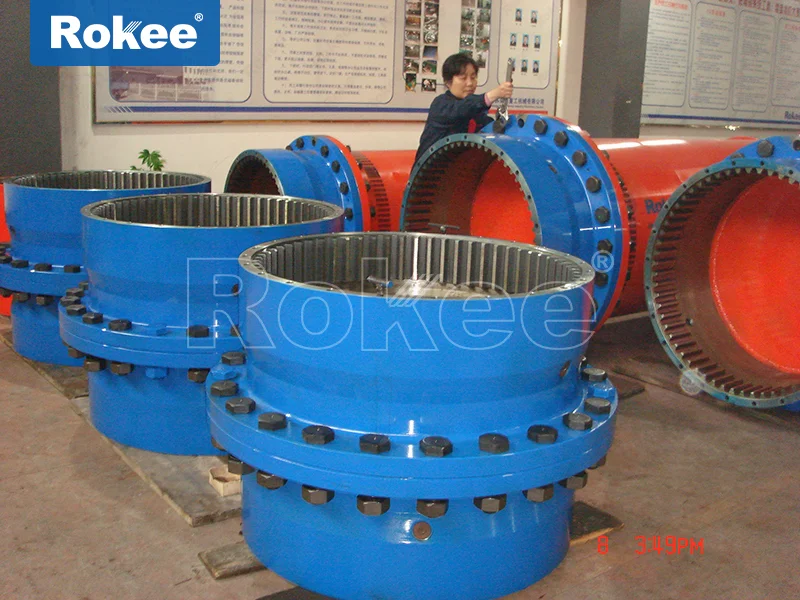
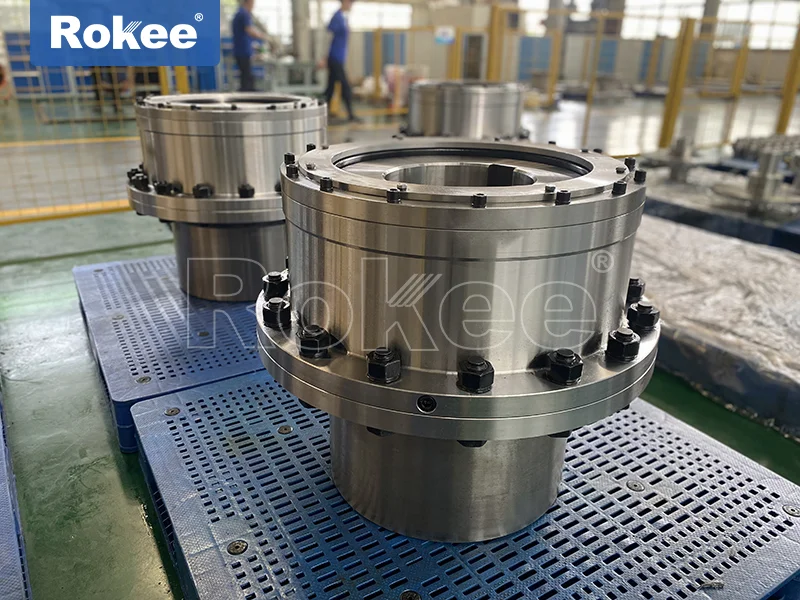
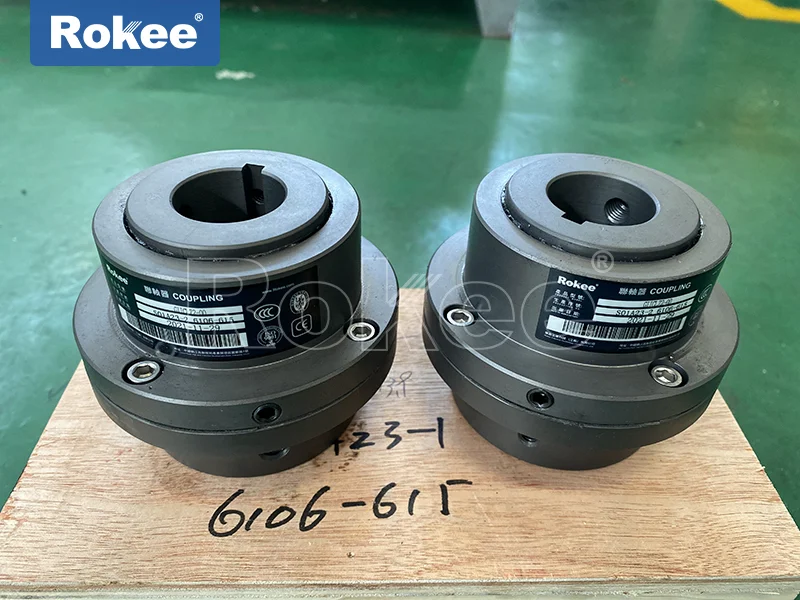
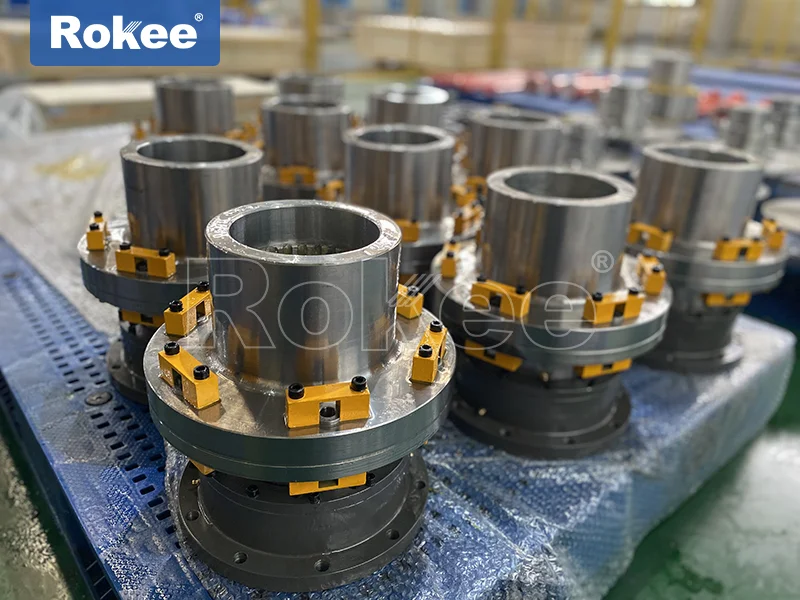
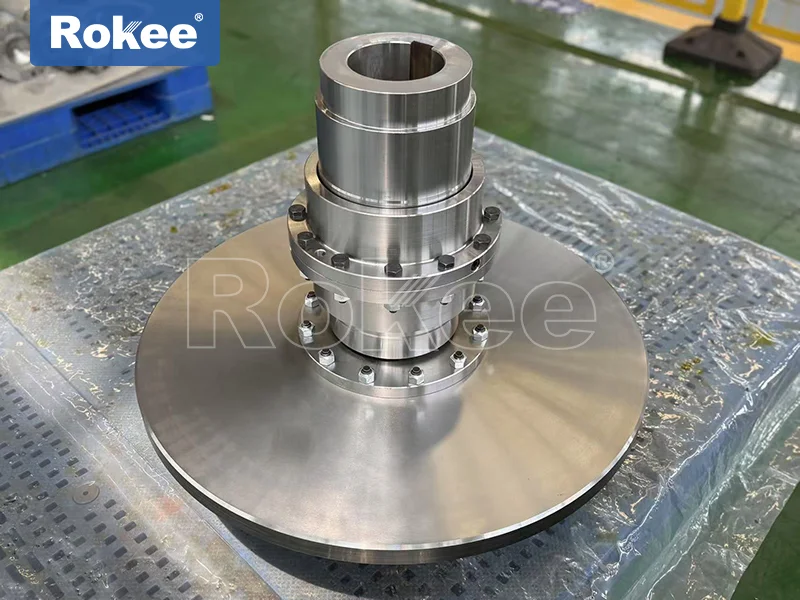
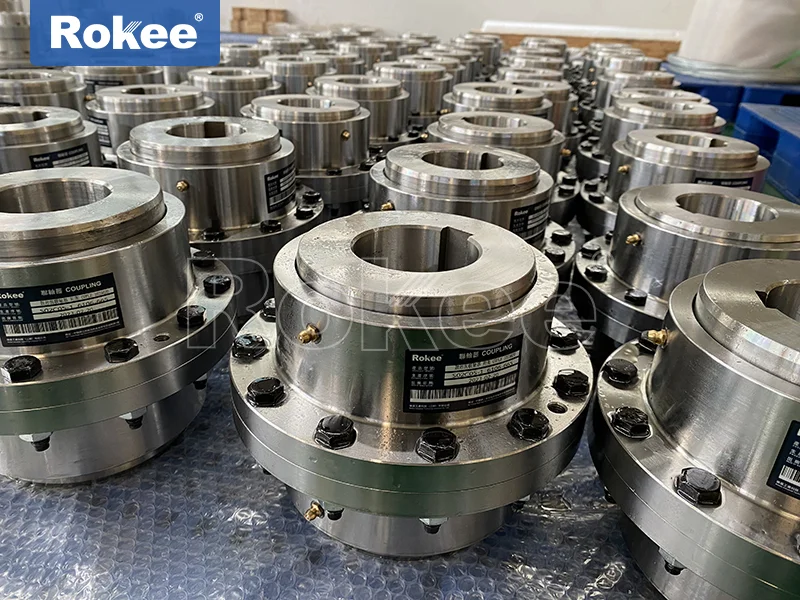
The barrel gear coupling is a specially designed advanced mechanical transmission component, which is widely used in heavy-duty industrial equipment that requires high torque transmission and stable operation. Different from ordinary couplings, its unique structural design gives it excellent performance advantages that are difficult to replace by other types of couplings. The core structure of the barrel gear coupling mainly includes an inner gear ring and an outer gear sleeve, and its key innovation lies in the special design of the tooth shape—the outer teeth are made into a spherical shape, with the center of the sphere on the axis of the gear. This spherical tooth design not only increases the contact area between the teeth, but also makes the force more uniform, effectively reducing the stress concentration phenomenon that easily occurs in ordinary straight-tooth couplings, thus improving the load-bearing capacity and service life of the coupling. In addition, the tooth clearance of the barrel gear coupling is slightly larger than that of ordinary products, which not only ensures the smooth meshing of the teeth during high-speed operation, but also provides a certain buffer space for the compensation of shaft misalignment, laying a solid foundation for the stable operation of the transmission system.
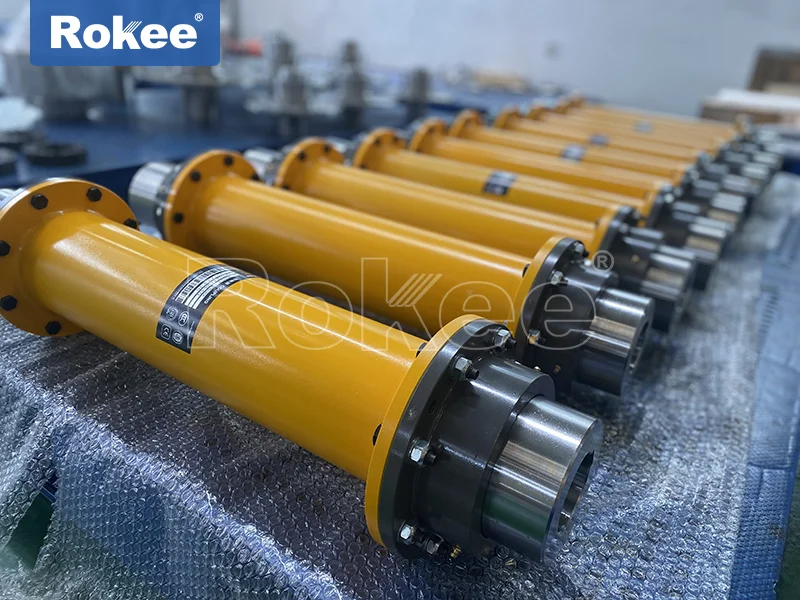
The working principle of the barrel gear coupling is based on the meshing transmission of gears, but it has been optimized and improved to adapt to the complex working environment of sandwich panel production lines. In the transmission system of the sandwich panel line, the barrel gear coupling is usually used to connect the reducer's power output shaft with the rotating components of each process, such as the unwinding roller, forming roller, composite pressure roller and cutting mechanism. When the production line starts to operate, the motor drives the reducer to run, and the reducer transmits the converted torque to the barrel gear coupling. Through the meshing between the inner gear ring and the outer gear sleeve of the coupling, the torque is stably transmitted to the driven shaft, driving the corresponding working components to operate at a constant speed. During this process, the spherical tooth design of the barrel gear coupling can effectively compensate for the angular misalignment, radial offset and axial float that may exist between the two shafts. These misalignments are often caused by factors such as installation errors, thermal expansion of equipment during operation, structural deflection under load and wear of bearings over time. If these misalignments are not effectively compensated, it will lead to increased friction between the shafts, generate excessive heat, accelerate the wear of components, and even cause shaft breakage in severe cases, resulting in the interruption of the production line. The barrel gear coupling can effectively absorb these misalignments through its unique structural design, avoid additional stress on the transmission system, and ensure the smooth and stable operation of each component.
The sandwich panel production line is a highly automated industrial system that requires continuous operation for a long time, and its working environment is often accompanied by high load, high speed, vibration and other harsh conditions. This puts forward strict requirements on the performance of the transmission components. The barrel gear coupling can perfectly adapt to these working conditions and become the core guarantee for the continuous operation of the sandwich panel line due to its excellent performance advantages. Firstly, the barrel gear coupling has strong torque transmission capacity. The sandwich panel production line needs to drive multiple heavy-duty rollers and mechanical components during operation, which requires the transmission components to have sufficient torque-bearing capacity. The spherical tooth design of the barrel gear coupling increases the contact area between the teeth, makes the torque transmission more stable, and can transmit larger torque under the same volume, meeting the power demand of the sandwich panel line for high-load operation. Compared with ordinary couplings, the barrel gear coupling can bear 2-5 times the load under the same diameter and curvature conditions, which is closely related to its drum-shaped pin surface contact structure—traditional straight pin couplings have line or point contact, leading to stress concentration, while the surface contact of the barrel gear coupling can distribute the load to a larger area, significantly reducing the unit area stress and avoiding local wear and early fatigue cracks.
Secondly, the barrel gear coupling has excellent misalignment compensation capacity. As mentioned earlier, the sandwich panel production line has a long body, and each component is affected by factors such as temperature change and mechanical vibration during operation, which is prone to shaft misalignment. The barrel gear coupling can compensate for angular misalignment up to 1.5°-3°, radial offset and a certain amount of axial float, which is achieved through the clearance design between the pin, bushing and end cover of the coupling. This compensation capacity not only protects the connected shafts and bearings from excessive stress, but also avoids the occurrence of transmission jamming, ensures the synchronous operation of each process of the production line, and prevents production interruptions caused by component damage due to misalignment. For example, in the forming process of the sandwich panel line, the forming roller needs to operate at a constant speed to ensure the uniformity of the panel shape. If the coupling cannot compensate for the slight misalignment between the shafts, it will lead to uneven speed of the forming roller, resulting in unqualified panel shape, and even damage the forming roller and other components, forcing the production line to stop for maintenance.
Thirdly, the barrel gear coupling has strong wear resistance and long service life. The sandwich panel production line usually needs to operate continuously for 24 hours, which puts a huge test on the service life of the transmission components. The key components of the barrel gear coupling, such as the gear ring and gear sleeve, are usually made of high-strength alloy steel, which is processed by quenching, tempering and other heat treatment processes, greatly improving the hardness and wear resistance of the components. In addition, the relative motion between the pin and the bushing in the barrel gear coupling is a "rolling + micro-sliding" composite friction mode, which is different from the pure sliding friction of traditional couplings. This composite friction mode can reduce the friction coefficient, reduce frictional heat, slow down material fatigue, significantly reduce the lubrication burden, and avoid annealing or hardness reduction caused by excessive frictional heat. Compared with traditional couplings, the service life of the barrel gear coupling can be extended by 30%-300%, which greatly reduces the frequency of component replacement and maintenance, and ensures the continuous operation of the sandwich panel line without interruption. At the same time, the innovative sealing technology adopted by the barrel gear coupling can maintain excellent lubrication performance, prevent dust, debris and other impurities from entering the coupling interior, avoid wear and tear of internal components, and further extend its service life.
Fourthly, the barrel gear coupling has good shock absorption and vibration reduction performance. During the operation of the sandwich panel lines, the motor, reducer and other equipment will generate a certain amount of vibration, and these vibrations will be transmitted to the entire transmission system. If the vibration cannot be effectively absorbed, it will not only affect the stability of the production line operation, but also accelerate the wear of components and reduce the service life of the equipment. The barrel gear coupling can absorb and buffer the vibration generated during operation through the elastic deformation of the gear meshing and the clearance between the components, reduce the impact of vibration on the transmission system, and ensure the stable operation of each component of the production line. This shock absorption performance is particularly important for the foaming and compounding processes of the sandwich panel line. The foaming process requires a stable temperature and pressure environment, and the compounding process requires uniform pressure of the composite roller. If there is excessive vibration, it will lead to uneven foaming density of the sandwich panel core material, poor bonding between the panel and the core material, and affect the product quality. The shock absorption and vibration reduction performance of the barrel gear coupling can effectively avoid these problems, ensure the stability of the production process, and lay a foundation for the continuous operation of the production line.
In the actual application process of the sandwich panel production line, the barrel gear coupling is widely used in various key links, and its stable operation directly determines the continuity and efficiency of the entire production line. In the raw material unwinding link, the barrel gear coupling connects the reducer with the unwinding roller, ensuring that the metal coil is unwound at a constant speed. The stable unwinding speed is the premise of ensuring the subsequent forming quality. If the unwinding speed is uneven, it will lead to wrinkles, deformation and other problems of the metal panel, affecting the subsequent processing. The barrel gear coupling can transmit torque stably, compensate for the misalignment between the reducer shaft and the unwinding roller shaft, ensure that the unwinding roller operates at a constant speed, and avoid production interruptions caused by uneven unwinding. In the forming link, the forming roller needs to bear a large pressure and torque, and the barrel gear coupling can transmit the torque stably to the forming roller, ensuring that the forming roller operates at a constant speed and pressure, and ensuring the uniformity of the panel shape. At the same time, the misalignment compensation capacity of the barrel gear coupling can avoid the jamming of the forming roller caused by shaft misalignment, and prevent the production line from stopping due to the failure of the forming link.
In the foaming and compounding link, the barrel gear coupling is used to connect the reducer with the composite pressure roller and the foaming machine transmission shaft. The foaming process requires the foaming machine to inject the foaming material into the gap between the two metal panels at a constant speed and pressure, and the composite pressure roller needs to apply uniform pressure to the composite panel to ensure the firm bonding between the panel and the core material. The barrel gear coupling can ensure the stable operation of the foaming machine and the composite pressure roller, avoid the uneven injection of foaming material and uneven pressure of the composite roller caused by unstable transmission, and prevent unqualified products and production interruptions. In the fixed-length cutting link, the cutting mechanism needs to operate at a high speed and accurately, and the barrel gear coupling can transmit the torque stably to the cutting saw, ensuring that the cutting saw operates at a constant speed and accurately cuts the sandwich panel according to the set length. The stability of the cutting link is directly related to the production efficiency and product qualification rate. The barrel gear coupling can effectively avoid cutting errors and equipment failures caused by unstable transmission, ensuring the continuous operation of the cutting link.
The continuous operation of the sandwich panel production line not only depends on the excellent performance of the barrel gear coupling, but also requires scientific installation, use and maintenance of the coupling. In the installation process, it is necessary to ensure the accurate alignment of the two shafts connected by the coupling. Although the barrel gear coupling has a certain misalignment compensation capacity, excessive installation misalignment will still increase the load of the coupling, accelerate wear and reduce service life. Therefore, during installation, professional tools should be used to detect the alignment of the shafts, and adjustments should be made in time to ensure that the misalignment is within the allowable range. At the same time, attention should be paid to the installation tightness of the coupling, and the connecting bolts should be tightened to avoid loosening during operation, which will lead to unstable transmission and even component damage. In addition, the barrel gear coupling needs to be filled with sufficient appropriate lubricating oil before use. The lubricating oil can reduce the friction between the gear teeth and other components, reduce wear and frictional heat, and extend the service life of the coupling. It is necessary to regularly check the oil level and oil quality of the lubricating oil, and add or replace the lubricating oil in time according to the use situation to ensure the good lubrication state of the coupling.
In the daily use process, it is necessary to regularly inspect the operation status of the barrel gear coupling, including whether there is abnormal noise, vibration, overheating and other phenomena. Abnormal noise and vibration may be caused by gear wear, loose bolts, misalignment and other problems; overheating may be caused by insufficient lubrication, excessive load, excessive friction and other reasons. Once abnormal phenomena are found, the production line should be stopped in time for inspection and maintenance to avoid further damage to the coupling and other components, resulting in longer production interruptions. In addition, it is necessary to regularly clean the surface of the coupling, remove dust, debris and other impurities, prevent impurities from entering the interior of the coupling, and avoid wear of internal components. For the long-term stored barrel gear coupling, it is necessary to take long-term protection measures, store it in a dry and dustproof environment, and keep the air humidity below 50% to avoid corrosion of components.
Compared with other types of couplings, the barrel gear coupling has obvious advantages in the application of sandwich panel production lines. For example, the jaw coupling has a simple structure and low cost, but its torque transmission capacity is limited, and it cannot compensate for large misalignment, which is not suitable for the high-load and high-stability requirements of sandwich panel production lines; the disc coupling has good vibration reduction performance, but its load-bearing capacity is weak, and it is easy to be damaged under heavy load conditions, which cannot ensure the long-term continuous operation of the production line; the tire coupling has strong misalignment compensation capacity, but its wear resistance is poor, and its service life is short, which needs frequent replacement, increasing maintenance costs and production interruptions. The barrel gear coupling integrates the advantages of strong torque transmission capacity, excellent misalignment compensation, good wear resistance and long service life, which can perfectly meet the working requirements of the sandwich panel production line, and become the optimal choice for the transmission components of the sandwich panel production line.
With the continuous development of the sandwich panel manufacturing industry, the requirements for the production efficiency and product quality of the production line are getting higher and higher, and the role of the barrel gear coupling in ensuring the continuous operation of the production line is becoming more and more prominent. In the future, with the continuous progress of mechanical processing technology and material science, the performance of the barrel gear coupling will be further optimized. For example, the use of new high-strength and wear-resistant materials can further improve the load-bearing capacity and service life of the coupling; the optimization of structural design can enhance the misalignment compensation capacity and shock absorption performance of the coupling, making it more suitable for the complex working environment of the sandwich panel production line. At the same time, with the popularization of intelligent manufacturing, the barrel gear coupling may be integrated with intelligent monitoring technology, which can monitor the operation status of the coupling in real time, predict potential faults, and provide a basis for predictive maintenance, further reducing the frequency of production interruptions and improving the production efficiency of the sandwich panel line.
In conclusion, the barrel gear coupling, as a key transmission component of the sandwich panel production line, plays an irreplaceable role in ensuring the continuous operation of the production line without interruption. Its unique structural design and excellent performance advantages, such as strong torque transmission capacity, excellent misalignment compensation, good wear resistance and shock absorption performance, make it can adapt to the harsh working environment of the sandwich panel production line, stably transmit power, protect the transmission system, reduce maintenance frequency and production interruptions. Through scientific installation, use and maintenance, the service life of the barrel gear coupling can be further extended, and its role in ensuring the continuous operation of the sandwich panel production line can be brought into full play. With the continuous development of the sandwich panel manufacturing industry, the barrel gear coupling will continue to play an important role, providing strong support for the high-efficiency, stable and continuous operation of the sandwich panel production line, and promoting the sustainable development of the industry.