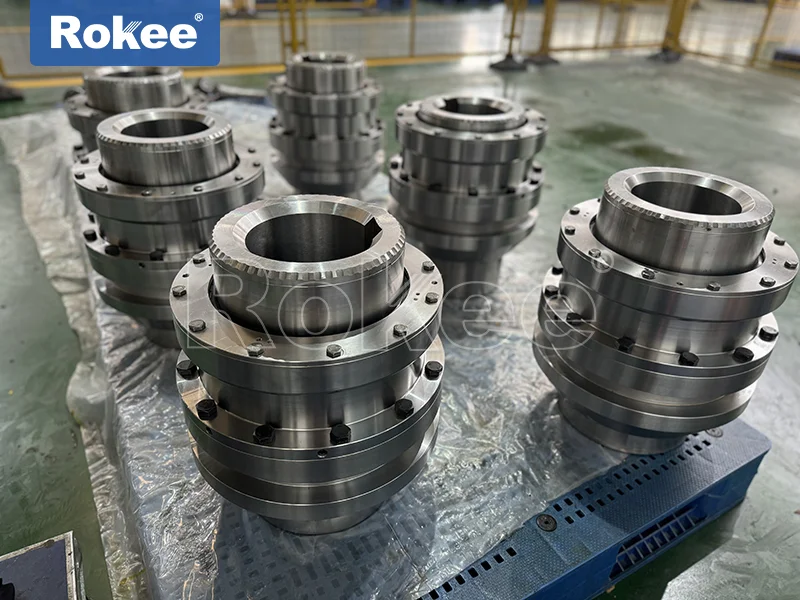
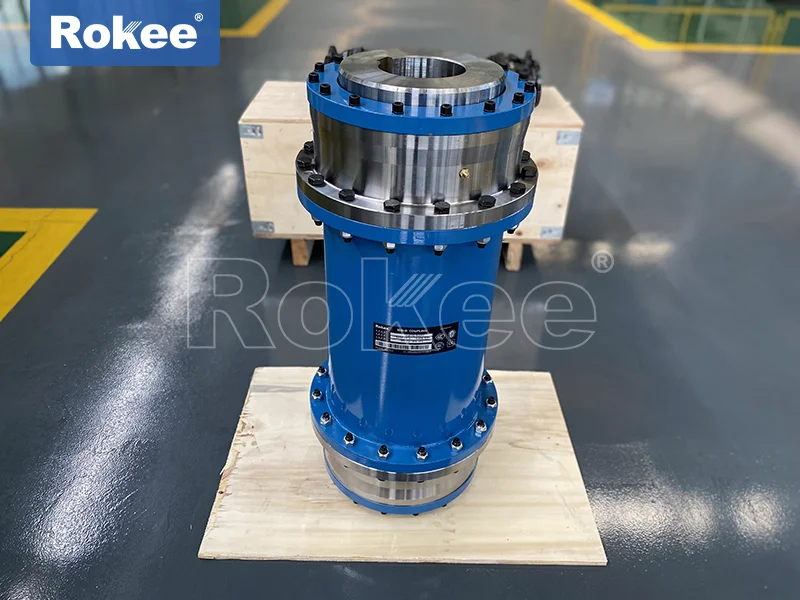
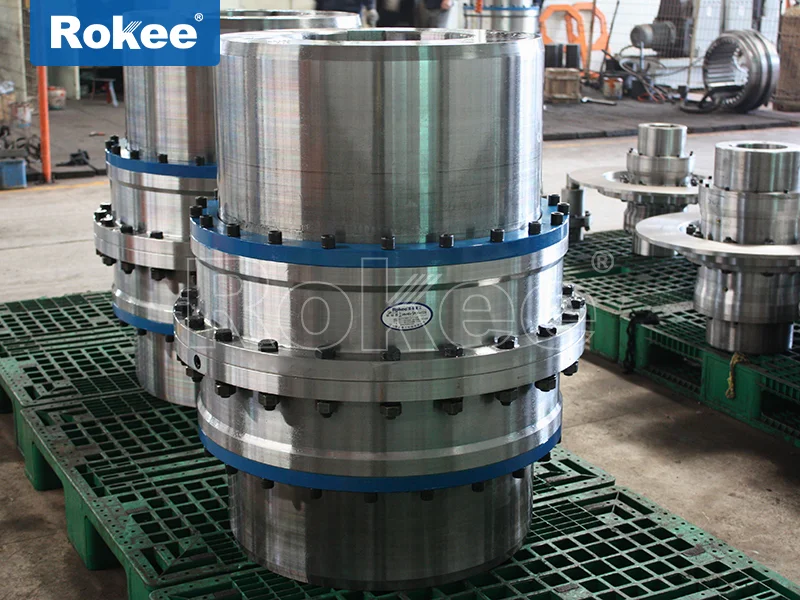
Curved Tooth Flexible Coupling
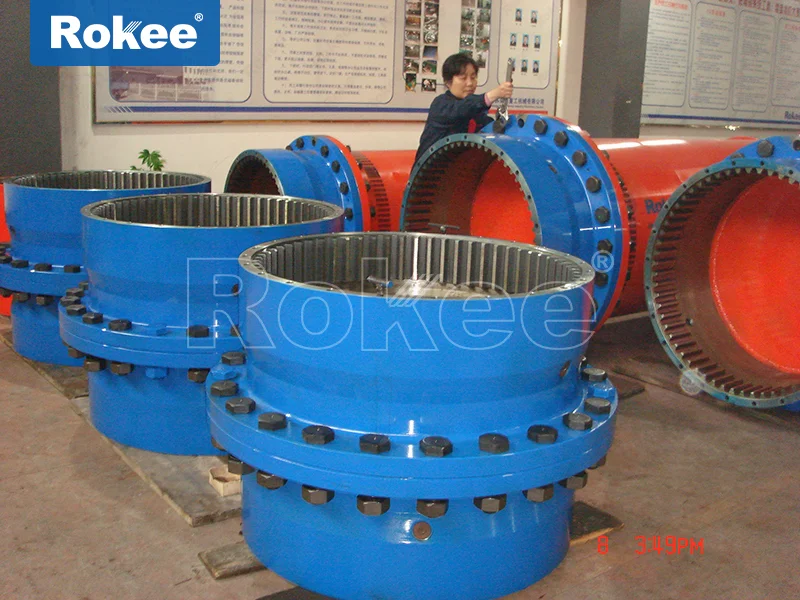
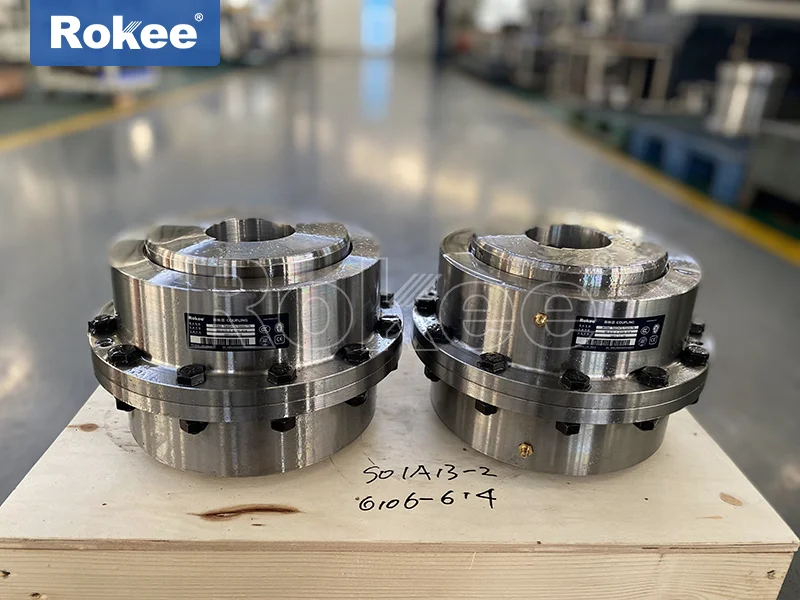
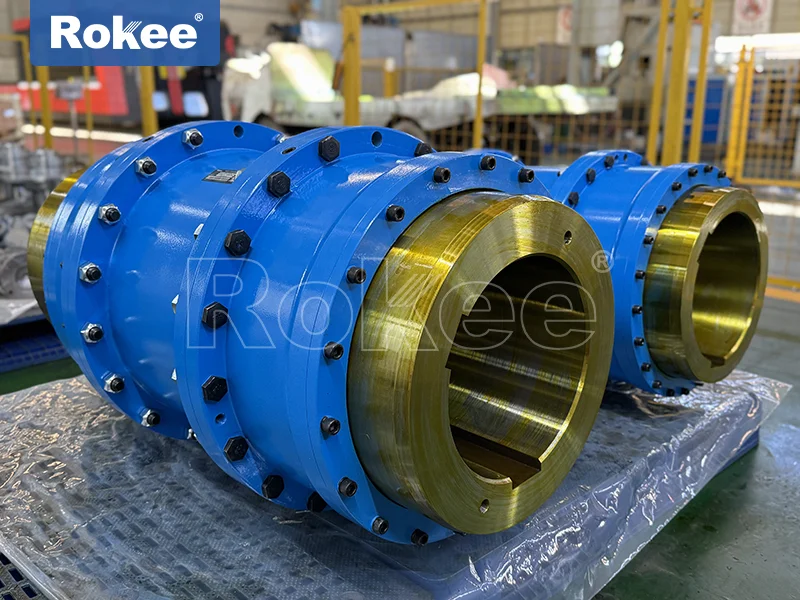
Curved tooth flexible coupling is a high-performance mechanical transmission component designed to connect two rotating shafts and transmit torque while compensating for various shaft misalignments in mechanical operation. Differing from traditional straight-tooth and rigid coupling structures, its core innovation lies in the unique curved tooth profile of the meshing gears, which forms a flexible and uniform contact state during power transmission. This mechanical structure effectively addresses common operational problems such as shaft position deviation, vibration impact, and local stress concentration in rotating equipment. It integrates the advantages of high torque transmission efficiency, strong misalignment adaptability, and excellent operational stability, making it widely applicable in various heavy-duty, high-speed, and continuous operating mechanical systems. As a key connecting part of mechanical transmission systems, it not only ensures stable power output of equipment but also reduces wear and tear of supporting components, extending the overall service life of mechanical equipment and lowering long-term operational failure risks.
The core operational principle of curved tooth coupling centers on flexible meshing and adaptive misalignment compensation, which fundamentally optimizes the power transmission mode of traditional gear couplings. The structure mainly consists of two toothed hubs with curved external teeth and an outer sleeve with internal teeth, achieving positive-locking torque transmission through precise gear meshing. During equipment operation, the driving shaft drives the hub to rotate, and the curved tooth surfaces gradually transfer rotational power and torque to the driven shaft via the outer sleeve. Thanks to the arc-shaped tooth design, the meshing contact point always stays in the middle area of the tooth surface rather than the edge, even when angular, radial, or axial misalignment occurs between the two connected shafts. This structural feature completely avoids the edge extrusion and sharp local friction common in straight-tooth couplings. The flexible migration of meshing positions enables the coupling to automatically offset comprehensive shaft deviations generated during high-speed operation, without inducing additional bending stress or shear stress on shafts and gears, thus maintaining continuous and stable power transmission in dynamic working environments.
The unique curved tooth profile endows the coupling with exceptional load-bearing capacity and uniform force distribution performance, laying a solid foundation for its reliable operation under heavy-load working conditions. Different from flat straight teeth that only form linear contact during meshing, curved teeth form a wider curved surface contact area when engaged, allowing the transmission load to be evenly dispersed on multiple gear teeth instead of concentrating on individual tooth surfaces. This uniform load distribution mode greatly reduces the unit pressure of the tooth surface and eliminates local overstress and excessive wear of single teeth. Combined with professional tooth surface hardening treatment and high-strength alloy material configuration, the coupling exhibits outstanding fatigue resistance and impact resistance during long-term cyclic operation. It can stably withstand instantaneous load fluctuations, frequent start-stop movements, and forward-reverse rotation switching that are common in industrial production. Even under long-duration heavy-load operation, the tooth surface can maintain intact meshing state, effectively avoiding tooth deformation, abrasion damage, and transmission failure caused by uneven force, ensuring the durability and reliability of mechanical transmission systems.
One of the most prominent advantages of curved tooth flexible coupling is its excellent multi-directional misalignment compensation capability, which solves the operational pain points of rigid couplings and ordinary flexible couplings in complex working conditions. In actual mechanical operation, complete coaxiality of two rotating shafts is almost impossible to maintain due to installation errors, equipment vibration, base settlement, and thermal expansion and contraction of components. Rigid couplings cannot tolerate any shaft deviation, which will transfer misalignment stress to shafts, bearings, and gearboxes, accelerating component wear and causing equipment vibration and noise. In contrast, the curved tooth structure of the flexible coupling can adaptively compensate for three main types of shaft misalignment, including angular deflection, radial offset, and axial displacement. Its allowable misalignment range is far larger than that of conventional straight-tooth couplings, and it can flexibly adjust the meshing state according to real-time shaft position changes. This compensation function isolates abnormal stress generated by shaft deviation, protects core transmission components from damage, and effectively reduces equipment vibration and operating noise to improve the overall operational stability of mechanical systems.
Curved tooth flexible coupling shows remarkable adaptability in high-speed and dynamic working environments, making it suitable for various high-precision and continuous-operation mechanical scenarios. In high-speed rotating equipment, tiny tooth surface friction and unbalanced force will cause huge operational losses and equipment vibration, while the optimized curved tooth meshing structure greatly reduces meshing friction resistance. The rolling friction formed during tooth surface meshing replaces the sliding friction of traditional structures, effectively lowering friction heat generation and tooth surface abrasion during high-speed operation. This characteristic enables the coupling to maintain efficient and stable transmission state for a long time without thermal deformation or transmission efficiency decline caused by high-temperature accumulation. Meanwhile, its flexible structural characteristics can effectively buffer instantaneous impact force generated by sudden load changes, avoid rigid collision between transmission components, and stabilize the torque output of high-speed equipment. Whether in continuous industrial production lines or high-precision rotating mechanical systems, it can suppress operational vibration, ensure consistent transmission accuracy, and avoid equipment jitter and power fluctuation caused by dynamic load changes.
In terms of structural design and maintenance performance, curved tooth flexible coupling adopts a mature modular assembly structure, which greatly simplifies equipment installation, daily inspection, and later maintenance work. The overall structure is compact and reasonable with a neat layout, which saves installation space and is compatible with various types of mechanical shaft connection structures. All core components are independently processed and molded with high assembly precision and good interchangeability of parts. During installation, workers can quickly complete shaft alignment and assembly fixation without complex debugging processes, effectively improving equipment installation efficiency. In daily operation, the coupling’s stable meshing state and wear-resistant tooth surface greatly reduce the frequency of daily failures. When individual components are worn or damaged after long-term use, the modular design allows targeted replacement of damaged parts instead of overall replacement, which significantly reduces maintenance difficulty and operational cost. In addition, the closed meshing structure can effectively block external dust, impurities, and moisture, reducing the probability of tooth surface corrosion and abrasive wear, further lowering daily maintenance workload and improving the long-term operational economy of mechanical equipment.
Compared with other types of flexible couplings on the market, curved tooth flexible coupling has comprehensive performance advantages in transmission accuracy, service life, and working condition adaptability. Elastic sleeve couplings and spring couplings rely on elastic deformation for flexible compensation, which are prone to elastic fatigue and aging after long-term use, leading to reduced compensation performance and short service life, and cannot adapt to heavy-load working conditions. Ordinary straight-tooth gear couplings have limited misalignment tolerance and serious edge wear, which is easy to cause transmission jitter and component damage in long-term operation. In comparison, curved tooth flexible coupling combines high rigid transmission performance and flexible compensation capability, achieving zero clearance torque transmission while realizing multi-directional misalignment adaptation. It has no elastic component aging problem, and the optimized tooth surface structure ensures long-term stable transmission accuracy and low wear loss. Whether for heavy industrial machinery, high-speed precision equipment, or long-term continuous operation devices, it can maintain stable working performance, showing higher comprehensive applicability and longer service life than traditional coupling products.
With the continuous upgrading of modern industrial mechanical equipment towards high efficiency, high stability, and long service life, the application value and market prospect of curved tooth flexible coupling are becoming increasingly prominent. Modern industrial production puts forward higher requirements for the stability, durability, and low failure rate of mechanical transmission systems, and traditional coupling products can no longer meet the complex and diverse working condition needs. Relying on its excellent load-bearing performance, reliable misalignment compensation capability, low wear and low vibration characteristics, and convenient maintenance advantages, curved tooth flexible coupling has become an indispensable core component in mechanical transmission systems. It can effectively improve the overall operational efficiency of equipment, reduce unexpected downtime and maintenance costs caused by transmission component failures, and provide stable power transmission guarantee for various industrial mechanical equipment. With the continuous optimization of material technology and structural design, the performance of curved tooth flexible coupling will be further improved, and its application scope in various high-end mechanical fields will continue to expand.