Universal Cross Joint Couplings
In the realm of mechanical power transmission, the universal cross joint coupling stands as one of the most fundamental and versatile components, serving as a critical bridge between driving and driven shafts that are not aligned along a single straight axis. Unlike rigid couplings that demand perfect coaxial alignment between connected shafts, this specialized coupling is engineered to accommodate angular, axial, and even minor radial misalignments while sustaining consistent torque transmission and rotational motion. Its widespread adoption across countless industrial sectors stems from its robust structural design, exceptional mechanical performance, and adaptable configurations, making it indispensable in machinery where shaft displacement is inevitable due to manufacturing tolerances, operational vibrations, thermal expansion, or dynamic movement.
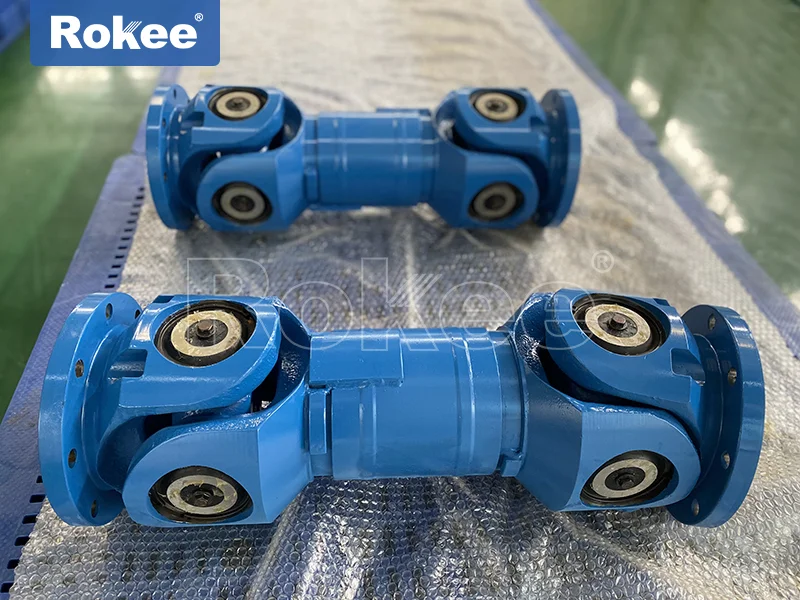
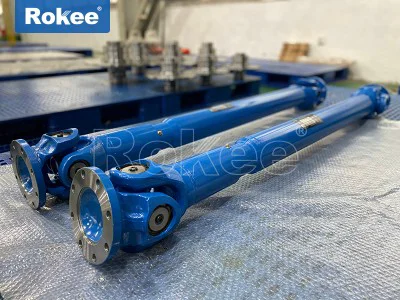
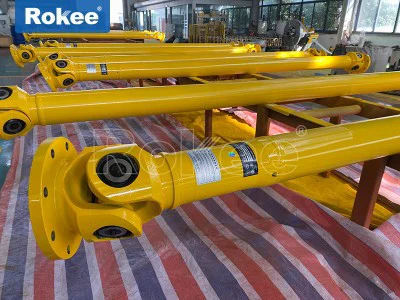
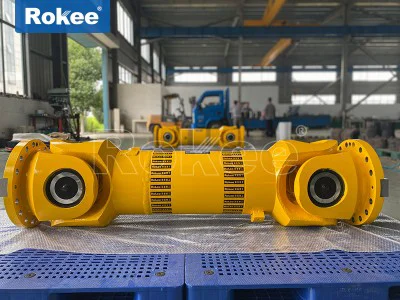
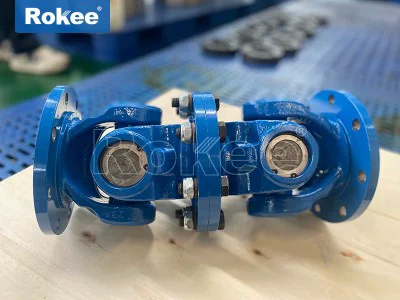
At its core, the universal cross joint coupling features a relatively simple yet highly efficient structural composition, with every component tailored to withstand high mechanical stresses and minimize frictional losses during operation. The primary constituents include two yoke assemblies, a central cross-shaped spider (commonly referred to as the cross shaft), and four sets of precision bearing units that integrate the spider with the yokes. Each yoke is designed with a forked end, typically forged or machined from high-strength alloy materials to resist bending and torsional forces, and is fitted with a mounting interface—such as a flange, spline, or keyway—to connect securely to the driving and driven shafts. The central cross shaft is the heart of the coupling, featuring four perpendicular journal ends that fit precisely into the bearing housings within each yoke fork; this orthogonal arrangement enables the two yokes to pivot freely relative to one another, creating the angular flexibility that defines the universal joint’s functionality. The bearing units, most commonly needle roller bearings in standard industrial designs, are mounted on each journal of the cross shaft, enclosed within bearing caps or sleeves to retain lubrication and prevent contamination from dust, debris, or moisture in harsh working environments. Some heavy-duty variants incorporate sealed bearing assemblies with enhanced dust shields and oil seals to prolong service life, while precision-focused models use low-friction bearing coatings to reduce heat generation and wear under high-speed operation. Notably, the entire structure is engineered to distribute torsional and bending loads evenly across the cross shaft journals and bearing surfaces, eliminating localized stress concentrations that could lead to premature fatigue or failure. The compact nature of this design also allows for installation in confined spaces, a key advantage in machinery with limited layout flexibility, and the modular construction simplifies disassembly for maintenance, lubrication, or component replacement without requiring full system dismounting.
The performance characteristics of the universal cross joint coupling are directly shaped by its structural design, delivering a unique blend of load-bearing capacity, misalignment compensation, transmission efficiency, and operational durability that sets it apart from other coupling types. Foremost among its performance traits is its exceptional angular misalignment tolerance, with standard models capable of accommodating shaft angles ranging from 5 degrees up to 25 degrees, and specialized heavy-duty or custom-engineered variants supporting angles as high as 45 degrees between the driving and driven shafts. This angular adaptability ensures uninterrupted power transmission even when shafts shift position during operation, a critical capability in mobile machinery, vibrating equipment, and systems subject to thermal deformation. Beyond angular compensation, many universal cross joint couplings feature integrated spline mechanisms that enable axial displacement compensation, typically ranging from ±10mm to ±50mm, allowing shafts to expand or contract axially without imposing damaging axial loads on the coupling or connected machinery. In terms of torque transmission, these couplings exhibit outstanding load-bearing capabilities, with designs scaled to handle everything from light-duty, low-torque applications in small precision equipment to heavy-duty, high-torque scenarios in large industrial machinery, with torque capacities tailored to the material strength, cross shaft dimensions, and bearing specifications. Transmission efficiency is another standout performance metric, with well-maintained universal cross joint couplings achieving efficiency rates of 98% to 99.8% under optimal operating conditions, minimizing energy loss through friction and ensuring that nearly all input power is transferred to the driven load. This high efficiency is sustained across a broad speed range, with standard models operating reliably at rotational speeds between 1000 and 5000 RPM, and precision-balanced variants suitable for high-speed applications exceeding 10,000 RPM when paired with minimal shaft misalignment angles.
Operational durability and resilience further define the coupling’s performance profile, as it is built to withstand harsh environmental conditions including extreme temperatures, high humidity, corrosive atmospheres, and heavy shock loads. The use of hardened alloy steels for the cross shaft and yokes, often treated with carburizing, quenching, or tempering processes, enhances surface hardness, wear resistance, and fatigue strength, enabling the coupling to endure repeated cyclic loading without cracking or deformation. Sealed bearing designs prevent lubricant leakage and external contaminants from infiltrating the bearing surfaces, reducing friction-induced wear and extending the interval between maintenance cycles. However, it is important to note that performance can be influenced by operating parameters: at larger misalignment angles, rotational speed must be moderated to avoid excessive vibration, dynamic imbalance, and accelerated bearing wear, as the combination of high angles and high RPM can create harmonic oscillations that compromise system stability. Additionally, consistent lubrication is paramount to maintaining peak performance; inadequate or degraded lubricant leads to increased friction, heat buildup, and premature bearing failure, underscoring the need for routine maintenance practices tailored to the operating environment and duty cycle.
Universal cross joint couplings are categorized into distinct types based on multiple criteria, including structural configuration, load-bearing capacity, operational purpose, and design features, each optimized to address specific application requirements and operational challenges. The most fundamental classification is based on structural design, with the single cross joint universal coupling (also known as the single Cardan joint) being the most common and widely used variant. This type consists of a single cross shaft assembly connecting two yokes, offering straightforward angular compensation and suitable for general-purpose applications where moderate misalignment and steady torque transmission are required. While efficient, single cross joints exhibit minor non-uniform rotational velocity at significant shaft angles, leading to slight speed fluctuations that are acceptable in many industrial settings but not in high-precision systems. To mitigate this velocity fluctuation, double cross joint universal couplings (double Cardan joints) are employed, featuring two single cross joint assemblies linked by an intermediate shaft or yoke. This dual-joint design cancels out the velocity irregularities of individual joints, delivering near-uniform rotational motion even at larger misalignment angles, making it ideal for applications requiring smoother power delivery and reduced vibration.
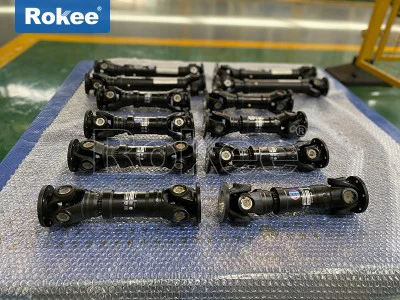
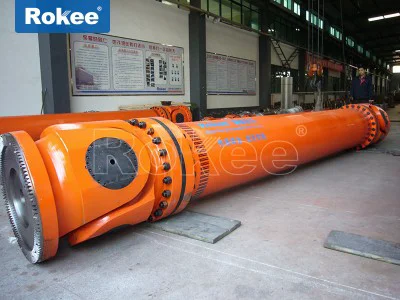
Classification by load-bearing capacity divides these couplings into light-duty, medium-duty, and heavy-duty variants, each differentiated by material thickness, component dimensions, and bearing specifications. Light-duty universal cross joint couplings feature compact dimensions, smaller cross shafts, and lightweight yokes, designed for low-torque, high-speed applications such as small power tools, precision instruments, and office machinery where space is limited and load demands are minimal. Medium-duty models strike a balance between size and strength, utilizing medium-alloy steel components and standard needle roller bearings to handle moderate torque loads and operational stresses, suitable for conveyor systems, agricultural equipment, and general industrial machinery. Heavy-duty universal cross joint couplings are engineered for extreme torque transmission and harsh operating conditions, constructed with thick, forged alloy steel yokes, oversized cross shafts, and reinforced heavy-duty bearings; these variants are built to resist shock loads, continuous heavy use, and extreme mechanical stresses, making them the go-to choice for large-scale industrial machinery and heavy equipment.
Additional classification is based on functional design features, including telescopic and non-telescopic variants, split yoke designs, and integrated damping configurations. Telescopic universal cross joint couplings incorporate a splined shaft section within the assembly, enabling adjustable axial length to accommodate variable shaft distances and simplify installation in applications where shaft alignment may shift over time. Non-telescopic models feature a fixed axial length, offering greater structural rigidity and higher torque capacity for applications with stable shaft positioning. Split yoke designs feature a two-piece yoke construction that allows for easy installation and removal without disconnecting the entire drive system, reducing downtime during maintenance and component replacement. Some specialized variants also include elastic damping elements integrated into the yoke or cross shaft assembly, designed to absorb operational vibrations and shock loads, protecting connected machinery from excessive stress and extending the overall service life of the transmission system. Beyond these categories, custom-engineered universal cross joint couplings are available to meet unique operational demands, such as corrosion-resistant coatings for marine or chemical environments, high-temperature materials for furnace or kiln equipment, and miniaturized designs for micro-mechanical systems.
The versatility of the universal cross joint coupling is reflected in its extensive range of applications across nearly every industrial sector, where reliable torque transmission and misalignment compensation are non-negotiable. In the heavy industrial sector, including metallurgy, mining, and steel production, heavy-duty universal cross joint couplings are integral to rolling mills, continuous casting machines, crushers, and conveyor systems, where they transmit extremely high torque loads while accommodating the significant shaft misalignment caused by heavy machinery vibration and thermal expansion. These couplings withstand the harsh, dust-filled environments of industrial plants, delivering consistent performance under continuous heavy-duty operation and reducing downtime associated with coupling failure. In construction and earthmoving machinery, such as excavators, cranes, bulldozers, and loaders, universal cross joint couplings play a vital role in drive shafts and hydraulic pump transmissions, adapting to the dynamic shaft movements inherent in mobile equipment and rugged terrain. Their ability to handle shock loads and angular shifts ensures reliable power delivery even under the extreme operating conditions of construction sites, where machinery is subjected to constant jolting and positional changes.
The agricultural industry relies heavily on universal cross joint couplings for a wide array of farming equipment, including tractors, harvesters, seeders, and tillers. These couplings connect power take-off (PTO) shafts to various agricultural implements, accommodating the uneven terrain and variable shaft angles encountered in field operations, while transmitting the torque needed to drive harvesting, tilling, and planting mechanisms. Their robust design resists exposure to dirt, moisture, and agricultural debris, ensuring durability in outdoor farming environments with minimal maintenance requirements. In the transportation and automotive sector, universal cross joint couplings are essential components of drive shafts, steering systems, and transmission assemblies, enabling smooth power transfer between engine and wheels even as the suspension system shifts and wheels move vertically. Double cross joint designs are particularly prevalent here, delivering uniform rotational motion to reduce vibration and enhance ride quality, while compact variants fit within the constrained space of vehicle chassis and drivetrain assemblies.
In precision manufacturing and machinery, including CNC machine tools, robotic systems, and automated production lines, light and medium-duty universal cross joint couplings provide precise torque transmission with minimal backlash, supporting the high accuracy demands of precision machining and automated assembly. Their compact size and low-friction operation make them suitable for high-speed precision equipment, where even minor velocity fluctuations or vibration could compromise product quality. The petrochemical and energy sectors utilize these couplings in pumps, compressors, generators, and wind turbine drive systems, where they operate reliably in corrosive, high-temperature, and high-pressure environments, often with sealed, maintenance-free designs to reduce the need for frequent servicing in hard-to-access locations. Additional applications span marine equipment, packaging machinery, textile manufacturing, printing presses, and aerospace support systems, highlighting the universal cross joint coupling’s ability to adapt to diverse operational demands, from low-speed, high-torque heavy machinery to high-speed, precision-driven automated systems.
As industrial technology continues to advance, the design and performance of universal cross joint couplings evolve in tandem, with ongoing innovations in material science, bearing technology, and manufacturing processes enhancing their durability, efficiency, and adaptability. Modern manufacturing techniques, such as precision forging, CNC machining, and advanced heat treatment, ensure tighter tolerances and more consistent component quality, while high-performance alloy materials and specialized coatings further boost wear resistance and load-bearing capacity. The integration of maintenance-free bearing designs and self-lubricating materials addresses the need for reduced upkeep in remote or automated systems, aligning with the industry shift toward more efficient, low-maintenance machinery. Despite the emergence of advanced transmission components, the universal cross joint coupling remains a cornerstone of mechanical power transmission due to its unrivaled combination of simplicity, reliability, and versatility. Its ability to solve the universal engineering challenge of shaft misalignment ensures that it will continue to be a vital component across global industries, supporting the operation of countless mechanical systems and driving progress in industrial automation, heavy machinery, and precision manufacturing alike. Understanding the structural nuances, performance capabilities, classification distinctions, and application-specific advantages of the universal cross joint coupling is essential for engineers, maintenance professionals, and equipment designers seeking to optimize transmission system performance, enhance operational reliability, and extend the service life of critical machinery.