Universal Shafts
In the realm of mechanical power transmission, the universal shaft stands as an indispensable component, engineered to bridge the gap between misaligned rotating shafts and transfer torque and rotational motion efficiently across varied operational conditions. Unlike rigid couplings that demand perfect coaxial alignment between driving and driven shafts, universal shafts offer exceptional flexibility, accommodating angular, axial, and even minor radial misalignments that arise from manufacturing tolerances, installation errors, thermal expansion, dynamic load shifts, or mechanical vibration during operation. This core adaptability has cemented their role across countless industrial, automotive, aerospace, marine, and heavy machinery systems, where seamless power transfer and operational reliability are non-negotiable.
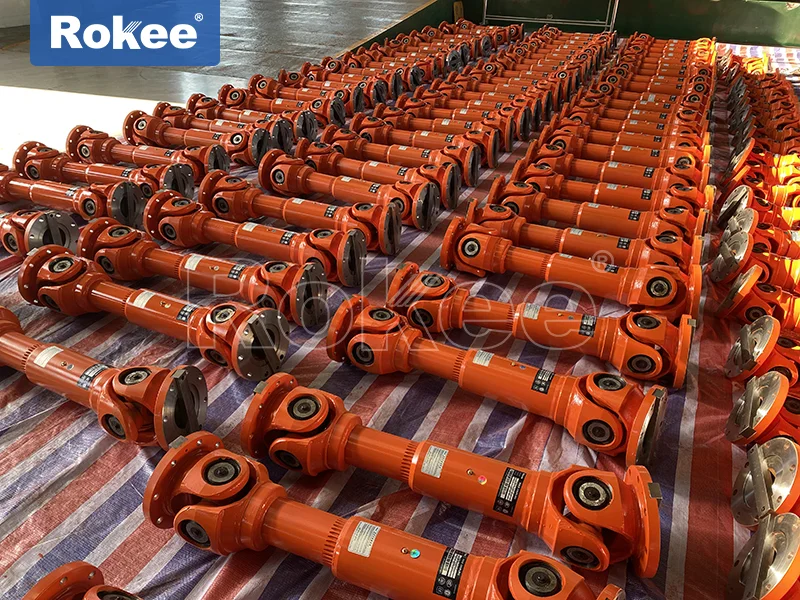
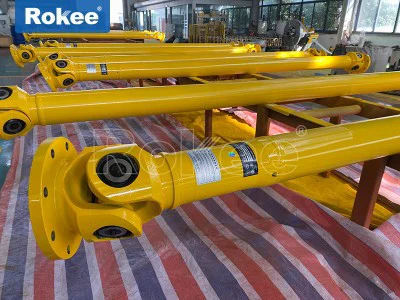
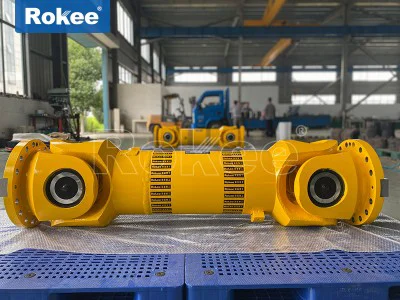
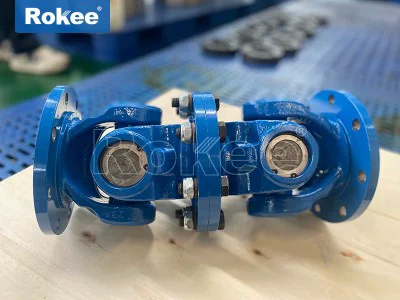
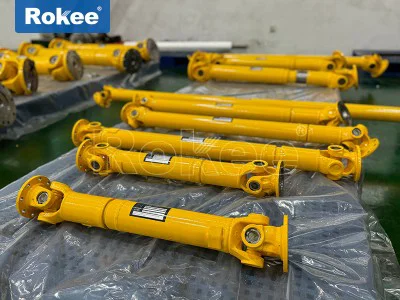
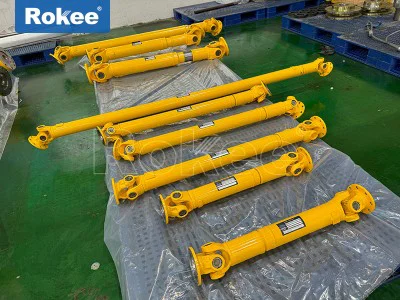
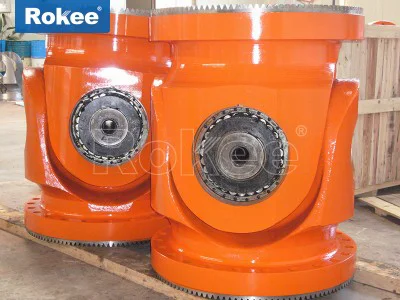
At its core, the standard universal shaft features a streamlined yet robust mechanical structure, optimized for strength, flexibility, and friction reduction. The most prevalent design, commonly referred to as the cross-shaft or Cardan universal shaft, consists of three primary integral components: two yoke assemblies (also termed fork joints), a central cross-shaped spider, and precision bearing units. The yoke assemblies serve as the connection points between the universal shaft and the driving and driven shafts, typically crafted with precision-machined mounting interfaces to ensure secure, backlash-free attachment. The cross-shaped spider, forged from high-strength alloy steel for enhanced durability and load resistance, features four perpendicular trunnions that fit seamlessly into corresponding bores within the yoke assemblies, forming a pivotal articulation point. Bearing units, most commonly needle roller bearings for their compact profile and high load-bearing capacity, are fitted between the spider trunnions and yoke bores to minimize rotational friction, enable smooth angular articulation, and distribute mechanical stress evenly across the joint. Many universal shafts also incorporate integrated sealing elements to shield internal bearings and moving parts from contaminants such as dust, moisture, debris, and lubricant leakage, preserving operational integrity and extending service life in harsh working environments. Additionally, telescopic universal shaft designs feature a splined shaft and sleeve assembly, enabling axial length adjustment to compensate for dimensional changes caused by thermal expansion, mechanical movement, or installation variances, further expanding their operational versatility.
The performance of a universal shaft is defined by a set of interconnected technical parameters that dictate its suitability for specific applications, with each attribute tailored to balance functionality, durability, and efficiency. Foremost among these is torque transmission capacity, which refers to the maximum rotational force the shaft can transfer without structural deformation, wear, or catastrophic failure. This parameter is heavily influenced by material composition, component dimensions, cross-spider design, and bearing quality, with heavy-duty variants engineered to handle extreme torque loads for large-scale industrial machinery, and compact models optimized for low-to-medium torque requirements in precision equipment. Angular misalignment tolerance is another defining performance trait, with standard universal shafts capable of accommodating angular offsets ranging from 5 degrees to 45 degrees between connected shafts, depending on their structural design; specialized models can handle even greater angles for unique operational scenarios. Operating speed range is equally critical, as high-speed applications demand dynamically balanced components to minimize vibration, centrifugal stress, and premature wear, while low-speed, heavy-load setups prioritize raw torque capacity over high-speed stability. Transmission efficiency, a measure of how much input power is successfully transferred to the driven shaft with minimal frictional loss, typically ranges from 98% to 99.8% for well-designed universal shafts, making them highly energy-efficient for power-critical systems. Durability and fatigue resistance round out core performance metrics, with robust material selection and precision manufacturing ensuring the shaft can withstand repeated cyclic loading, shock impacts, and prolonged operational stress without compromising performance, reducing maintenance needs and downtime in continuous-use applications.
Universal shafts are categorized into distinct types based on their structural configuration, operational principles, and performance specialization, each engineered to address unique transmission challenges and operational demands. The most widely adopted category is the cross-shaft (Cardan/Hooke’s) universal shaft, valued for its simplistic, rugged design, high load-bearing capacity, and ease of maintenance. This type operates via the articulation of the cross-spider within the yoke assemblies, enabling reliable torque transfer across moderate angular misalignments; however, single cross-shaft units may exhibit minor rotational speed fluctuations at larger angles, a limitation mitigated by using paired units connected via an intermediate shaft to achieve near-constant velocity transmission. Cross-shaft universal shafts dominate heavy-duty, low-to-medium speed applications, where durability and cost-effectiveness take precedence over ultra-smooth high-speed rotation. A second major category is the constant velocity (CV) universal shaft, featuring a precision-engineered ball-cage or ball-fork design that eliminates rotational speed variations entirely, ensuring synchronous rotation between driving and driven shafts regardless of angular offset. CV universal shafts consist of a spherical outer race, a star-shaped inner race, a retaining cage, and hardened steel torque-transmitting balls, with all ball centers positioned on the bisector of the shaft angle to maintain constant velocity. This design offers exceptional smoothness, high operating speeds, and wider angular tolerance (up to 75 degrees in some variants), making it ideal for precision-driven, high-speed applications where vibration and speed inconsistency would compromise performance. While more complex to manufacture and requiring stricter lubrication and sealing, their superior dynamic performance justifies their use in demanding systems. Additional specialized variants include three-pin universal shafts, optimized for large angular misalignments and axial movement; convex block universal shafts, engineered to absorb heavy shock loads; and compact miniature universal shafts, designed for small-scale precision machinery with limited installation space. Each type retains the core function of misalignment compensation and torque transfer but is fine-tuned to excel in specific operational niches, ensuring a tailored solution for nearly every mechanical transmission need.
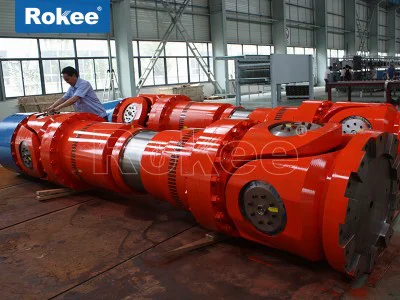
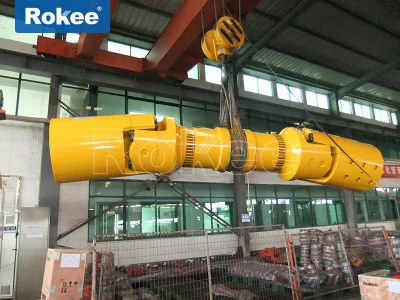
The versatility of universal shafts translates to an extensive range of applications across diverse sectors, where their ability to navigate misalignment and deliver reliable power transfer solves critical mechanical challenges. In the automotive industry, universal shafts are integral to both passenger and commercial vehicles: cross-shaft variants are widely used in rear-wheel-drive and four-wheel-drive drivetrains, connecting the transmission to the differential and accommodating suspension movement-induced shaft misalignment, while CV universal shafts are staples in front-wheel-drive systems, delivering smooth, constant velocity power to the drive wheels even during steering maneuvers and suspension travel. They also feature in automotive steering assemblies, transmitting rotational motion from the steering wheel to the steering gear despite angular offsets between components. Heavy industrial machinery relies heavily on heavy-duty cross-shaft universal shafts, particularly in steel rolling mills, mining equipment, crushing machinery, and large conveyor systems, where they transfer extreme torque loads across misaligned shafts in high-stress, dusty, and high-vibration environments. These shafts are built to withstand continuous heavy loading and shock impacts, ensuring uninterrupted operation in industrial production lines that operate around the clock. In precision manufacturing and machining, CV universal shafts and compact precision variants are employed in machine tools, robotic arms, packaging machinery, and textile equipment, where smooth, vibration-free power transmission and precise motion control are essential to maintain product quality and manufacturing accuracy; their constant velocity design eliminates rotational irregularities that could cause machining errors or production defects.
Aerospace and defense systems utilize lightweight, high-performance universal shafts, engineered from advanced alloy materials to meet stringent weight and reliability standards. These shafts are integrated into flight control systems, landing gear mechanisms, and engine accessory drives, where they must operate flawlessly under extreme temperature fluctuations, high altitudes, and dynamic aerodynamic loads, delivering consistent power transfer while minimizing weight to enhance fuel efficiency and vehicle performance. Marine applications also benefit immensely from universal shafts, particularly in vessel propulsion systems, where they connect the engine to the propeller shaft, accommodating angular and axial misalignments caused by hull flexing, wave-induced movement, and thermal expansion. Corrosion-resistant universal shaft variants, crafted from stainless steel or coated alloys, are deployed in saltwater marine environments to resist degradation and maintain performance over prolonged exposure to harsh marine conditions. Beyond these core sectors, universal shafts play vital roles in renewable energy systems, such as wind turbines, where they transfer torque from the rotor assembly to the gearbox despite misalignments caused by wind loading and thermal changes; in agricultural machinery, including tractors, harvesters, and tillers, where they navigate uneven terrain-induced shaft shifts and transmit power to implement attachments; and in medical diagnostic and surgical equipment, where compact, precision universal shafts enable smooth, controlled motion in devices requiring high accuracy and sterile, reliable operation.
The enduring relevance of universal shafts stems from their perfect synergy of structural simplicity, adaptive performance, and broad applicability, making them a cornerstone of modern mechanical engineering. As material science and manufacturing technologies continue to advance, universal shaft designs evolve to meet increasingly demanding operational requirements: enhanced alloy materials boost torque capacity and fatigue resistance, precision machining improves dynamic balance for high-speed applications, and advanced sealing and lubrication systems extend service life in extreme environments. Despite technological progress in power transmission components, the fundamental utility of universal shafts—their ability to bridge misaligned shafts and transfer power reliably—remains unmatched, ensuring their continued deployment across existing and emerging mechanical systems. Whether in heavy industrial machinery, high-performance automotive systems, delicate precision equipment, or cutting-edge aerospace technology, the universal shaft remains a quiet yet critical workhorse, enabling seamless mechanical operation and power transfer in countless applications where rigid couplings simply cannot function. By understanding their structural nuances, performance capabilities, and specialized classifications, engineers and designers can select and implement the optimal universal shaft variant for each unique application, maximizing operational efficiency, reliability, and longevity across all mechanical power transmission systems.
In summation, the universal shaft is far more than a simple connecting component; it is a precision-engineered solution that addresses the inherent challenges of misaligned shaft power transmission, blending robust construction with adaptive flexibility to deliver consistent performance across diverse conditions. Its varied structural types cater to every conceivable operational demand, from heavy-duty industrial torque transfer to high-speed precision motion control, while its widespread applications span nearly every sector of modern engineering and manufacturing. As mechanical systems grow more complex and operational demands more rigorous, the universal shaft will continue to evolve, retaining its status as an essential element in efficient, reliable power transmission. The careful consideration of structural design, performance metrics, and application-specific requirements ensures that universal shafts remain a foundational component, driving functionality and efficiency in machinery and systems that shape daily life and industrial progress worldwide, without reliance on proprietary branding, regulatory certifications, or commercial pricing to define their inherent value and technical merit.