Cardan Shaft Couplings
In the realm of mechanical power transmission, the Cardan shaft coupling stands as a pivotal and versatile component, engineered to bridge the gap between misaligned rotating shafts while efficiently transferring torque and rotational motion. Unlike rigid couplings that demand perfect shaft alignment, this specialized coupling accommodates angular, radial, and axial deviations between driving and driven shafts, addressing common challenges in industrial machinery such as installation errors, thermal expansion, operational vibration, and dynamic displacement. Its unique articulated design enables reliable power delivery even when shaft axes intersect at varying angles, making it indispensable across countless industrial sectors.

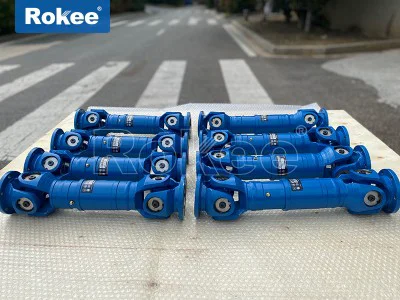
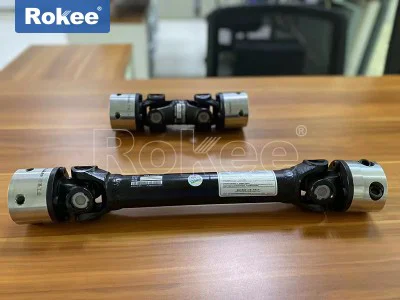
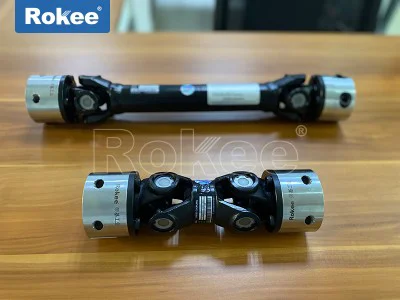
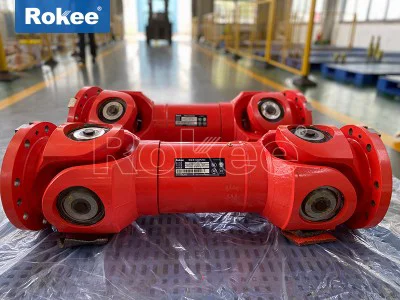
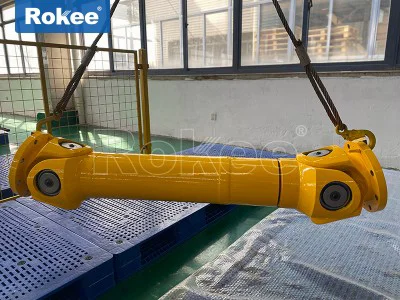
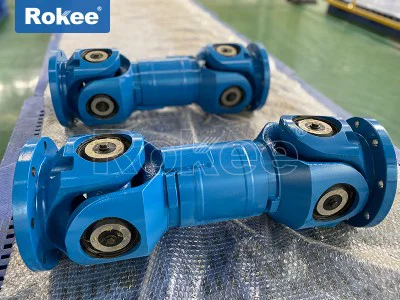
At its core, the fundamental structure of a standard Cardan shaft coupling is defined by a set of precision-machined components that work in tandem to enable flexible torque transmission. The most prevalent variant, the cross-type Cardan shaft coupling, consists of two key fork-shaped yokes, a central cross shaft (also referred to as a spider), and integrated bearing assemblies. The yokes serve as the connection points between the coupling and the driving and driven shafts, typically secured via flanges, splines, or keyways to ensure a firm, slip-free grip. The cross shaft, the heart of the coupling, features four perpendicular journal ends that fit into corresponding bearing housings within the yokes, creating a universal joint that permits multi-directional articulation. Bearing configurations vary based on operational demands, with needle roller bearings being the most common choice for their compact size, high load-bearing capacity, and low friction; sliding bearings may also be utilized in heavy-duty, low-speed applications where impact resistance is prioritized over high-speed efficiency. Many advanced Cardan shaft couplings incorporate a telescopic intermediate shaft, designed to compensate for axial displacement between the connected shafts. This telescopic feature, often constructed with splined or polygonal profiles, allows the coupling to adjust its length dynamically during operation without compromising torque transmission integrity. The entire structure is typically crafted from high-strength alloy steel or carbon steel, selected for its exceptional tensile strength, toughness, and resistance to fatigue, ensuring the coupling can withstand repeated bending, torsional stress, and shock loads encountered in real-world operation. Surface treatments such as quenching, tempering, and carburizing are commonly applied to enhance wear resistance, hardness, and overall durability, prolonging the service life of critical components like the cross shaft and bearing surfaces.
The performance characteristics of Cardan shaft couplings are tailored to meet the rigorous demands of diverse mechanical systems, with key attributes that set them apart from other transmission components. Foremost among these is their exceptional misalignment compensation capability, which allows for angular deflections typically ranging from 5 degrees to 45 degrees, depending on the specific design and type. Single Cardan joints can accommodate moderate angular misalignment, while double Cardan assemblies eliminate rotational speed fluctuations inherent in single joints, enabling smooth power transfer even at larger deflection angles. This flexibility not only simplifies machinery installation by reducing the need for ultra-precise shaft alignment but also minimizes stress on connected equipment, such as motors, gearboxes, and pumps, thereby extending the operational lifespan of entire drive systems. Torque transmission efficiency is another standout performance metric, with well-designed Cardan shaft couplings boasting efficiency rates of up to 98% under optimal operating conditions. The robust structural design ensures minimal power loss even when transmitting high torque loads, making them suitable for both light-duty precision equipment and heavy-duty industrial machinery. Dynamic stability is a critical consideration, with balanced designs reducing vibration and noise during operation; high-precision machining and dynamic balancing processes further refine performance, allowing the couplings to operate reliably at moderate to high rotational speeds without compromising smoothness. Additionally, these couplings exhibit strong shock load absorption capacity, cushioning sudden spikes in torque or impact forces that occur during startup, shutdown, or sudden load changes, protecting delicate internal components of connected machinery. Maintenance requirements are relatively modest, with sealed bearing designs preventing contamination from dust, moisture, and debris, and lubrication intervals optimized for extended operational periods. Some variants feature maintenance-free bearing systems with pre-lubricated, sealed components, reducing downtime and operational costs for industrial users.
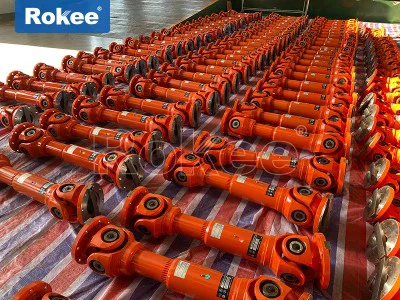
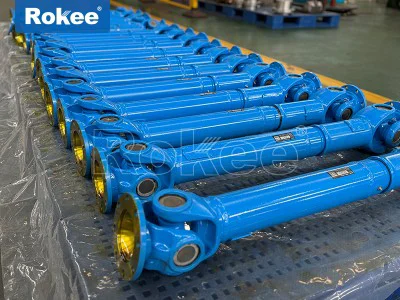
Cardan shaft couplings are categorized into distinct types based on structural design, operational capacity, and application-specific requirements, each engineered to excel in particular operating environments. The most widely used classification is based on joint configuration, with cross-type universal joint couplings, ball cage constant velocity couplings, and double Cardan shaft couplings representing the primary variants. Cross-type Cardan shaft couplings, the simplest and most cost-effective design, are characterized by their sturdy construction and high load-bearing capacity, making them ideal for heavy-duty, low-speed applications where large torque transmission is prioritized over high-speed smoothness. While they excel in handling extreme loads and moderate angular misalignment, single cross-type joints may produce minor speed fluctuations at higher operating angles, making double cross-type assemblies preferable for precision-driven systems. Ball cage constant velocity couplings, a more advanced variant, feature a spherical outer housing, an inner race, steel balls, and a retaining cage that guides the balls along precision-machined tracks. This design ensures constant velocity transmission regardless of shaft angle, eliminating rotational unevenness and vibration, making them perfect for high-speed, precision applications such as automotive drive systems and precision machine tools. Double Cardan shaft couplings, also known as universal joint shafts with intermediate shafts, combine two single Cardan joints with a central shaft, effectively canceling out angular velocity fluctuations and enabling larger misalignment compensation and longer-distance power transmission. This design is widely adopted in heavy industrial machinery where both flexibility and smooth operation are essential. Beyond joint configuration, Cardan shaft couplings are also classified by load capacity into light-duty, medium-duty, and heavy-duty variants. Light-duty models are compact and lightweight, designed for low-torque, high-speed applications such as small industrial tools, office machinery, and precision instruments. Medium-duty couplings strike a balance between load capacity and speed, suitable for general industrial equipment like conveyors, mixers, and centrifugal pumps. Heavy-duty Cardan shaft couplings feature reinforced structures, larger cross shafts, and thicker yokes, engineered to withstand extreme torque loads, harsh operating conditions, and heavy shock loads in sectors such as mining, metallurgy, and construction. Another classification criterion is the presence of a telescopic function: telescopic Cardan shaft couplings, equipped with splined or sliding intermediate shafts, adapt to axial displacement, while non-telescopic models offer greater rigidity and are ideal for fixed-distance shaft connections with minimal axial movement.
The adaptability and reliable performance of Cardan shaft couplings have led to their widespread adoption across nearly every corner of modern industry, with each application leveraging the component’s unique strengths to solve specific transmission challenges. In the automotive and transportation sector, these couplings play a vital role in drive train systems, connecting gearboxes to drive axles, facilitating power transfer between engine and wheels while accommodating suspension movement and wheel articulation. Constant velocity ball cage couplings are particularly prevalent here, ensuring smooth power delivery at varying steering angles and suspension travel, enhancing vehicle stability and ride comfort. In agricultural machinery, Cardan shaft couplings are integral to equipment such as tractors, harvesters, and tillers, transmitting power from the engine to attachments like plows, seeders, and mowers. Their ability to withstand dust, vibration, and sudden load changes makes them well-suited for the rugged, unstructured operating conditions of farmland, accommodating misalignment caused by uneven terrain and heavy implement loads. The construction and engineering machinery sector relies heavily on heavy-duty cross-type Cardan shaft couplings, which are used in excavators, cranes, bulldozers, and concrete mixers to transfer high torque between engines, hydraulic pumps, and working mechanisms. These couplings endure extreme shock loads, continuous vibration, and harsh environmental conditions, maintaining reliable performance in heavy construction operations. In the metallurgical and mining industry, where machinery operates under some of the most demanding conditions, heavy-duty Cardan shaft couplings are employed in rolling mills, crushers, conveyors, and ore processing equipment. Their robust construction resists wear, fatigue, and contamination from dust and debris, ensuring uninterrupted power transmission in high-load, high-temperature environments. Precision manufacturing and machine tool applications utilize high-precision ball cage and light-duty Cardan shaft couplings, which deliver smooth, constant velocity power transfer for CNC machines, lathes, milling machines, and grinding equipment. These couplings minimize vibration and backlash, preserving machining accuracy and surface finish quality, critical for producing high-precision industrial components. Additional industrial applications include paper manufacturing machinery, textile equipment, marine propulsion systems, pumping stations, and aerospace auxiliary systems. In marine settings, Cardan shaft couplings accommodate shaft misalignment caused by hull flexing and wave-induced movement, while in aerospace applications, they support reliable power transmission for auxiliary components under dynamic operating conditions. Across all these sectors, the core value of Cardan shaft couplings remains consistent: enabling efficient, reliable power transmission between misaligned shafts, enhancing machinery performance, reducing maintenance burdens, and improving the overall durability of mechanical drive systems.
As industrial technology continues to advance and machinery design evolves toward greater efficiency, flexibility, and durability, the role of Cardan shaft couplings becomes increasingly significant. Ongoing innovations in material science, bearing technology, and precision manufacturing are further enhancing the performance of these components, with developments such as high-strength lightweight alloys, maintenance-free sealed bearings, and optimized joint geometries expanding their operational capabilities. The ability to customize Cardan shaft couplings to meet specific application requirements—whether in terms of size, load capacity, misalignment range, or environmental resistance—ensures their continued relevance in an ever-expanding range of mechanical systems. From small-scale precision instruments to massive industrial heavy machinery, Cardan shaft couplings remain a cornerstone of modern power transmission, embodying the perfect balance of flexibility, strength, and efficiency. Their enduring popularity stems from their ability to solve a universal mechanical challenge—transmitting power reliably across misaligned shafts—with a design that is both simple and robust, adaptable and durable. In summary, the Cardan shaft coupling’s intricate structure, exceptional performance traits, diverse classifications, and extensive industrial applications solidify its status as an irreplaceable component in mechanical engineering, supporting the seamless operation of vital equipment across global industries.