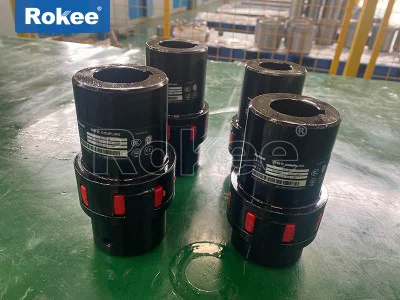
Star Flex Couplings
In the realm of mechanical power transmission, flexible couplings serve as indispensable components that bridge rotating shafts, mitigate operational stresses, and sustain the efficiency of diverse machinery systems. Among these, the Star Flex Coupling stands out as a widely adopted elastomeric jaw-type coupling, renowned for its balanced blend of simplicity, durability, and functional versatility. Unlike rigid couplings that transmit torque directly without accommodating shaft misalignment or vibration, this flexible coupling is engineered to address common mechanical challenges such as shaft offset, torsional shock, and resonant vibration, making it a staple in light to medium-duty industrial drive systems. Its design prioritizes practicality and performance, with a modular construction that simplifies installation, maintenance, and replacement, while its material selection and structural tuning allow it to adapt to a broad spectrum of operating conditions.
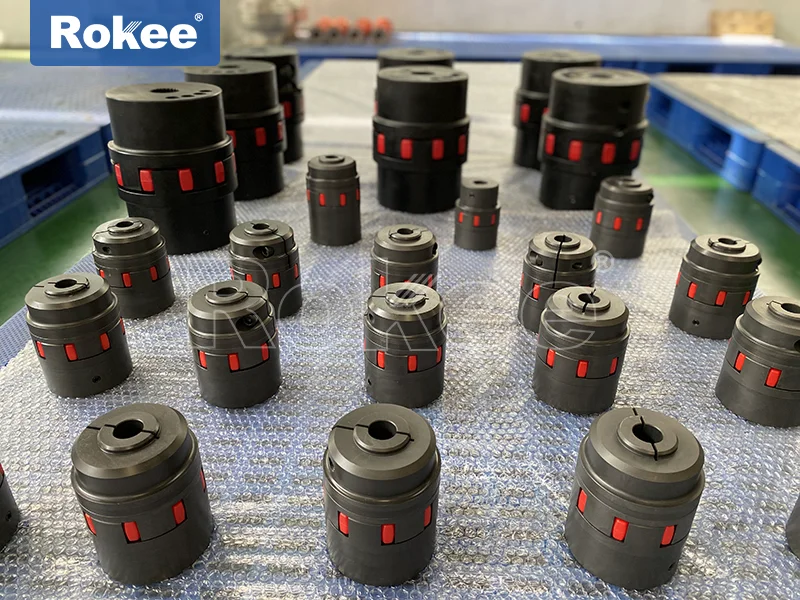
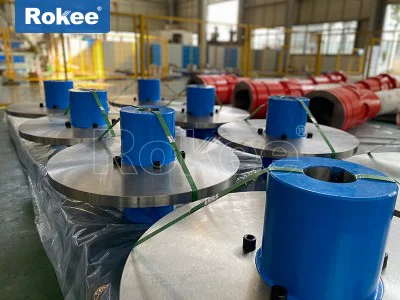
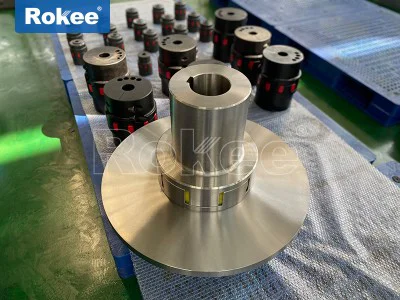
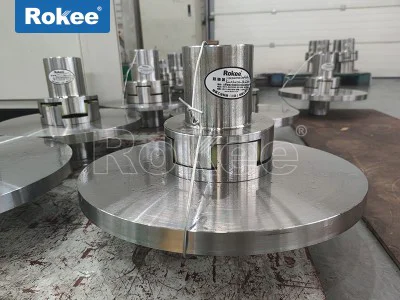
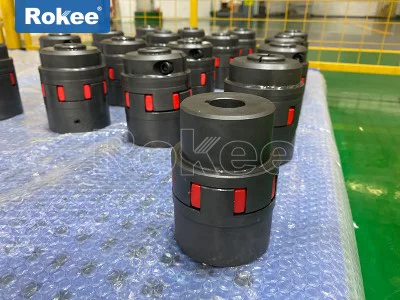
At its core, the Star Flex Coupling features a straightforward yet robust three-piece modular structure, consisting of two rigid hubs and a central star-shaped elastomeric insert, commonly referred to as a spider. This minimalist design eliminates the need for complex components, lubrication, or regular upkeep, setting it apart from more intricate flexible coupling variants. The two hubs are precision-machined to fit securely onto the driving and driven shafts, with internal profiles tailored to accommodate standard shaft sizes and connection methods. Crafted from high-strength materials, typically lightweight aluminum alloy for general-purpose use, cast iron for heavier load capacities, or steel for high-speed and high-torque applications, the hubs boast exceptional rigidity and resistance to torsional deformation. Their outer surfaces are shaped with curved or linear jaws that interlock with the lobes of the central elastomeric insert, creating a secure torque-transmission interface without direct metal-to-metal contact. This non-metallic contact zone is critical, as it prevents abrasive wear, reduces noise generation, and enhances the coupling’s ability to absorb dynamic stresses during operation.
The star-shaped elastomeric insert is the heart of the Star Flex Coupling, dictating its flexibility, damping capacity, and load-bearing performance. Manufactured primarily from high-grade polyurethane elastomer, a material prized for its exceptional elasticity, wear resistance, and thermal stability, the insert is molded with multiple radial lobes that fit precisely into the recesses of the hub jaws. The geometric design of these lobes, paired with the material’s inherent properties, enables the insert to deform elastically under load, compensating for various forms of shaft misalignment while maintaining consistent torque transmission. Unlike rigid transmission elements, the elastomeric spider does not crack or fracture under moderate cyclic stress, and it acts as a natural shock absorber, dampening sudden torque spikes and vibrational forces that would otherwise damage connected machinery components such as motors, gearboxes, and pumps. Additionally, the insert’s material composition is engineered to resist degradation from common industrial contaminants, including light oils, dust, and moisture, extending the service life of the coupling in harsh working environments. The modular nature of the structure also allows for independent replacement of the elastomeric insert when worn, eliminating the need to replace the entire coupling and reducing long-term operational costs.
The performance characteristics of the Star Flex Coupling are a direct product of its structural design and material selection, making it highly adaptable to diverse mechanical transmission requirements. One of its most prominent performance traits is its superior misalignment compensation capability, which addresses three primary types of shaft displacement: angular misalignment, parallel radial misalignment, and axial misalignment. Angular misalignment occurs when the two shafts intersect at a slight angle, while radial misalignment refers to lateral offset between shaft centers, and axial misalignment involves longitudinal movement along the shaft axis. The elastic deformation of the polyurethane insert accommodates these deviations without imposing excessive radial or axial loads on the shaft bearings, preventing premature wear and extending the lifespan of connected equipment. This compensation ability is particularly valuable in applications where perfect shaft alignment is difficult to achieve or maintain, such as in mobile machinery, variable-load systems, or equipment subjected to thermal expansion and contraction.
Torsional flexibility and vibration damping are equally vital performance features of the Star Flex Coupling. In dynamic power transmission systems, torsional vibrations and shock loads are inevitable, arising from sudden starts, stops, load fluctuations, or resonant frequencies. The elastomeric spider absorbs these vibrational energies and dissipates them as minimal heat, smoothing out torque delivery and reducing mechanical noise. This damping effect not only improves the smoothness of operation but also protects sensitive drive components from fatigue failure, a common issue in systems with high cyclic loading. Furthermore, the coupling exhibits excellent torque transmission efficiency, with a high torque-to-weight ratio that surpasses many conventional jaw couplings. The curved jaw design of the hubs maximizes contact area with the elastomeric insert, distributing load evenly across the lobes and enhancing torque-carrying capacity without increasing the overall size or weight of the coupling. This efficiency makes it suitable for compact machinery layouts where space is limited, without compromising on power transmission performance.
Additional performance advantages include zero-backlash operation in specific configurations, low inertia, and fail-safe functionality. Certain variants of the Star Flex Coupling feature a pre-compressed elastomeric insert design, eliminating rotational backlash and ensuring precise torque transmission for applications requiring positional accuracy, such as machine tools and servo-driven systems. The lightweight hub materials minimize rotational inertia, reducing energy consumption and improving the responsiveness of high-speed drive systems. In the event of unexpected elastomeric insert failure, the interlocking jaw design of the hubs allows for limited temporary torque transmission, preventing sudden system shutdowns and enabling scheduled maintenance without catastrophic equipment damage. The coupling also operates effectively across a moderate temperature range, maintaining its elastic properties and structural integrity in most standard industrial environments, further solidifying its reliability.
The Star Flex Coupling is available in a range of varieties, differentiated primarily by elastomeric insert properties, hub material, and shaft connection type, each tailored to specific operational demands. Classification by elastomeric insert hardness and fit is the most common distinction, as these factors directly impact the coupling’s stiffness, damping, and load capacity. Inserts are offered in varying Shore hardness ratings, each optimized for distinct applications: harder inserts deliver higher torque capacity and torsional stiffness, ideal for high-load, low-flexibility systems, while softer inserts provide enhanced vibration damping and greater misalignment tolerance, suited for noise-sensitive and high-vibration environments. Fit variations include tight pre-compressed fits for zero-backlash precision applications and loose fits for increased flexibility and ease of installation, allowing engineers to select the optimal insert for balance between performance and functionality.
Hub material classification further expands the coupling’s versatility, with each material catering to specific load, speed, and environmental conditions. Aluminum alloy hubs are the most prevalent, offering lightweight construction, corrosion resistance, and ease of machining, making them ideal for general-purpose, low-to-medium load applications such as small pumps, fans, and conveyors. Cast iron hubs provide enhanced rigidity and load-bearing capacity, suitable for heavy-duty industrial equipment with higher torque requirements, while steel hubs offer exceptional strength and durability for high-speed, high-torque systems such as machine tool spindles and heavy industrial drives. Shaft connection type is another key differentiator, with three primary hub designs: pilot bore hubs that allow custom machining for non-standard shaft sizes, key and set screw hubs that deliver secure torque transmission for high-load applications, and clamp-style hubs that enable tool-free installation and removal, simplifying maintenance and shaft mounting. This diverse range of configurations ensures that a suitable Star Flex Coupling variant exists for nearly every light to medium-duty power transmission scenario.
The combination of robust structure, reliable performance, and flexible customization has led to the widespread adoption of Star Flex Couplings across countless industrial sectors, where they serve as critical links in power transmission systems. In the general manufacturing industry, they are extensively used in conveyor systems, packaging machinery, and material handling equipment, where their ability to compensate for minor shaft misalignment and absorb operational vibration ensures smooth and continuous production flow. The pump and compressor industry relies heavily on these couplings, integrating them into centrifugal pumps, reciprocating compressors, and hydraulic power units to reduce vibration-induced wear on pump internals and extend equipment service life, while maintaining efficient fluid and gas transfer.
Machine tool and precision engineering applications benefit from the zero-backlash and high-precision torque transmission of specific Star Flex Coupling variants, where they connect servo motors, stepper motors, and drive shafts to ensure accurate positioning and smooth operation of milling machines, lathes, and grinding equipment. In the automotive and transportation sector, they are utilized in auxiliary equipment such as cooling system pumps, ventilation fans, and hydraulic actuators, enduring the variable loads and vibrational stresses of mobile machinery. HVAC (heating, ventilation, and air conditioning) systems employ these couplings in fan and blower drives, leveraging their noise-dampening properties to reduce operational noise and improve system efficiency.
Additional key applications include agricultural machinery, textile manufacturing equipment, food processing machinery, and power generation auxiliary systems. In agricultural equipment, they withstand the harsh, dusty conditions of farm operations while transmitting power to tillers, harvesters, and irrigation systems. Textile machinery relies on their smooth torque delivery to prevent fabric damage and ensure consistent production speeds, while food processing equipment benefits from their contamination-resistant design and low-maintenance operation. Even in renewable energy systems, such as small-scale wind turbine generators and solar tracking drives, Star Flex Couplings play a vital role in transmitting rotational power efficiently while compensating for shaft misalignment caused by wind and positional shifts.
Beyond these core industries, the Star Flex Coupling’s adaptability makes it a preferred choice for specialized applications where reliability, ease of maintenance, and cost-effectiveness are paramount. Its modular design reduces downtime for repairs, its durable construction minimizes replacement frequency, and its ability to address common mechanical transmission challenges makes it a versatile solution for both new machinery design and equipment retrofitting. As industrial automation and machinery efficiency continue to evolve, the demand for dependable, high-performance flexible couplings like the Star Flex Coupling remains steady, as they provide a practical and effective means of optimizing power transmission, protecting critical equipment, and enhancing overall operational reliability across diverse engineering landscapes.
In summary, the Star Flex Coupling represents a pinnacle of practical mechanical design, merging simple modular construction with high-performance elastomeric technology to deliver a reliable, versatile power transmission solution. Its well-engineered structure ensures efficient torque transmission, exceptional misalignment compensation, and superior vibration damping, while its diverse varieties cater to the unique demands of countless industrial applications. From general manufacturing to precision engineering, from fluid handling to mobile machinery, this coupling continues to prove its value as a foundational component in modern mechanical systems, offering a perfect balance of performance, durability, and affordability. As industrial operations increasingly prioritize efficiency, longevity, and low maintenance, the Star Flex Coupling will remain a cornerstone of power transmission engineering, adapting to emerging technological needs while upholding its legacy of reliable and consistent performance.