Flexible Jaw Shaft Couplings
In the realm of mechanical power transmission, flexible jaw shaft couplings stand as one of the most widely utilized and indispensable components, bridging the gap between driving and driven shafts while addressing the inherent challenges of shaft misalignment, vibration, and torque transmission in industrial systems. Unlike rigid couplings that offer no tolerance for positional discrepancies between shafts, these flexible variants combine structural simplicity with functional versatility, making them a staple across countless manufacturing, automation, and heavy machinery setups. At their core, flexible jaw shaft couplings are engineered to transmit rotational torque efficiently while accommodating minor to moderate shaft misalignments, dampening mechanical vibrations, and absorbing sudden shock loads, all without compromising the overall stability and longevity of the transmission system. Their design philosophy revolves around balancing rigidity for reliable torque transfer and flexibility for system protection, a dual characteristic that sets them apart from other coupling types and solidifies their position as a cornerstone of modern mechanical engineering.
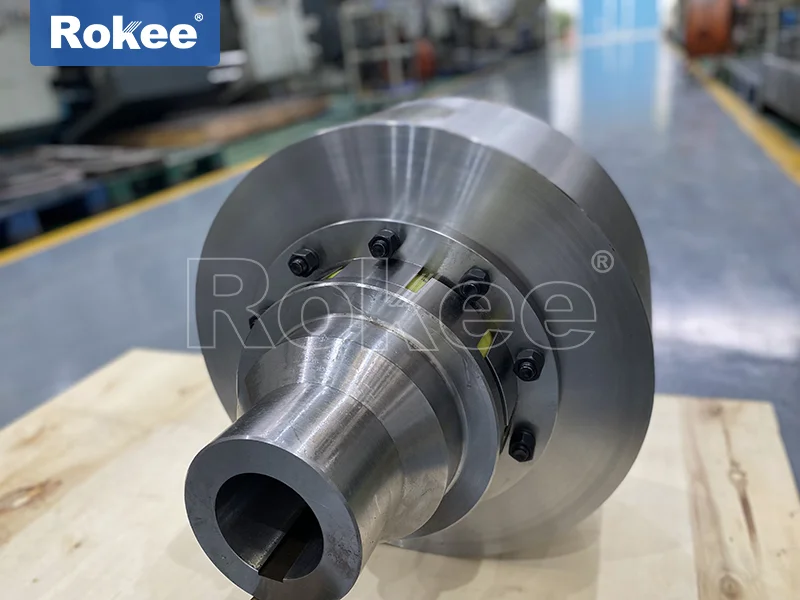
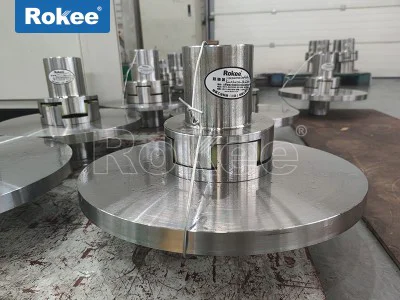
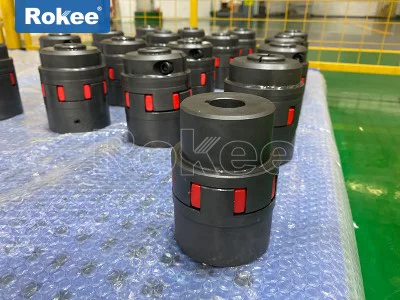
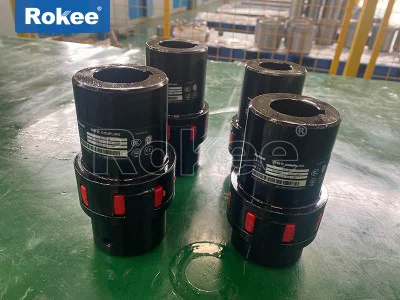
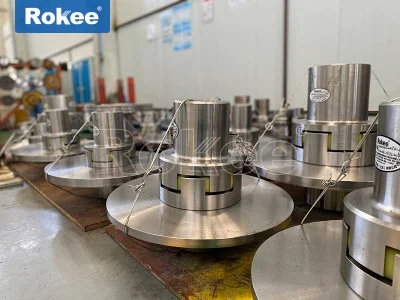
The fundamental structure of a flexible jaw shaft coupling is elegantly straightforward, consisting of three primary modular components that work in seamless harmony: two metallic hubs and an intermediate elastomeric spider insert, with optional supplementary parts for enhanced durability or environmental protection in demanding operating conditions. Each metallic hub is precision-machined from high-strength materials such as carbon steel, alloy steel, cast iron, or aluminum alloy, tailored to the load requirements and operational environment of the application. The inner bore of each hub is crafted to fit snugly onto the corresponding shaft, featuring keyways, clamping screws, or expansion sleeve designs to ensure a secure, backlash-free connection that prevents slippage during torque transmission. The outer face of each hub is equipped with evenly spaced, interlocking jaws—typically ranging from three to eight in number, with six jaws being the most common configuration—that protrude radially and are arranged in a staggered pattern to mesh perfectly with the elastomeric spider. These jaws are engineered with varying profiles, including straight, curved, or contoured surfaces, each designed to optimize contact pressure, stress distribution, and torque-carrying capacity when engaged with the flexible insert.
The elastomeric spider, the heart of the coupling’s flexibility, is a precision-molded component made from high-performance polymer materials such as polyurethane, natural rubber, synthetic rubber, or nylon, each offering distinct mechanical properties to suit different operational demands. Shaped to match the jaw configuration of the metallic hubs, the spider features lobes that fit precisely between the jaws of each hub, creating a cushioned interface that eliminates metal-to-metal contact during normal operation. This elastomeric element is not only responsible for enabling shaft misalignment compensation but also serves as a vibration damper and shock absorber, dissipating kinetic energy from sudden load spikes or mechanical oscillations before they can propagate to critical drive components. Optional accessories for the basic structure include protective covers, which shield the internal spider and jaw assembly from external contaminants like dust, moisture, oil, and debris, and locking mechanisms that prevent the spider from dislodging under high-speed rotation or extreme loads. The modular, three-piece design of these couplings simplifies installation, maintenance, and replacement; the elastomeric spider can be swapped out quickly without removing the metallic hubs or re-aligning the entire shaft system, minimizing downtime and reducing long-term operational costs.
The performance characteristics of flexible jaw shaft couplings are defined by their structural design and material selection, encompassing torque transmission capacity, misalignment compensation, vibration damping, environmental adaptability, and fail-safe operation. In terms of torque handling, these couplings exhibit exceptional torsional stiffness and load-bearing capability, with a wide operating range that caters to light-duty precision machinery, medium-duty industrial equipment, and heavy-duty power transmission systems. The torque is transmitted through the compressive force exerted on the elastomeric spider lobes by the interlocking jaws, ensuring smooth, efficient power transfer with minimal energy loss, even under fluctuating load conditions. Unlike rigid couplings, flexible jaw couplings excel at compensating for three primary types of shaft misalignment: angular misalignment, radial (parallel) misalignment, and axial displacement. This compensation capability arises from the elastic deformation of the spider insert, which flexes to accommodate positional deviations without inducing excessive stress on the shafts, bearings, or connected equipment. The degree of misalignment tolerance varies based on the coupling size, spider material, and jaw design, but standard models can reliably handle moderate levels of each misalignment type, a critical feature in real-world industrial setups where perfect shaft alignment is rarely achievable due to manufacturing tolerances, thermal expansion, or mechanical wear.
Vibration and shock absorption are equally standout performance attributes, driven by the viscoelastic properties of the elastomeric spider. In mechanical systems, rotational imbalances, gear meshing, or sudden load changes generate vibrations that can accelerate wear, reduce precision, and cause premature component failure; the flexible jaw coupling mitigates these issues by absorbing vibrational energy and reducing noise levels significantly. This damping effect not only improves the comfort and safety of operating environments but also extends the service life of bearings, gears, motors, and other sensitive transmission parts. Environmental adaptability is another key performance metric, with the metallic hubs and elastomeric inserts engineered to withstand a broad spectrum of operating temperatures, chemical exposures, and physical stresses. Polyurethane spiders, for instance, offer excellent resistance to oil, grease, and abrasion, while rubber inserts provide superior low-temperature flexibility and high-damping performance. The metallic hubs, when finished with appropriate coatings, can resist corrosion and rust in humid, coastal, or chemically active environments, ensuring consistent performance even in harsh industrial settings. Additionally, flexible jaw couplings feature inherent fail-safe operation: in the event of elastomeric spider degradation or failure, the interlocking metallic jaws will engage directly to maintain torque transmission temporarily, preventing catastrophic system shutdown and allowing for scheduled maintenance rather than emergency repairs.
Beyond these core traits, these couplings boast low maintenance requirements, as they operate without the need for lubrication or periodic adjustments, distinguishing them from gear couplings or other high-maintenance transmission components. Their lightweight yet durable construction also reduces rotational inertia, minimizing energy consumption and improving the responsiveness of high-speed drive systems. Electrical insulation is a secondary but valuable performance feature, provided by the non-conductive elastomeric spider, which prevents the transfer of stray electrical currents between shafts—a critical benefit in applications involving electronic controls, precision instrumentation, or electric motor drives where electrical interference could disrupt operation or damage sensitive components. Collectively, these performance attributes make flexible jaw shaft couplings highly adaptable to diverse operational scenarios, offering a cost-effective, reliable solution that balances performance, durability, and practicality.
Flexible jaw shaft couplings are categorized into distinct types based on multiple criteria, including jaw design, hub configuration, elastomeric insert material, and application-specific load ratings, each tailored to address unique operational requirements and environmental conditions. The most common classification is based on jaw profile, which divides couplings into straight jaw and curved jaw variants, each with unique mechanical behaviors. Straight jaw couplings feature flat, linear jaw surfaces that provide high torsional rigidity and precise torque transmission, making them ideal for applications requiring minimal backlash and consistent positional accuracy, such as automation equipment, conveyor systems, and light-duty machine tools. The straight jaw design ensures uniform stress distribution across the spider lobes during operation, enhancing stability under steady loads but offering slightly lower misalignment tolerance compared to curved jaw models. Curved jaw couplings, by contrast, have radiused, contoured jaw surfaces that create a larger contact area with the elastomeric spider lobes. This design optimizes load distribution, reduces localized stress on the spider, and enhances misalignment compensation capabilities, making them suitable for heavy-duty applications with high torque loads, shock vibrations, and greater shaft misalignment, such as pumps, compressors, fans, and heavy industrial machinery.
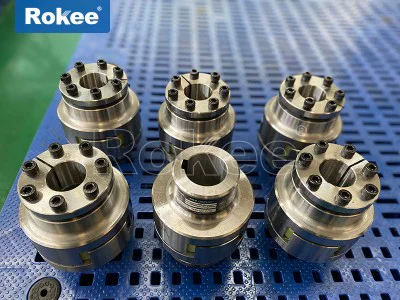
Classification by hub configuration further expands the versatility of these couplings, with key differences lying in the shaft mounting method and structural design. Standard hub couplings feature fixed bore sizes with keyway connections, the most traditional and widely used design that offers reliable torque transfer for general-purpose applications. Clamping hub couplings utilize compression-style clamping rings or screws to secure the hub to the shaft, eliminating the need for keyways and providing a uniform, backlash-free connection that is ideal for high-speed applications or shafts with smooth surfaces. Split hub couplings feature a two-piece hub design that allows for easy installation and removal without disassembling adjacent equipment, making them perfect for confined spaces or retrofitting existing transmission systems. Expanding sleeve hub couplings use friction-based expansion sleeves to grip the shaft, delivering exceptional torque capacity and concentricity, suitable for heavy-duty, high-load applications where maximum power transfer is critical. Each hub type is engineered to address specific installation constraints, load requirements, and maintenance needs, ensuring compatibility with a vast array of shaft sizes and equipment designs.
Material classification of the elastomeric spider is equally vital, as the insert material directly dictates the coupling’s performance limits, environmental resistance, and damping characteristics. Standard polyurethane spiders are the most prevalent choice, offering a balanced blend of durability, abrasion resistance, oil resistance, and moderate temperature tolerance, suitable for the majority of general industrial applications. High-temperature polyurethane inserts are formulated to withstand elevated thermal conditions without losing elasticity or degrading, making them ideal for operations in hot environments such as furnaces, industrial ovens, or engine-driven equipment. Rubber spiders, including natural and synthetic rubber variants, provide superior vibration damping and shock absorption, along with excellent low-temperature flexibility, perfect for applications with high vibrational stress or cold operating conditions. Nylon spiders offer high mechanical strength, rigidity, and wear resistance, catering to light-duty, high-speed applications where minimal deformation and precise transmission are required. Some specialized couplings feature composite elastomeric inserts that combine the properties of multiple materials, delivering enhanced performance for extreme operating conditions that demand both high temperature resistance and superior damping.
Additional classifications include light-duty, medium-duty, and heavy-duty couplings based on load-carrying capacity, as well as compact miniature couplings for precision instruments and oversized couplings for large-scale industrial machinery. There are also electrically insulated couplings with enhanced non-conductive properties and corrosion-resistant couplings with stainless steel hubs for harsh, corrosive environments. This diverse range of types ensures that engineers and designers can select a flexible jaw shaft coupling perfectly matched to the unique demands of their application, balancing performance, cost, and durability without compromising functionality.
The versatility of flexible jaw shaft couplings is reflected in their extensive range of industrial applications, spanning nearly every sector that relies on mechanical power transmission. Their ability to handle misalignment, dampen vibrations, and transmit torque reliably makes them a go-to choice for both standard and specialized equipment, from small-scale precision devices to heavy industrial machinery. In the manufacturing and automation sector, these couplings are integral to conveyor systems, assembly lines, robotic arms, and machine tools, ensuring smooth, precise power transfer while compensating for minor misalignments caused by continuous operation or thermal changes. In pumping and compression systems, including centrifugal pumps, hydraulic pumps, air compressors, and vacuum pumps, flexible jaw couplings absorb the vibrational loads generated by fluid flow and pressure fluctuations, protecting the pump motor and internal components from premature wear and reducing operational noise.
The HVAC and ventilation industry relies heavily on these couplings for fan and blower drives, where they dampen the high vibrations produced by rotating fan blades and accommodate shaft misalignment caused by duct pressure or structural movement. In material handling equipment, such as elevators, hoists, conveyors, and packaging machinery, they deliver consistent torque transmission under variable load conditions, enhancing equipment reliability and reducing maintenance intervals. Automotive and transportation applications utilize flexible jaw couplings in engine drives, transmission systems, and auxiliary equipment, where they absorb shock loads from engine operation and compensate for thermal expansion in drivetrain components. Agricultural machinery, including tractors, harvesters, and irrigation systems, benefits from their robust construction and environmental resistance, thriving in dusty, dirty, and outdoor conditions while handling the high shock loads of agricultural operations.
Heavy industrial sectors, including mining, construction, and metalworking, deploy heavy-duty flexible jaw couplings in crushers, mixers, mills, and heavy machinery, where they withstand extreme torque loads, continuous operation, and harsh environmental conditions. Marine and offshore applications use corrosion-resistant variants in shipboard machinery, pumping systems, and propulsion drives, relying on their resistance to saltwater, moisture, and corrosive marine environments. In power generation systems, including electric motors, generators, and turbine drives, these couplings ensure efficient power transfer while dampening vibrations that could disrupt power output or damage generating components. Precision engineering and instrumentation applications utilize miniature, low-backlash flexible jaw couplings in encoders, sensors, and small-scale precision devices, maintaining positional accuracy and protecting sensitive electronic components from mechanical vibration.
The widespread adoption of flexible jaw shaft couplings across these diverse sectors stems from their unique combination of structural simplicity, high performance, and practical adaptability. Unlike more complex coupling designs that require specialized installation or maintenance, these couplings offer a cost-effective, user-friendly solution that delivers consistent performance across a broad spectrum of operating conditions. Their modular design allows for easy customization and replacement, while their robust construction ensures long service life even in demanding industrial environments. As mechanical engineering continues to evolve and industrial systems demand higher efficiency, greater reliability, and enhanced durability, flexible jaw shaft couplings remain a vital component, continuously refined through material advancements and design optimizations to meet the ever-changing needs of modern power transmission systems.
In summary, flexible jaw shaft couplings represent a pinnacle of functional simplicity and engineering efficiency in mechanical power transmission. Their well-engineered structural design, encompassing precision metallic hubs and high-performance elastomeric inserts, delivers exceptional torque transmission, misalignment compensation, and vibration damping capabilities. The diverse range of types, classified by jaw profile, hub configuration, and insert material, ensures suitability for every conceivable industrial application, from light-duty precision equipment to heavy-duty industrial machinery. Their low maintenance requirements, fail-safe operation, and environmental adaptability further enhance their value, making them an indispensable component in countless mechanical systems worldwide. As industries continue to prioritize reliability, efficiency, and cost-effectiveness, the flexible jaw shaft coupling will remain a cornerstone of power transmission engineering, adapting to new technological advancements and continuing to serve as a critical link in driving global industrial progress.