Multi Jaw Couplings
In the realm of mechanical power transmission, the multi jaw coupling stands as a versatile and widely adopted flexible coupling, engineered to bridge two rotating shafts while addressing common operational challenges such as misalignment, vibration, and shock loads. Unlike rigid couplings that demand perfect shaft alignment and offer no tolerance for dynamic system fluctuations, multi jaw couplings blend structural simplicity with functional flexibility, making them a staple in countless industrial drive systems.

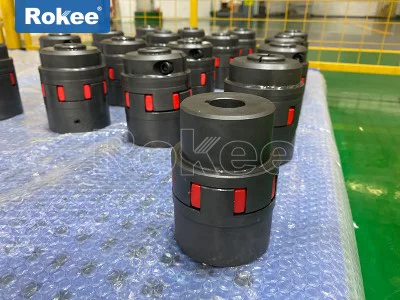
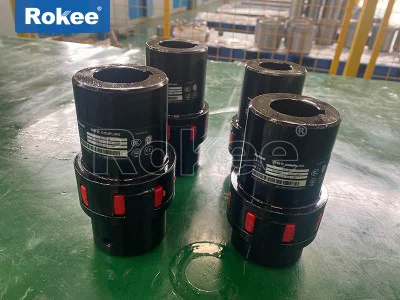
At its core, the multi jaw coupling features a streamlined yet robust structural design, consisting of three fundamental components: two metallic hub halves and a central elastic spider insert. Each hub half is precision-machined with multiple protruding jaws, evenly distributed around the inner circumference, which interlock with the corresponding slots in the elastic spider without direct metal-to-metal contact under normal operating conditions. The jaw profiles are typically crafted to optimize torque transmission and flexibility, with curved or straight jaw designs varying based on intended performance goals. The hubs are commonly fabricated from high-strength metals, including carbon steel, stainless steel, and aluminum alloy, each selected for distinct mechanical properties: steel hubs deliver exceptional torsional strength and durability for heavy-duty operations, aluminum hubs offer a lightweight build with reduced inertia ideal for high-speed or precision systems, and stainless steel hubs provide enhanced corrosion resistance for harsh environmental settings. The central elastic spider, the heart of the coupling’s flexibility, is manufactured from elastomeric materials such as polyurethane, nitrile rubber, nylon, or thermoplastic composites, chosen for their elasticity, wear resistance, and damping capabilities. This three-piece assembly ensures effortless installation and maintenance, as the spider can be replaced without disassembling the entire drive system or repositioning connected shafts, a design advantage that minimizes operational downtime and simplifies upkeep.
The working principle of the multi jaw coupling revolves around the compression and deformation of the elastic spider to transmit torque between the driving and driven shafts. When the driving shaft rotates, the jaws on the corresponding hub exert pressure on the elastic spider, which then transfers the rotational force to the jaws of the driven hub, enabling smooth power delivery. Throughout this process, the elastic spider serves dual critical functions: it facilitates torque transmission and acts as a buffer to absorb shocks, dampen vibrations, and compensate for shaft misalignment. This operational mechanism eliminates the need for lubrication, as there is no metal-on-metal friction between the hubs during normal operation, resulting in a maintenance-free design that reduces long-term operational costs. The torque transmission process unfolds in three distinct stages: the initial contact stage, where the jaws lightly engage the spider and trigger minor elastic deformation; the steady load transmission stage, where the spider deforms uniformly under consistent pressure to transfer full operational torque; and the extreme load stage, where the spider reaches its maximum elastic deformation threshold at the coupling’s design torque limit, preventing sudden mechanical failure by acting as a sacrificial component if overloaded.
The performance characteristics of multi jaw couplings are tailored to meet the demands of diverse mechanical systems, combining flexibility, reliability, and efficiency. One of the most prominent performance traits is exceptional misalignment compensation, allowing the coupling to accommodate radial, angular, and axial misalignment simultaneously. Radial misalignment, the parallel offset between shafts, is mitigated by the lateral flexibility of the elastic spider; angular misalignment, the slight tilt between shaft axes, is absorbed by the spider’s rotational flexibility; and axial misalignment, the endplay movement of shafts, is managed by the spider’s axial compressibility. This multi-directional misalignment tolerance prevents excessive stress on shaft bearings, seals, and connected equipment, extending the service life of the entire drive system. Another key performance feature is superior vibration and shock damping, as the elastomeric spider dissipates vibrational energy generated by motor startup, sudden load changes, or uneven operational loads, reducing noise levels and protecting delicate components from impact damage. This damping ability is particularly valuable in systems with frequent start-stop cycles or variable speed operation, where transient loads can cause premature wear and tear.
Multi jaw couplings also exhibit reliable torque transmission capacity with a broad operational range, suitable for both low-torque precision applications and high-torque heavy-duty scenarios. The torque density, or torque output relative to the coupling’s physical size, is notably high, allowing for compact designs that fit within space-constrained installations without compromising performance. Additionally, these couplings offer a degree of overload protection: when subjected to torque exceeding the design limit, the elastic spider will deform permanently or slip between the jaws, preventing damage to more costly components such as motors, gearboxes, or pumps. The electrical insulation properties of the elastomeric spider further enhance functionality, isolating electrical currents between shafts and preventing electrical interference or corrosion in sensitive electronic and precision machinery. While multi jaw couplings excel in flexibility and damping, they maintain adequate torsional stiffness for consistent power delivery, striking a balanced compromise between rigidity and compliance that sets them apart from other flexible coupling types.
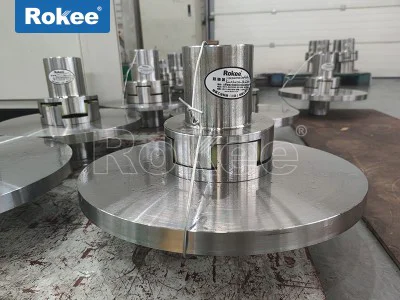
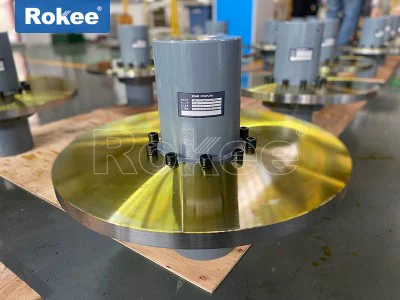
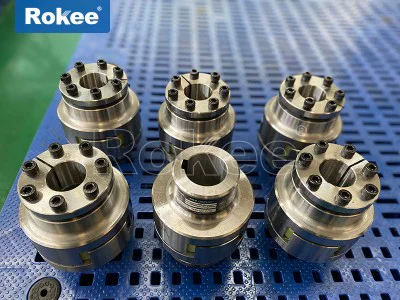
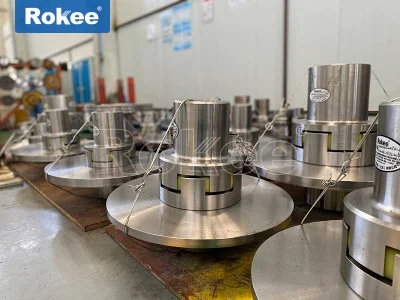
Classified by structural design and functional attributes, multi jaw couplings encompass a range of variants tailored to specific operational needs, each with unique features to address specialized system requirements. The standard multi jaw coupling is the most prevalent type, featuring a basic hub and spider configuration with balanced performance across misalignment compensation, torque transmission, and damping; it serves as a general-purpose solution for everyday industrial applications, offering reliable operation without specialized modifications. Flange-mounted multi jaw couplings integrate a flange connection on one or both hubs, enabling secure attachment to large shafts, gearboxes, or machinery frames; this design enhances stability and load-bearing capacity, making it suitable for heavy-duty equipment with high torque demands and limited mounting flexibility. Split-hub multi jaw couplings feature a two-piece hub design that can be installed or removed without displacing connected equipment, ideal for confined spaces or systems where full drive disassembly is impractical, such as conveyor lines, packaging machinery, and marine propulsion systems.
Curved jaw multi jaw couplings represent a precision-focused variant, with curved jaw profiles that optimize contact with the elastic spider, reducing stress concentrations and improving misalignment tolerance; this design minimizes backlash, making it ideal for high-precision motion control systems such as robotics, CNC machine tools, and automated assembly lines where positional accuracy is critical. Straight jaw multi jaw couplings, by contrast, prioritize torque transmission efficiency and load capacity, with rigid straight jaws that deliver higher torsional stiffness for heavy industrial machinery operating under constant, high loads. Elastomer-specific classifications further diversify multi jaw couplings, with polyurethane spiders offering excellent wear resistance, oil resistance, and temperature tolerance for general industrial use; nitrile rubber spiders providing superior damping and flexibility for high-vibration environments; nylon spiders delivering enhanced mechanical strength and rigidity for heavy-duty, low-speed applications; and thermoplastic composite spiders combining the benefits of multiple materials for extreme operating conditions, including high temperatures, chemical exposure, and heavy cyclic loads.
The adaptability of multi jaw couplings, driven by their structural diversity and performance versatility, has led to their widespread adoption across nearly every industrial sector that relies on rotational power transmission. In general manufacturing and industrial machinery, they are extensively used in pumps, fans, compressors, conveyors, mixers, and agitators, connecting motor shafts to driven equipment to ensure smooth power delivery while absorbing operational vibrations and misalignment. For pumping systems, including centrifugal pumps, reciprocating pumps, and submersible pumps, multi jaw couplings compensate for misalignment caused by foundation settling, thermal expansion, or installation errors, protecting pump seals and bearings from premature failure and reducing maintenance needs. In fan and ventilation systems, they dampen the high vibrations generated by rotating fan blades, lowering operational noise and enhancing system stability in HVAC, industrial ventilation, and air purification setups.
In the machine tool and automation industry, multi jaw couplings play a pivotal role in precision motion control systems, including CNC machine feed axes, robotic arm joints, servo motor drives, and automated production line conveyors. The low-backlash design and precise torque transmission of curved jaw variants ensure accurate positional movement, critical for machining intricate components, assembling delicate parts, and executing repetitive automated tasks with consistent precision. Lightweight aluminum multi jaw couplings are particularly favored in robotics and compact automation equipment, as their reduced inertia enhances response speed and energy efficiency without sacrificing strength. In heavy industrial sectors such as mining, construction, and material handling, heavy-duty steel multi jaw couplings withstand extreme loads, shock impacts, and harsh operating conditions, powering crushers, grinders, conveyor belts, and construction machinery where durability and reliability are non-negotiable.
Beyond traditional industrial settings, multi jaw couplings find utility in specialized sectors with unique operational demands. In marine and offshore engineering, corrosion-resistant stainless steel multi jaw couplings are used in ship propulsion systems, auxiliary machinery drives, and offshore drilling equipment, enduring saltwater exposure, high humidity, and mechanical stress. In power generation, including thermal power plants, wind turbines, and small-scale generator sets, they connect turbine shafts to generators or auxiliary equipment, dampening torsional vibrations and compensating for thermal expansion-induced misalignment in high-speed rotational systems. In the food and beverage processing industry, hygienic, easy-to-clean multi jaw couplings are employed in mixing, filling, and packaging machinery, complying with strict sanitary standards while maintaining reliable performance. Additionally, they are integrated into agricultural machinery, textile equipment, printing presses, and automotive auxiliary drives, showcasing their ability to adapt to varied load conditions, environmental factors, and operational speeds.
The enduring popularity of multi jaw couplings in mechanical engineering stems from their harmonious blend of simple design, reliable performance, and exceptional versatility. Unlike complex coupling systems that require specialized installation and maintenance, multi jaw couplings offer a cost-effective, user-friendly solution without compromising on functionality, addressing core pain points in power transmission such as misalignment, vibration, and overload. Their modular construction allows for easy customization to fit specific shaft sizes, load requirements, and environmental conditions, while the replaceable elastic spider ensures long-term usability and sustainability. As industrial systems continue to evolve toward higher efficiency, precision, and reliability, the multi jaw coupling remains a foundational component, adapting to emerging technological demands while retaining its core design principles. Whether in small-scale precision equipment or large-scale heavy machinery, the multi jaw coupling consistently delivers stable, efficient power transmission, solidifying its status as an essential and irreplaceable element in modern mechanical drive systems.