Research On Noise Reduction And Wear Resistance Optimization Of Gear Coupling For PU Sandwich Panel Line
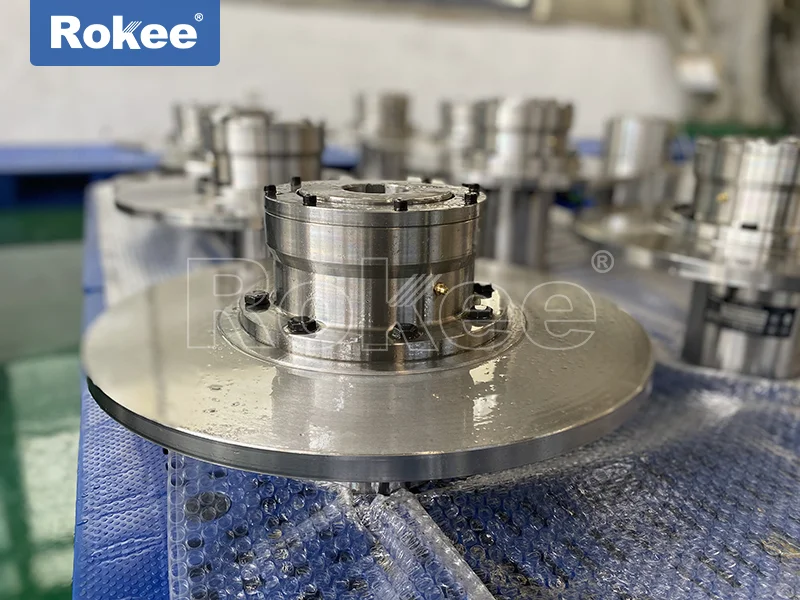
PU sandwich panel production lines are core continuous operation equipment in the field of new building materials manufacturing, which rely on stable mechanical transmission systems to complete continuous processes including plate feeding, foaming, compounding and fixed-length cutting. As a key universal transmission component connecting driving and driven shafts, gear couplings undertake the tasks of torque transmission, speed adjustment and axial deviation compensation in the entire production line. Affected by the continuous cyclic load, frequent start-stop impact and minor misalignment of shaft systems in long-term industrial operation, traditional gear couplings are prone to excessive meshing vibration, continuous operating noise and progressive tooth surface wear during service. These defects not only reduce the running stability of the PU sandwich panel production line, cause jitter in plate forming and affect the flatness and dimensional accuracy of finished sandwich panels, but also accelerate the fatigue failure of transmission components, shorten the service cycle of key equipment, and increase the frequency of shutdown maintenance and equipment operation failure risks. Therefore, carrying out targeted research on noise reduction and wear resistance optimization of gear couplings adapted to the working characteristics of PU sandwich panel production lines is of great practical significance for improving the continuous operation efficiency, processing stability and service life of the production line.
The operating environment and load characteristics of PU sandwich panel production lines determine the unique failure mechanism and vibration-noise generation law of matching gear couplings. Different from the intermittent operation mode of general mechanical equipment, the PU sandwich panel production line maintains a long-term continuous running state, with the transmission system bearing stable cyclic torque and occasional instantaneous impact load generated by material feeding deviation and equipment parameter adjustment. In the actual production process, the installation deviation of the transmission shaft system, including angular deviation, radial deviation and axial displacement, will cause uneven meshing clearance of gear teeth in the coupling. This uneven meshing state leads to periodic collision and friction between tooth surfaces during torque transmission, which is the core cause of meshing vibration and operating noise. On the one hand, the high-frequency vibration generated by gear meshing will be transmitted along the shaft system and diffused through the equipment shell, forming continuous mechanical noise that affects the on-site production environment and equipment operation stability. On the other hand, the abnormal contact friction caused by meshing deviation will aggravate the micro-abrasion, adhesive wear and fatigue pitting of the gear tooth surface. Long-term accumulation of wear will change the original meshing geometric parameters of the gear coupling, further expand the meshing clearance deviation, form a vicious cycle of vibration intensification and wear acceleration, and eventually lead to transmission jitter, torque transmission attenuation and even gear tooth fracture failure.
In terms of noise generation mechanism of gear couplings for PU sandwich panel line, the main noise source is the meshing impact noise generated by gear tooth engagement and separation, supplemented by structural vibration noise caused by system resonance. Under the continuous operating condition of the production line, the gear teeth of the coupling engage and separate periodically at a fixed frequency. When the meshing stiffness of the gear pair changes abruptly, instantaneous impact force will be generated between the tooth surfaces, stimulating high-frequency vibration of the gear body and the connected shaft system. The vibration energy is transmitted to the equipment frame and production line base, radiating broadband mechanical noise to the surrounding space. In addition, minor misalignment of the shaft system and uneven tooth surface wear will cause the meshing frequency to deviate from the design value, induce local resonance of the transmission system, and significantly increase the noise sound pressure level in the low and medium frequency bands. Long-term field monitoring of PU sandwich panel production lines shows that the unoptimized traditional gear couplings will produce continuous high-decibel noise during full-load operation, and the noise will increase gradually with the extension of service time, which not only deteriorates the production operation environment but also easily causes fatigue damage to the internal structure of the equipment, reducing the overall operation precision of the production line.
The wear failure of gear couplings in PU sandwich panel production lines is mainly divided into three typical forms: surface abrasive wear, adhesive wear and contact fatigue wear. Abrasive wear is mainly caused by tiny metal debris and dust particles generated by long-term operation of the production line entering the gear meshing gap. These tiny impurities act as abrasive particles between the tooth surfaces, continuously scraping the tooth surface during relative sliding, resulting in uniform material loss on the gear surface and increased surface roughness. Adhesive wear occurs when the local contact pressure of the meshing tooth surface is too large and the lubrication film is partially broken. The direct contact of metal surfaces produces local bonding points, and the relative sliding of gear teeth tears the bonding points, forming tooth surface scratches and material peeling. Contact fatigue wear is a long-term cumulative failure form under cyclic load. The repeated alternating contact stress on the tooth surface causes micro-cracks inside the material, and the cracks gradually expand with the increase of operating cycles, eventually leading to tooth surface pitting and peeling, which seriously affects the meshing accuracy and torque transmission performance of the coupling. These three wear forms interact and promote each other in the actual operating process, leading to the gradual degradation of the mechanical performance of the gear coupling.
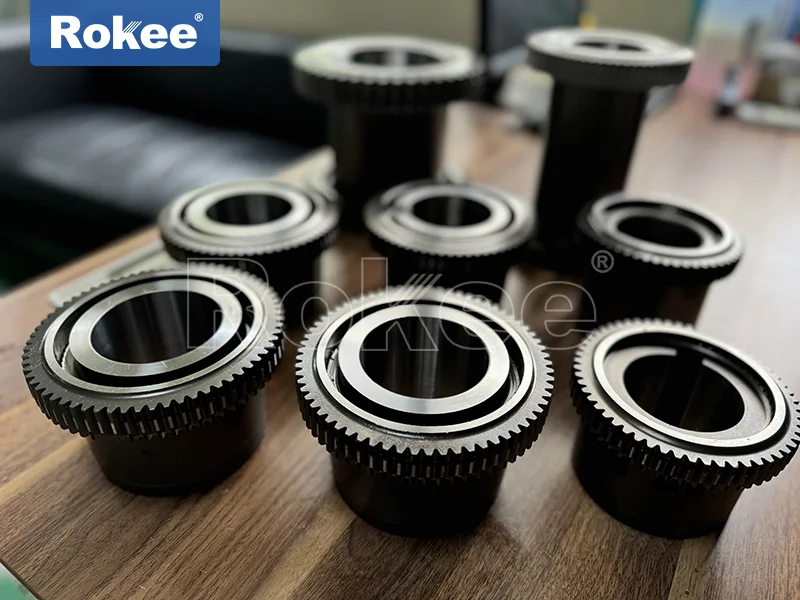
Aiming at the noise and wear problems of gear couplings in PU sandwich panel production line, this research carries out multi-dimensional optimization design from three core aspects: tooth surface modification optimization, matching material performance improvement and lubrication system optimization, combined with the continuous load and stable operation characteristics of the production line. Gear tooth surface modification is the most direct and effective technical means to reduce meshing vibration and noise. Traditional gear coupling tooth profiles are designed with standard involute curves, which are prone to meshing impact and stiffness mutation under the condition of shaft system deviation and continuous load. This research adopts differential tooth surface modification technology to carry out micro-correction on the tooth top, tooth root and tooth flank of the gear coupling. By optimizing the modification amount and modification curve, the abrupt change of gear meshing stiffness in the engagement and separation stage is effectively suppressed, the contact impact force between tooth surfaces is reduced, and the meshing stability of the gear pair is improved. Different from the single profile modification method, the differential modification design can adapt to the minor shaft misalignment and cyclic load fluctuation of the PU sandwich panel production line, realize uniform load distribution on the tooth surface, avoid local stress concentration, and fundamentally reduce the vibration excitation source of meshing noise.
Material performance optimization is the key foundation to improve the wear resistance and fatigue life of gear couplings. The long-term continuous operation of the PU sandwich panel production line puts forward higher requirements for the surface hardness, wear resistance and fatigue resistance of coupling gear materials. On the basis of ensuring the overall toughness and strength of the gear matrix, this research optimizes the surface heat treatment process of gear coupling parts. Through improved quenching and tempering treatment and surface strengthening process, the surface microhardness of gear teeth is significantly improved, and the residual compressive stress layer is formed on the tooth surface. The residual compressive stress can effectively offset the alternating tensile stress generated by cyclic meshing load, inhibit the initiation and expansion of fatigue cracks, and reduce contact fatigue wear and pitting failure. At the same time, the optimized material surface structure can reduce the friction coefficient of the tooth surface, weaken the adhesive friction effect in the meshing process, and greatly improve the abrasive wear resistance of the gear coupling in the dusty industrial environment of the production line. The optimized gear material has better surface integrity and structural stability under long-term cyclic load, which can maintain stable meshing accuracy for a long time and avoid performance degradation caused by wear accumulation.
Lubrication system optimization plays a vital role in reducing friction wear and suppressing operating noise of gear couplings. Good lubrication can form a stable lubricating film between meshing tooth surfaces, isolate direct metal contact, reduce friction resistance and meshing impact, and achieve dual effects of wear reduction and noise reduction. Aiming at the continuous operation characteristics of PU sandwich panel production lines, this research optimizes the lubrication state and lubricant matching of gear couplings. By improving the lubricant filling mode and sealing structure, the problems of lubricant loss and dust impurity mixing in the traditional lubrication structure are solved, ensuring that the gear meshing area is always in a full and clean lubrication state. The stable lubricating film can buffer the instantaneous impact force of gear meshing, reduce high-frequency vibration and noise radiation, and at the same time effectively prevent abrasive particles from contacting the tooth surface, inhibit the occurrence of abrasive wear and adhesive wear. In addition, the optimized lubrication system can continuously take away the friction heat generated in the gear meshing process, avoid the thermal deformation of gear teeth caused by heat accumulation, ensure the stability of meshing clearance, and further reduce the vibration and noise caused by thermal deformation.
To verify the actual optimization effect of the improved gear coupling, this research builds a performance test platform consistent with the actual working conditions of PU sandwich panel production lines, and carries out comparative tests on vibration noise level, wear resistance and transmission stability between the optimized coupling and the traditional unoptimized coupling. The test equipment simulates the long-term continuous operation state, cyclic load fluctuation and minor shaft misalignment of the actual production line, and collects real-time data of vibration acceleration, noise sound pressure level and tooth surface wear loss of the two types of couplings under the same operating parameters. The test results show that the optimized gear coupling has significantly improved vibration and noise suppression performance. Under the full-load continuous operating condition of the production line, the meshing vibration acceleration amplitude is reduced by more than 25%, the low and medium frequency noise sound pressure level is effectively reduced, and the overall operating noise of the transmission system is significantly improved. After long-term continuous operation cycle tests, the tooth surface wear loss of the optimized coupling is reduced by more than 30% compared with the traditional structure, no obvious pitting, scratching and peeling defects appear on the tooth surface, and the meshing accuracy remains stable without obvious attenuation.
Further analysis of the test data shows that the multi-dimensional optimization scheme of tooth surface modification, material strengthening and lubrication optimization has formed a synergistic effect. The tooth surface modification optimizes the meshing contact state and reduces the vibration excitation source; the material surface strengthening improves the wear resistance and fatigue resistance of the gear and enhances the structural stability under long-term load; the optimized lubrication system realizes friction reduction, buffer and heat dissipation, and maintains the long-term stability of the optimized meshing state. The three optimization technologies complement each other, effectively solving the common problems of easy noise generation and fast wear of gear couplings in PU sandwich panel production lines. In the actual production line application test, the optimized gear coupling runs stably for a long time, the transmission jitter phenomenon of the production line is completely eliminated, the forming precision of PU sandwich panels is significantly improved, and the shutdown maintenance frequency caused by coupling failure is greatly reduced, which verifies the practical application value of the optimization scheme.
In summary, the noise and wear failure of gear couplings for PU sandwich panel production lines are caused by the coupling effect of structural meshing characteristics, load operating conditions and environmental factors. The single optimization method can only improve the local performance and is difficult to meet the long-term stable operation requirements of continuous production lines. The multi-dimensional collaborative optimization scheme proposed in this research can effectively suppress gear meshing vibration and noise radiation, significantly improve the surface wear resistance and fatigue resistance of gear couplings, and maintain the long-term stability of transmission performance. The optimized gear coupling is highly adaptable to the continuous operation and industrial environmental characteristics of PU sandwich panel production lines, which can effectively improve the operating efficiency and processing quality of the production line, reduce equipment maintenance costs and operation failure risks. In the follow-up research, the dynamic parameter adjustment mechanism of gear couplings under variable load conditions can be further explored, and the intelligent optimization design of coupling performance can be realized to adapt to more complex production working conditions and provide more reliable technical support for the stable and efficient operation of new building material production equipment.