Application And Transformation Technology Of Barrel Gear Coupling In PIR Sandwich Panel Production Line
With the continuous upgrading of modern building thermal insulation and enclosure material manufacturing technology, PIR sandwich panels have become indispensable core materials in the fields of industrial plant construction, cold storage thermal insulation, and environmental protection enclosure engineering due to their excellent thermal insulation performance, structural stability and lightweight characteristics. The production process of PIR sandwich panels involves multi-process continuous operation including raw material extrusion, composite lamination, continuous conveying, fixed-length cutting and surface finishing, and the stable operation of the entire production line depends on the efficient and reliable transmission performance of the mechanical transmission system. As a key universal transmission component in industrial mechanical equipment, barrel gear couplings undertake the important task of torque transmission and motion coordination between various equipment units in the PIR sandwich panel production line. Their structural performance, operation stability and adaptive capacity directly affect the continuity of production processes, the consistency of product processing accuracy and the overall operation efficiency of the production line. In the long-term continuous production process, the traditional transmission coupling structure is prone to problems such as poor misalignment compensation ability, insufficient impact load resistance and easy fatigue wear under the complex working conditions of variable load and frequent speed regulation of the PIR sandwich panel production line, which leads to unstable power transmission, increased equipment vibration and frequent shutdown maintenance, restricting the high-efficiency and high-precision production of PIR sandwich panels. Therefore, exploring the scientific application methods and targeted transformation technologies of barrel gear couplings in PIR sandwich panel production line is of great practical significance for optimizing the transmission system performance of the production line, reducing equipment failure rates and improving industrial production benefits.
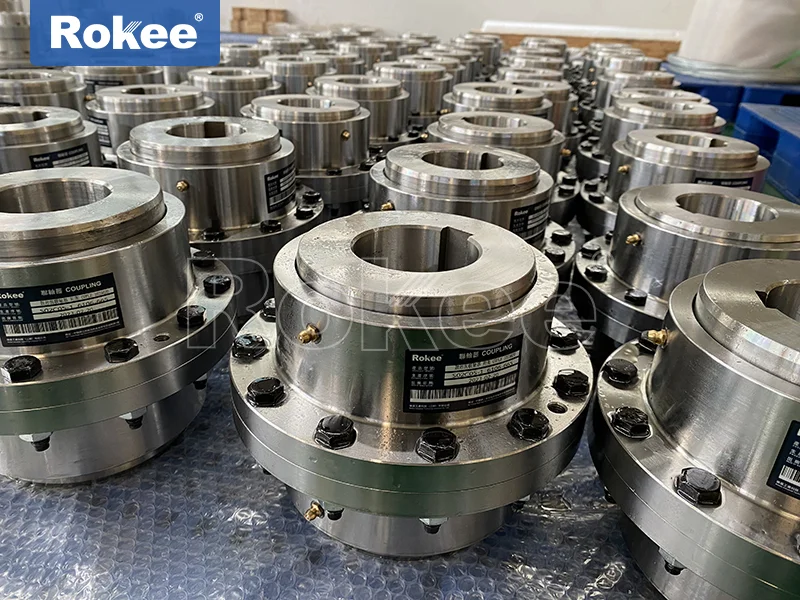
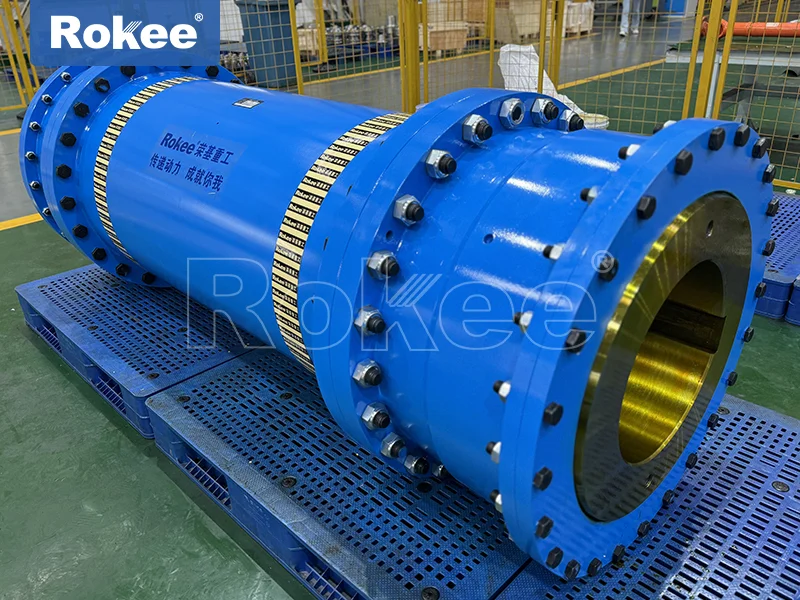
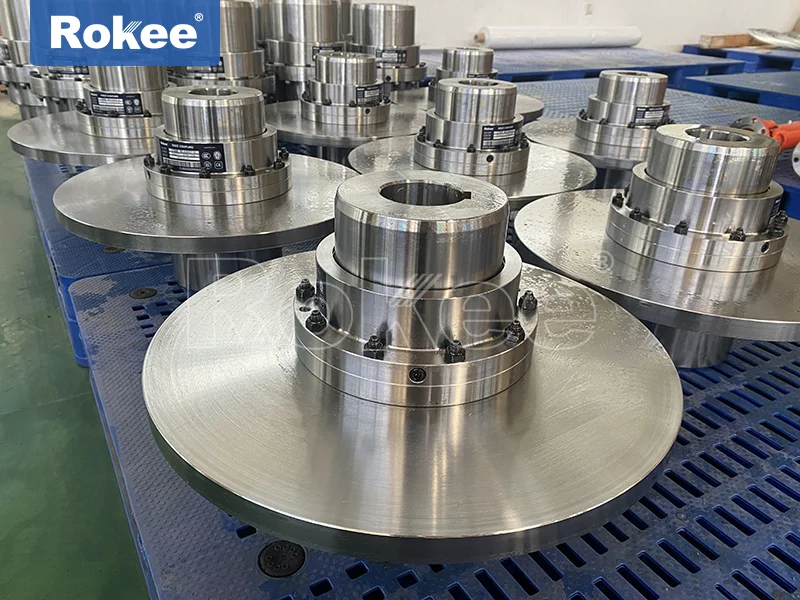
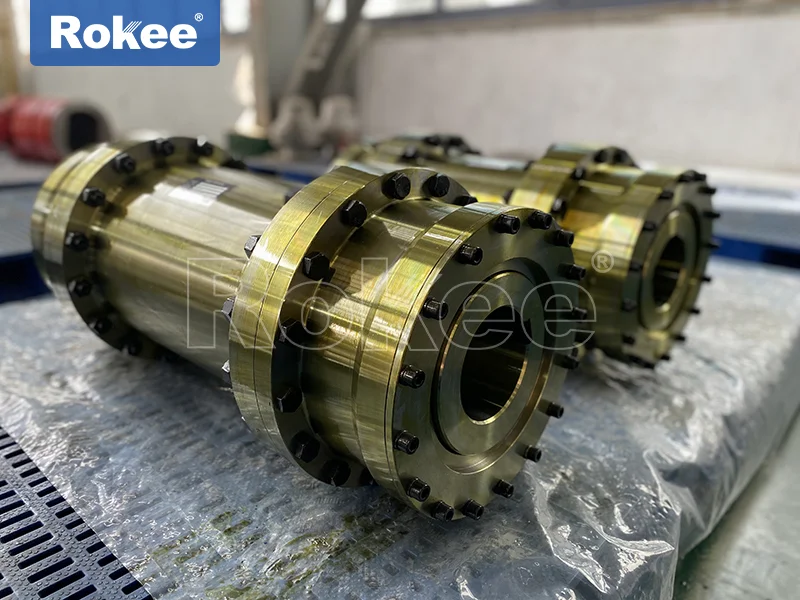
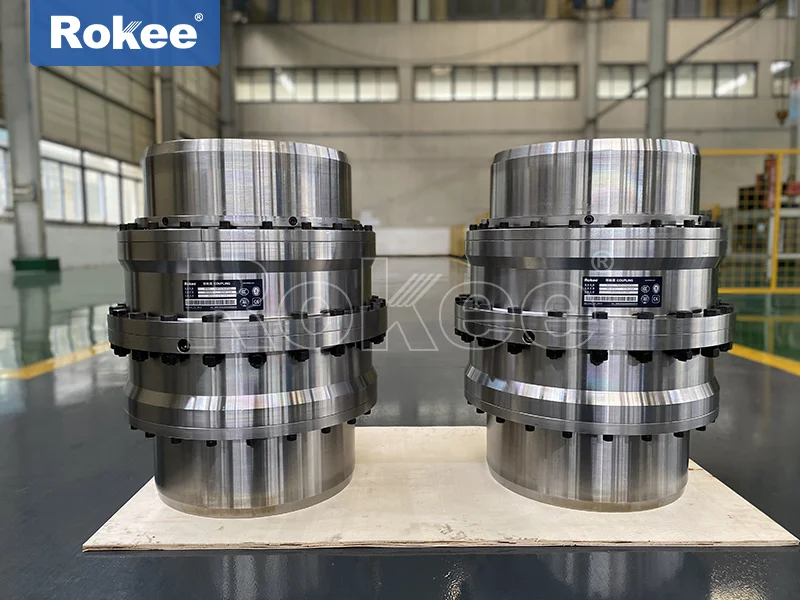
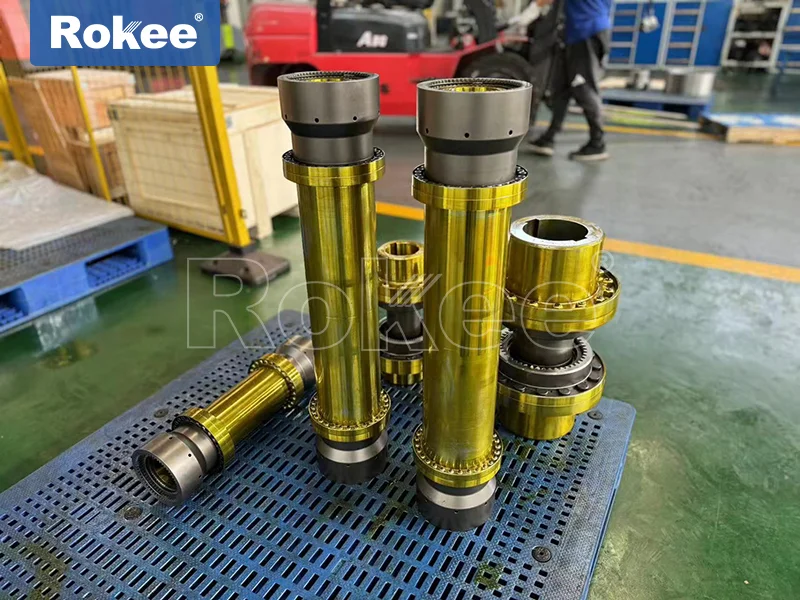
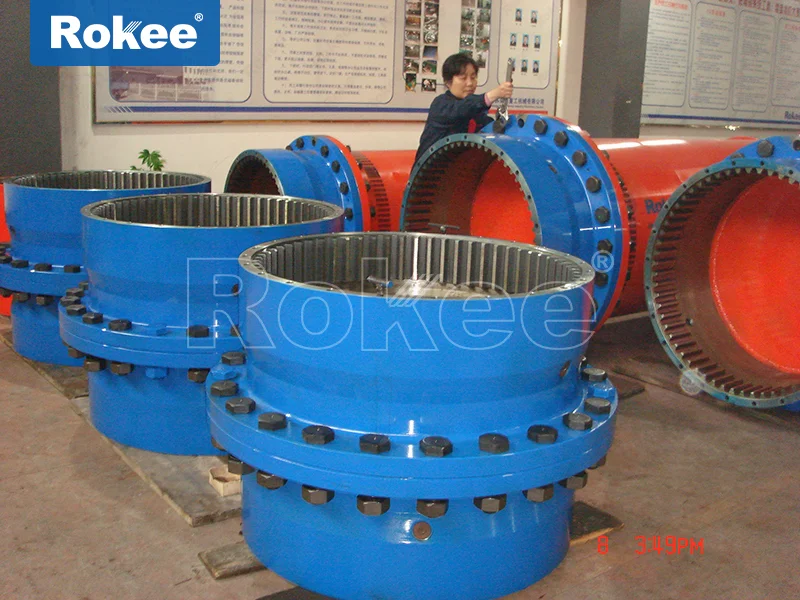
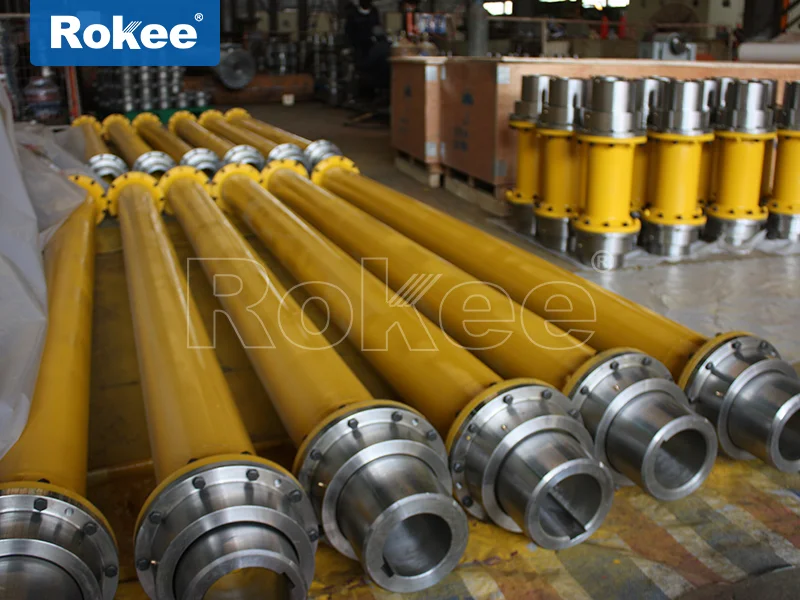
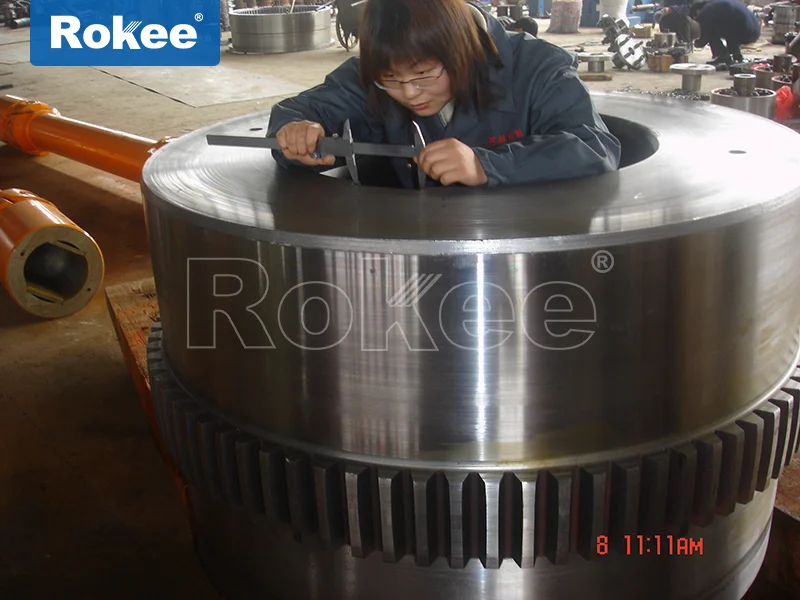
The unique structural design of barrel gear couplings endows them with superior transmission performance that is more suitable for heavy-duty and continuous industrial production scenarios compared with ordinary couplings. The core structure of the barrel gear coupling is composed of an inner gear sleeve and two half-couplings with barrel-shaped outer teeth. Different from the linear tooth profile of ordinary gear couplings, the outer teeth of the barrel gear coupling adopt a spherical convex drum-shaped structure. This special tooth profile design enables the tooth surface to form a large-area uniform contact state during meshing transmission, effectively dispersing the unit contact stress of the tooth surface and avoiding local stress concentration and premature wear failure caused by point or line contact of traditional gear teeth. In the power transmission process, the barrel-shaped outer teeth mesh flexibly with the inner teeth of the outer sleeve, and the rolling friction state formed between the tooth surfaces replaces the sliding friction of traditional transmission structures, which greatly reduces friction resistance and friction heat generation during operation, and improves the smoothness and efficiency of torque transmission. Meanwhile, the structural gap reserved by the drum-shaped tooth profile in the radial, axial and angular directions enables the coupling to have excellent comprehensive displacement compensation capability, which can effectively adapt to the coaxial deviation, axial displacement and angular offset between driving and driven shafts caused by equipment installation errors, foundation settlement and long-term operational deformation in the production line. This excellent misalignment adaptation performance makes barrel gear couplings uniquely suitable for the complex operating environment of PIR sandwich panel production lines with multi-equipment connection and long-cycle continuous operation.
In the full-process production of PIR sandwich panels, barrel gear couplings are widely applied in the core transmission links of key equipment, covering the whole process from raw material processing to finished product forming. In the polyurethane raw material extrusion stage, the coupling is installed between the driving motor and the extrusion reducer, undertaking the high-torque power transmission task required for raw material melting, mixing and quantitative extrusion. The PIR raw material extrusion process has the characteristics of high material viscosity and variable extrusion resistance, and the extrusion load will fluctuate dynamically with the change of raw material formula and extrusion speed. The high load-bearing capacity and impact resistance of barrel gear couplings can well adapt to this variable load operation mode, ensuring stable output of extrusion torque and avoiding pulsating extrusion of raw materials caused by unstable power transmission, which effectively guarantees the uniformity of raw material mixing and the stability of subsequent composite forming. In the continuous conveying and composite lamination stage of the production line, multiple groups of conveying rollers and composite pressing equipment need to maintain synchronous and constant-speed operation to ensure the flatness and composite bonding accuracy of the sandwich panel base material. The barrel gear couplings installed between the conveying power shafts and the transmission branches can accurately transmit rotational motion and torque, compensate for the tiny shaft offset generated by the long-term operation of the conveying system, eliminate the speed difference and vibration deviation between different conveying units, and prevent the problems of plate deviation, wrinkling and uneven bonding caused by asynchronous operation of the conveying system.
In the fixed-length cutting and finishing stage of PIR sandwich panels, the production line needs to realize frequent start-stop and speed adjustment according to different product specifications and production rhythms. The inertial impact load generated by frequent start-stop will cause great instantaneous impact on the transmission system. The flexible meshing structure of barrel gear couplings can effectively absorb instantaneous impact energy and buffer load fluctuation, avoid rigid impact damage to transmission components such as motors and reducers, and maintain the stability of the cutting equipment’s operating speed. This stable transmission state ensures the fixed-length cutting accuracy and section flatness of PIR sandwich panels, reducing product dimensional errors and surface defects. In addition, the closed transmission structure of barrel gear couplings can effectively isolate dust, debris and tiny foam particles generated in the PIR sandwich panel production environment, prevent external pollutants from entering the meshing tooth surface, reduce abrasive wear of components, and adapt to the long-term continuous production operation requirements of industrial production lines. Compared with elastic couplings and ordinary gear couplings, barrel gear couplings have higher torque transmission density and longer fatigue life under the same installation space, which can meet the high-intensity operation requirements of PIR sandwich panel production lines that operate continuously for a long time.
Although barrel gear couplings have inherent structural performance advantages, there are still many application problems in the actual operation of traditional matching schemes in PIR sandwich panel production lines, which restrict the full play of their transmission performance. In terms of model selection matching, many production lines adopt universal coupling configuration schemes, lacking targeted matching according to the actual load characteristics and operating parameters of PIR sandwich panel production equipment. The low-load transmission links such as auxiliary conveying often use oversized couplings, resulting in redundant structural volume, increased operating inertia and wasted power consumption, while the high-torque links such as raw material extrusion and composite pressing are equipped with insufficient load-level couplings, leading to long-term overload operation of the tooth surface, accelerated fatigue wear and frequent transmission failure. In terms of installation and debugging, the lack of precise installation standards leads to excessive reserved deviation of the coupling shaft system. Although the barrel gear coupling has displacement compensation capability, excessive long-term deviation will cause uneven meshing of tooth surfaces, increased local friction heat, and accelerated aging and wear of lubricating media, resulting in increased equipment vibration and noise during high-speed operation, and even affecting the overall operating stability of the production line.
In terms of daily operation and maintenance, the continuous closed production mode of PIR sandwich panel production lines makes the coupling in a long-term uninterrupted operating state. The traditional regular maintenance mode cannot realize real-time perception of the coupling’s operating state. Problems such as lubrication failure, tooth surface wear and bolt loosening cannot be detected and eliminated in time, which gradually evolves into hidden faults of the transmission system. In addition, the traditional barrel gear coupling has a single structural form, and the heat dissipation performance during high-load continuous operation is limited. Long-term high-temperature operation will reduce the surface hardness of gear teeth, weaken wear resistance and fatigue resistance, and greatly shorten the service life of the coupling. These practical application problems not only reduce the operational reliability of the transmission system but also increase the downtime maintenance time and operating cost of the production line, affecting the continuous and efficient production of PIR sandwich panels. Aiming at these practical pain points, targeted technical transformation of barrel gear couplings is required from the aspects of structural optimization, matching design, installation process and maintenance mode to adapt to the personalized operating conditions of PIR sandwich panel production lines.
The structural optimization and transformation of barrel gear couplings is the core link to improve their adaptive performance in PIR sandwich panel production lines. For the high-load and continuous-operation links such as raw material extrusion and composite lamination, the tooth profile structure of the coupling is optimized on the basis of the original drum-shaped tooth design. By optimizing the curvature of the drum-shaped tooth surface and increasing the effective meshing contact width of the gear teeth, the contact area of the tooth surface is further expanded, the unit bearing stress is reduced, and the heavy-load impact resistance and fatigue resistance of the coupling are significantly improved. At the same time, a micro-groove heat dissipation structure is designed on the outer surface of the inner gear sleeve and the non-meshing area of the tooth surface. The heat dissipation grooves can accelerate the air circulation inside the coupling structure, quickly take away the friction heat generated by meshing transmission, reduce the long-term operating temperature of the coupling, avoid lubricating oil deterioration and tooth surface thermal wear caused by high temperature, and improve the thermal stability and continuous operation capacity of the coupling. For the low-load and frequent speed-regulation links such as finished product conveying and cutting, the lightweight transformation of the coupling structure is carried out appropriately. Under the premise of ensuring basic transmission strength, the redundant structural size is optimized, the operating inertia of the coupling is reduced, the speed response sensitivity of the transmission system is improved, and the power consumption of equipment operation is reduced.
In terms of material transformation and optimization, combined with the humid and slightly corrosive operating environment of PIR sandwich panel production lines, the surface of the coupling gear teeth and structural parts is treated with high-strength wear-resistant and anti-corrosion treatment. On the basis of maintaining the high toughness of the base material, the surface hardness and wear resistance of the parts are improved, and the corrosion and oxidation of the coupling structure caused by long-term contact with humid air and trace chemical volatiles in the production environment are avoided, which effectively extends the service life of the coupling. In view of the problem of poor lubrication effect of traditional couplings in long-term operation, the closed lubrication structure is optimized and transformed. A sealed oil storage cavity is designed inside the coupling, and a micro-lubrication channel is reserved on the tooth surface meshing path. The stable oil film lubrication state of the meshing tooth surface is maintained through the self-circulating micro-lubrication system, which avoids dry friction and abrasive wear caused by insufficient lubrication, and reduces the maintenance frequency of manual oil injection. This optimized lubrication structure can adapt to the long-term uninterrupted operation mode of the production line, ensuring the long-term smooth meshing transmission of the coupling.
The matching application transformation technology aiming at the working conditions of PIR sandwich panel production lines can realize the precise adaptation between the coupling and the production line transmission system. According to the load characteristics, speed range and start-stop frequency of different process links in the production line, a hierarchical matching scheme of barrel gear couplings is formulated. Through the dynamic load test of each transmission unit of the production line, the actual torque demand, impact load amplitude and displacement deviation range of each link are accurately obtained, and the coupling specifications and structural parameters are selected in a targeted manner to avoid performance redundancy or insufficient matching. For the high-impact extrusion and pressing links, couplings with high load-bearing and high compensation performance are selected and matched with buffer limit structures to enhance the impact resistance of the transmission system. For the high-speed and stable conveying links, couplings with high-precision transmission and low vibration performance are matched to ensure the synchronization and stability of multi-unit transmission.
In terms of installation and debugging transformation, a standardized precision installation process is established to replace the traditional empirical installation mode. Before installation, the coaxiality of the driving and driven shafts is precisely calibrated by using precision detection tools to control the installation deviation within the optimal compensation range of the coupling, avoiding excessive deviation load caused by installation errors. During installation, the assembly gap and meshing state of the coupling are strictly adjusted to ensure uniform meshing stress of the tooth surface and stable transmission operation. After installation, the no-load trial operation and load debugging are carried out step by step to detect the vibration, noise and temperature rise of the coupling during operation, and fine-tune the installation state to ensure that the coupling is in the optimal working state. In terms of operation and maintenance transformation, a state-based intelligent maintenance mode is introduced to replace the traditional regular maintenance. By arranging vibration, temperature and speed monitoring points near the coupling operation position, the real-time operating state data of the coupling is collected, and the wear state, lubrication state and fault hidden danger of the coupling are judged through data analysis, so as to realize early warning and precise maintenance of faults, reduce unnecessary disassembly and maintenance, and improve the operation stability and service life of the coupling.
The application and transformation of barrel gear couplings have achieved remarkable practical effects in the actual operation of PIR sandwich panel production lines. After structural optimization and matching transformation, the torque transmission accuracy of the production line transmission system is significantly improved, the speed fluctuation rate of each transmission unit is effectively controlled, and the operation synchronization of extrusion, conveying, pressing and cutting processes is greatly enhanced. The dimensional accuracy and surface flatness of PIR sandwich panel products are significantly improved, and the product defect rate caused by unstable transmission is reduced. The optimized barrel gear coupling has stronger misalignment compensation ability and impact resistance, which can effectively adapt to the dynamic load changes and shaft system deviation changes in the production process, significantly reduce the vibration and noise of the production line during operation, and improve the overall operation stability of the equipment. The transformed lubrication and heat dissipation structure solves the problems of high temperature wear and lubrication failure in long-term continuous operation, reduces the wear speed of coupling gear teeth, and extends the service life of the coupling by a large margin.
In terms of production operation efficiency, the failure rate of the transmission system of the PIR sandwich panel production line is significantly reduced, the number and duration of shutdown maintenance are greatly reduced, the continuous operation time of the production line is effectively prolonged, and the overall production efficiency is significantly improved. The hierarchical matching and lightweight transformation of couplings reduce the invalid power consumption of equipment operation, realize energy-saving and efficient operation of the transmission system, and reduce the long-term operation cost of the production line. In addition, the stable transmission state avoids the equipment impact and structural fatigue caused by frequent transmission faults, protects the core equipment of the production line, reduces the loss of equipment accessories and the maintenance cost of mechanical structures, and brings good economic benefits for the stable production of enterprises. With the continuous development of PIR sandwich panel manufacturing technology towards high speed, high precision and intelligent continuous production, the operating conditions of production line transmission systems will be more stringent, and the performance requirements for barrel gear couplings will be further improved.
In the future, the application and transformation technology of barrel gear couplings will continue to develop in the direction of structural refinement, material high-performance and maintenance intelligence. Through further optimization of tooth profile design, development of new high-strength and wear-resistant materials, and integration of intelligent monitoring and fault diagnosis technology, the adaptive performance and service life of couplings will be further improved, which can better meet the intelligent and high-efficiency production needs of PIR sandwich panel production lines. At the same time, summarizing and improving the targeted transformation and matching application system of barrel gear couplings for different process links will form a set of standardized and systematic application technology schemes, providing reliable technical support for the stable operation and performance upgrading of PIR sandwich panel production industry transmission systems, and promoting the high-quality development of modern thermal insulation building material manufacturing industry.