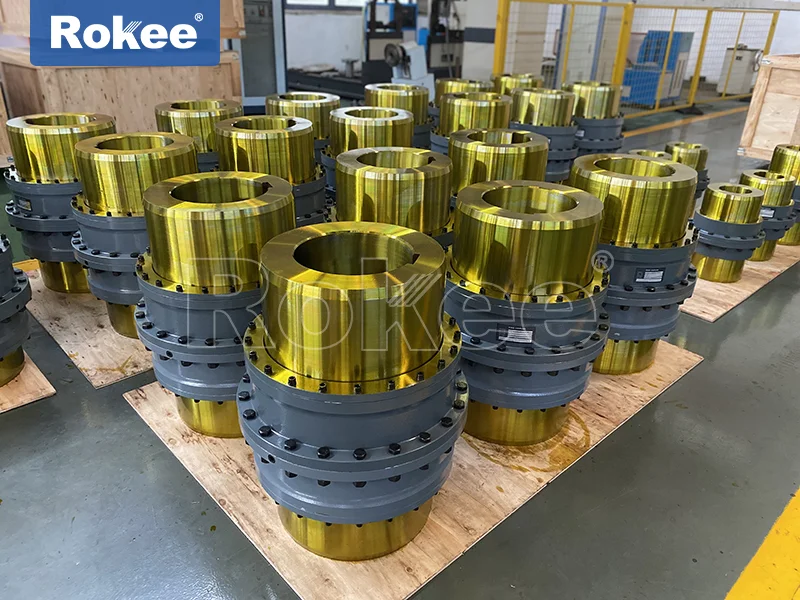
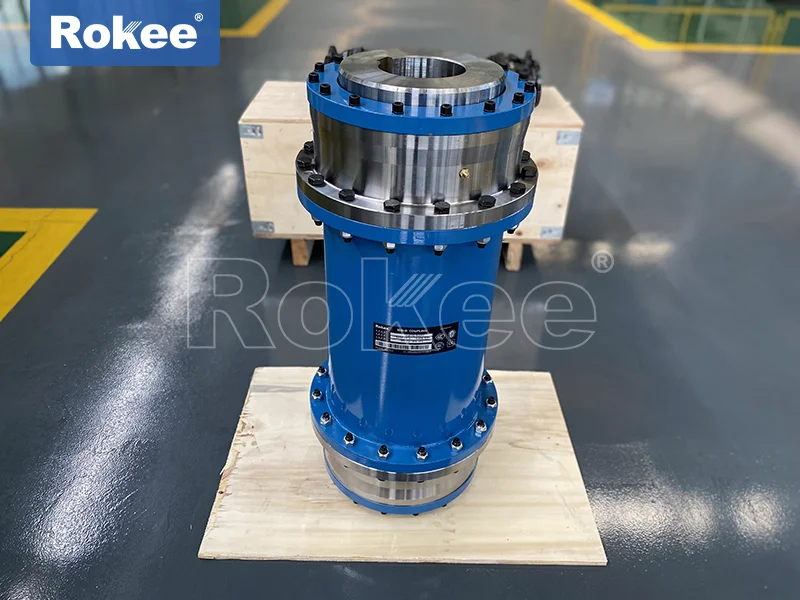
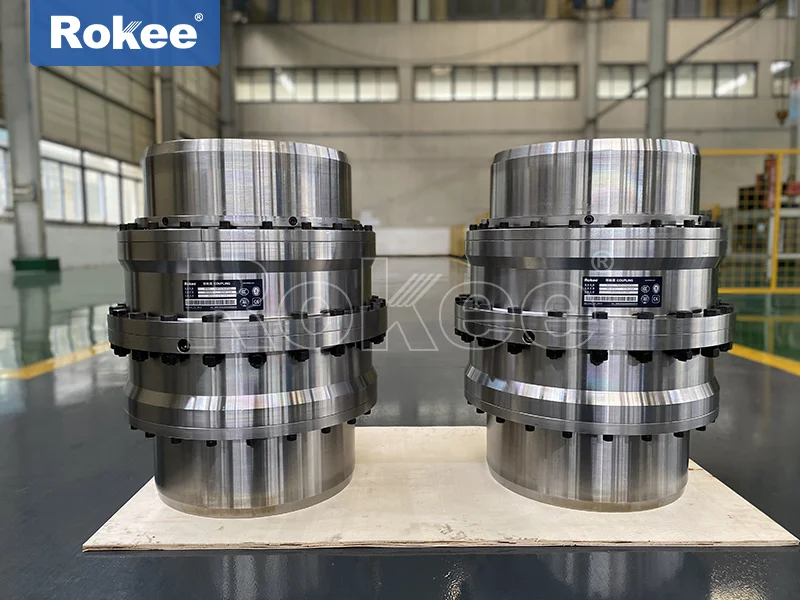
Key Points Of Teeth Coupling For Heavy Load Working Conditions Of Polyurethane Sandwich Panel Production Line
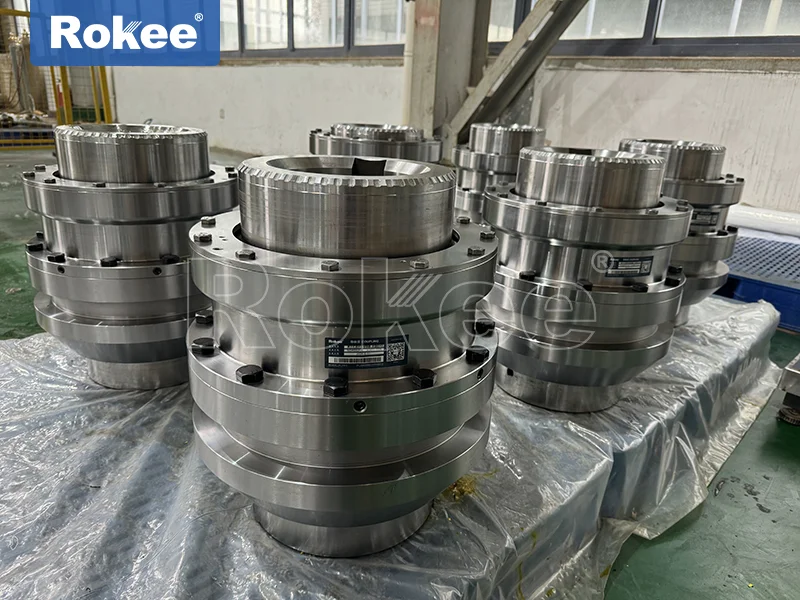
Polyurethane sandwich panel production lines belong to typical heavy-duty continuous industrial production equipment, which maintains long-cycle uninterrupted operation under high tension, high torque and alternating load conditions throughout the production process. The core transmission links including roller conveying, pressing forming, traction cutting and foaming matching operation require stable and efficient torque transmission systems, and the operational stability of transmission components directly determines the overall production efficiency and equipment safety of the production line. As a key flexible transmission component suitable for heavy-load and high-displacement industrial scenarios, teeth coupling undertakes the important task of connecting rotating shafts, balancing transmission deviation and bearing alternating impact loads in polyurethane sandwich panel production lines. Different from the light-load and stable working conditions of general mechanical equipment, the heavy-load operating environment of sandwich panel production lines is characterized by long-term continuous operation, frequent load fluctuation, occasional impact vibration and cumulative transmission deviation, which puts forward higher requirements on the structural adaptability, load-bearing performance, wear resistance and operational stability of teeth coupling. In actual industrial application, unreasonable selection, non-standard installation, inadequate operation maintenance and ignored structural adaptation will easily lead to coupling tooth surface wear, transmission jitter, torque attenuation and even shaft system failure, causing production line shutdown and mechanical failure losses. Therefore, mastering the core technical points of teeth coupling application under heavy load working conditions is the key to ensure the long-term stable and reliable operation of polyurethane sandwich panel production lines.
The operating characteristics of polyurethane sandwich panel production line under heavy load conditions are the fundamental basis for the reasonable application of teeth coupling. In the full-process production of polyurethane sandwich panels, raw material feeding, continuous rolling, high-pressure foaming, composite pressing and fixed-length cutting form a closed-loop continuous production system. The equipment operates for a long time without frequent shutdown and restart, and the transmission system needs to bear stable heavy torque for a long time. At the same time, in the stages of material start-up feeding, thickness adjustment of pressing roller and switching of production specifications, the load of the transmission system will fluctuate instantaneously, forming alternating impact loads on the coupling. In addition, affected by long-term mechanical vibration, thermal expansion and contraction of equipment operation and slight foundation settlement, the rotating shaft of each transmission unit of the production line will produce different degrees of radial, angular and axial displacement deviation. These comprehensive working characteristics make the transmission environment of the production line complex and harsh. Ordinary rigid coupling structures are difficult to adapt to displacement deviation and impact load, while common flexible couplings with low load-bearing capacity are prone to fatigue failure under long-term heavy torque. The teeth coupling relies on the multi-tooth meshing transmission structure, which can realize uniform load distribution and efficient torque transmission, and has excellent displacement compensation capability, which can well adapt to the comprehensive heavy-load working characteristics of polyurethane sandwich panel production lines. Fully clarifying the matching relationship between the performance characteristics of teeth coupling and the production line load environment is the primary prerequisite to avoid application failure and improve transmission stability.
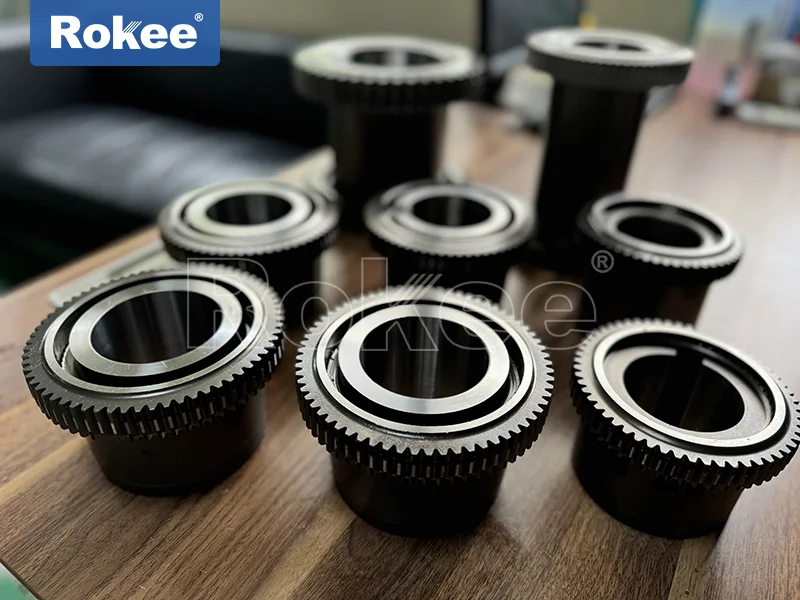
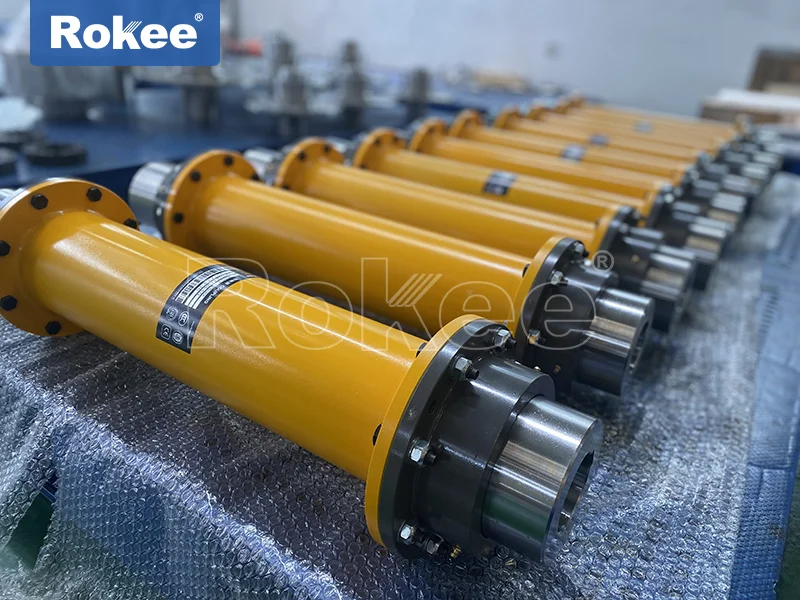
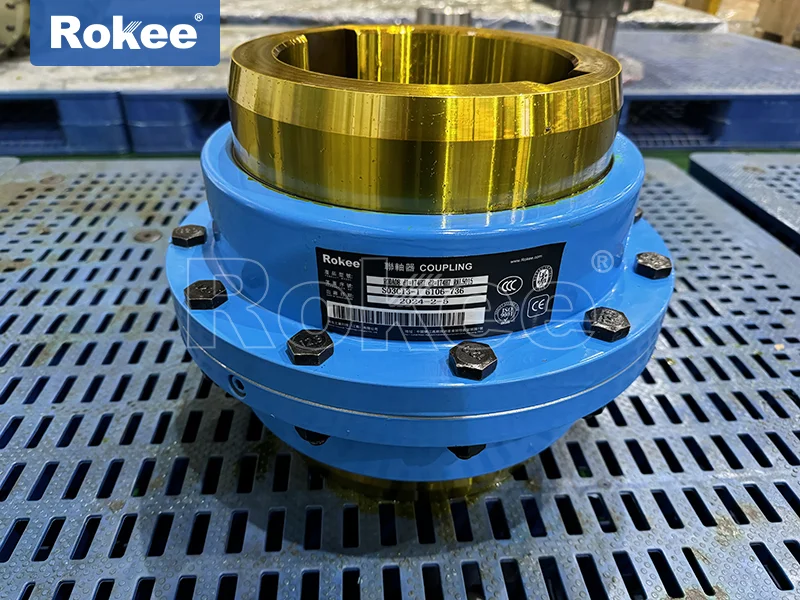
Structural design and type matching of teeth coupling are the core links to adapt to heavy load working conditions of polyurethane sandwich panel production lines. The load-bearing capacity and service stability of teeth coupling are essentially determined by its tooth profile structure, tooth surface processing accuracy and overall structural optimization design. Compared with traditional straight-tooth coupling structures, the crowned tooth structure has obvious advantages in heavy-load transmission scenarios. The spherical arc design of the tooth top and the curved transition of the tooth side enable the internal and external meshing teeth to form a larger contact area during torque transmission, effectively avoiding the stress concentration phenomenon at the tooth end of straight-tooth structures under heavy load. In the process of long-term heavy torque operation, uniform stress distribution can significantly reduce local friction and fatigue wear of the tooth surface, improve the overall load-bearing limit of the coupling, and enhance the ability to resist alternating impact loads. For the polyurethane sandwich panel production line with long-term continuous operation, the crowned tooth structure can also effectively adapt to the small-angle angular deviation and radial displacement of the shaft system generated during equipment operation, reduce the additional friction torque caused by transmission deviation, and maintain stable transmission efficiency.
In terms of structural matching, the transmission power, operating speed and load fluctuation range of different stations of the production line need to be fully considered. The main transmission parts responsible for roller pressing and overall traction bear the largest long-term static load and instantaneous impact load, so it is necessary to select teeth coupling with thickened tooth surface, optimized tooth modulus and enhanced overall rigidity to ensure sufficient torque transmission reserve. For the auxiliary transmission links such as material conveying and auxiliary cutting, the load is relatively stable, and the matching can be carried out according to the conventional heavy-duty standard to avoid excessive structural redundancy or insufficient load-bearing capacity. In addition, the integral structural rigidity of the coupling also needs to be matched with the shaft system of the production line. Excessive rigidity will reduce the buffer performance of the transmission system and cannot absorb impact vibration generated by load fluctuation; insufficient rigidity will cause elastic deformation of the coupling under heavy load, resulting in transmission jitter and affecting the flatness of sandwich panel forming. Reasonable structural type matching can maximize the structural advantages of teeth coupling, make it adapt to the long-term heavy-load operation rhythm of the production line, and lay a foundation for stable transmission.
Material selection and surface treatment process of teeth coupling directly affect the service life and heavy-load resistance in polyurethane sandwich panel production lines. Long-term heavy-load operation, continuous meshing friction and occasional impact load will cause cumulative wear and fatigue damage to the coupling tooth surface. At the same time, the production environment of polyurethane sandwich panels has certain trace chemical medium volatility and environmental humidity, which will bring subtle corrosion and oxidation effects on the coupling metal structure. Therefore, the matrix material of the coupling must have high strength, high toughness and good fatigue resistance to withstand repeated alternating load and mechanical friction. High-quality alloy steel materials are usually used for heavy-duty teeth coupling, which has excellent comprehensive mechanical properties, can maintain stable structural strength and dimensional accuracy under long-term heavy torque, and avoid plastic deformation or tooth surface collapse caused by load overload.
Surface strengthening treatment is an indispensable key process for teeth coupling used in heavy-load working conditions. Conventional untreated tooth surfaces are prone to rapid wear and scratch failure under continuous meshing friction of heavy load. Professional surface quenching, carburizing hardening and anti-wear coating treatment can significantly improve the hardness and wear resistance of the tooth surface, reduce the friction coefficient during meshing transmission, and weaken the abrasive wear caused by long-term operation. At the same time, the anti-corrosion treatment on the coupling surface can effectively isolate the influence of humid environment and trace chemical volatiles in the production workshop, prevent metal oxidation and corrosion, avoid tooth surface pitting and transmission gap increase caused by corrosion, and ensure the long-term dimensional stability and transmission accuracy of the coupling. It is worth noting that the surface treatment process needs to balance hardness and toughness. Excessive single hardness will lead to increased brittleness of the tooth surface, easy tooth chipping under impact load, while insufficient hardness cannot meet the wear resistance requirements of heavy-load continuous operation.
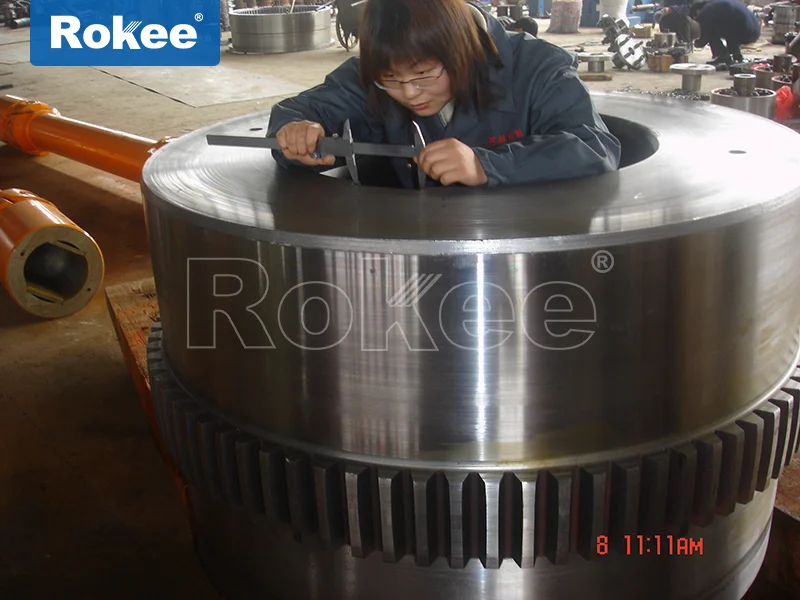
Precision installation and debugging are crucial to give full play to the heavy-load performance of teeth coupling in polyurethane sandwich panel production lines. Even if the coupling has excellent structural design and material performance, non-standard installation will cause serious deviation of transmission state, resulting in accelerated failure under heavy load. Before installation, it is necessary to carry out comprehensive inspection on the coupling and the matching shaft system, clean the burrs, impurities and rust on the tooth surface, shaft head and keyway, and ensure the cleanliness and flatness of the matching surface, so as to avoid assembly gap and local stress concentration caused by foreign matters. The coaxiality calibration of the driving and driven shafts is the core of installation debugging. Under heavy load working conditions, slight coaxiality deviation will be continuously amplified in the process of high-torque transmission, resulting in unilateral excessive wear of the coupling tooth surface, increased transmission vibration and accelerated fatigue damage.
In the actual installation process, multi-dimensional deviation calibration is required for radial runout, angular deflection and axial clearance of the shaft system. Appropriate axial expansion clearance should be reserved according to the operating temperature and thermal expansion coefficient of the production line equipment, to avoid coupling extrusion deformation and tooth surface friction increase caused by thermal expansion of the shaft system during long-term operation. After the completion of installation and fixing, no-load trial operation and graded load test operation must be carried out. The no-load operation can check whether there is abnormal noise, jitter and stuck phenomenon in the transmission process, and eliminate installation errors. The graded load operation gradually increases the transmission torque to the production working state, so that the coupling tooth surface can form uniform running-in fit, avoid sudden full-load impact leading to local tooth surface overload damage, and ensure that the coupling can maintain stable meshing state under formal heavy-load operation.
Lubrication management is a key daily guarantee for the stable operation of teeth coupling under long-term heavy load of polyurethane sandwich panel production lines. The meshing transmission of teeth coupling relies on the mutual sliding and fitting of internal and external teeth surfaces. Under heavy-load working conditions, the contact pressure between tooth surfaces is extremely high, and dry friction will produce a large amount of friction heat and serious abrasive wear in a short time. Scientific and standardized lubrication can form a uniform oil film on the meshing tooth surface, isolate direct metal contact, reduce friction resistance and wear loss, and take away the friction heat generated by high-load meshing through the flow of lubricating oil, so as to avoid local overheating of the tooth surface, material performance attenuation and thermal deformation of the structure. For the continuous operating production line, the lubrication state of the coupling directly determines its continuous operation capacity and service life.
In terms of lubrication selection and cycle management, it is necessary to select high-viscosity and high-temperature-resistant special lubricating grease suitable for heavy-load and low-speed meshing transmission, which can maintain stable oil film strength under high pressure and will not fail or lose efficacy due to long-term temperature rise. The lubrication cycle should be formulated according to the operating intensity of the production line. The production line with full-load continuous operation needs to shorten the regular lubrication interval to ensure the continuous effectiveness of the lubricating oil film. At the same time, regular inspection of lubrication status is required to check for oil leakage, grease deterioration and impurity mixing. The lubricating grease mixed with metal wear debris will lose anti-wear and lubrication performance, and will even cause secondary abrasive wear on the tooth surface. Timely replacement of deteriorated lubricating materials and cleaning of internal dirt of the coupling can effectively maintain the good lubrication state of the meshing pair and reduce the failure rate of heavy-load transmission.
Daily operation monitoring and regular maintenance are important means to prevent failure and extend the service life of teeth coupling under heavy load working conditions. The polyurethane sandwich panel production line operates continuously for a long time, and the teeth coupling is in a high-load working state for a long time, with hidden cumulative fatigue damage. Establishing a perfect daily monitoring and regular maintenance mechanism can effectively discover potential faults in advance and avoid sudden equipment shutdown caused by coupling failure. In the daily production process, it is necessary to monitor the operating state of the coupling in real time, including transmission vibration amplitude, operating noise, surface temperature and transmission stability. Abnormal vibration and harsh friction noise often indicate uneven tooth surface wear, meshing deviation or insufficient lubrication; excessive local temperature rise means abnormal friction and overload operation of the coupling, which needs timely inspection and adjustment.
Regular disassembly and maintenance should focus on checking the wear state of the tooth surface, the tightness of the connecting parts and the deformation of the overall structure. Fine pitting, scratch and wear traces on the tooth surface are early signs of fatigue damage, and targeted maintenance and lubrication reinforcement are required to avoid further expansion of damage. The connecting bolts and positioning parts of the coupling will produce loose hidden dangers due to long-term vibration impact, and regular fastening and calibration are needed to ensure the overall structural stability of the coupling. In addition, the axial and radial displacement compensation performance of the coupling should be checked regularly to ensure that it can effectively adapt to the slight shaft system deviation generated during the long-term operation of the production line and maintain the accuracy and stability of power transmission. For the coupling with obvious tooth surface wear, structural deformation and reduced compensation performance, timely replacement and upgrading should be carried out to avoid hidden dangers of heavy-load operation.
Fault prevention and emergency disposal optimization are supplementary key points to ensure the reliable application of teeth coupling in heavy-load production conditions. In the long-term heavy-load operation of polyurethane sandwich panel production lines, teeth coupling may have common faults such as tooth surface abnormal wear, transmission jitter, torque insufficient transmission and local tooth chipping. The root causes of these faults are mostly concentrated in unreasonable type selection, installation deviation, poor lubrication, long-term overload operation and untimely maintenance. In the daily management process, it is necessary to formulate targeted fault prevention measures according to the working condition characteristics. Strictly avoid long-term overload operation of the production line beyond the rated load range of the coupling, formulate standardized installation and debugging processes, unify lubrication and maintenance standards, and eliminate fault hidden dangers from the source.
At the same time, perfect emergency disposal measures should be established for sudden coupling faults. When abnormal transmission vibration, noise or power attenuation is found in production, the load operation should be reduced in time, and the equipment should be shut down for inspection when necessary to avoid secondary damage to the coupling and shaft system caused by forced operation under fault state. Summarize fault types and causes regularly, optimize the matching scheme and maintenance cycle of the coupling according to the actual production load changes, and form a closed-loop management mechanism of selection, installation, operation, maintenance and optimization, so as to continuously improve the adaptability and operational reliability of teeth coupling under the heavy-load working conditions of polyurethane sandwich panel production lines.
In conclusion, the application of teeth coupling in polyurethane sandwich panel production lines under heavy load working conditions is a systematic engineering involving structural matching, material performance, installation precision, lubrication maintenance and fault management. The complex working characteristics of long-term continuous operation, alternating load fluctuation and shaft system displacement deviation of the production line put forward strict requirements on every link of coupling application. Only by fully grasping the adaptation law between coupling performance and production working conditions, standardizing every technical link from type selection matching to daily maintenance, and eliminating various adverse factors affecting heavy-load transmission stability, can we give full play to the high load-bearing, high stability and high compensation advantages of teeth coupling, ensure the long-term efficient and stable operation of the transmission system of polyurethane sandwich panel production lines, reduce equipment failure rate and production loss, and provide reliable technical support for continuous and standardized industrial production.