Optimize Gear Coupling Structure To Enhance Transmission Efficiency Of PIR Sandwich Panel Production Line
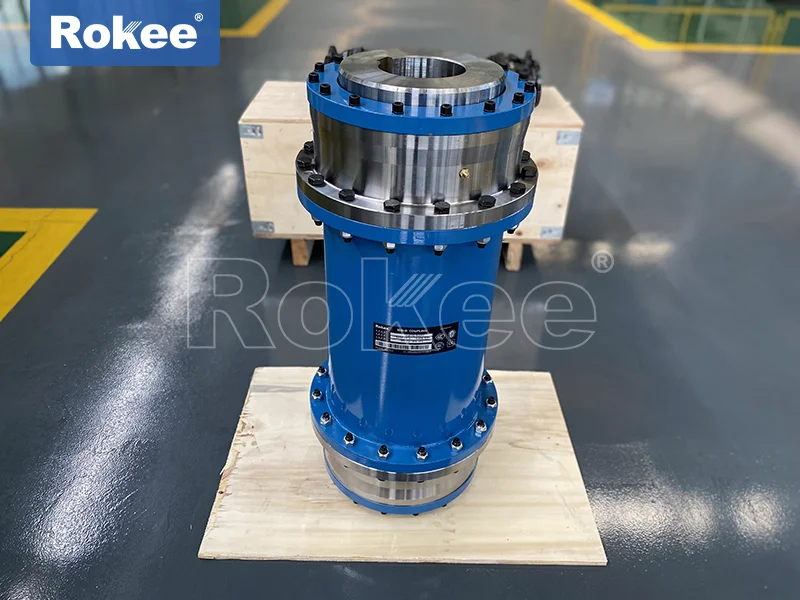
The continuous and stable operation of mechanical transmission systems is the core guarantee for the high-yield and high-quality production of PIR sandwich panels. As a key connecting component of the power transmission unit in PIR sandwich panel production lines, gear couplings undertake the important task of transmitting torque between driving motors, reduction gearboxes, and roller transmission mechanisms. Their structural rationality directly determines the power transmission accuracy, energy loss level, and operational stability of the entire production line. In actual industrial production, traditional gear coupling structures often expose prominent defects such as uneven gear meshing, excessive friction loss, poor misalignment compensation ability, and easy wear of key components under the long-term heavy-load and continuous operation conditions of PIR sandwich panel production lines. These defects lead to reduced transmission efficiency, increased equipment operating energy consumption, frequent minor failures of transmission components, and even intermittent jitter of production line operating speed, which not only raises production operation costs but also affects the dimensional accuracy and surface flatness of finished PIR sandwich panels, restricting the overall production efficiency and product quality upgrade of the production line. Therefore, targeted structural optimization of gear couplings based on the operating characteristics of PIR sandwich panel production lines is of great practical significance for reducing transmission energy consumption, improving equipment operation stability, and maximizing the production capacity of the production line.
PIR sandwich panel production line belongs to continuous industrial production equipment with long operating cycles and stable load characteristics. The whole production process includes raw material feeding, foaming compounding, roller pressing, fixed-length cutting, and finished product conveying, all of which rely on coordinated power transmission from multiple sets of transmission systems. The operating environment and load conditions of the production line put forward strict requirements for gear coupling performance. First, the production line operates continuously for a long time, and the gear coupling needs to maintain stable torque transmission under long-term cyclic load without obvious fatigue deformation and wear failure. Second, the multi-unit collaborative operation of the production line is prone to slight shaft misalignment caused by equipment vibration, foundation slight deformation, and assembly errors during operation, which requires the coupling to have good dynamic compensation capability. Third, the roller pressing and forming process of PIR sandwich panels has high requirements for transmission speed stability. Any transmission pause and jitter caused by coupling structural problems will lead to uneven foaming layer thickness and inconsistent plate body density, resulting in unqualified products. Traditional straight-tooth gear couplings widely used in existing production lines have rigid structural limitations. The straight tooth profile leads to linear contact during gear meshing, making it impossible to adapt to slight angular and radial misalignment of the transmission shaft. Local stress concentration occurs on the tooth surface during operation, which intensifies friction and wear, increases transmission energy loss, and gradually causes transmission clearance enlargement. With the extension of service time, the accumulated transmission error will seriously affect the synchronous operation accuracy of each processing unit of the production line, forming a vicious cycle of reduced efficiency, increased failure rate, and decreased product yield.
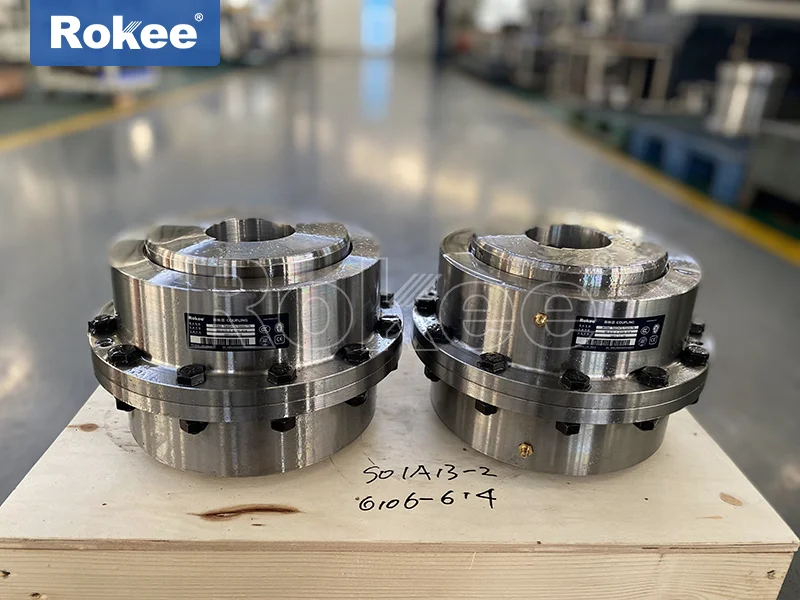
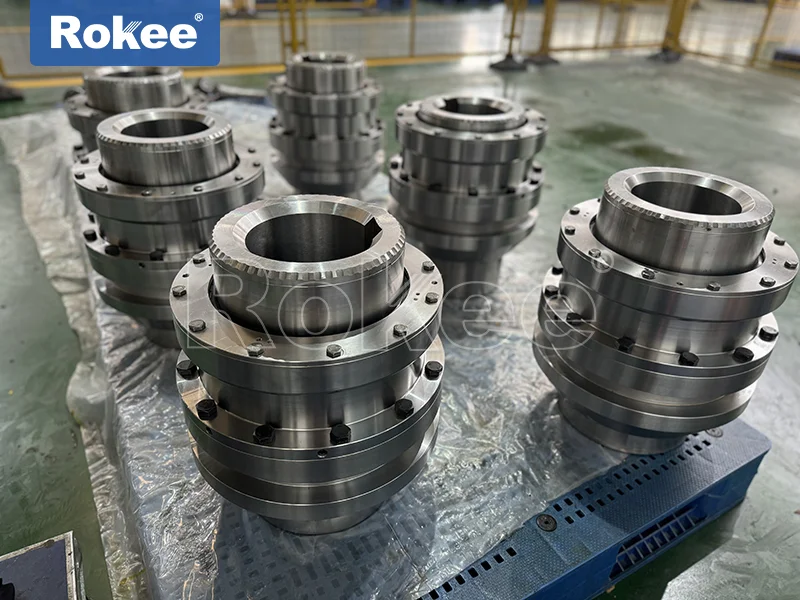
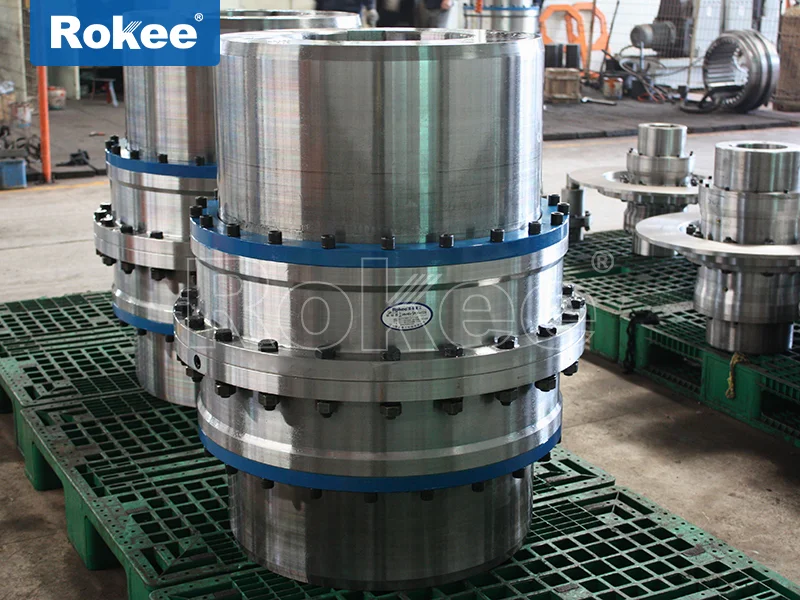
In view of the structural defects of traditional gear couplings matching PIR sandwich panel production lines, the core idea of structural optimization is to take improving gear meshing state, reducing friction loss, enhancing dynamic misalignment compensation ability, and optimizing load distribution as the starting point, and carry out targeted improvement from tooth profile structure, meshing clearance, component matching, and overall assembly structure. The first key optimization is the innovative improvement of gear tooth profile. Traditional straight-tooth structures are replaced with drum-shaped crowned tooth profiles for structural upgrading. The outer teeth of the coupling are machined into a smooth spherical curved structure with a reasonable radian, while the inner gear ring retains a precision straight tooth structure. This composite tooth profile design changes the linear rigid contact mode of traditional gear meshing into uniform surface contact. In the operation process of the PIR sandwich panel production line, even if there is slight angular deviation and radial displacement between the driving shaft and the driven shaft caused by equipment vibration, the curved tooth profile can automatically adapt to the misalignment state, avoid edge contact and local stress concentration of gear teeth, and disperse the bearing torque on the whole tooth surface evenly. This structural optimization fundamentally reduces the friction resistance and contact wear during torque transmission, effectively lowers the mechanical energy loss caused by meshing friction, and significantly improves the basic transmission efficiency of the coupling. Meanwhile, the optimized curved tooth structure has a larger effective meshing area under the same outer dimension, which enhances the torque bearing capacity of the coupling, enables it to adapt to the heavy-load pressing and conveying working conditions of the PIR sandwich panel production line, and ensures stable output of transmission torque.
The second important optimization direction is the precise adjustment of gear meshing clearance and internal assembly gap. The meshing gap of traditional gear couplings is designed with a large tolerance range to adapt to rough assembly conditions, which leads to excessive idle clearance in the transmission process. When the production line starts, stops, and adjusts speed, the excessive meshing gap will produce obvious transmission delay and impact vibration, resulting in torsional energy loss and accelerated fatigue damage of gear teeth. In the optimization design, combined with the low-frequency vibration and stable load operating characteristics of the PIR sandwich panel production line, the gear meshing clearance is precisely calibrated through finite element simulation and repeated prototype tests. A moderate and uniform gap is reserved between the inner and outer gear teeth, which not only eliminates the transmission jitter and delay caused by excessive clearance, but also avoids tooth surface abrasion and heating failure caused by over-tight meshing. At the same time, the axial assembly gap of the coupling is optimized and matched, and the limit positioning structure is added inside the coupling sleeve to control the axial displacement range of the half-coupling. This structure effectively suppresses the axial series motion of components during high-speed operation of the production line, reduces additional mechanical loss caused by component displacement, and further improves the stability and efficiency of power transmission. In addition, the optimized gap structure is more conducive to the uniform distribution of lubricating oil film, forming a stable lubricating layer on the gear meshing surface, reducing dry friction and abrasive wear, and realizing long-term low-loss operation of the coupling.
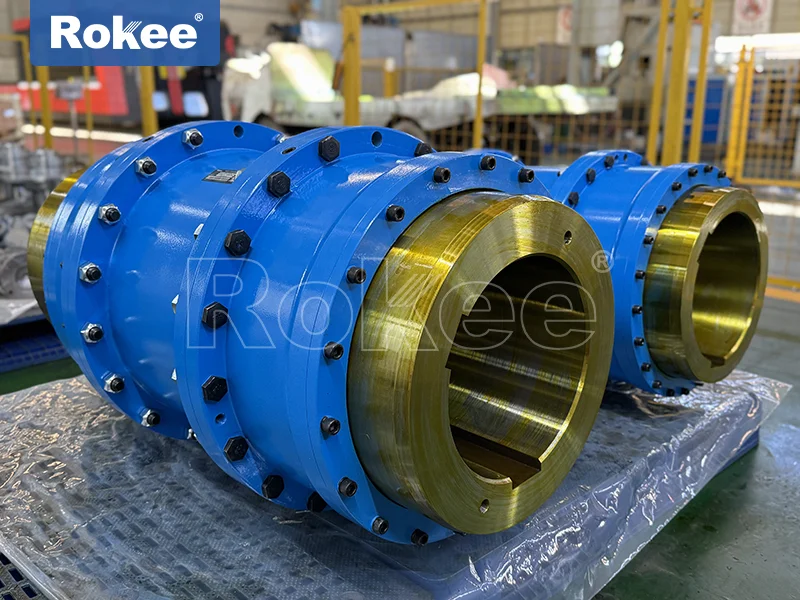
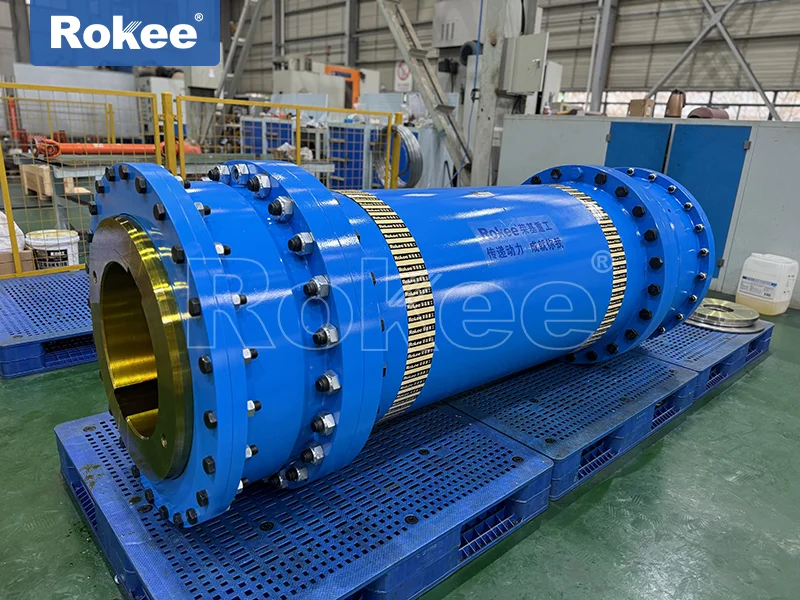
The third systematic optimization is the upgrade of the overall component structure and protection system of the gear coupling. Traditional gear couplings have a single sealing structure, which is easy to cause dust, foam debris, and fine particle pollutants in the production environment of PIR sandwich panels to enter the meshing interior. The accumulation of impurities will damage the lubricating oil film, aggravate tooth surface wear, block the meshing gap, and lead to increased transmission resistance and reduced efficiency. In the structural optimization, a composite sealing protection structure is adopted, which combines static sealing and dynamic sealing to form a fully enclosed protective space inside the coupling. This structure can effectively isolate external production pollutants, keep the internal meshing environment clean for a long time, avoid lubricant deterioration and abrasive wear caused by impurity invasion, and maintain the optimal meshing and lubrication state. At the same time, the structural weight of the coupling flange and sleeve is optimized on the premise of ensuring structural strength and torsional stiffness. The lightweight design of non-stress key parts reduces the rotational inertia of the coupling during operation, lowers the no-load energy consumption of the transmission system, and further improves the overall transmission efficiency. Moreover, the integral forging process is adopted for the optimized coupling hub and gear ring to improve the overall structural uniformity and mechanical strength, avoid local deformation and stress relaxation of components under long-term heavy load, ensure the long-term consistency of gear meshing accuracy, and reduce the efficiency attenuation rate of the coupling in the whole service cycle.
The structural optimization of gear couplings brings comprehensive performance improvements to the transmission system of PIR sandwich panel production lines, and the efficiency enhancement mechanism is reflected in multiple dimensions of dynamic operation, energy consumption loss, and stability maintenance. In terms of transmission energy consumption, the optimized drum-shaped tooth profile and precise meshing gap eliminate invalid friction and impact loss in the transmission process, greatly reduce the mechanical energy converted into heat energy and vibration energy, and significantly improve the effective utilization rate of power output by the motor. In the actual operation test of the PIR sandwich panel production line, the optimized gear coupling effectively reduces the power loss of the transmission system, realizing efficient and accurate transmission of torque and speed. In terms of operation stability, the optimized structure has excellent misalignment compensation ability, which can adapt to the slight dynamic deformation and vibration displacement of the production line equipment during long-term operation, maintain continuous and uniform gear meshing state, avoid transmission speed jitter and torque fluctuation, and ensure the synchronous and stable operation of each processing link of feeding, pressing, and cutting of the production line. This stable transmission state fundamentally eliminates product quality problems such as uneven foam filling and inconsistent plate thickness caused by transmission fluctuation, and improves the yield of PIR sandwich panels.
In terms of service life and maintenance cost control, the optimized gear coupling structure effectively alleviates tooth surface wear and fatigue damage, reduces the failure frequency of transmission components such as gear tooth abrasion, clearance enlargement, and component looseness. The closed sealing structure ensures the long-term stability of the internal lubrication system, prolongs the lubrication maintenance cycle, and reduces the downtime loss and maintenance labor cost caused by frequent component inspection and replacement. For the continuous production mode of PIR sandwich panel production lines, the reduction of equipment failure rate and maintenance downtime means the improvement of effective production time, which indirectly improves the overall production efficiency of the production line. In addition, the optimized coupling has higher torsional stiffness and structural stability, which can resist torsional vibration and impact load generated during the operation of the production line, avoid resonance problems of the transmission system, ensure the safe and reliable operation of the equipment, and lay a foundation for the long-term high-efficiency operation of the production line.
In practical industrial application, the optimized gear coupling structure shows excellent adaptability and efficiency improvement effect in PIR sandwich panel production lines. Different from general mechanical transmission equipment, PIR sandwich panel production lines have the characteristics of fixed process flow, stable load change, and high requirements for operation continuity. The traditional coupling structure can no longer meet the high-efficiency and high-precision production needs of modern sandwich panel equipment due to its low compensation ability, large friction loss, and easy attenuation of transmission accuracy. After structural optimization, the gear coupling realizes the organic combination of high-efficiency transmission, dynamic compensation, wear resistance and stability, solves many pain points of traditional transmission components in the application of sandwich panel production lines, and forms a matching high-efficiency transmission scheme for continuous heavy-load production conditions. The improvement of transmission efficiency not only reduces the comprehensive energy consumption of unit product production, realizes energy-saving and emission reduction in the production process, but also improves the operation precision and synchronization of the production line, promotes the overall optimization of production process parameters, and helps enterprises achieve high-efficiency and low-cost standardized production of PIR sandwich panels.
In conclusion, the structural optimization of gear couplings is a key technical means to improve the transmission performance and comprehensive production capacity of PIR sandwich panel production lines. By optimizing the gear tooth profile structure, precisely adjusting the meshing gap, upgrading the sealing protection system and lightweight structural design, the problems of large friction loss, poor misalignment compensation, unstable transmission and easy wear failure of traditional gear couplings are effectively solved. The optimized gear coupling significantly improves the power transmission efficiency and operation stability of the production line transmission system, reduces equipment operation energy consumption and maintenance cost, ensures the stable improvement of product processing quality, and brings significant economic and technical benefits to the production and processing of PIR sandwich panels. With the continuous upgrading of industrial intelligent and high-efficiency production equipment, the structural optimization of transmission components represented by gear couplings will become an important direction for the performance improvement of sandwich panel production lines, providing continuous technical support for the high-quality and high-efficiency development of the building insulation panel manufacturing industry.