Barrel Gear Coupling Fault Handling For Transmission System Of PIR Sandwich Panel Production Line
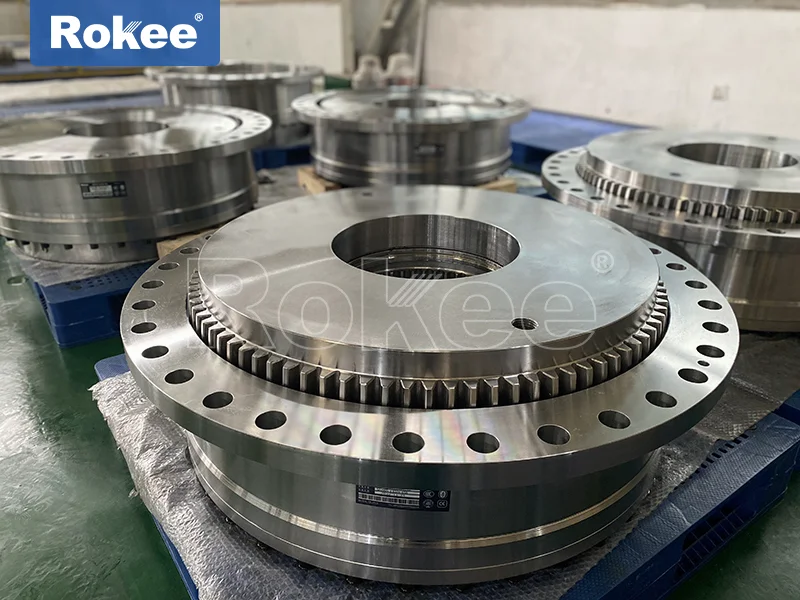
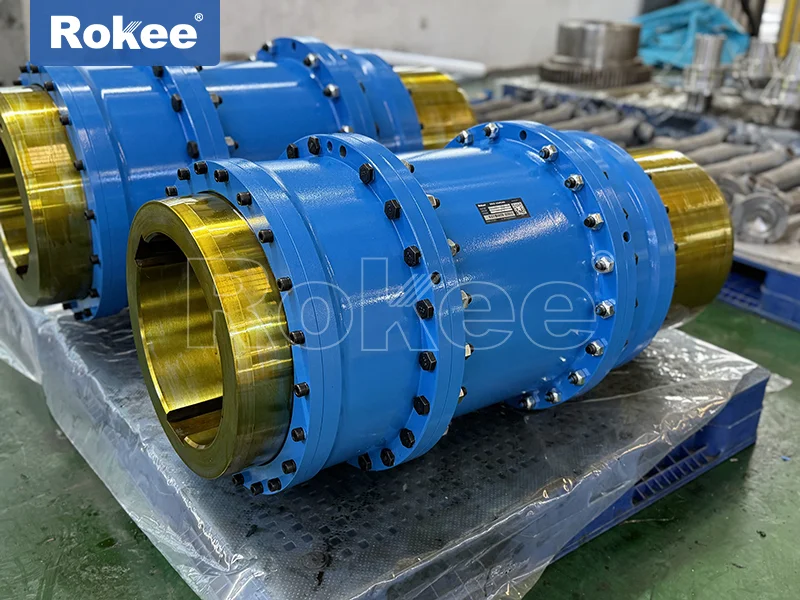
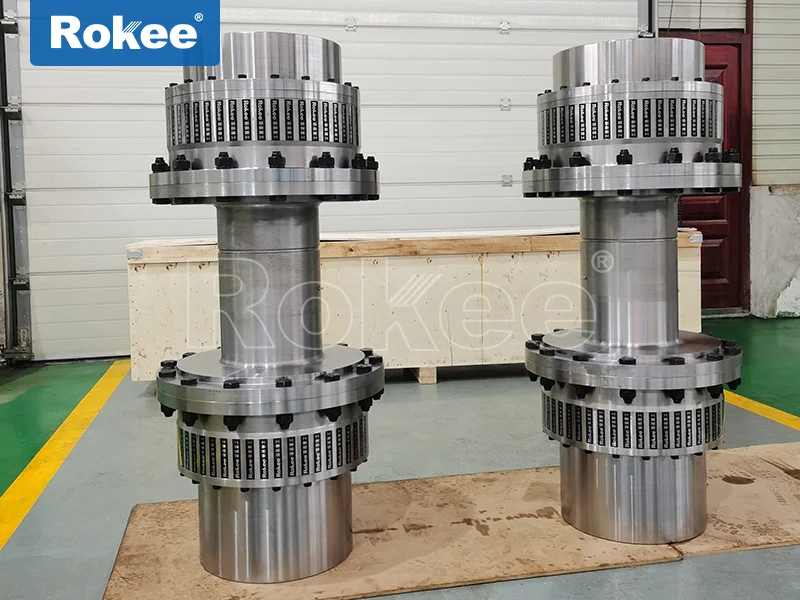
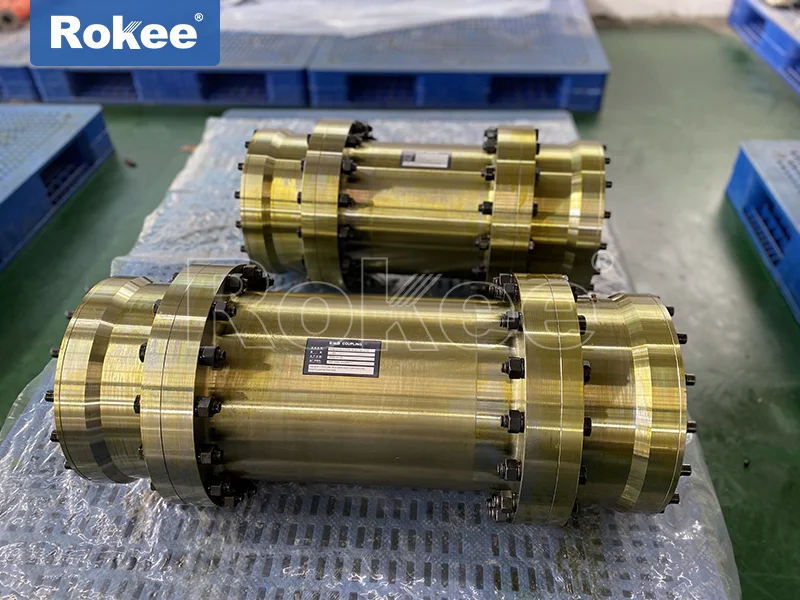
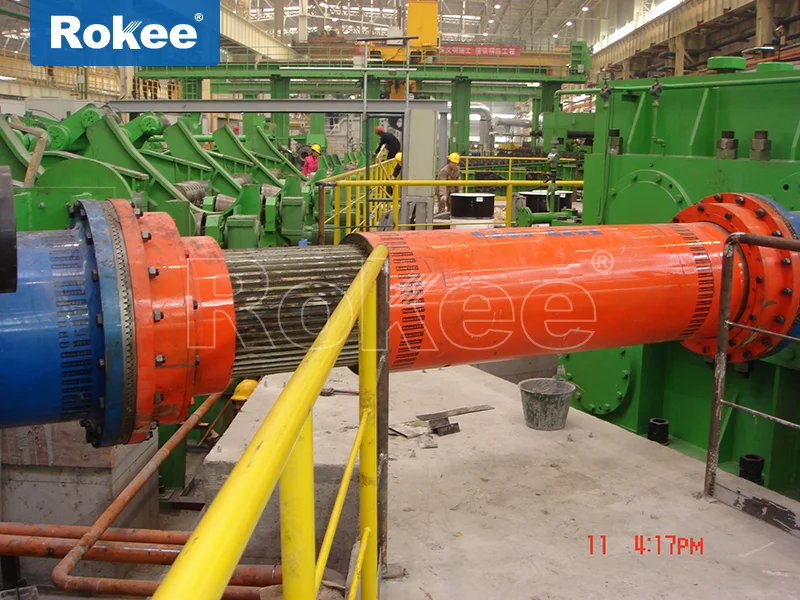
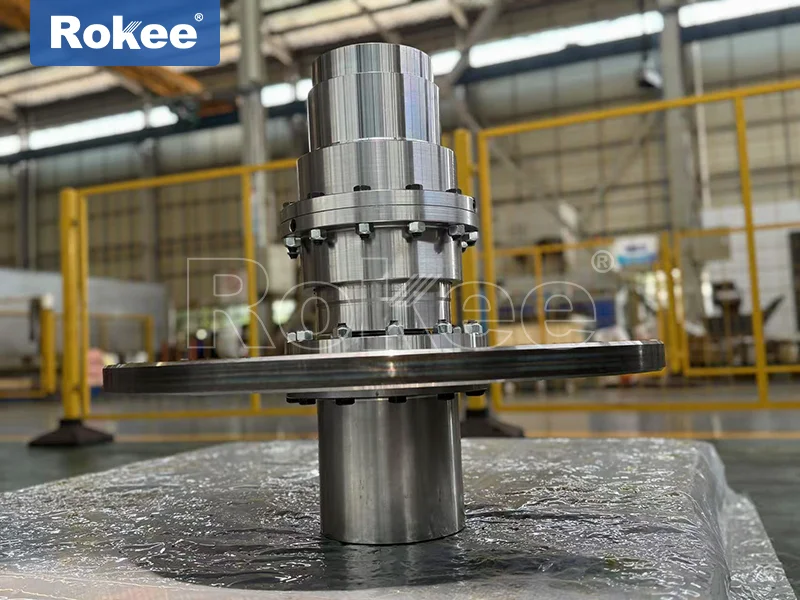
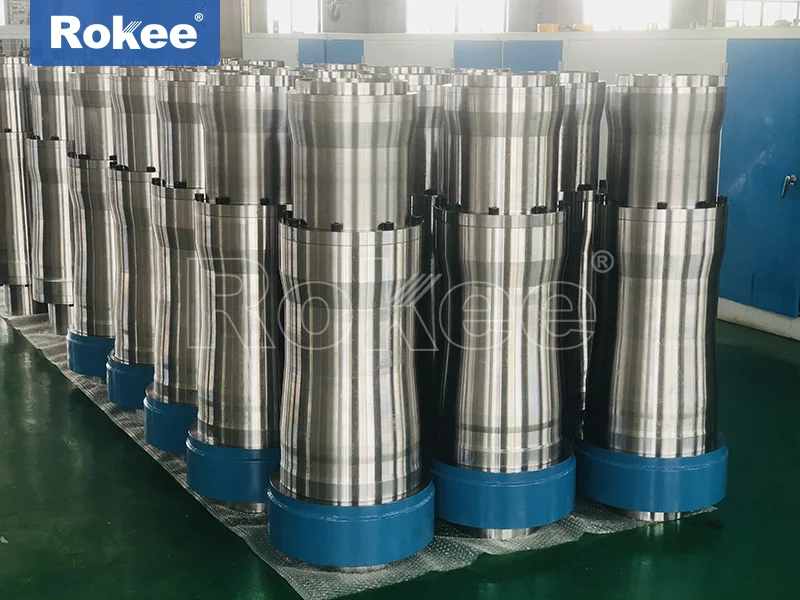
The transmission system serves as the core power delivery component of the PIR sandwich panel production line, undertaking the continuous and stable operation of key processes including raw material feeding, roller pressing, foaming curing, and finished product cutting. The barrel gear coupling, as a critical connecting part in the transmission system, is mainly responsible for connecting driving and driven shafts, compensating for minor axial, radial and angular deviations during equipment operation, and stably transmitting torque to ensure the coordinated operation of multi-group mechanical equipment on the production line. The PIR sandwich panel production line features long-term continuous operation, stable load fluctuation and slightly harsh on-site production environment, with a certain amount of dust, fine chemical particles and slight temperature changes generated during the foaming and molding process. Under such working conditions, the barrel gear coupling is prone to various operational faults after long-term service, which will directly cause unstable power transmission, abnormal operation of single equipment, and even overall production line shutdown in severe cases, seriously affecting production efficiency and product processing stability. Therefore, systematic analysis of common faults of barrel gear couplings in PIR sandwich panel production line transmission systems, accurate fault diagnosis, standardized fault handling procedures and scientific daily maintenance strategies are essential to maintain the long-term reliable operation of the entire production equipment.
In the actual operation of PIR sandwich panel production line, the operating characteristics of multi-process continuous linkage determine the fault induction rules of barrel gear couplings. Unlike intermittent operating mechanical equipment, the production line runs uninterruptedly for a long time, making the coupling in a continuous torque transmission state with no regular downtime for natural heat dissipation and stress relief. Meanwhile, the frequent start-stop adjustment of individual processes such as feeding speed regulation and cutting positioning will generate instantaneous impact load on the coupling, resulting in periodic fatigue stress on gear teeth and connecting structures. In addition, the micro-dust and residual chemical mist in the production workshop will gradually invade the internal meshing area of the coupling through tiny gaps in the sealing structure, accelerating the aging of lubricating media and the wear of matching parts. These comprehensive working conditions lead to several typical frequent faults of barrel gear couplings in daily operation, including excessive tooth surface wear, abnormal vibration and noise, local overheating, loose connection failure and meshing jamming failure, each with distinct fault characteristics and targeted inducing factors, which require differentiated diagnosis and handling methods.
Excessive tooth surface wear is the most prevalent fault of barrel gear couplings in PIR sandwich panel production line transmission systems, and it is also the main cause of gradual performance degradation of the coupling. In the initial stage of the fault, no obvious abnormal changes can be observed in equipment operation, only accompanied by slight and irregular noise during high-load operation. With the continuous accumulation of wear, the gear tooth thickness decreases uniformly, the meshing contact area between internal and external gears is significantly reduced, and the torque transmission efficiency of the coupling declines obviously. In serious cases, local tooth surface peeling and pitting corrosion will occur, resulting in unstable power transmission, jitter of roller pressing and feeding mechanisms, and inconsistent processing precision of PIR sandwich panels. The core causes of this fault can be summarized into three dimensions: lubrication failure, environmental interference and operational load abnormality. In terms of lubrication, long-term operation will lead to gradual deterioration, volatilization and impurity contamination of the internal lubricant. Many production lines lack regular lubricant replacement mechanisms, resulting in insufficient lubricating oil film on the gear meshing surface, direct dry friction between metal parts, and accelerated abrasive wear. In terms of environmental factors, the fine dust and foaming agent particles in the production workshop will penetrate the sealing gap of the coupling and mix into the lubricant, forming abrasive particles that intensify the scraping wear of the tooth surface during high-speed meshing. In terms of load operation, long-term full-load continuous operation and occasional overload caused by material blockage will exceed the rated bearing capacity of the coupling, leading to fatigue wear on the tooth surface and rapid loss of structural precision.
For the fault of excessive tooth surface wear, standardized hierarchical handling measures need to be adopted according to the wear degree to avoid unnecessary part replacement and ensure repair economy and operational reliability. For slight uniform wear with no pitting or peeling on the tooth surface and basically stable torque transmission, the core solution is to completely optimize the lubrication system. First, disassemble the coupling sealing structure, thoroughly clean the residual deteriorated lubricant and internal abrasive impurities with professional cleaning agents, and dry the internal meshing cavity completely. Then select high-temperature and wear-resistant lubricating medium suitable for continuous operation of industrial production lines, fill it according to the standard filling amount, and check and adjust the sealing gaskets to enhance the sealing performance and prevent secondary dust pollution. For moderate wear with slight tooth surface pitting and reduced meshing tightness, on the basis of thorough cleaning and lubrication replacement, perform fine grinding treatment on the pitting area of the tooth surface to remove protruding burrs and damaged layers, restore the smoothness of the meshing surface, and test the meshing clearance to ensure uniform stress during torque transmission. For severe wear with obvious tooth thickness thinning, large-area peeling or local tooth surface damage, direct repair cannot restore the structural strength and transmission precision, so the damaged coupling parts need to be completely replaced. After replacement, perform no-load trial operation for a certain period to confirm stable meshing and no abnormal noise, and then switch to formal load operation.
Abnormal vibration and noise faults are typical early warning signals of barrel gear coupling failure in transmission systems, which are easy to be ignored in the noisy production environment of PIR sandwich panel workshops, but will induce secondary equipment faults if not handled in time. This fault is mainly manifested as regular vibration of the coupling installation position during equipment operation, obvious resonance of the connected shaft body, and continuous dull friction noise or periodic impact noise. The fundamental inducing factors of abnormal vibration and noise mainly include installation misalignment, loose connecting parts and uneven tooth surface stress. In the daily installation and debugging of production line equipment, long-term mechanical vibration will cause slight displacement of the driving and driven shafts, resulting in superposition of radial, axial and angular misalignment of the coupling. When the misalignment exceeds the allowable error range, the gear teeth will bear eccentric load during meshing, generating periodic vibration and impact friction noise. In addition, the long-term vibration of the production line will cause gradual loosening of the coupling fastening bolts and key connection parts, leading to unstable matching between the hub and the shaft body, synchronous displacement during operation, and aggravated vibration amplitude. Partial wear and uneven lubrication of individual gear teeth will also lead to inconsistent meshing gap, forming irregular impact noise in the torque transmission process.
The handling of abnormal vibration and noise faults focuses on accurate positioning of fault points and elimination of hidden dangers, with the core principle of correcting assembly errors and stabilizing connection structures. First, stop the equipment for static inspection, check the fastening state of all coupling connecting bolts, key parts and sealing components one by one, tighten all loose fasteners to the standard torque, and replace failed bolts and aging gaskets that have lost their fastening performance. After completing the fastening treatment, use professional alignment tools to detect the coaxiality of the driving and driven shafts, accurately adjust the shaft body position to eliminate misalignment deviation, and ensure that the coupling operates in a balanced and concentric state. Then disassemble the coupling to check the meshing state of gear teeth, clean local accumulated impurities, supplement lubricant for areas with insufficient lubrication, and polish and repair individual protruding tooth surfaces caused by partial wear. After all adjustments are completed, conduct graded trial operation: first run at low speed and no-load for observation, confirm no abnormal vibration and noise, then gradually increase the operating speed and load, and continuously monitor the vibration amplitude and operating sound to ensure the fault is completely eliminated. It is necessary to avoid blind high-load operation after simple fastening, so as to prevent long-term eccentric operation from causing irreversible fatigue damage to the coupling structure.
Local overheating fault of barrel gear couplings often occurs in the high-load continuous operation stage of PIR sandwich panel production lines, which is a dangerous fault that easily induces lubricant failure and structural deformation. During normal operation, the coupling will generate slight heat due to metal friction, and the heat can be dissipated naturally through the shell and air convection to maintain a stable operating temperature. When overheating occurs, the surface temperature of the coupling rises rapidly, and the local high-temperature area is obvious. In severe cases, the lubricant will smoke and deteriorate rapidly, and the high temperature will cause local thermal deformation of gear teeth and shaft body matching parts, reducing the structural matching precision. The main causes of overheating faults include excessive friction caused by poor lubrication, long-term overload operation, blocked heat dissipation and excessive meshing pretightening force. In the high-temperature working environment of the production line foaming process, the ambient temperature rise will reduce the natural heat dissipation efficiency of the coupling. If the lubricant is not replaced for a long time, the increased friction resistance will generate a large amount of frictional heat, which cannot be dissipated in time and accumulates inside the coupling cavity. In addition, excessive pretightening force during installation will lead to too small meshing clearance of gear teeth, resulting in continuous extrusion friction during operation and rapid temperature rise. Instant overload caused by material jamming in the production line will also make the coupling bear excessive torque in a short time, producing a large amount of instantaneous heat and triggering overheating.
The handling of overheating faults needs to follow the principle of first cooling and then troubleshooting to avoid secondary damage caused by high-temperature disassembly. When abnormal temperature rise is found, immediately reduce the equipment load or stop the machine for natural cooling, and do not carry out any disassembly and maintenance operations in a high-temperature state to prevent structural deformation and personal injury. After the temperature drops to the normal ambient level, disassemble the coupling for comprehensive inspection, check the state of the internal lubricant, completely remove the failed, coked and deteriorated lubricant, and clean the internal cavity. Detect the meshing clearance of gear teeth, adjust the assembly pretightening force to the standard range, eliminate excessive extrusion friction caused by too small clearance, and trim the deformed tooth surface and shell structure caused by high temperature. For the production line with frequent overheating in fixed positions, optimize the local heat dissipation conditions, properly increase the ventilation space around the coupling installation position, avoid long-term accumulation of ambient heat, and formulate dynamic load monitoring measures to prevent long-term overload operation and instantaneous impact load. After maintenance, fill with new high-temperature resistant lubricant, conduct no-load and low-load trial operation, continuously monitor the temperature change, and confirm that the temperature is stable within the normal range before resuming full-load production.
Connection loosening and meshing jamming are two types of sudden faults of barrel gear couplings, which will directly cause interruption of transmission system operation and production line shutdown. Connection loosening is mainly manifested as abnormal displacement of the coupling hub relative to the shaft body, slipping during torque transmission, and inability to stably output power. This fault is caused by long-term mechanical vibration leading to fatigue loosening of fastening bolts, aging failure of anti-loosening gaskets, and excessive wear of keyway matching parts resulting in insufficient positioning accuracy. Meshing jamming is more serious, which means the gear teeth are stuck in the meshing process and cannot rotate normally, completely cutting off power transmission. The main inducing factors include hard impurity invasion leading to tooth surface clamping, serious tooth surface deformation and peeling, and excessive lubricant viscosity leading to poor fluidity and meshing blockage in low-temperature environment. In the continuous production process of PIR sandwich panels, once such sudden faults occur, the linkage process of the production line will be disordered, and unprocessed raw materials and semi-finished products on the production line will be scrapped, causing direct economic losses.
For connection loosening faults, the treatment process focuses on repairing positioning accuracy and strengthening anti-loosening performance. First, remove the loose coupling components, check the wear degree of keyways, shaft heads and bolt holes. For slightly worn keyways, perform fine trimming to restore matching precision; for severely worn keyways and positioning structures, adopt bushing repair or replace matching parts to ensure accurate positioning. Reinstall the coupling components in strict accordance with the assembly process, use new anti-loosening gaskets and fasteners, and tighten all bolts in diagonal grading mode to ensure uniform stress. For meshing jamming faults, forced rotation is strictly prohibited in the first place to avoid tooth surface fracture and structural damage caused by forced stress. After equipment shutdown and power cutoff, slowly disassemble the coupling shell, remove the stuck hard impurities and damaged tooth surface debris, check the integrity of all gear teeth structures, replace severely deformed and broken parts, and thoroughly clean the internal lubricant mixed with impurities. After troubleshooting, readjust the meshing clearance and coaxiality, replace the lubricant suitable for the current ambient temperature, and conduct multiple no-load rotation tests to confirm flexible and unobstructed meshing before putting it back into operation.
To reduce the failure rate of barrel gear couplings in PIR sandwich panel production line transmission systems and avoid frequent fault shutdown maintenance, targeted long-term preventive maintenance strategies must be formulated based on fault induction rules. Daily routine inspection is the basic link of fault prevention. Operators need to regularly observe the operating state of the coupling during production, check for abnormal vibration, noise and local temperature rise, and timely clean the surface dust and accumulated debris to prevent impurities from invading the internal structure. Regular lubrication maintenance is the core of prolonging service life. Formulate a fixed lubricant replacement cycle according to the production line operating intensity and ambient environment, thoroughly clean the internal cavity during replacement, and select lubricating media matching the operating temperature and load conditions to ensure stable oil film protection on the meshing surface. Regular precision detection and calibration are essential to eliminate potential hidden dangers. Regularly detect the coaxiality of the transmission shaft and the meshing clearance of the coupling, correct minor misalignment errors in time, and avoid long-term eccentric operation leading to fatigue damage. In addition, standardized operation management should be strengthened to avoid frequent equipment start-stop, long-term overload operation and material blockage impact, reduce instantaneous load impact on the coupling, and maintain stable operating conditions of the transmission system.
In conclusion, the barrel gear coupling, as a key transmission component of the PIR sandwich panel production line, has diverse fault types and complex inducing factors, which are closely related to the continuous operation characteristics and on-site environmental conditions of the production line. Different faults such as tooth surface wear, abnormal vibration, overheating, loosening and jamming have distinct performance characteristics and targeted causes, requiring maintenance personnel to conduct accurate fault diagnosis, adopt standardized hierarchical handling schemes, and avoid simple and crude maintenance methods that affect equipment performance. On the basis of efficient fault handling, establishing a complete set of daily inspection, regular maintenance and precision calibration mechanisms can effectively reduce the occurrence of coupling faults, maintain the stability and continuity of the production line transmission system, ensure the consistent processing precision of PIR sandwich panel products, and reduce equipment maintenance costs and production loss caused by shutdown faults. In the actual production and equipment management process, it is necessary to continuously summarize fault laws, optimize maintenance strategies according to the actual operating state of the equipment, and realize scientific and refined management of coupling equipment operation and maintenance.