Light Weight Curved Tooth Coupling
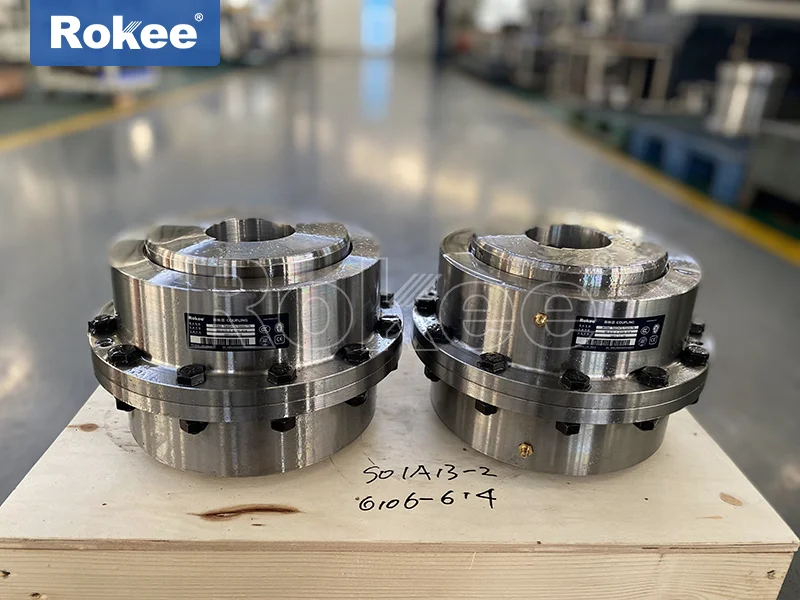
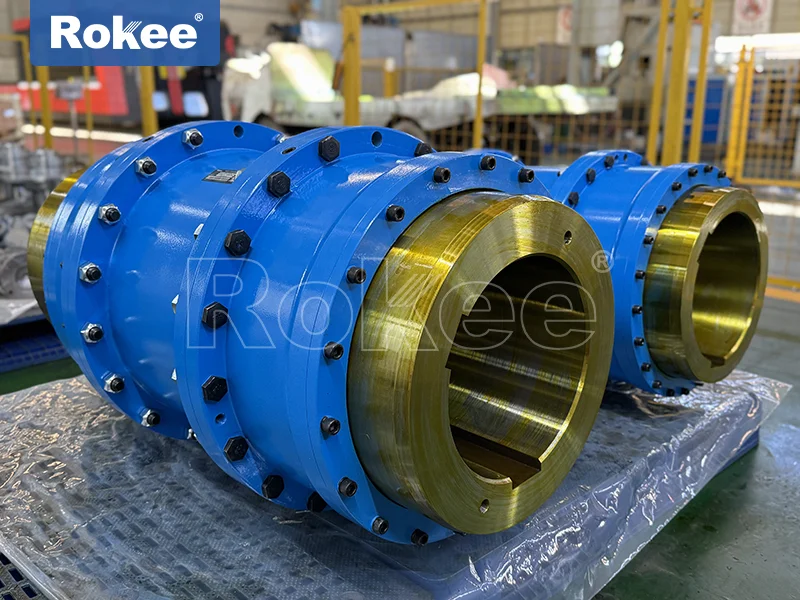
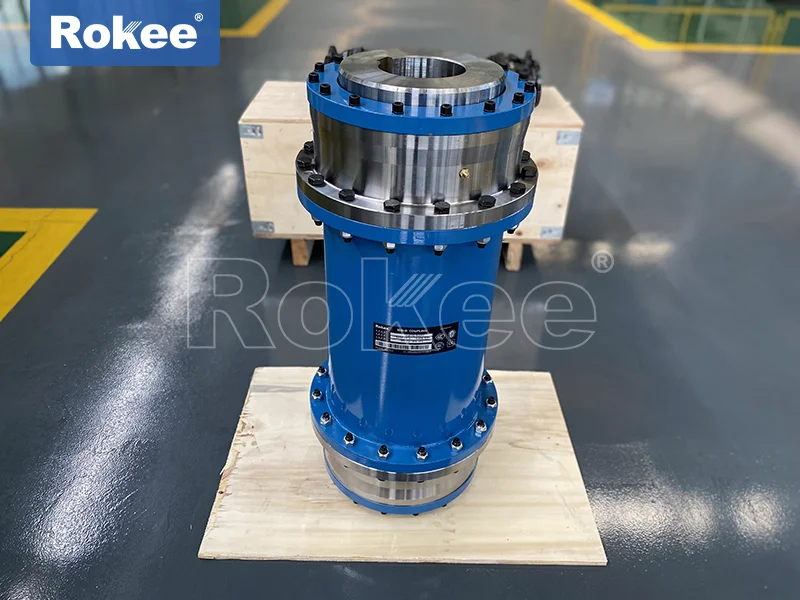
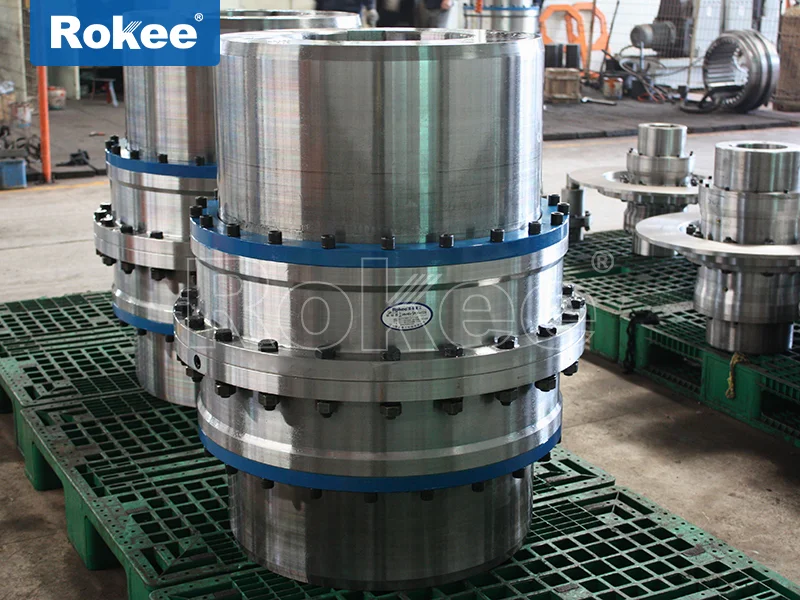
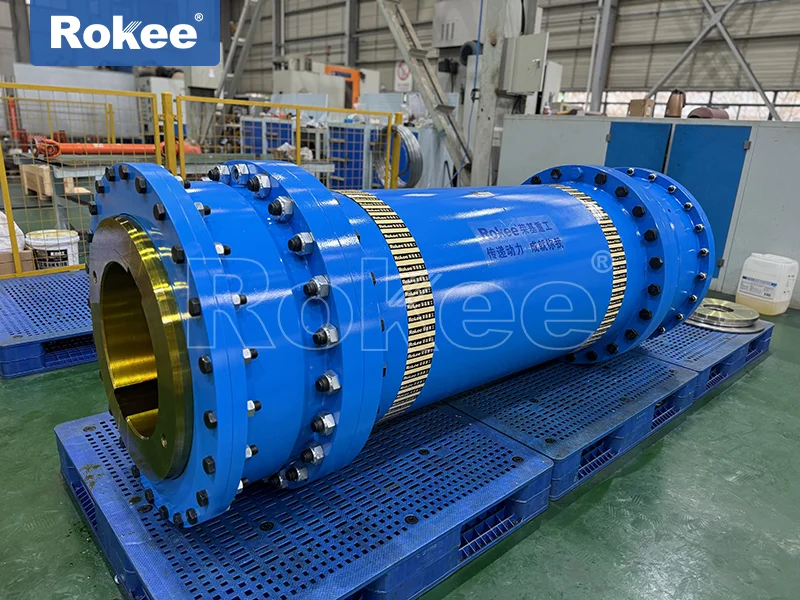
Light weight curved tooth coupling is a high-performance mechanical transmission component optimized for lightweight and flexible power transmission scenarios, integrating innovative curved tooth structure design and streamlined lightweight molding technology. Different from traditional heavy-duty gear couplings with bulky structures and rigid meshing modes, this coupling abandons redundant structural configurations while retaining core torque transmission capabilities, achieving a perfect balance between light weight, structural stability and transmission efficiency. Its unique arc-shaped tooth profile enables uniform and stable contact between meshing parts, effectively compensating for minor axial, radial and angular misalignments generated during mechanical operation. With the advantages of low inertia, small operating vibration and low energy consumption, it is widely adaptable to light and medium-load mechanical equipment, including automated transmission systems, precision processing machinery and general industrial power devices. It has gradually become a preferred connecting component for modern lightweight mechanical design, effectively improving the overall operating flexibility and energy-saving performance of mechanical systems.
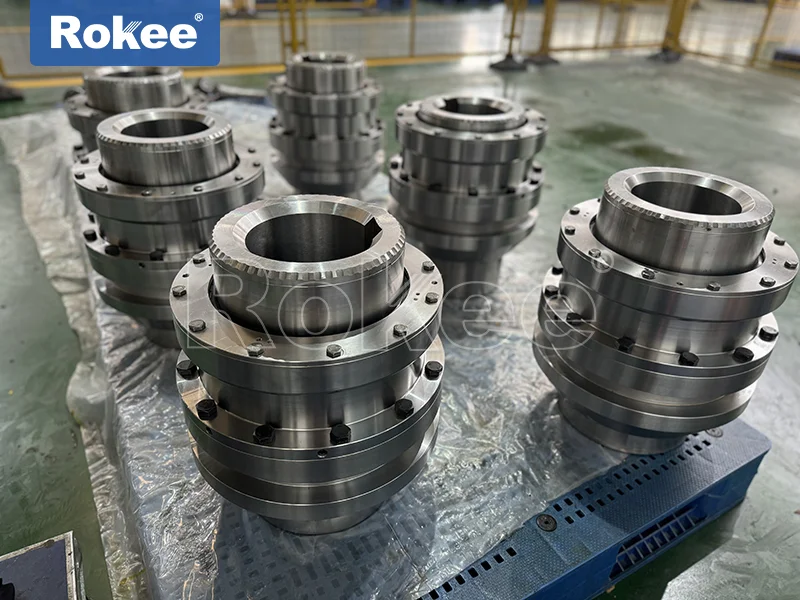
The core structural design of light weight curved tooth coupling focuses on lightweight optimization and curved tooth profile innovation, which fundamentally distinguishes it from conventional straight-tooth couplings and heavy gear couplings. The overall structure adopts a compact integrated design, removing thickened and redundant structural parts that do not contribute to torque transmission, and the hub and sleeve components are polished and streamlined to reduce overall volume and self-weight without damaging structural rigidity. The external teeth of the coupling are designed with smooth arc curved profiles, with the tooth surface presenting a uniform drum-shaped curved structure, which changes the linear contact mode of traditional straight teeth into surface contact during meshing. This structural improvement not only disperses the local stress concentration generated during power transmission, but also enhances the uniformity of tooth surface force bearing. Meanwhile, the lightweight structural layout reduces the rotational inertia of the coupling during high-speed operation, enabling the equipment to complete start-stop and speed adjustment actions more quickly and stably. The matching gap between internal and external teeth is reasonably optimized to ensure flexible meshing while avoiding excessive clearance that causes transmission jitter, laying a solid structural foundation for efficient and stable lightweight transmission.
The working principle of light weight curved tooth coupling is based on flexible curved tooth meshing and synchronous torque transmission, realizing stable power connection between two rotating shafts with minor misalignment. In the operating state, the driving shaft drives the coupling hub to rotate synchronously, and the arc curved external teeth mesh with the internal tooth sleeve in a fully fitted manner, stably transmitting torque and rotational speed to the driven shaft. Thanks to the special curved tooth profile, the tooth surface can automatically adapt to small offset and angle deviation between the two shafts during meshing, producing slight sliding and fitting adjustment on the contact surface to offset the misalignment error generated by equipment installation, mechanical wear or operational vibration. Different from rigid couplings that are prone to tooth surface wear and transmission stuck under misalignment conditions, this coupling’s flexible meshing mode buffers instantaneous impact force and vibration in the transmission process. The lightweight body further reduces the inertial resistance during operation, making the torque transmission process more smooth and continuous, and effectively avoiding power loss caused by structural inertia and rigid collision.
Light weight curved tooth coupling exhibits outstanding comprehensive performance advantages in practical industrial applications, covering transmission efficiency, operational stability and service durability. In terms of transmission efficiency, its optimized curved tooth meshing structure achieves nearly zero idle friction loss, with extremely high power transmission efficiency, which effectively reduces energy consumption during equipment operation compared with traditional coupling products. The lightweight design greatly reduces the overall load borne by the rotating shaft and bearing parts, slowing down the wear and fatigue aging of supporting components and extending the service life of the entire mechanical transmission system. In terms of vibration and noise control, the uniform surface contact of curved teeth avoids local tooth edge impact and friction noise, realizing low-vibration and low-noise operation even at medium and high rotating speeds. In addition, the coupling has strong environmental adaptability, maintaining stable transmission performance in conventional industrial working environments with normal temperature and conventional dust conditions, and will not have structural deformation or meshing failure due to slight environmental changes, ensuring long-term stable operation of mechanical equipment.
Material selection is a key factor supporting the excellent performance of light weight curved tooth coupling, adhering to the matching principle of lightweight, high strength and wear resistance. Different from heavy-duty couplings that use thick single metal materials, this lightweight coupling adopts high-strength lightweight alloy materials with low density and high structural toughness, which effectively reduces self-weight while ensuring basic torsional resistance and structural rigidity. The tooth surface is treated with special anti-wear and anti-oxidation process, forming a dense protective layer on the curved tooth surface, improving the hardness and friction resistance of the meshing part, and preventing tooth surface abrasion, oxidation and corrosion during long-term operation. The hub and connecting parts adopt integrated molding technology, which avoids structural looseness and strength attenuation caused by splicing assembly. The selected materials have good fatigue resistance, can withstand frequent start-stop and cyclic load operation, and will not produce structural fatigue damage under continuous light and medium-load working conditions. The scientific material matching scheme realizes the organic unity of light weight, high durability and low maintenance demand of the coupling.
Light weight curved tooth coupling has a wide range of application scenarios, mainly covering light and medium-load mechanical transmission fields that pursue high efficiency, low energy consumption and flexible operation. It is widely used in automated production equipment such as conveyor transmission lines, automated sorting machines and small assembly equipment, providing stable power connection for high-frequency and small-stroke mechanical operation. In the field of precision processing machinery, it is applied to small and medium-sized cutting, polishing and drilling equipment, ensuring high-precision synchronous rotation of the transmission shaft and avoiding processing errors caused by transmission jitter and shaft misalignment. It also plays an important role in general industrial machinery, including fan and pump equipment, light power transmission devices and auxiliary mechanical systems. For mechanical equipment with high requirements for equipment energy saving and response speed, the lightweight coupling can effectively reduce the starting load of the motor, improve the dynamic response speed of the equipment, and optimize the overall operating efficiency of the mechanical system.
Compared with traditional gear couplings and elastic couplings, light weight curved tooth coupling has unique competitive advantages in structural design and operational performance. Traditional straight-tooth gear couplings have heavy structures and large rotational inertia, which are prone to large vibration and high energy consumption during high-speed operation, and cannot adapt to lightweight and high-efficiency working requirements. Common elastic couplings rely on elastic components for buffering, which are easy to age and deform after long-term use, resulting in reduced transmission accuracy and short service life. In contrast, light weight curved tooth coupling combines the high transmission accuracy of gear couplings and the flexible compensation performance of elastic couplings, with a lightweight structure that greatly reduces operating inertia. Its integrated curved tooth structure has no vulnerable elastic parts, realizing long-term maintenance-free stable operation. Meanwhile, its compact structure saves installation space, which is more suitable for modern mechanical equipment with compact layout and lightweight design trend, making up for the performance defects of traditional coupling products in light-load and high-precision transmission scenarios.
With the continuous upgrading of modern industrial lightweight and high-efficiency manufacturing concepts, the development prospect of light weight curved tooth coupling is increasingly broad. At present, mechanical equipment is gradually developing towards miniaturization, high speed and energy conservation, and the traditional heavy and high-consumption coupling products can no longer meet the new industrial design needs. In the future, the structural optimization of light weight curved tooth coupling will be further deepened, with more refined curved tooth profile design and more advanced lightweight composite materials adopted to improve misalignment compensation ability and transmission stability while reducing self-weight. At the same time, with the continuous improvement of processing technology, the manufacturing precision of the coupling will be further improved, realizing higher-precision synchronous transmission and adapting to more sophisticated mechanical equipment scenarios. Its low energy consumption, low maintenance and high adaptability characteristics will make it more widely used in intelligent manufacturing, light industrial equipment, new energy supporting machinery and other emerging fields, becoming an indispensable basic component of modern lightweight mechanical transmission systems.