XL Star Flexible Coupling
In the realm of mechanical power transmission, flexible couplings serve as indispensable components that bridge rotating shafts, mitigate operational stresses, and sustain the stability of entire drive systems. Among the diverse array of flexible coupling designs, the XL Star Flexible Coupling stands out as a widely adopted solution, renowned for its balanced blend of structural simplicity, functional versatility, and reliable performance across light to medium-duty industrial scenarios. Unlike rigid couplings that demand perfect shaft alignment and offer no tolerance for misalignment or vibration, this star-shaped flexible variant is engineered to address common transmission challenges, including shaft misalignment, torsional shock, and operational vibration, while maintaining efficient torque transfer. A comprehensive understanding of its structural composition, core performance attributes, classification criteria, and practical application scenarios is essential for engineers, maintenance professionals, and design teams seeking to optimize drive system performance, enhance equipment durability, and reduce operational downtime.
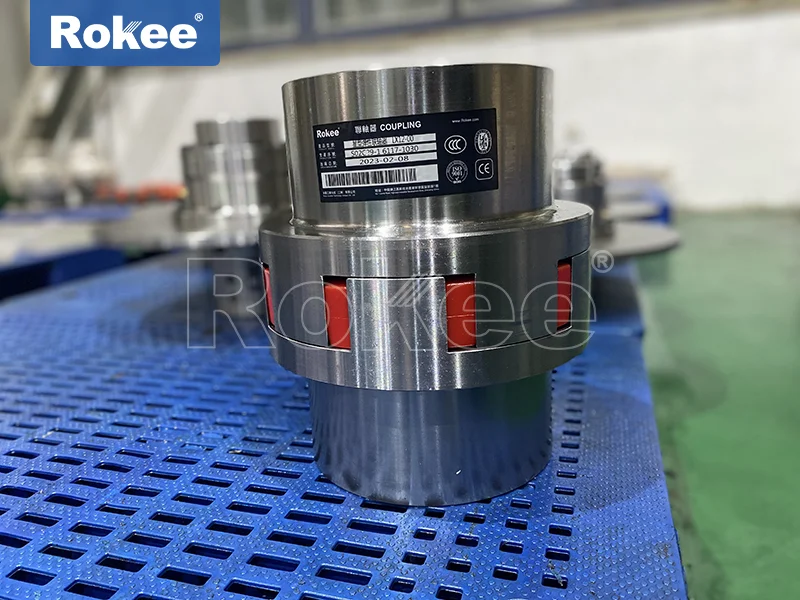
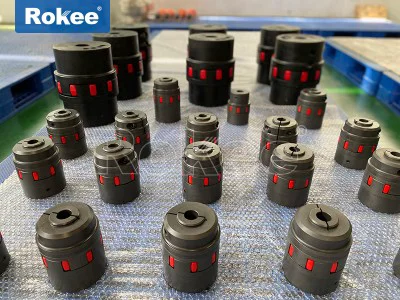
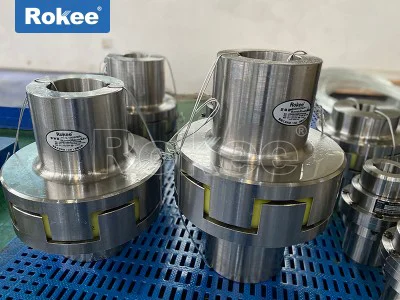
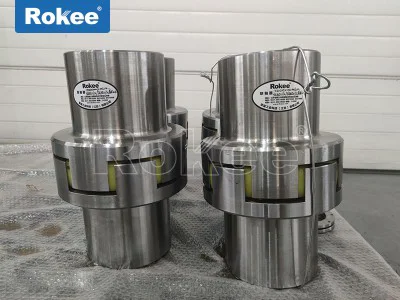
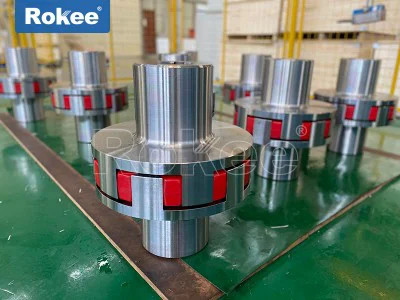
At its core, the XL Star Flexible Coupling features a streamlined, three-part structural configuration that eliminates complex components and simplifies assembly, disassembly, and routine maintenance. The fundamental structure consists of two metallic hubs and an intermediate star-shaped elastic element, commonly referred to as a spider, which is the heart of the coupling’s flexible functionality. The metallic hubs are precision-machined with claw-shaped protrusions arranged in a radial, star-like pattern on their inner faces; these claws are designed to interlock with the lobes of the central elastic spider without direct metal-to-metal contact, a critical design choice that prevents abrasive wear, reduces frictional heat generation, and extends the service life of both the coupling and connected shafts. The claw profiles are crafted with a curved, involute design featuring large concave surfaces, which distributes contact pressure evenly across the elastic element’s lobes, minimizing localized stress concentrations even under transient overload conditions. This even pressure distribution not only prevents premature deformation or cracking of the elastic component but also preserves the structural integrity of the metallic hubs during prolonged operation.
The material selection for each structural component is tailored to optimize the coupling’s overall performance, with careful consideration given to mechanical strength, flexibility, wear resistance, and environmental adaptability. The hubs are typically fabricated from high-grade ferrous metals or lightweight non-ferrous alloys, each offering distinct advantages for specific operational environments. Ferrous materials, such as high-quality carbon steel, deliver exceptional tensile strength, torque-bearing capacity, and resistance to mechanical fatigue, making them suitable for heavy-load, high-torque transmission tasks. Lightweight alloys, including aluminum and gray cast iron, offer reduced rotational inertia, corrosion resistance, and ease of machining, ideal for high-speed applications where minimal energy loss and responsive operation are prioritized. The central star-shaped elastic element is manufactured from specialized elastomeric materials, such as polyurethane, rubber blends, or high-performance thermoplastics, selected for their superior elasticity, shock absorption capabilities, and resistance to wear, oil, and temperature fluctuations. These elastomers are formulated to maintain consistent mechanical properties across a wide operational temperature range, typically spanning from sub-zero conditions to moderately high temperatures, ensuring reliable flexibility and performance in diverse industrial environments without hardening, cracking, or losing damping capacity.
The structural design of the XL Star Flexible Coupling directly translates to a suite of standout performance characteristics that define its suitability for varied transmission applications. Foremost among these is its ability to compensate for multiple forms of shaft misalignment, a common issue in real-world mechanical setups caused by manufacturing tolerances, installation errors, thermal expansion, or operational wear. The coupling effectively accommodates three primary types of misalignment: axial misalignment, which refers to the forward or backward displacement of shafts along their central axis; radial misalignment, the lateral offset between the central lines of two connected shafts; and angular misalignment, the slight tilt of shafts relative to one another. This multi-directional misalignment compensation eliminates the need for ultra-precise shaft alignment during installation, reducing setup time and labor costs while preventing excessive stress on bearings, shafts, and other drive system components that can lead to premature failure.
Another key performance trait is its exceptional buffering and shock absorption capacity, which stems from the viscoelastic properties of the central elastomeric spider. In mechanical drive systems, sudden starts, abrupt stops, fluctuating load conditions, or external impact forces can generate severe torsional shocks and vibrations that propagate through shafts and connected machinery, causing damage, noise, and reduced operational lifespan. The XL Star Flexible Coupling mitigates these issues by absorbing and dissipating shock energy through the elastic deformation of its star-shaped element, softening the transfer of impact loads and dampening resonant vibrations. This damping effect not only protects delicate transmission components but also reduces operational noise, creating a quieter, more stable working environment. Additionally, the coupling operates without the need for lubrication, a significant advantage over gear or chain couplings that require regular greasing to maintain functionality. This lubrication-free design eliminates the risk of oil leakage, reduces maintenance requirements, and prevents contamination of surrounding equipment or production materials, making it a hygienic and low-maintenance choice for various industrial settings.
Durability and wear resistance further enhance the coupling’s performance profile, thanks to the optimized structural design and high-quality materials. The even pressure distribution on the elastic spider’s lobes prevents excessive wear from repeated compression and relaxation cycles, while the robust metallic hubs resist deformation, bending, and surface abrasion under continuous operational loads. Unlike inferior flexible couplings that may suffer from elastic element failure or hub damage under moderate overloads, the XL Star variant exhibits strong resistance to transient overloads, maintaining structural integrity and functional stability without permanent deformation. The coupling also features low rotational inertia, a critical attribute for high-speed drive systems, as it minimizes energy consumption during acceleration and deceleration phases, improves system responsiveness, and reduces energy waste. Combined with a compact, space-saving footprint, these performance features make the coupling adaptable to equipment with limited installation space, without compromising torque transmission efficiency or operational reliability.
The XL Star Flexible Coupling is categorized into distinct types based on several key criteria, including material specifications, elastic element properties, structural modifications, and load-bearing capabilities, each tailored to meet the unique demands of specific industrial applications. The primary classification revolves around the material of the elastic spider, as this component dictates the coupling’s damping capacity, temperature resistance, and load tolerance. Standard polyurethane elastic spiders are the most common variant, offering a balanced mix of flexibility, wear resistance, and cost-effectiveness, suitable for general-purpose light to medium-duty applications with moderate temperatures and minimal exposure to harsh chemicals. High-performance thermoplastic elastomer spiders are engineered for enhanced durability and chemical resistance, ideal for environments with exposure to oils, solvents, or mild corrosive substances, while maintaining excellent shock absorption properties. Rubber-based elastic spiders provide superior damping and flexibility, making them optimal for applications with high levels of vibration and frequent shock loads, though they may have a narrower temperature operating range compared to polyurethane alternatives.
Secondary classification is based on the material and design of the metallic hubs, which define the coupling’s torque capacity and environmental suitability. Standard steel hub couplings are engineered for medium to high torque transmission, featuring robust construction and exceptional mechanical strength, suitable for heavy industrial machinery with consistent load demands. Lightweight alloy hub couplings, typically aluminum, offer reduced weight and corrosion resistance, perfect for high-speed equipment such as small motors, pumps, and precision instruments where low inertia and rust resistance are essential. Cast iron hub couplings strike a balance between strength and cost, providing reliable performance for general industrial applications with moderate loads and budget constraints. Additionally, some variants feature modified hub designs, such as stepped bores or keyway enhancements, to accommodate different shaft sizes, connection types, and torque transmission requirements, further expanding the coupling’s versatility.
Load-bearing capacity also serves as a key classification parameter, with XL Star Flexible Couplings available in a range of sizes corresponding to varying nominal torque ratings, rotational speed limits, and shaft diameter compatibilities. Small-sized couplings are designed for light-duty, high-speed applications, delivering low to moderate torque transfer and suited for compact equipment with limited power requirements. Medium-sized couplings are the most prevalent, offering a balanced torque-speed profile that caters to the majority of general industrial transmission needs. Large-sized couplings are engineered for heavy-duty, low-speed applications, capable of handling high torque loads and robust operational stresses in heavy machinery. Regardless of the specific type, all XL Star Flexible Coupling variants retain the core star-shaped elastic design and three-part configuration, ensuring consistent core functionality while adapting to specialized operational demands through material and dimensional modifications.
The combination of robust structural design, versatile performance, and diverse classification makes the XL Star Flexible Coupling a ubiquitous component across a vast spectrum of industrial sectors, where reliable power transmission and misalignment tolerance are non-negotiable. In the general machinery manufacturing sector, it is extensively used to connect electric motors, gear reducers, and actuators to driven components, ensuring smooth power transfer in conveyor systems, small-scale processing equipment, and assembly line machinery. Its ability to absorb vibration and compensate for misalignment makes it particularly valuable for automated production lines, where equipment precision and operational continuity are paramount.
In the fluid handling industry, including water supply, petroleum, and chemical processing, the coupling is widely integrated into pump and fan systems, connecting motor shafts to pump impellers or fan rotors. The lubrication-free design prevents fluid contamination, while the shock absorption capacity protects pump internals from damage caused by water hammer or sudden flow fluctuations, making it suitable for clean water pumps, oil transfer pumps, and industrial exhaust fans. In the automotive and transportation equipment sector, it finds application in auxiliary machinery such as vehicle-mounted generators, air compressors, and hydraulic system drives, where compact size, vibration damping, and reliable performance under variable loads are critical.
The packaging and printing industry also relies heavily on XL Star Flexible Couplings, leveraging their low inertia, high responsiveness, and misalignment compensation for precision-driven equipment like packaging machines, printing presses, and labeling systems. These applications demand smooth, accurate power transmission to maintain print registration and packaging precision, and the coupling’s ability to reduce vibration minimizes image blurring and packaging defects, boosting production quality and efficiency. In the textile and light manufacturing sectors, it is used in spinning machines, weaving looms, and processing equipment, where it dampens the high-frequency vibrations inherent to textile production, reduces equipment noise, and prevents thread breakage or material damage.
Beyond these sectors, the coupling serves in agricultural machinery, food processing equipment, and mining auxiliary devices, adapting to diverse environmental conditions from dusty farm fields to controlled food processing facilities. Its versatility is further highlighted by its suitability for equipment with frequent start-stop cycles and reversible rotation, such as mixers, crushers, and material handling machines, where it withstands repeated torsional stress without performance degradation. While it excels in light to medium-duty applications, proper selection based on torque requirements, speed ranges, environmental conditions, and misalignment levels is crucial to maximize its service life and operational efficiency; pairing the correct coupling type with the application’s specific demands ensures optimal performance, minimizes wear, and avoids premature failure.
In summary, the XL Star Flexible Coupling represents a pinnacle of practical design in power transmission technology, merging a simple, robust structure with exceptional functional performance to solve common mechanical drive challenges. Its well-engineered three-part composition, misalignment compensation capabilities, shock absorption properties, and low-maintenance design set it apart from alternative coupling solutions, while its diverse classifications cater to a broad range of industrial applications. From small-scale precision equipment to heavy-duty industrial machinery, this coupling delivers consistent, reliable performance, enhancing the durability of drive systems, reducing maintenance burdens, and supporting seamless industrial operations. As industrial technology continues to evolve and demand for efficient, reliable transmission components grows, the XL Star Flexible Coupling remains a foundational choice for engineers and designers worldwide, embodying the ideal balance of simplicity, versatility, and performance in mechanical power transmission.