Flexible Drive Gear Couplings
In the realm of mechanical power transmission, flexible drive gear couplings stand as indispensable components that bridge rotating shafts, enabling efficient torque transfer while addressing the inherent challenges of shaft misalignment, vibration, and operational stress in industrial machinery. Unlike rigid couplings that demand perfect shaft alignment and offer no tolerance for positional deviations, these specialized gear-based couplings blend the high torque-carrying capacity of traditional gear mechanisms with engineered flexibility, making them a cornerstone of heavy-duty and precision-driven drive systems across countless industrial sectors. Every aspect of their design, from internal tooth profiles to material selection and structural configuration, is tailored to balance strength, adaptability, and durability, ensuring reliable performance under diverse operating conditions ranging from low-speed, high-load scenarios to high-speed rotational applications.
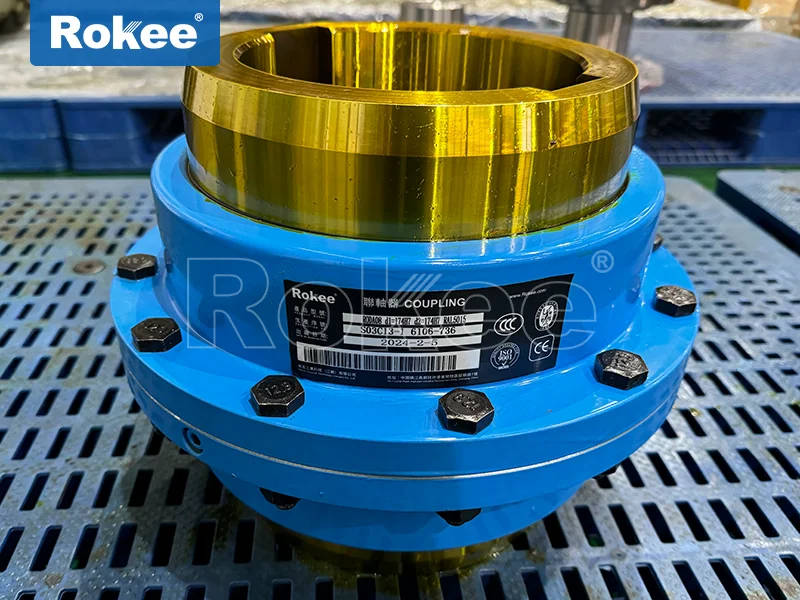
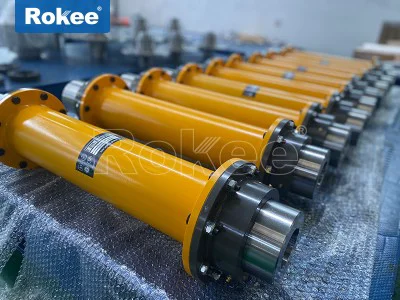
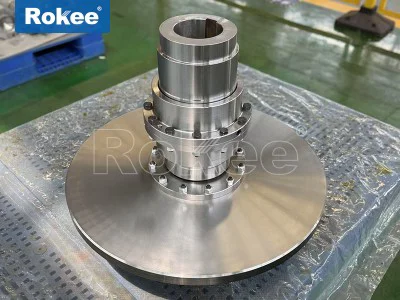
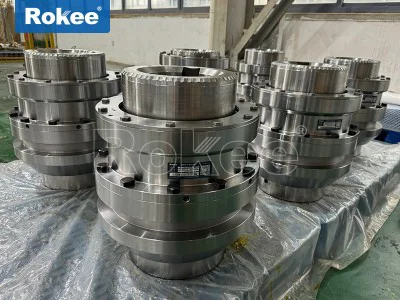
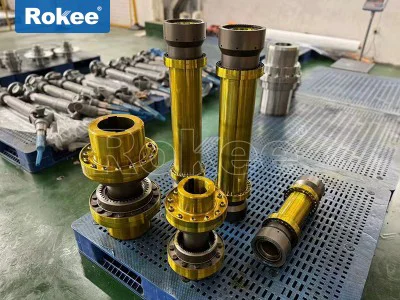
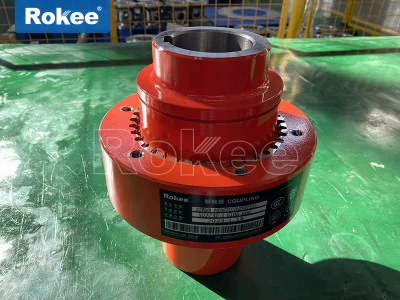
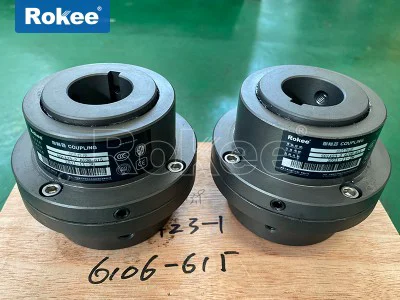
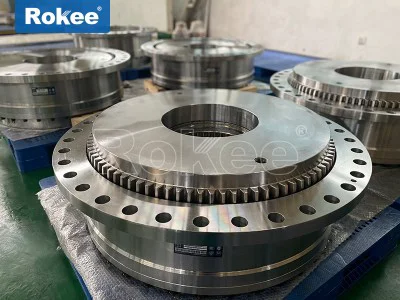
At its core, the structure of a flexible drive gear coupling is engineered around a gear meshing mechanism that delivers both torque transmission and misalignment compensation, with a modular design that facilitates installation, maintenance, and compatibility with various shaft sizes and drive setups. The fundamental assembly typically consists of two hub components, each fitted with external gear teeth, and one or two outer sleeve components equipped with internal gear teeth that mesh precisely with the external teeth on the hubs. The hubs are securely mounted to the driving and driven shafts via keyways, interference fits, or clamping mechanisms, creating a rigid connection between the coupling and the shaft ends to prevent slippage during torque transfer. The outer sleeves, often referred to as gear casings, are connected to one another via fasteners, forming a unified enclosure that houses the meshing gear pairs and protects internal components from contaminants, debris, and excessive wear in harsh operating environments. A defining structural feature that sets flexible gear couplings apart from standard rigid gear couplings is the profile of the gear teeth: the external teeth on the hubs are crafted with a crowned, spherical profile, with the center of curvature aligned with the shaft axis, while the internal teeth on the sleeves maintain a standard involute profile. This crowned tooth design creates controlled clearance between meshing teeth, allowing for limited angular, parallel, and axial movement between the two shafts without disrupting torque transmission or causing premature gear failure. Additionally, many flexible gear couplings incorporate sealing elements at the junction between hubs and sleeves to retain lubrication within the gear meshing zone, preventing leakage and minimizing the ingress of dust, moisture, and abrasive particles that could accelerate wear. Some advanced variants also feature spacer components between the two sleeve sections, extending the overall length of the coupling to accommodate greater shaft separation distances without compromising performance, a modification that expands their usability in systems with spaced-apart driving and driven equipment.
The performance characteristics of flexible drive gear couplings are a direct product of their structural design and material engineering, making them uniquely suited to handle the demands of heavy-duty and dynamic drive systems. Foremost among these traits is exceptional torque transmission capacity, as the full-face gear meshing distributes load evenly across multiple teeth simultaneously, enabling the coupling to handle extremely high torque loads and shock loads that would overwhelm many other types of flexible couplings. This load distribution also enhances torsional rigidity, ensuring that rotational motion is transferred smoothly and efficiently with minimal angular deflection, a critical attribute for applications requiring consistent speed synchronization and precise power delivery. Beyond torque handling, the core performance advantage lies in superior misalignment compensation: the crowned tooth geometry allows the coupling to accommodate angular misalignment, parallel misalignment, and axial end float simultaneously, addressing common issues caused by manufacturing tolerances, thermal expansion, foundation settlement, or mechanical wear in operating machinery. This ability to absorb positional deviations reduces excessive stress on shaft bearings, gearboxes, and other drive system components, significantly extending the service life of adjacent equipment and reducing downtime related to premature component failure. While flexible gear couplings are not designed with elastomeric elements for extreme vibration damping, the controlled gear meshing clearance and metal-on-metal contact provide moderate vibration and shock absorption, cushioning the drive system from sudden load spikes and rotational pulsations. Durability is another standout performance feature, as these couplings are typically constructed from high-strength alloy steels, carbon steels, or hardened stainless steels that resist wear, fatigue, and deformation under continuous heavy use. Properly lubricated and maintained, flexible gear couplings exhibit exceptional wear resistance, with the crowned tooth design minimizing concentrated contact stress and reducing scuffing or pitting on gear surfaces. They also demonstrate broad environmental adaptability, operating reliably across a wide range of temperatures, from extreme cold to high heat, and performing effectively in harsh industrial settings such as mining, construction, and manufacturing, where exposure to contaminants and heavy loads is commonplace. It is important to note that performance is closely tied to maintenance: regular lubrication replenishment and periodic inspection of gear wear and seal integrity are essential to preserve optimal functionality and prevent efficiency losses over time.
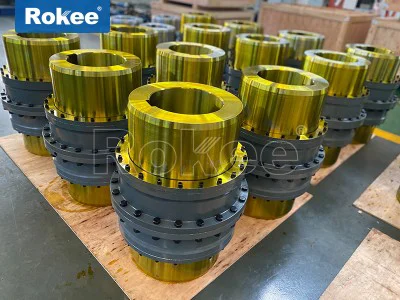
Flexible drive gear couplings are categorized into distinct types based on structural variations, misalignment capabilities, application-specific design modifications, and operational requirements, each tailored to address unique challenges in different drive systems. The most prevalent classification is based on structural configuration, starting with full gear flexible couplings, the standard and most widely used variant. This type features two external-tooth hubs and two internal-tooth sleeves that are bolted together, offering balanced misalignment compensation and high torque capacity for general heavy-duty applications. Full gear couplings are versatile, suitable for most industrial drive systems where moderate to high misalignment tolerance and robust torque transfer are needed, and they are available in various sizes to match different shaft diameters and load ratings. A second common type is the half gear or simplified flexible gear coupling, which features a single internal-tooth sleeve paired with two external-tooth hubs, offering a more compact design and reduced weight compared to full gear variants. While this type has slightly lower misalignment compensation capabilities, it is ideal for space-constrained installations and low-to-medium load applications where compactness is prioritized over maximum flexibility. Another key category is the spacer-type flexible gear coupling, engineered with an extended central spacer between the two sleeve sections to increase the distance between the connected shafts. This design is specifically developed for applications where driving and driven equipment are separated by a significant gap, such as large pumps, compressors, and turbine drives, and it maintains the same high torque and misalignment performance as standard full gear couplings while addressing shaft spacing requirements. For applications demanding enhanced misalignment tolerance, particularly extreme angular or parallel misalignment, crowned tooth high-flexibility gear couplings are available, featuring modified tooth profiles with increased curvature and clearance to accommodate greater positional deviations without sacrificing load capacity. These high-flexibility variants are commonly used in systems where shaft alignment is difficult to maintain, such as mobile machinery, large industrial conveyors, and equipment subject to frequent thermal cycling. Additionally, flexible gear couplings can be classified by connection type, including keyed hubs, keyless clamping hubs, and tapered bush hubs, each designed to suit different shaft mounting preferences and torque transmission needs. Keyed hubs offer reliable torque transfer for standard shaft designs, while keyless clamping hubs provide a concentric, backlash-free connection ideal for high-speed and precision applications. Tapered bush hubs simplify installation and removal, making them a practical choice for equipment requiring frequent maintenance or component replacement. Despite these variations, all types retain the core gear meshing principle that defines flexible drive gear couplings, prioritizing a balance of strength, flexibility, and reliability to meet diverse operational demands.
The unique combination of high torque capacity, misalignment tolerance, and durability makes flexible drive gear couplings one of the most widely utilized power transmission components across nearly every industrial sector, with applications spanning heavy machinery, process equipment, transportation, and precision manufacturing. In heavy industry, including mining, quarrying, and metalworking, these couplings are extensively used in large-scale equipment such as crushers, mills, conveyors, and hoists, where they handle extreme torque loads and absorb the significant vibration and shock generated by raw material processing. The ability to compensate for shaft misalignment caused by heavy loads and foundation movement is critical in these settings, ensuring uninterrupted operation and reducing maintenance costs in rugged, high-stress environments. In the oil and gas industry, flexible gear couplings are employed in pumps, compressors, mixers, and drilling equipment, operating reliably under high-pressure, high-temperature conditions and accommodating the thermal expansion of shafts during continuous operation. Their robust construction and resistance to environmental contaminants also make them suitable for offshore drilling rigs and onshore processing facilities, where equipment durability is paramount. The marine sector relies heavily on these couplings for propulsion systems, deck machinery, and auxiliary equipment, as they withstand the dynamic loads, shaft misalignment, and corrosive marine environment, ensuring efficient power transfer between engines, gearboxes, and propellers. In manufacturing and industrial processing, flexible gear couplings are integral to machinery such as extruders, presses, rolling mills, and textile machines, providing consistent torque transmission and misalignment compensation to maintain production efficiency and product quality. For high-speed rotational equipment, including fans, blowers, turbines, and generators, these couplings deliver smooth, efficient power transfer with minimal torsional deflection, balancing high-speed performance with the flexibility to address minor shaft deviations that occur during operation. Transportation applications, such as heavy-duty trucks, locomotives, and construction vehicles, also utilize flexible gear couplings in drive trains and auxiliary systems, where they absorb shock loads from uneven terrain and compensate for chassis flex, enhancing vehicle reliability and component longevity. Even in precision engineering and automated production lines, specialized compact flexible gear couplings are used to connect motors and gearboxes, offering a blend of precision torque transfer and moderate flexibility to support accurate motion control without compromising operational stability. Across all these applications, the selection of a specific flexible gear coupling type depends on factors such as torque requirements, shaft size, misalignment magnitude, operating speed, environmental conditions, and installation constraints, ensuring that the coupling is optimized for its intended use case.
In summary, flexible drive gear couplings represent a pinnacle of mechanical power transmission design, merging the strength and efficiency of gear-based torque transfer with engineered flexibility to solve the universal challenges of shaft misalignment and operational stress in industrial machinery. Their meticulously crafted structural design, centered on crowned gear teeth and modular components, delivers exceptional torque capacity, reliable misalignment compensation, and long-term durability, while the diverse range of types ensures compatibility with every conceivable drive system configuration. From heavy-duty mining and oilfield equipment to precision manufacturing machinery and transportation systems, these couplings play a vital role in maintaining the efficiency, reliability, and longevity of global industrial operations. As mechanical engineering continues to advance, the fundamental design principles of flexible drive gear couplings remain relevant, with ongoing refinements to materials, tooth profiles, and sealing technologies further enhancing their performance and adaptability. Understanding the structure, performance traits, classification, and applications of these couplings is essential for engineers, maintenance professionals, and equipment designers, enabling informed selection and optimal utilization to maximize drive system efficiency and minimize operational downtime in every industrial setting.