Flexible Snake Couplings
In the realm of mechanical power transmission, flexible couplings serve as indispensable components that bridge driving and driven shafts, mitigating misalignment, absorbing vibration, and ensuring smooth torque delivery across diverse industrial systems. Among these critical components, the flexible snake coupling stands out as a robust, versatile solution engineered to balance high torque transmission capacity, exceptional flexibility, and long-term operational durability. Unlike rigid couplings that offer no tolerance for shaft displacement or shock loading, and unlike some lightweight flexible couplings that lack the strength for heavy-duty scenarios, the flexible snake coupling leverages a distinctive serpentine spring design to deliver a unique blend of performance attributes, making it a staple in countless industrial settings where reliability and adaptability are non-negotiable.

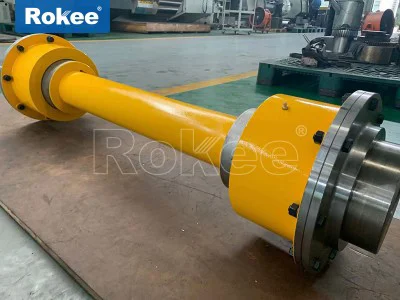
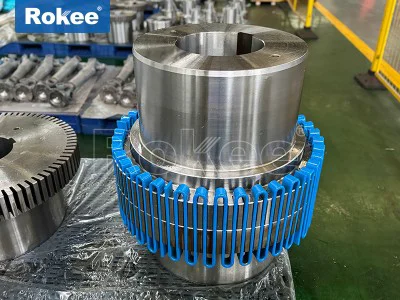
At its core, the flexible snake coupling is constructed around a streamlined yet highly functional assembly of precision-engineered parts, each tailored to work in harmony to facilitate efficient power transfer and mechanical flexibility. The foundational elements consist of two robust hub halves, typically forged from high-strength alloy steel or durable cast iron, which are securely mounted onto the driving and driven shafts respectively. These hub halves feature precision-machined tooth grooves along their inner circumferences, crafted to precise tolerances to accommodate the central functional component: the serpentine spring strip. This spring strip, formed from high-grade spring steel subjected to specialized heat treatment processes, is bent into a continuous, wave-like serpentine profile that fits snugly within the matching tooth grooves of both hub halves. The serpentine shape is not merely a cosmetic feature; it is a deliberate design choice that enables multi-directional elastic deformation while maintaining consistent contact with the hub teeth, ensuring uniform load distribution across the entire spring surface. Many variants of the flexible snake coupling also incorporate a protective outer shell or housing, which encloses the spring and hub assembly to safeguard internal components from external contaminants such as dust, moisture, oil, and debris, while also retaining lubrication within the coupling to reduce friction and wear. Sealing elements are integrated into the housing design to prevent lubricant leakage and maintain a clean internal operating environment, further enhancing the coupling’s longevity and performance consistency. The simplicity of this structural design is one of its greatest strengths: there are no complex gears, intricate linkages, or fragile elastomeric parts that are prone to premature failure under heavy loads or harsh conditions, allowing the coupling to withstand rigorous operational stress with minimal maintenance requirements.
The structural design of the flexible snake coupling directly translates to a suite of exceptional performance properties that set it apart from other flexible coupling variants. Foremost among these is its superior torque transmission capability, which enables the coupling to handle substantial rated torque loads as well as short-term overload conditions without compromising structural integrity. The serpentine spring distributes torsional stress evenly across its length, eliminating localized stress concentrations that can lead to fatigue cracking or breakage in less robust coupling designs. This even load distribution, combined with the high tensile strength of the spring steel material, allows the coupling to deliver efficient power transfer with minimal energy loss, maintaining high mechanical efficiency even under sustained heavy operation. A defining performance trait of the flexible snake coupling is its exceptional misalignment compensation capacity, addressing the three primary forms of shaft displacement that commonly occur in mechanical systems: axial, radial, and angular misalignment. Axial misalignment, which involves longitudinal shifting of the shafts, is accommodated through the spring’s axial elasticity, while radial misalignment—lateral offset between the shaft centers—is mitigated by the spring’s ability to flex horizontally without losing contact with the hub teeth. Angular misalignment, caused by non-parallel shaft axes, is managed through the spring’s torsional flexibility, which permits slight angular deflection between the two hubs while maintaining consistent torque delivery. This multi-directional compensation capability eliminates the need for ultra-precise shaft alignment during installation, reducing assembly time and labor costs while preventing premature wear on bearings, gears, and other connected equipment that can result from forced shaft alignment.
Beyond misalignment compensation, the flexible snake coupling excels in vibration damping and shock absorption, critical performance features for equipment operating under fluctuating loads or impact conditions. The serpentine spring’s elastic nature acts as a natural shock absorber, cushioning sudden torque spikes, impact loads, and torsional vibrations that originate from either the driving or driven end of the transmission system. This damping effect not only smoothens power delivery but also protects sensitive mechanical components from damage caused by repetitive shock loading, extending the overall service life of the entire machinery system. Unlike couplings with rigid or semi-rigid elements that transfer vibration directly between shafts, the snake coupling’s flexible spring dissipates vibrational energy, reducing noise levels and minimizing the risk of system resonance that can lead to catastrophic failure. Additionally, the coupling exhibits excellent thermal stability and environmental adaptability, operating reliably across a broad range of temperatures and harsh working conditions. The high-quality metal construction resists deformation, oxidation, and degradation in environments with extreme temperatures, exposure to oils, chemicals, or abrasive particles, making it suitable for both indoor controlled settings and rugged outdoor industrial sites. The durable metal components also offer superior fatigue resistance compared to plastic or rubber-based flexible elements, ensuring consistent performance over extended operational cycles and reducing the frequency of replacement and maintenance interventions.
Flexible snake couplings are categorized into distinct types based on key design variations, stiffness characteristics, and structural modifications, each engineered to suit specific operational requirements and load conditions. One of the primary classification methods is based on the tooth profile design of the hub halves, which dictates the coupling’s stiffness behavior and load response. The first major category is the constant stiffness flexible snake coupling, featuring straight, linear tooth profiles on the hub halves. In this design, the contact points between the serpentine spring and the hub teeth remain fixed regardless of the spring’s deformation under load, resulting in a consistent stiffness rating throughout the coupling’s operating range. This uniform stiffness makes constant stiffness models ideal for applications with steady, predictable torque loads and minimal fluctuation, where stable power transmission and consistent rotational speed are paramount. The linear tooth profile is also simpler to machine, contributing to a straightforward manufacturing process that supports reliable performance for general-purpose industrial use. The second primary category is the variable stiffness flexible snake coupling, equipped with curved, contoured tooth profiles on the hub halves. As torque loads increase and the serpentine spring deforms further, the contact arc between the spring and the curved teeth expands, shifting the contact points and increasing the coupling’s stiffness progressively. This variable stiffness characteristic provides enhanced buffering for systems with high torque fluctuations, frequent start-stop cycles, or frequent forward and reverse operation, as the coupling adapts its rigidity to match the load intensity. The curved tooth design optimizes load distribution under heavy loads, reducing wear and improving shock absorption compared to constant stiffness variants, albeit with a slightly more complex manufacturing process.
Additional classifications of flexible snake couplings are based on structural adaptations and specialized design features tailored to unique operational scenarios. Standard general-purpose flexible snake couplings represent the most widely used variant, featuring a compact, balanced design that delivers reliable performance for moderate torque loads and typical misalignment conditions. These couplings are versatile enough to integrate into a vast array of light to medium-duty industrial machinery, serving as a cost-effective solution for routine power transmission tasks. Heavy-duty enhanced flexible snake couplings are engineered with thicker, high-strength serpentine springs and reinforced hub structures, boosting torque capacity and load-bearing performance to handle extreme heavy-duty operation. These enhanced models are built to withstand sustained high loads, severe shock conditions, and prolonged use in rugged industrial environments where standard couplings would be prone to wear or failure. High-speed flexible snake couplings feature precision-balanced components and streamlined housing designs to minimize rotational imbalance and reduce centrifugal force effects at elevated operating speeds. This design optimization ensures smooth, stable rotation without excessive vibration or noise, making them suitable for high-speed machinery where rotational balance is critical. Corrosion-resistant flexible snake couplings are constructed from corrosion-resistant alloy materials, such as stainless steel, to withstand exposure to corrosive substances, moisture, and harsh outdoor or marine environments. These specialized couplings maintain structural integrity and performance in chemical processing plants, marine equipment, and coastal industrial settings where standard steel couplings would suffer from rust and degradation. Some variants also feature modified mounting configurations, such as flange-mounted designs, to simplify installation and disassembly without disrupting connected equipment, enhancing maintenance accessibility in hard-to-reach machinery setups.
The unique combination of structural durability, performance versatility, and adaptive design makes the flexible snake coupling applicable across an extensive spectrum of industrial sectors, powering critical machinery in both heavy-duty and general-purpose operations. In the heavy machinery and mining sector, these couplings are extensively utilized in equipment such as crushers, ball mills, conveyors, and crushing screens, where they endure extreme torque loads, constant shock loading, and continuous operation in abrasive, dusty environments. Their ability to absorb heavy impacts and compensate for shaft misalignment caused by machinery vibration ensures uninterrupted operation, reducing downtime and maintenance costs in mining and quarrying operations. In the metallurgical and steel industry, flexible snake couplings are integrated into rolling mills, straightening machines, and steel processing equipment, where they withstand high temperatures, heavy loads, and the rigorous demands of continuous metal production. The coupling’s thermal stability and high torque capacity make it ideal for transmitting power reliably in the harsh conditions of steel manufacturing facilities, where equipment failure can lead to significant production losses.
The energy and power generation sector relies heavily on flexible snake couplings for applications in steam turbines, generators, large pump sets, and wind turbine transmission systems. These couplings provide stable power transmission while dampening turbine vibrations and compensating for shaft misalignment that can occur due to thermal expansion during operation, ensuring efficient energy conversion and reducing wear on critical power generation components. In the petrochemical and chemical processing industry, the coupling’s corrosion-resistant variants are employed in pumps, compressors, mixers, and reactor equipment, where they resist chemical corrosion and maintain performance in environments with exposure to oils, solvents, and corrosive gases. Their sealed, contaminant-resistant design prevents internal damage from process-related debris, ensuring safe and reliable operation in hazardous industrial settings. The marine and shipbuilding industry utilizes flexible snake couplings in propulsion systems, deck machinery, and marine pumps, leveraging their corrosion resistance, shock absorption, and misalignment compensation to withstand the harsh marine environment, including saltwater exposure, wave-induced vibration, and shaft movement during vessel operation.
Beyond heavy industrial applications, flexible snake couplings are widely integrated into general industrial machinery across manufacturing, paper production, and transportation sectors. In manufacturing plants, they are used in machine tools, conveyor systems, gearboxes, and assembly line equipment, providing smooth power transmission and protecting precision machinery from vibration and misalignment damage. In the paper and pulp industry, these couplings drive paper machines, calenders, and processing equipment, handling the moderate to heavy loads and continuous operation requirements of paper production while reducing maintenance needs. In the transportation and automotive sector, they are utilized in heavy-duty vehicle transmission systems, railway traction equipment, and automotive manufacturing machinery, where their durability and shock absorption capabilities support reliable performance under dynamic load conditions. Even in agricultural machinery, flexible snake couplings find use in heavy-duty farming equipment such as harvesters, tillers, and irrigation pumps, enduring the rugged outdoor conditions and variable loads of agricultural operations.
The enduring relevance of the flexible snake coupling in modern engineering stems from its ability to address core challenges in mechanical power transmission: balancing strength and flexibility, adapting to diverse operational conditions, and delivering long-term reliability with minimal upkeep. Its simple yet effective structural design eliminates unnecessary complexity, while its tailored variants ensure compatibility with an unparalleled range of industrial applications, from light-duty general machinery to heavy-duty industrial processing equipment. Unlike specialized couplings that are limited to narrow use cases, the flexible snake coupling’s adaptability allows it to evolve alongside changing industrial demands, maintaining its status as a foundational component in mechanical transmission systems. As industrial machinery continues to advance toward higher loads, faster speeds, and harsher operating environments, the flexible snake coupling remains a trusted solution, thanks to its proven performance, robust construction, and ability to mitigate common mechanical issues such as misalignment, vibration, and shock loading. Whether deployed in heavy mining machinery, precision manufacturing equipment, or critical power generation systems, the flexible snake coupling consistently delivers efficient, reliable power transmission, underscoring its indispensable role in the global industrial landscape.
In summary, the flexible snake coupling represents a pinnacle of practical mechanical engineering, merging thoughtful structural design with high-performance materials to create a component that excels in torque transmission, misalignment compensation, vibration damping, and environmental resilience. Its classification into constant stiffness and variable stiffness models, along with specialized variants for heavy-duty, high-speed, and corrosive environments, ensures a tailored solution for nearly every power transmission requirement. Across mining, metallurgy, energy, petrochemicals, marine, manufacturing, and agriculture, the flexible snake coupling continues to enable smooth, reliable machinery operation, reducing downtime, extending equipment life, and supporting industrial productivity. As a versatile, durable, and cost-effective flexible coupling solution, it remains an essential element in the design and operation of modern mechanical systems, embodying the perfect balance of strength, flexibility, and practicality that defines high-quality industrial components.