Jaw Type Flexible Couplings
Jaw type flexible couplings stand as one of the most versatile and widely utilized mechanical power transmission components in industrial and mechanical engineering systems, serving as a critical bridge between driving and driven shafts to facilitate torque transfer while accommodating operational misalignments and dampening mechanical vibrations. Unlike rigid couplings that demand perfect shaft alignment and offer no flexibility, jaw type flexible couplings integrate a balanced design of rigid metal components and elastic elements, merging the stability of torque transmission with the adaptability needed for real-world operating conditions. This unique combination of structural simplicity, reliable performance, and broad applicability has cemented their role across countless mechanical systems, from small-scale precision machinery to heavy-duty industrial equipment.

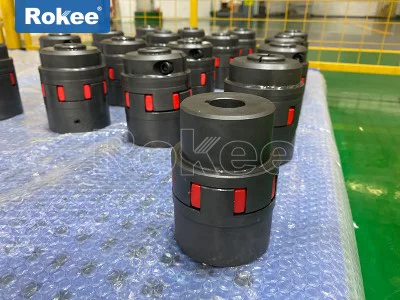
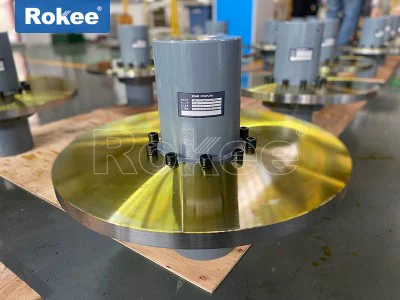
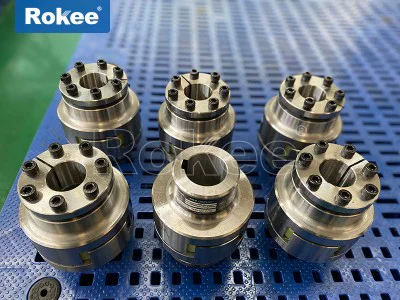
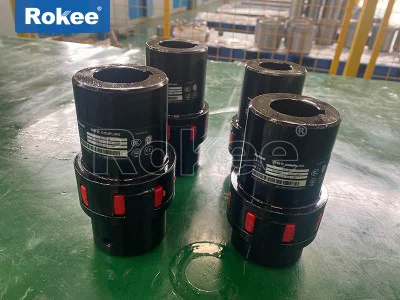
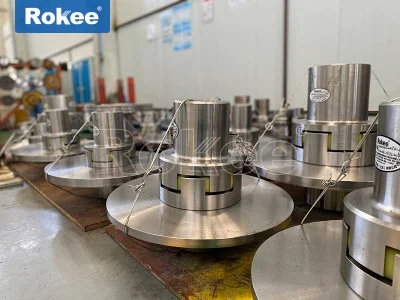
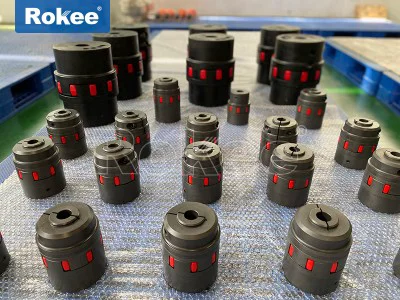
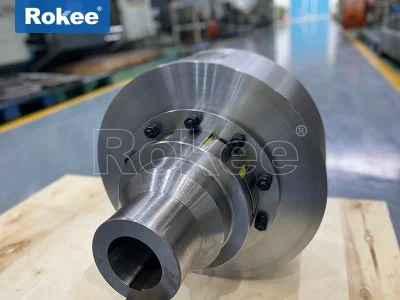
At its core, the jaw type flexible coupling features a streamlined, three-part structural framework that eliminates unnecessary complexity while maximizing functional efficiency, a design trait that contributes to its widespread adoption and ease of maintenance. The primary components consist of two metallic hubs and an intermediate elastic spider insert, with no redundant parts that could compromise reliability or increase maintenance burdens. The metallic hubs, typically crafted from high-strength carbon steel, alloy steel, cast iron, or lightweight aluminum alloy, are precision-machined to feature evenly spaced, protruding jaw-like projections around their circumferential faces. These jaws are engineered with precise contours—either straight, curved, or composite-surfaced—to ensure optimal meshing with the elastic spider and uniform stress distribution during torque transmission. The number of jaws varies across designs, commonly ranging from three to eight, with six-jaw configurations being the most prevalent for general-purpose use; this spacing balances load-bearing capacity, flexibility, and manufacturing feasibility, preventing localized stress concentrations that could lead to premature component failure. The intermediate elastic spider, often shaped like a plum blossom or asterisk to fit seamlessly between the interlocking jaws of the two hubs, acts as the heart of the coupling’s flexibility. Manufactured from durable elastomeric materials such as nitrile rubber, polyurethane, Hytrel, or engineering plastics, this spider is engineered to compress under torsional load rather than shear, a design choice that enhances torque transmission efficiency and load tolerance. Some specialized variants may include optional protective covers to shield the internal spider and jaw interfaces from dust, debris, moisture, or abrasive contaminants, preserving performance in harsh operating environments, while hub attachment mechanisms vary to suit different shaft connection needs, including keyway fixation, clamping sets, top screw locking, and expansion sleeve connections to accommodate diverse shaft sizes and mounting requirements.
The operational principle of the jaw type flexible coupling revolves around the compressive deformation of the elastic spider to transfer torque while mitigating mechanical stresses and alignment errors. When the driving shaft rotates, the jaws of the driving hub exert pressure on the adjacent lobes of the elastic spider, compressing the elastomer and transferring rotational force to the jaws of the driven hub. This indirect force transmission via the elastic element delivers multiple performance benefits that distinguish jaw couplings from other flexible coupling designs. Foremost among these is misalignment compensation: the coupling can effectively accommodate three primary types of shaft misalignment—angular, radial (parallel), and axial—without imposing excessive radial or axial loads on connected equipment bearings. Angular misalignment, caused by slight tilting between the two shaft centerlines, is absorbed by the uneven compression of the spider lobes; radial misalignment, where shafts are offset laterally, is managed through the lateral flexibility of the elastomer; and axial misalignment, involving slight endplay between shafts, is accommodated by the axial compressibility of the spider. This misalignment tolerance reduces the need for ultra-precise shaft alignment during installation, lowering assembly costs and simplifying machinery setup while protecting sensitive components from premature wear.
Beyond misalignment compensation, jaw type flexible couplings exhibit exceptional vibration and shock damping capabilities, a critical performance feature for systems with variable loads, frequent start-stop cycles, or pulsating torque inputs. The viscoelastic properties of the elastomeric spider absorb mechanical vibrations generated by the driving unit, such as electric motors or internal combustion engines, and cushion sudden shock loads, preventing these disturbances from propagating to the driven equipment and reducing operational noise levels significantly. This damping effect not only improves the smoothness of power transmission but also extends the service life of gears, bearings, shafts, and other precision components by minimizing fatigue stress. Another key performance trait is their fail-safe operational design: in the event of elastomeric spider degradation or failure, the interlocking metal jaws of the two hubs will come into direct contact, allowing the coupling to continue transmitting torque temporarily. While this backup mode lacks vibration damping and may produce increased noise and wear, it prevents catastrophic system downtime, enabling scheduled maintenance rather than emergency repairs—a vital advantage for continuous-operation industrial processes. Additionally, these couplings are inherently maintenance-free under normal operating conditions, as they require no lubrication, unlike gear or chain couplings that demand regular lubrication to prevent friction and wear. The elastomeric spider is the only wearable component, and its replacement is straightforward, requiring minimal disassembly of the shaft system, further reducing long-term maintenance costs and operational downtime.
Performance variability in jaw type flexible couplings is largely driven by variations in structural design, elastomer material properties, and hub configurations, leading to distinct categories tailored to specific operating conditions and load requirements. One primary classification is based on the design of the elastic spider and hub assembly, distinguishing between standard solid-center jaw couplings, open-center jaw couplings, snap-wrap jaw couplings, and load-cushion jaw couplings. Standard solid-center couplings feature a fully centralized spider with a solid core, offering robust torque capacity, high radial stiffness, and suitability for high-speed rotational applications; this is the most common variant for general industrial use, balancing performance and affordability across moderate load and speed ranges. Open-center couplings feature a hollow central spider design, reducing overall weight and enabling closer shaft end spacing, making them ideal for compact machinery with limited axial installation space, though they typically have lower maximum speed ratings compared to solid-center models. Snap-wrap couplings utilize a perimeter-connected spider design without a central core, allowing for quick, tool-free spider replacement without disturbing hub alignment or shaft positioning, a valuable feature for equipment where frequent maintenance access is restricted. Load-cushion couplings use discrete, removable elastomer blocks instead of a single-piece spider, facilitating targeted replacement of worn cushion elements and enhancing durability in heavy-load, high-shock applications.
Couplings are also categorized by the material of the elastic spider, a defining factor that shapes temperature resistance, chemical compatibility, torque capacity, and damping performance, allowing engineers to match the coupling to specific environmental and operational demands. Nitrile butadiene rubber (NBR) spiders represent the most common and economical choice, offering excellent oil resistance, moderate temperature tolerance, and superior vibration damping properties, suitable for most general industrial environments with moderate temperatures and exposure to hydraulic fluids or lubricants. Polyurethane spiders deliver higher torque density, enhanced wear resistance, and better ozone and UV stability compared to NBR, with a slightly narrower temperature range, making them ideal for applications requiring compact size and higher load capacity in mildly corrosive or outdoor environments. Hytrel spiders offer exceptional high-temperature resistance, chemical stability, and three times the torque capacity of standard NBR, though with reduced damping flexibility and misalignment tolerance, suited for high-temperature industrial processes or environments with exposure to harsh chemicals. Engineering plastic spiders, such as nylon, provide lightweight, corrosion-resistant performance with good electrical insulation properties, ideal for precision equipment or applications where metal corrosion is a concern. In rare heavy-duty, low-speed applications, bronze or metal-impregnated porous inserts may be used, offering extreme temperature resistance and high torque capacity but eliminating vibration damping functionality entirely.
Additional classification criteria include hub material and jaw design, with steel and cast iron hubs preferred for heavy-duty, high-torque applications due to their exceptional strength and durability, while aluminum alloy hubs are favored for lightweight, high-speed, or precision machinery to reduce rotational inertia and minimize bearing loads. Jaw geometry further differentiates performance: straight jaws offer simple manufacturing and cost-effectiveness for low-to-moderate loads; curved jaws provide larger contact areas with the spider, improving load distribution and boosting torque-bearing capacity for heavy-duty operations; composite-surfaced jaws feature optimized contours that reduce stress concentrations on the spider, enhancing elastomer lifespan and operational smoothness. Zero-backlash jaw couplings represent a specialized subcategory, engineered with precision-machined jaws and pre-compressed spiders to eliminate rotational play, making them indispensable for precision motion control systems, robotics, and CNC machinery where positional accuracy is critical.
The diverse structural and performance attributes of jaw type flexible couplings translate to an extensive range of applications across nearly every sector of mechanical engineering, from small-scale precision devices to large industrial production systems, solidifying their status as a universal power transmission solution. In general industrial machinery, they are the go-to choice for connecting electric motors to pumps, fans, compressors, conveyors, and mixers, where their misalignment compensation and vibration damping capabilities ensure stable, quiet operation and protect motor and equipment bearings from premature failure. In material handling and logistics equipment, including conveyor systems, lifting machinery, and packaging lines, their robust torque transmission, fail-safe design, and low maintenance requirements support continuous, reliable operation in high-throughput production environments. For automated manufacturing and precision engineering systems, such as industrial robots, CNC machine tools, servo drives, and measuring instruments, zero-backlash jaw couplings deliver the precise torque transfer and minimal positional error required for high-accuracy motion control, while their compact design fits seamlessly into tight assembly spaces.
In the power generation and energy sector, jaw couplings are employed in small-scale generators, water turbines, wind turbine auxiliary systems, and pump drives, where they withstand variable load conditions and dampen torsional vibrations generated by rotational equipment, enhancing system stability and component longevity. The marine and shipbuilding industry relies on these couplings for auxiliary transmission systems, including onboard pumps, ventilation systems, and winches, leveraging their corrosion-resistant variants and misalignment tolerance to adapt to the dynamic, high-vibration marine environment. In agricultural machinery, such as tractors, harvesters, and irrigation systems, jaw couplings endure harsh outdoor conditions, shock loads from uneven terrain, and frequent load fluctuations, providing durable power transmission with minimal maintenance needs. They also find critical use in the automotive industry for auxiliary drive systems, test benches, and manufacturing equipment, as well as in aerospace ground support machinery, where reliability and compactness are paramount. Even in household appliances and small power tools, miniaturized jaw couplings facilitate smooth power transfer, reducing noise and vibration for improved user experience.
Selecting the appropriate jaw type flexible coupling for a specific application requires a comprehensive assessment of multiple operational parameters to ensure optimal performance and longevity, rather than relying on a one-size-fits-all approach. Key considerations include nominal torque and peak load requirements, rotational speed limits, degree and type of shaft misalignment, operating temperature range, exposure to chemicals, oils, or abrasive contaminants, and spatial constraints for installation. Matching the elastomer material to environmental conditions is critical: NBR for general-purpose use, polyurethane for high-torque compact setups, Hytrel for high-temperature environments, and engineering plastics for corrosion resistance. Hub material selection depends on load magnitude and speed, with steel for heavy loads and aluminum for high-speed precision applications. Proper installation practices, including ensuring adequate shaft engagement, avoiding jaw-to-jaw metal contact, and aligning shafts within the coupling’s rated tolerance, further enhance performance and prevent premature wear. Regular visual inspections to monitor spider condition—such as checking for compression set, cracking, or wear—enable proactive maintenance, replacing the elastomer before failure occurs and maximizing the coupling’s service life.
In summary, jaw type flexible couplings embody a perfect synergy of structural simplicity, functional versatility, and reliable performance, making them an indispensable component in modern mechanical power transmission systems. Their ability to transmit torque efficiently, compensate for shaft misalignment, dampen vibrations and shocks, and operate with minimal maintenance addresses core challenges in diverse industrial and engineering applications. The wide array of design variants and material options allows for tailored solutions to meet the unique demands of every operational scenario, from precision robotics to heavy industrial machinery. As mechanical engineering continues to evolve toward higher efficiency, reliability, and compactness, jaw type flexible couplings will retain their pivotal role, adapting to emerging technological demands while maintaining their core advantages of durability, adaptability, and cost-effectiveness. Their enduring popularity stems not from complex innovation, but from a refined, practical design that consistently delivers dependable performance across the full spectrum of mechanical power transmission needs.