Metal Membrane Couplings
In the realm of modern mechanical power transmission, metal membrane couplings stand as indispensable flexible coupling components, engineered to bridge driving and driven shafts while addressing the inherent challenges of shaft misalignment, vibration, and precision transmission. Unlike rigid couplings that demand flawless shaft alignment and offer no tolerance for positional deviations, metal membrane couplings leverage the elastic deformation of high-performance metallic membranes to deliver reliable torque transfer, making them a cornerstone in diverse industrial systems where efficiency, durability, and adaptability are non-negotiable.
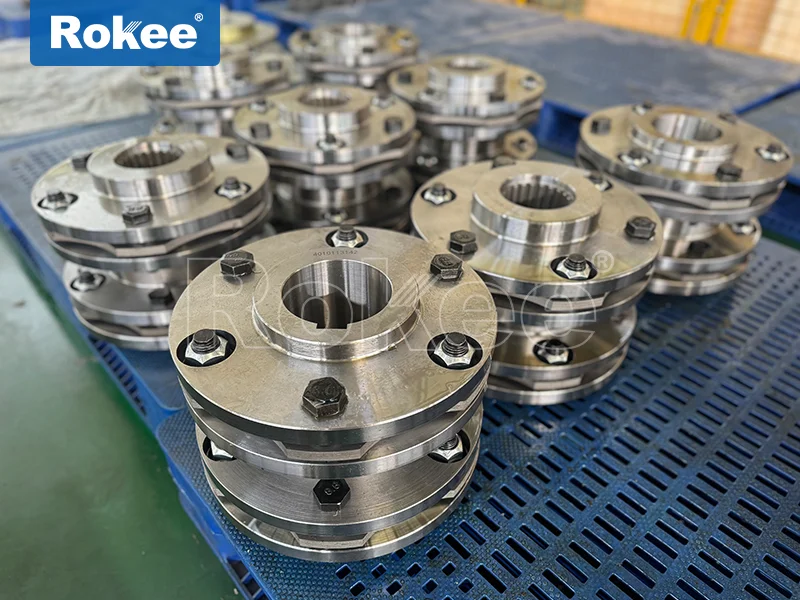
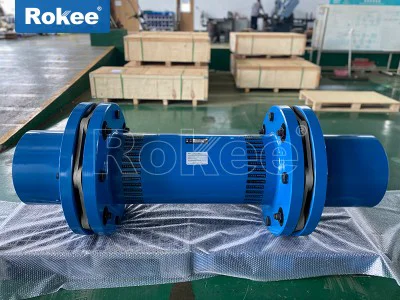
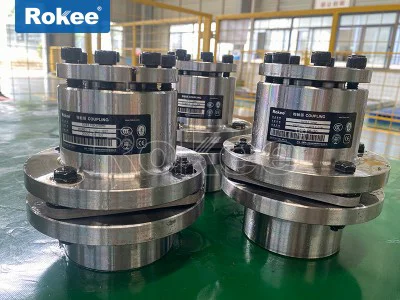
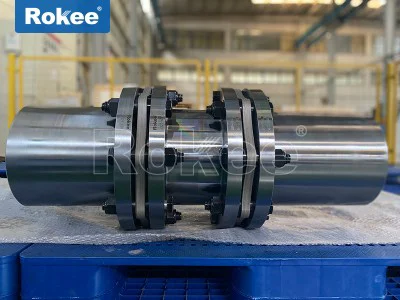
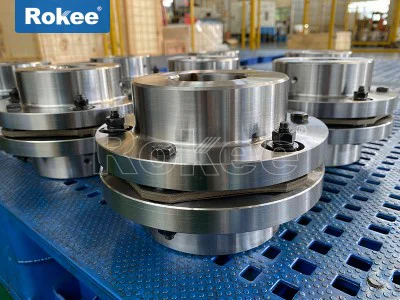
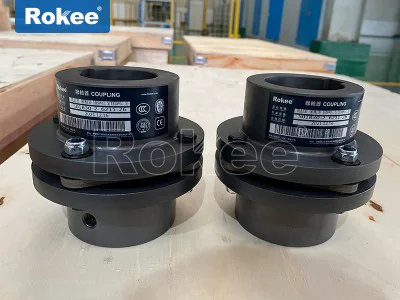
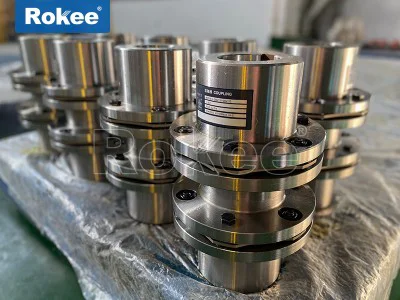
At its core, the structure of a metal membrane coupling is a masterclass in precision engineering, characterized by a compact, streamlined layout with no redundant components, yet optimized for maximum mechanical efficiency. The primary constituent parts include two rigid hubs, a set of thin, flexible metal membranes (often referred to as diaphragms), and high-strength fastening hardware that securely integrates these elements into a cohesive transmission unit. The hubs, typically forged from high-grade alloy steel or lightweight aluminum alloy, serve as the connection interface between the coupling and the rotating shafts; their inner bores are machined to tight tolerances to ensure a snug, stable fit with the shaft ends, with connection modes ranging from keyway locking and clamping to keyless expansion sleeve fixation, catering to varied load and installation requirements. The metallic membrane group is the heart of the coupling, composed of multiple layers of ultra-thin, high-tensile stainless steel or spring steel sheets stacked in precise alignment. These thin membranes are engineered with carefully contoured profiles—such as waisted, circular, or rectangular shapes—to minimize stress concentration during deformation and enhance elastic resilience. The fastening bolts, crafted from high-strength alloy steel, are installed in a staggered pattern to link the membrane group with the hubs, distributing torque evenly across the membrane surface and preventing localized overloading. Notably, the entire structure operates without relative sliding between components, eliminating friction wear and the need for internal lubrication, a design choice that sets it apart from traditional gear or elastomeric couplings.
The operational principle of a metal membrane coupling revolves around the synergistic interplay of torque transmission and misalignment compensation, enabled solely by the elastic deformation of the metal membranes. When torque is applied from the driving shaft, it is transferred through the driving hub to the membrane group, which undergoes controlled elastic stretching and bending to convey the rotational force to the driven hub and subsequently the driven shaft. Concurrently, the membrane’s inherent flexibility allows it to accommodate three primary types of shaft misalignment: axial, radial, and angular. Axial misalignment, caused by thermal expansion or shaft endplay, is absorbed by the membrane’s longitudinal elastic deformation; radial misalignment, stemming from installation errors or shaft deflection, is mitigated by the membrane’s conical bending; and angular misalignment, arising from non-parallel shaft axes, is compensated through the membrane’s S-shaped flexure. This dual functionality—efficient torque transfer and effective misalignment accommodation—ensures that the transmission system operates smoothly, reducing excessive stress on bearings, gears, and other critical equipment components, thereby extending the service life of the entire mechanical assembly.
The performance characteristics of metal membrane couplings are tailored to meet the rigorous demands of modern industrial operations, boasting a suite of advantages that solidify their status as a premium transmission solution. Foremost is their exceptional transmission precision, marked by zero backlash and near-rigid torsional stiffness, which guarantees synchronous rotation between driving and driven shafts without speed deviation or positional lag. This level of precision is paramount in high-precision machinery where rotational accuracy directly impacts product quality and operational efficiency, with transmission efficiencies consistently exceeding 99%, minimizing energy loss during power transfer. Secondly, metal membrane couplings exhibit outstanding misalignment compensation capabilities, outperforming many conventional flexible couplings; they can handle moderate to high levels of angular, radial, and axial misalignment simultaneously, reducing the need for ultra-precise shaft alignment during installation and lowering assembly costs. Thirdly, their environmental adaptability is unparalleled: constructed entirely from corrosion-resistant, high-temperature metals, they operate reliably in extreme conditions, including high-temperature environments, low-temperature settings, and atmospheres contaminated by oil, chemicals, or moisture. Unlike elastomeric couplings that degrade rapidly in harsh conditions, metal membrane couplings retain their mechanical properties over prolonged exposure, ensuring consistent performance without material fatigue.
Additional performance merits include maintenance-free operation and long service life. The absence of lubrication requirements eliminates routine maintenance tasks such as oil replenishment, leakage inspection, and component cleaning, reducing downtime and operational costs for industrial facilities. The all-metal construction resists wear, fatigue, and aging, with a service life that far surpasses elastomeric and gear couplings, even under continuous heavy-duty operation. Furthermore, these couplings offer effective vibration damping and noise reduction: the elastic membranes absorb mechanical vibrations generated during operation, isolating shock loads and preventing vibration transmission between shafts, resulting in quieter, more stable system performance. They also feature a lightweight, compact design with low moment of inertia, making them ideal for high-speed rotational systems where excess weight would compromise dynamic balance and operational safety. In overload scenarios, the metal membranes act as a sacrificial component, failing first to protect more valuable driving and driven equipment from catastrophic damage, adding an extra layer of safety to the transmission system.
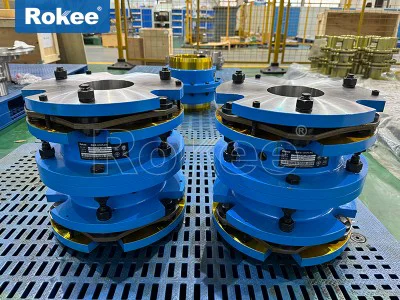
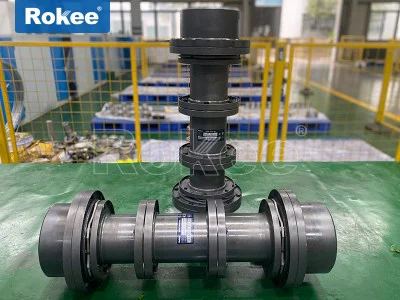
Metal membrane couplings are classified into distinct types based on structural configuration, membrane design, and application-specific requirements, each optimized for unique operational conditions. The most common classification is based on the number of membrane groups, which divides them into single membrane couplings and double membrane couplings. Single membrane couplings feature a single set of metallic membranes connecting two hubs, offering a simple, cost-effective design with high torsional stiffness and minimal axial space occupancy. While their misalignment compensation capacity is relatively limited—primarily suited for minor axial and angular misalignments—they excel in high-precision, low-deviation applications such as small precision motors, instrumentation equipment, and light-duty pumps. Double membrane couplings, by contrast, incorporate two separate membrane groups linked by an intermediate spacer or shaft, enabling significantly enhanced misalignment compensation. This dual-membrane design can accommodate larger angular, radial, and composite misalignments, making it the preferred choice for long-distance shaft transmission, high-speed rotating machinery, and systems with significant installation or operational deviations. The intermediate spacer also allows for customization of the coupling’s overall length, adapting to varied shaft spacing requirements in complex mechanical setups.
Classification by membrane structure yields two primary categories: stacked lamina membrane couplings and integral single-piece membrane couplings. Stacked lamina membrane couplings consist of multiple thin metal sheets layered together, offering superior flexibility and fatigue resistance; the layered design distributes stress across individual sheets, preventing premature failure and boosting load-bearing capacity, making them suitable for heavy-duty, high-torque applications. Integral single-piece membrane couplings are machined from a single solid metal sheet, delivering exceptional rigidity, concentricity, and dynamic balance. This monolithic design eliminates gaps between layered sheets, reducing windage loss at high speeds and ensuring unparalleled rotational precision, ideal for high-speed turbomachinery, precision machine tools, and aerospace transmission systems. Additional specialized variants include step-type membrane couplings for ultra-high torque transmission, keyless expansion sleeve membrane couplings for heavy machinery where shaft keyway machining is impractical, and long-span membrane couplings with extended intermediate shafts for industrial systems with large shaft separations. Each type is engineered to balance stiffness, flexibility, torque capacity, and misalignment tolerance, ensuring a tailored solution for every transmission scenario.
The versatility of metal membrane couplings is reflected in their extensive cross-industry applications, spanning virtually every sector of modern manufacturing, energy production, and precision engineering. In the energy industry, they are integral to power generation equipment, including steam turbines, gas turbines, wind turbine gearboxes, and hydroelectric generator sets. Here, their high-temperature resistance, high-speed operational stability, and heavy torque capacity ensure reliable power transmission in demanding energy production environments, withstanding thermal fluctuations and continuous load stresses without performance degradation. In the chemical and petrochemical sector, metal membrane couplings are widely used in process pumps, compressors, mixers, and reactor drives; their corrosion resistance and lubrication-free design prevent contamination of sensitive chemical media, while their ability to operate in corrosive, high-pressure atmospheres ensures uninterrupted production in harsh processing facilities.
In the machinery manufacturing and metallurgical industries, these couplings power heavy-duty equipment such as rolling mills, crushers, conveyors, and large-scale machine tools. Their robust construction and high torque transmission capacity handle the extreme loads and vibration associated with metal forming, mining, and material handling, while their misalignment compensation capabilities protect equipment from damage caused by heavy operational stresses. For precision engineering applications, including CNC machining centers, servo motor drives, robotic arms, and optical instrumentation, the zero-backlash precision and vibration damping properties of metal membrane couplings are indispensable, ensuring micron-level machining accuracy, smooth robotic movement, and stable instrumentation performance. In the aerospace and marine sectors, their lightweight design, high reliability, and resistance to extreme environmental conditions—such as saltwater corrosion, high altitudes, and rapid temperature changes—make them ideal for aircraft engine drives, marine propulsion systems, and shipboard auxiliary equipment.
Beyond these core industries, metal membrane couplings find utility in food and beverage processing, pharmaceutical manufacturing, automotive production, and medical equipment, where hygiene, precision, and low maintenance are critical. In food and pharmaceutical plants, their lubrication-free design eliminates the risk of product contamination from lubricants, complying with strict industry hygiene standards. In automotive assembly lines, they support high-speed, automated production equipment, ensuring consistent operational efficiency and minimal downtime. In medical devices, their quiet, vibration-free operation and precise transmission support the functionality of diagnostic and therapeutic equipment, where accuracy and reliability are life-critical.
As industrial technology continues to advance toward higher speeds, heavier loads, and greater precision, the demand for high-performance transmission components like metal membrane couplings is poised to grow exponentially. Ongoing innovations in material science—such as the development of high-strength, lightweight alloy membranes—and precision manufacturing techniques are further enhancing their performance, expanding their operational limits, and broadening their application scope. Unlike generic coupling solutions, metal membrane couplings represent a harmonious blend of structural ingenuity, material excellence, and functional adaptability, addressing the most pressing challenges in modern power transmission. From small-scale precision instruments to large-scale industrial power plants, their role in ensuring efficient, reliable, and safe mechanical operation cannot be overstated. As a vital link in rotating machinery systems, metal membrane couplings will continue to evolve alongside industrial progress, remaining a key enabler of technological advancement and operational excellence across global engineering and manufacturing landscapes.