Gear Coupling is Core Accessory Of Transmission System For PU Sandwich Panel Production Line
In the sophisticated manufacturing system of PU sandwich panels, the stability and efficiency of the entire production process hinge entirely on the reliable operation of the transmission system, which serves as the power transmission backbone connecting all core processing equipment. Among numerous mechanical accessories that constitute this vital system, gear coupling stands out as an indispensable core component, undertaking the critical task of transmitting torque, coordinating the operation of multi-stage equipment, and adapting to complex industrial operating conditions. As a high-performance transmission connecting part integrating rigid transmission stability and flexible displacement compensation capability, it perfectly matches the continuous, high-load, and high-precision operation requirements of PU sandwich panel production lines, becoming a fundamental guarantee for the long-term stable operation of the entire production equipment. Unlike ordinary flexible couplings that rely on elastic deformation for buffering and simple rigid couplings with single connection functions, gear couplings realize power transmission through precise meshing of internal and external gear teeth, achieving torsionally rigid torque output while retaining excellent adaptability to various shaft misalignments generated during equipment operation, which makes it uniquely valuable in the specialized working environment of PU sandwich panel manufacturing.
The production process of PU sandwich panels involves a complete set of continuous assembly line operations, including raw material feeding, polyurethane foaming, panel pressing, constant-temperature curing, trimming cutting, and finished product conveying. Each processing link is driven by independent power devices, and the coordinated operation of all links depends on the seamless power transmission of the transmission system. In this continuous production mode, the transmission system needs to maintain stable torque output at all times to ensure consistent production speed and uniform product quality. Slight fluctuations in power transmission or asynchronous operation of front and rear equipment will directly lead to defects such as uneven panel thickness, inconsistent foaming density, and irregular edge cutting, resulting in unqualified products and increased production costs. Gear couplings are precisely designed to solve the core pain points of power transmission in continuous industrial production. Their special gear meshing structure enables efficient and slip-free torque transmission between driving shafts and driven shafts, ensuring that the power output of motors and reducers can be accurately transmitted to various execution equipment of the production line, maintaining synchronous operation of the entire production chain and effectively avoiding product quality problems caused by power transmission deviation.
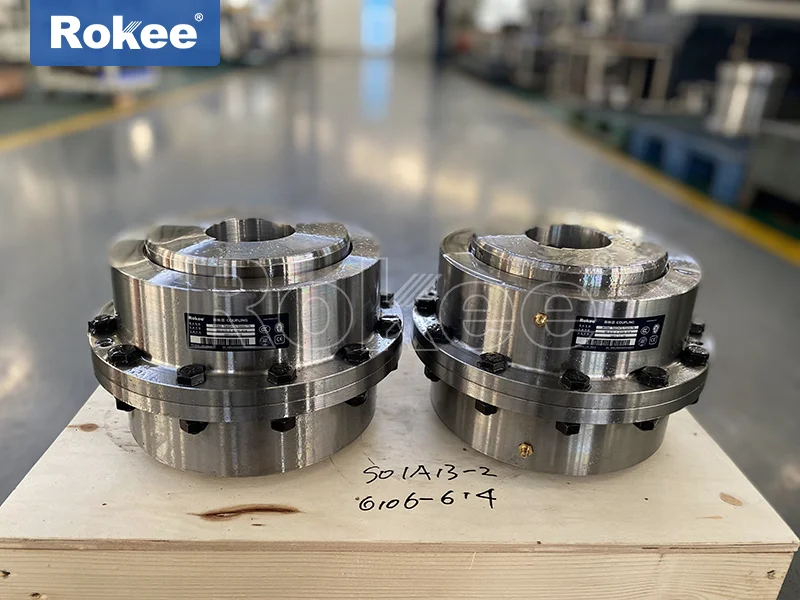
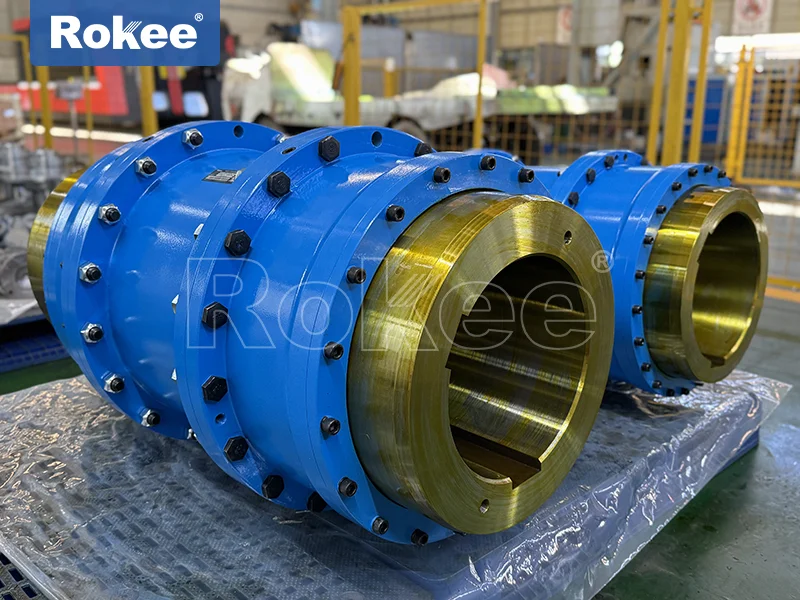
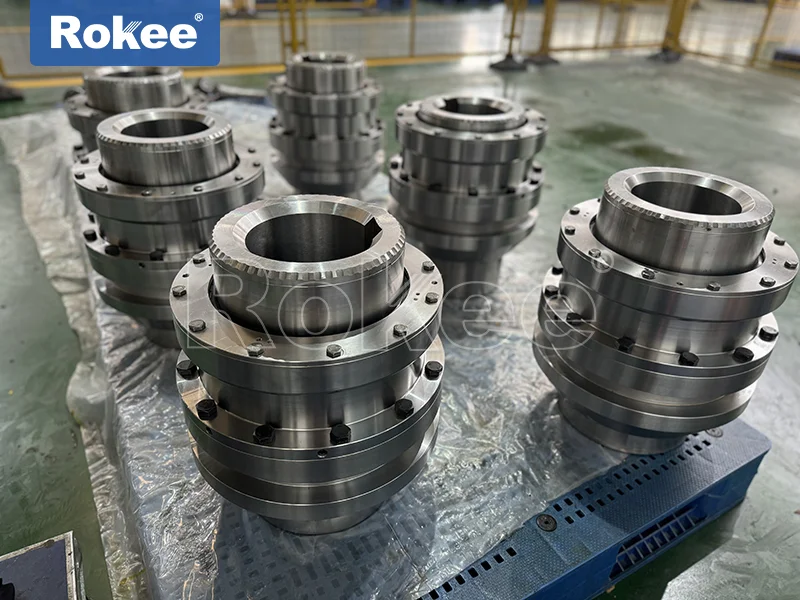
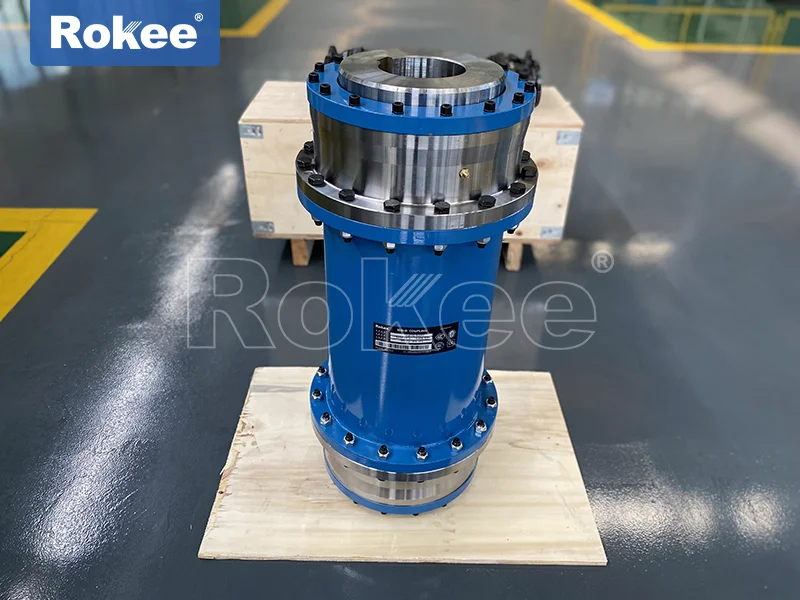
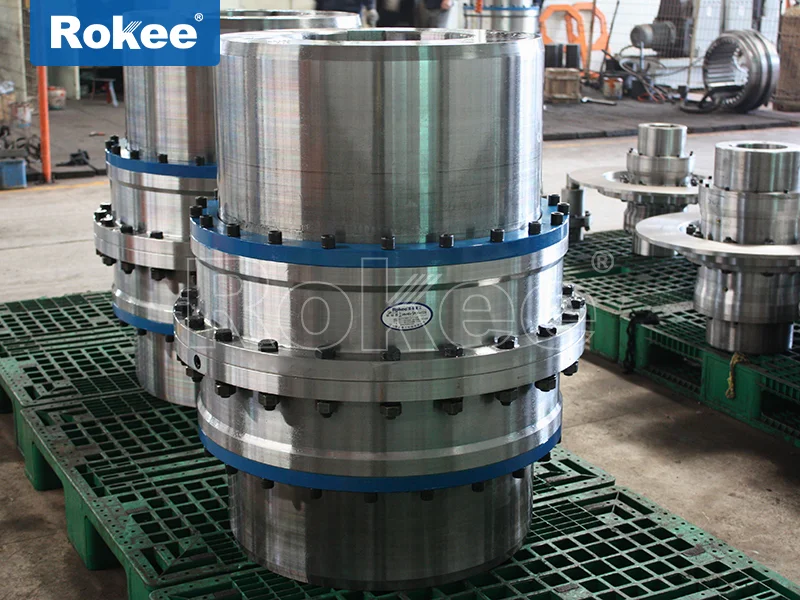
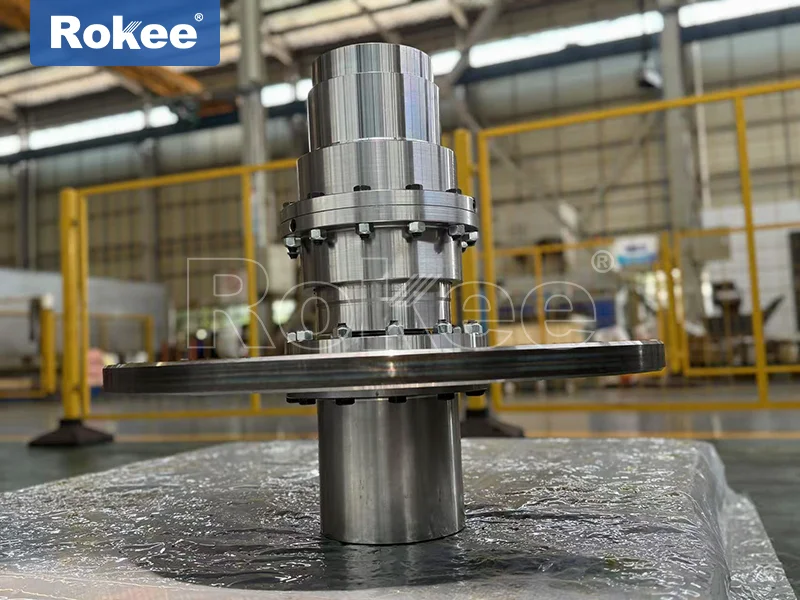
The structural design of gear couplings endows them with superior performance advantages adapted to the working conditions of PU sandwich panel production line. The basic structure of this component consists of two toothed hubs and two flanged sleeves with internal teeth. The external teeth on the hubs mesh tightly with the internal teeth of the sleeves, forming a closed and stable transmission structure. The crowned design of the external gear teeth allows a certain range of angular, parallel, and axial displacement compensation during operation, which can effectively cope with various misalignment problems that are inevitable in long-term equipment operation. In actual production scenarios, long-term mechanical vibration, slight deformation of equipment foundations, thermal expansion and contraction of metal parts during continuous operation, and minor installation deviations will all cause relative displacement between connecting shafts. Ordinary transmission accessories often fail to adapt to these subtle changes, resulting in increased shaft system operation resistance, severe component wear, and even equipment jamming and shutdown. In contrast, gear couplings can automatically compensate for these displacements during high-speed operation, eliminating additional mechanical stress on the transmission system and ensuring that the equipment always operates in a stable stress state.
Heavy-load operation resistance is a typical working feature of PU sandwich panel production lines, especially in the pressing and curing molding stages. The equipment needs to bear continuous and stable mechanical pressure to ensure the compactness and structural stability of polyurethane foam and composite panels. This working condition requires the transmission system to have excellent heavy-load resistance and impact resistance. Gear couplings have extremely high torque density due to their multi-tooth meshing transmission mode. Multiple gear teeth bear the load simultaneously during operation, which disperses the transmission pressure of a single tooth and greatly improves the overall load-bearing capacity of the component. This structural characteristic enables it to withstand the long-term heavy-load operation of the sandwich panel production line without deformation or fatigue damage, maintaining stable power output under continuous high-load working conditions. At the same time, the rigid transmission characteristic of gear couplings ensures no torsional deformation during torque transmission, which guarantees the high-precision operation of pressing equipment, effectively controlling the flatness and thickness accuracy of finished sandwich panels, and meeting the high-standard manufacturing requirements of building thermal insulation and decoration panels.
Continuous industrial production puts forward strict requirements on the durability and anti-fatigue performance of mechanical components, and the non-stop operation mode of PU sandwich panel production lines makes component stability particularly important. Frequent equipment shutdowns caused by accessory failure will not only reduce production efficiency but also cause waste of raw materials such as polyurethane materials and metal base plates, and even affect the continuous production rhythm of the entire production line. Gear couplings adopt integral forging and precision machining processes in production, with high overall structural rigidity and good wear resistance. The gear tooth surface undergoes fine finishing treatment, which reduces friction and wear during meshing operation, lowers the heat generation of the transmission system, and effectively delays the aging and failure speed of components. In the long-term continuous operation of the sandwich panel production line, this excellent durability enables gear couplings to maintain stable transmission performance for a long time, reduce the frequency of equipment failure and maintenance downtime, and provide strong support for efficient and continuous production.
Vibration and shock are unavoidable in the operation of mechanical transmission systems, and long-term unbuffered vibration will cause cumulative damage to precision parts of the production line, such as reducers, bearings, and drive motors. Although gear couplings are torsionally rigid, their gear meshing gap and flexible displacement compensation function can effectively absorb and weaken mechanical vibration and instantaneous impact generated during equipment start-up, shutdown, and load switching. In the PU sandwich panel production process, the start and stop of feeding equipment and the switching of pressing load will produce instantaneous transmission impact. If these impacts are directly transmitted to the entire shaft system, it will easily cause loose connection of parts, accelerated wear of bearings, and reduced transmission accuracy. Gear couplings can buffer these instantaneous impact forces through the relative adaptive movement between gear teeth, protect the core precision components of the transmission system, reduce the loss of mechanical energy, and improve the overall operation stability and service life of the equipment.
The adaptability of gear couplings to complex working environments further consolidates their core status in PU sandwich panel production lines. The production workshop of PU sandwich panels usually has a certain amount of dust generated by raw material cutting and processing, and the polyurethane foaming process will produce trace chemical volatile substances. Such working environments have high requirements on the sealing performance and corrosion resistance of transmission accessories. The integral sleeve structure of gear couplings can form a good protective barrier for the internal meshing gear teeth, effectively preventing dust, debris, and harmful substances in the external environment from entering the meshing area, avoiding gear tooth abrasion, corrosion, and meshing failure caused by environmental pollution. This good environmental adaptability enables the transmission system to maintain stable working performance in long-term complex industrial environments, reducing the failure rate of components caused by environmental factors and ensuring the continuity and stability of panel production.
The rational matching and stable operation of gear couplings also play a key role in reducing the operating cost of PU sandwich panel production lines. In industrial production, the wear and failure of transmission accessories are important factors leading to equipment maintenance costs and energy consumption increase. Poor transmission component performance will lead to increased transmission resistance, which requires more power output from the motor to maintain normal equipment operation, resulting in increased energy consumption. At the same time, frequent replacement of damaged accessories and long-time equipment maintenance will increase labor costs and reduce effective production time. Gear couplings have low wear rate and long service life due to their reasonable structural design and high machining accuracy. The efficient and low-resistance transmission mode can reduce mechanical energy loss in the power transmission process, improve the overall energy utilization efficiency of the equipment, and achieve the effect of energy saving and consumption reduction. In addition, its stable operation performance greatly reduces the frequency of equipment failure maintenance, saves maintenance labor and accessory replacement costs, and creates more stable economic benefits for panel production enterprises.
In the daily operation and maintenance of PU sandwich panel production lines, the scientific use and regular maintenance of gear couplings are crucial to maintaining the long-term efficient operation of the transmission system. Although gear couplings have high durability and stability, regular inspection of gear meshing status, lubrication conditions, and connection tightness is still required according to the equipment operation cycle. Good lubrication can reduce gear tooth friction and wear, lower operating temperature, and avoid component fatigue damage caused by long-term high-temperature operation. Regular inspection of shaft alignment and component wear can timely discover potential hidden dangers such as slight deformation and wear of parts, and carry out adjustment and maintenance in advance, so as to avoid small faults evolving into large-scale equipment failures and affecting the overall production progress. The standardized maintenance mode can maximize the service life of gear couplings, maintain the optimal transmission performance of the system, and ensure that the PU sandwich panel production line always maintains high-efficiency and high-quality production status.
With the continuous upgrading of PU sandwich panel manufacturing technology, the production line is developing towards higher automation, higher precision and higher efficiency, which puts forward higher requirements on the performance of transmission system components. As the core accessory of the transmission system, gear coupling also needs to keep pace with the development of the industry, and continuously optimize the structural design and processing technology to adapt to the higher-standard production needs. The high-precision meshing technology, stronger load-bearing capacity and more accurate displacement compensation performance of modern gear couplings can better meet the requirements of high-speed and high-precision continuous production of new-type sandwich panels, further improve the dimensional accuracy, surface flatness and overall structural stability of finished panels, and promote the overall upgrading of the production quality of PU sandwich panels.
In conclusion, gear coupling is not only a simple mechanical connecting part in the PU sandwich panel production line, but also a core functional component that determines the operating stability, production efficiency and product quality of the entire equipment. It solves multiple key problems in the transmission process of sandwich panel production lines, including stable torque transmission, shaft misalignment compensation, heavy-load operation adaptation, vibration and impact buffering, and complex environment adaptation. Its excellent comprehensive performance makes it irreplaceable in the transmission system of PU sandwich panel production equipment. In the entire industrial manufacturing chain of PU sandwich panels, the stable operation of gear couplings provides a solid mechanical guarantee for continuous and standardized production, which is of great significance to improving production efficiency, reducing production costs, and stabilizing product quality, and has become an indispensable core support for the efficient operation of modern PU sandwich panel production lines.