Barrel Gear Coupling Adaptation And Transmission Optimization For PIR Sandwich Panel Production Line
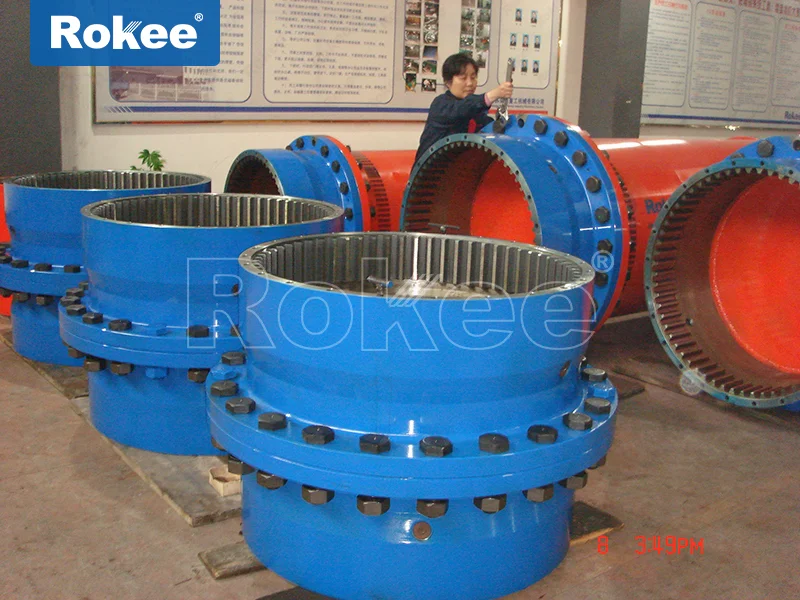
The continuous and stable operation of mechanical transmission systems serves as the core guarantee for the efficient production of PIR sandwich panels, whose production process involves continuous rolling, foaming, compounding, and cutting procedures with long-term cyclic load operation and frequent dynamic load fluctuations. As a key connecting component between driving and driven shafts in the transmission system, the barrel gear coupling undertakes the important task of torque transmission, misalignment compensation and vibration buffering, and its adaptation degree and transmission performance directly affect the operating stability, production continuity and equipment service life of the entire production line. Different from general industrial transmission equipment, the PIR sandwich panel production line has unique operating characteristics such as long-duration continuous operation, low-speed and high-torque transmission, frequent start-stop switching, and inevitable shaft misalignment caused by mechanical vibration and thermal deformation. Traditional transmission coupling structures often suffer from insufficient misalignment compensation capacity, uneven tooth surface load distribution, large transmission impact and serious wear under the special working conditions of sandwich panel production, which easily lead to transmission efficiency attenuation, equipment operation jitter and even intermittent production shutdowns. Therefore, carrying out targeted adaptation analysis and transmission performance optimization of barrel gear couplings is of great practical significance for improving the overall operating efficiency and operational stability of PIR sandwich panel production lines.
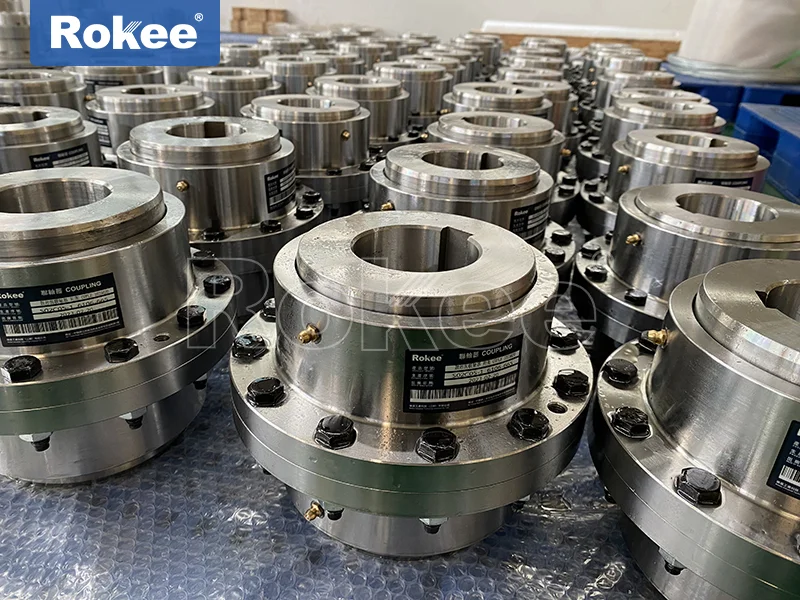
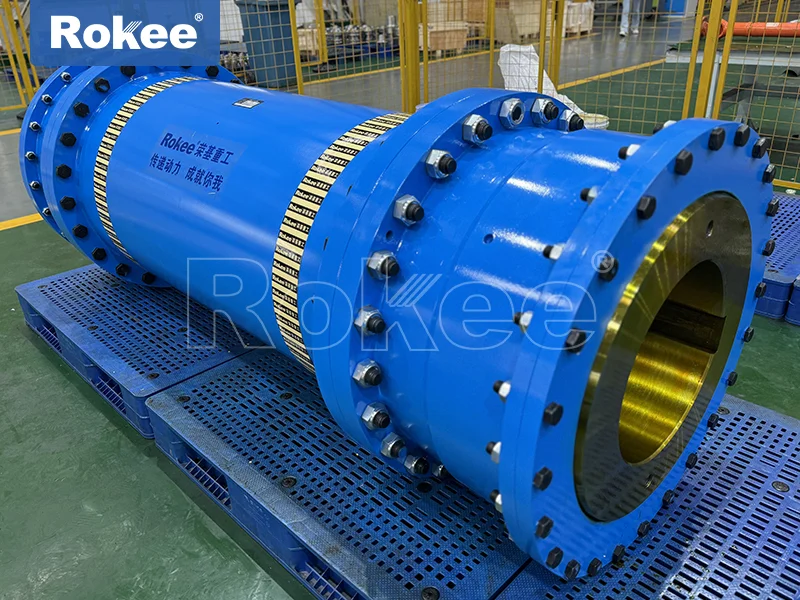
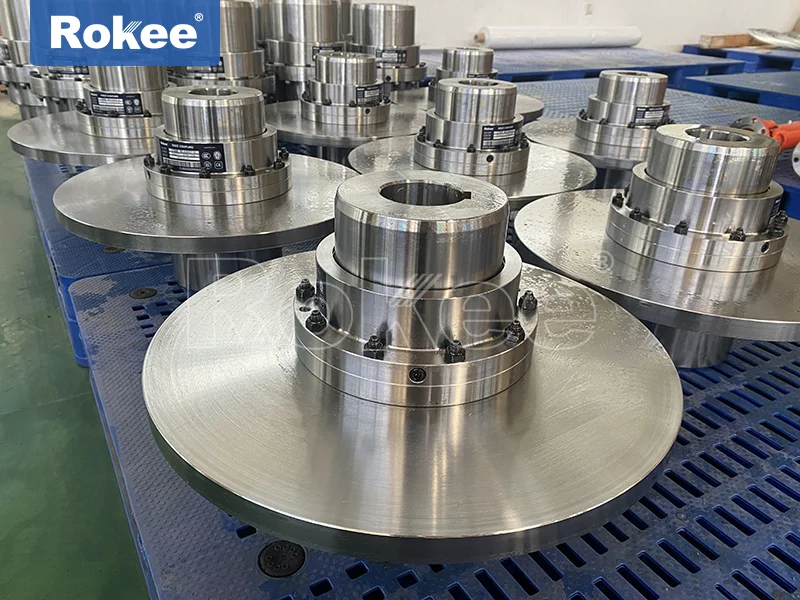
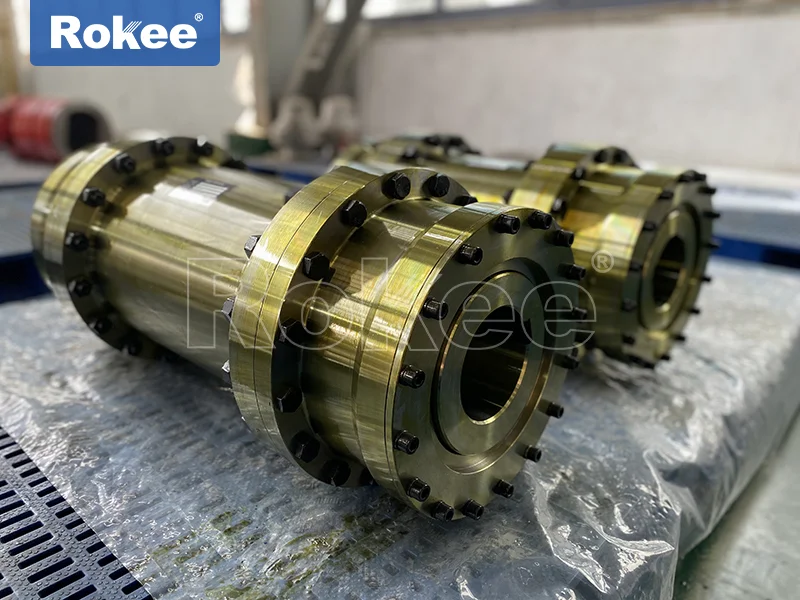
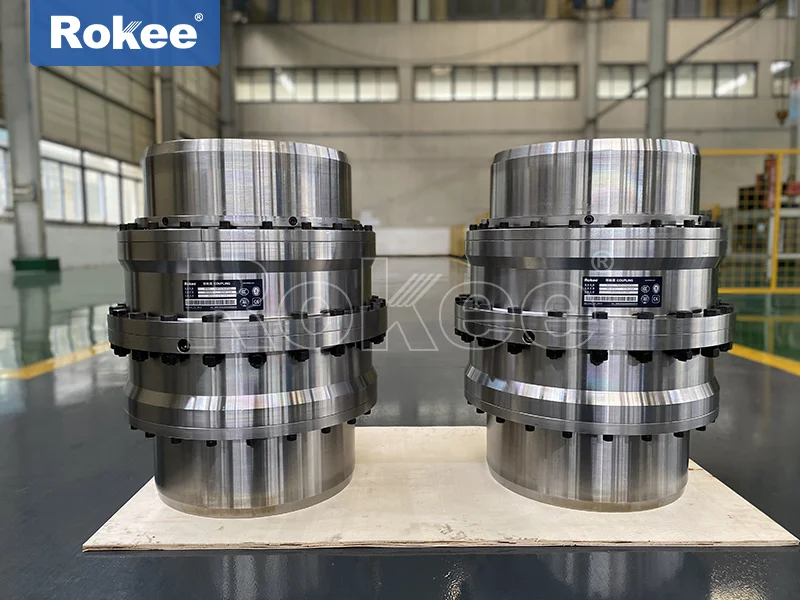
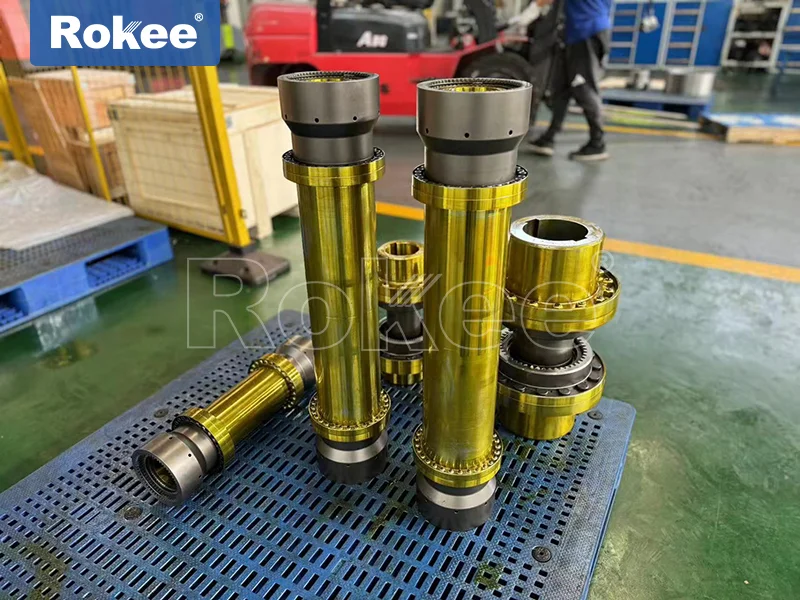
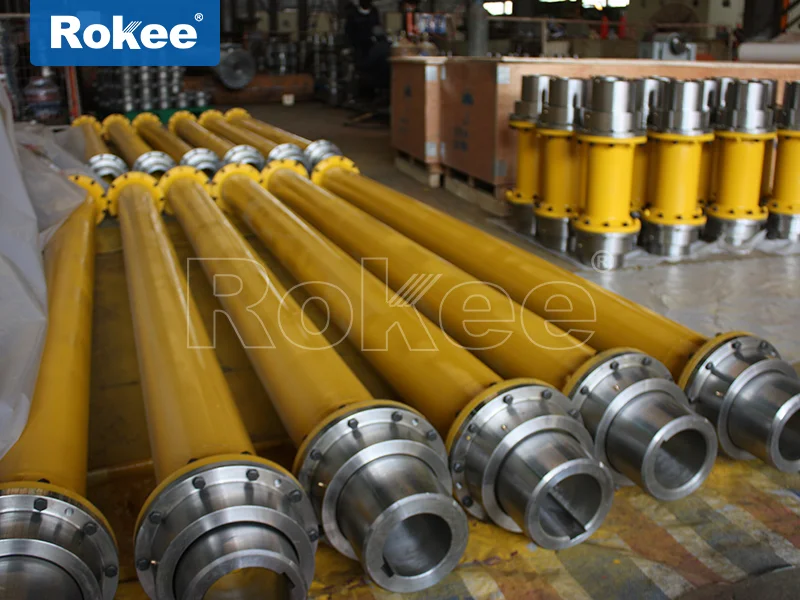
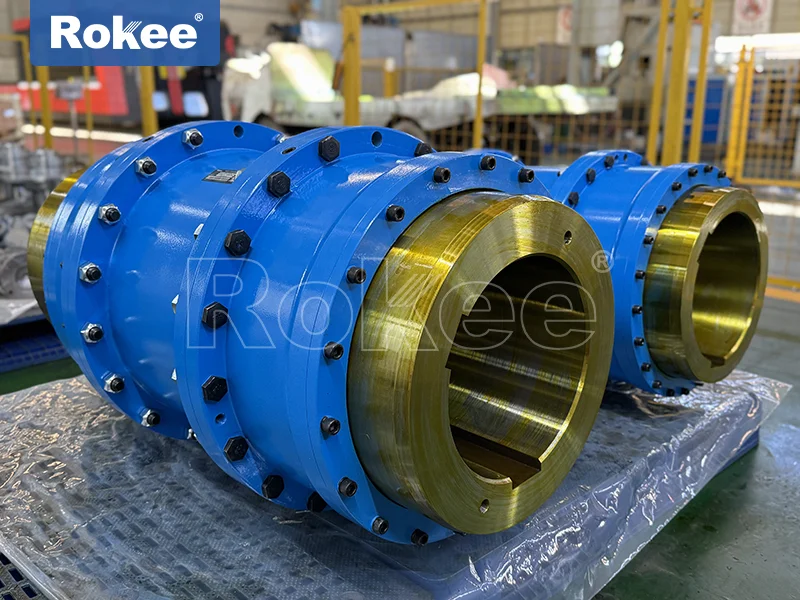
Barrel gear couplings are a type of flexible gear coupling with excellent comprehensive transmission performance, whose core structural feature lies in the barrel-shaped outer tooth design different from ordinary straight-tooth gear couplings. The spherical tooth profile structure enables the coupling to form flexible meshing contact in the process of torque transmission, effectively solving the rigid contact defect of traditional gear teeth that is prone to stress concentration. The basic working principle of the coupling is to realize synchronous rotation and power transmission through the meshing fit between the barrel-shaped outer teeth of the hub and the inner teeth of the outer sleeve. When the production line is in operation, the driving shaft drives the coupling hub to rotate synchronously, and the uniform contact force formed by the meshing of the barrel tooth surfaces stably transmits the rotational torque and power to the driven shaft, thereby driving the rolling system, conveying system and composite forming system of the PIR sandwich panel production line to operate coordinately. Compared with elastic couplings and rigid couplings, barrel gear couplings have outstanding advantages of large torque transmission capacity, good dynamic compensation performance and strong environmental adaptability, which can well match the high-load operation demand of continuous industrial production lines, and thus are widely applied in the transmission links of medium and heavy-duty continuous production equipment.
In the actual application scenario of PIR sandwich panel production line, the operating environment and working conditions put forward higher adaptive requirements for barrel gear couplings. First of all, the production line maintains uninterrupted continuous operation for a long time, and the coupling needs to bear cyclic alternating loads for a long time, which requires the coupling to have excellent fatigue resistance and stable long-term transmission performance to avoid performance degradation caused by long-term load accumulation. Secondly, the core processes of PIR sandwich panel production such as board rolling and foam compounding belong to low-speed and high-torque transmission scenarios, and the instantaneous torque impact generated by equipment start-stop, speed regulation and load mutation is obvious, which requires the coupling to have good impact resistance and buffer performance to reduce the rigid impact of the transmission system. In addition, in the long-term operation of the production line, the vibration of rolling equipment, thermal deformation caused by equipment heating, and tiny displacement caused by mechanical wear will lead to different degrees of angular misalignment, radial offset and axial displacement between the driving shaft and driven shaft. Ordinary coupling structures are difficult to adapt to such comprehensive misalignment changes, which will lead to local overload of gear teeth, accelerated wear and increased transmission noise. The unique barrel tooth profile of barrel gear couplings can form rolling contact rather than fixed-point friction during meshing, which can effectively compensate for various shaft misalignments and maintain stable transmission state under complex dynamic working conditions, making it the optimal matching component for the transmission system of PIR sandwich panel production lines.
Despite the good basic adaptation of barrel gear couplings to the working conditions of sandwich panel production lines, many unreasonable adaptation problems and transmission defects still exist in practical application, which restrict the further improvement of production line operation performance. In terms of structural adaptation, many couplings adopt standard general structural designs, which fail to carry out targeted optimization for the low-speed high-torque and long-cycle operation characteristics of PIR panel production lines. The tooth surface clearance of standard couplings is designed for conventional working conditions, and the clearance is too small to form effective lubricating oil film under long-term continuous operation, resulting in dry friction and abrasive wear between tooth surfaces; while excessive clearance will cause meshing impact and transmission jitter during equipment start-stop and load switching, affecting the flatness of panel rolling and compounding processing. In terms of load transmission, the standard barrel tooth profile has insufficient contact uniformity under high torque load, and the stress is concentrated at the local position of the tooth surface, leading to uneven tooth surface wear. Long-term uneven wear will cause changes in tooth profile accuracy, reduce transmission synchronization, and further induce vibration and resonance of the transmission system, affecting the forming quality of PIR sandwich panels.
In terms of dynamic operation adaptation, the transmission stability of barrel gear couplings is easily affected by the thermal deformation of the production line equipment. The foaming and curing process of PIR sandwich panels will generate continuous heat transfer, causing the temperature of the transmission shaft and coupling parts to rise. The thermal expansion and contraction of metal parts will change the meshing clearance and contact state of gear teeth, resulting in reduced transmission accuracy and increased operating noise. In addition, the frequent speed adjustment of the production line to adapt to different panel specifications will lead to frequent changes in the operating speed and load of the coupling. The conventional coupling structure has poor dynamic response performance during speed regulation, which is prone to transmission lag and torque loss, reducing the overall transmission efficiency of the equipment. In terms of assembly and use adaptation, unreasonable installation errors and non-standard assembly processes in actual production will amplify the misalignment of the transmission shaft system. Although barrel gear couplings have misalignment compensation capability, excessive cumulative misalignment will exceed the compensation range of the coupling, resulting in increased bearing load, accelerated fatigue damage of gear teeth, and shortened service cycle of transmission components, increasing the frequency of equipment maintenance and affecting the continuity of production.
To solve the above adaptation defects and transmission problems, targeted transmission optimization design and performance improvement measures are proposed based on the operating mechanism of barrel gear couplings and the actual working characteristics of PIR sandwich panel production lines. The optimization work starts from four core dimensions: tooth profile structure optimization, meshing clearance matching optimization, dynamic load buffering optimization and assembly adaptation optimization, so as to realize the full adaptation of the coupling to the production line working conditions and the overall improvement of transmission performance. In terms of tooth profile structure optimization, on the basis of the standard barrel tooth profile, the curvature of the outer tooth crown is finely adjusted, and the tooth surface contact area is reasonably expanded while ensuring the flexible meshing performance of the gear teeth. The optimized tooth profile can realize full-section uniform contact under high torque load, effectively disperse local stress concentration, reduce unit tooth surface load, and improve the fatigue resistance and wear resistance of the coupling in long-term high-load operation. At the same time, the transition fillet of the tooth root is optimized to reduce the tooth root stress amplitude generated by cyclic load impact, avoid tooth root fatigue cracks, and greatly extend the service life of the coupling.
In terms of meshing clearance matching optimization, combined with the long-term continuous operation and thermal deformation characteristics of PIR sandwich panel production lines, a graded clearance matching scheme is adopted instead of the fixed standard clearance. According to the low-speed high-torque operating state and thermal expansion coefficient of metal materials of the production line transmission system, the optimal meshing clearance range is calculated to ensure that a stable and continuous lubricating oil film can be formed between the tooth surfaces during long-term operation, eliminate dry friction and abrasive wear, and avoid meshing impact and transmission jitter caused by excessive clearance. The optimized clearance matching can effectively adapt to the tiny changes of shaft misalignment and thermal deformation in the operation process of the production line, maintain the stability of gear meshing state, and reduce transmission vibration and noise. In addition, the lubrication structure of the coupling is slightly optimized on the basis of the original structure to improve the lubricant circulation efficiency inside the coupling, ensure sufficient lubrication and heat dissipation of the meshing parts, reduce the temperature rise of the coupling during continuous operation, and avoid transmission performance attenuation caused by thermal deformation.
In terms of dynamic load buffering optimization, aiming at the frequent start-stop, speed regulation and load fluctuation characteristics of the sandwich panel production line, the flexible coordination performance of the coupling is improved by optimizing the structural matching degree of the inner and outer sleeves. The optimized internal and external meshing structure can form a gentle buffering effect during instantaneous load impact and speed switching, effectively absorb the dynamic impact force generated by equipment operation, reduce the rigid impact of the transmission system, and improve the dynamic response accuracy of torque transmission. This optimization measure can significantly reduce the operation jitter of the rolling and compounding equipment of the production line, ensure the stability of the transmission speed and torque, and thus improve the flatness and forming consistency of PIR sandwich panel products. At the same time, the dynamic balance performance of the coupling is optimized to reduce the unbalanced centrifugal force generated during high-speed operation, avoid resonance problems of the transmission system, and further improve the overall operating stability of the equipment.
In terms of assembly and operation adaptation optimization, standardized assembly and debugging processes suitable for the production line are formulated to control the assembly misalignment of the coupling within the optimal compensation range. The precise alignment of the driving and driven shafts is realized through multi-dimensional position calibration, which reduces the extra load and wear caused by assembly deviation. Meanwhile, combined with the continuous production characteristics of the production line, a regular maintenance and inspection mechanism for the coupling is established to monitor the wear state of tooth surfaces, the tightness of connecting parts and the lubrication state in real time, and eliminate potential transmission faults in advance. The optimized assembly and maintenance mode can maximize the misalignment compensation advantage of barrel gear couplings, maintain long-term stable transmission performance, and reduce equipment downtime and maintenance costs caused by coupling failure.
After the comprehensive optimization of structure, clearance, dynamic performance and assembly adaptation, the transmission performance of the barrel gear coupling is fully matched with the working conditions of the PIR sandwich panel production line. The optimized coupling has more uniform tooth surface load distribution, stronger impact resistance and fatigue resistance, and better dynamic misalignment compensation ability, which can effectively adapt to long-term continuous high-load operation and frequent dynamic load fluctuation working conditions. In practical operation, the optimized transmission system can significantly reduce transmission vibration and operating noise, improve the stability of torque transmission and speed synchronization, avoid production jitter and product quality problems caused by transmission instability, and effectively improve the continuous operation efficiency and product yield of the PIR sandwich panel production line. In addition, the optimized coupling has lower wear rate and longer service cycle, which reduces the frequency of equipment shutdown maintenance, improves the overall operational rate of the production line, and brings good operational benefits for industrial continuous production.
In conclusion, the barrel gear coupling has inherent structural advantages in adapting to the transmission demand of PIR sandwich panel production lines, but the standard structural design cannot fully adapt to the complex and changeable dynamic working conditions of continuous production. Through targeted tooth profile optimization, clearance matching optimization, dynamic buffering optimization and assembly adaptation optimization, the transmission defects of the coupling in practical application are effectively solved, and the comprehensive adaptation and transmission stability of the coupling to the production line are significantly improved. The optimization scheme fully combines the structural characteristics of barrel gear couplings and the production process characteristics of PIR sandwich panels, realizing the high matching between transmission components and production equipment. The research results can provide effective technical reference for the performance optimization of transmission systems of similar continuous sandwich panel production lines, and help to improve the overall automation level and stable production capacity of plate processing and manufacturing equipment.