Gear Coupling Ensures Continuous And Stable Operation Of PIR Sandwich Panel Production Line
In the modern manufacturing industry, the continuous and stable operation of production lines is the core guarantee for improving production efficiency, reducing costs and ensuring product quality. PIR sandwich panel, as a high-performance composite material with excellent thermal insulation, fire resistance and light weight, has been widely used in cold storage, insulated buildings and other fields with high requirements for thermal insulation and fire protection. The PIR sandwich panel production line is a complex automated system that integrates multiple processes such as uncoiling, leveling, roll forming, foaming, lamination, curing, cutting and stacking. Each link is closely connected, and the stable operation of each component directly affects the overall production efficiency and product quality. Among the numerous key components of the production line, the gear coupling plays an irreplaceable role as a core power transmission device. It undertakes the important task of transmitting torque between the driving shaft and the driven shaft of various equipment in the production line, ensuring that the power is transmitted efficiently and stably, and providing a solid guarantee for the continuous and stable operation of the entire PIR sandwich panel production line.
To understand the important role of gear coupling in the PIR sandwich panel production line, it is first necessary to clarify the working characteristics of the PIR sandwich panel production line and the core requirements for power transmission. The PIR sandwich panel production line is a continuous operation system, which requires each process to maintain a high degree of synchronization. From the uncoiling of the metal coil to the final stacking of the finished panels, any link that stops or runs unstable will cause the entire production line to shut down, resulting in material waste, production efficiency reduction and even economic losses. The production line involves a variety of power equipment, such as uncoiling machines, roll forming machines, foaming machines, traction devices, cutting machines and conveyor belts. These equipment need to transmit different torques according to their own working requirements, and there may be slight deviations in the axis during installation and operation, such as angular deviation, radial deviation and axial deviation. In addition, the production environment of PIR sandwich panels may have certain dust and temperature changes, which puts forward higher requirements for the durability, stability and adaptability of power transmission components. Under such working conditions, the gear coupling, with its unique structural design and excellent performance, has become the preferred power transmission device for the PIR sandwich panel production line.
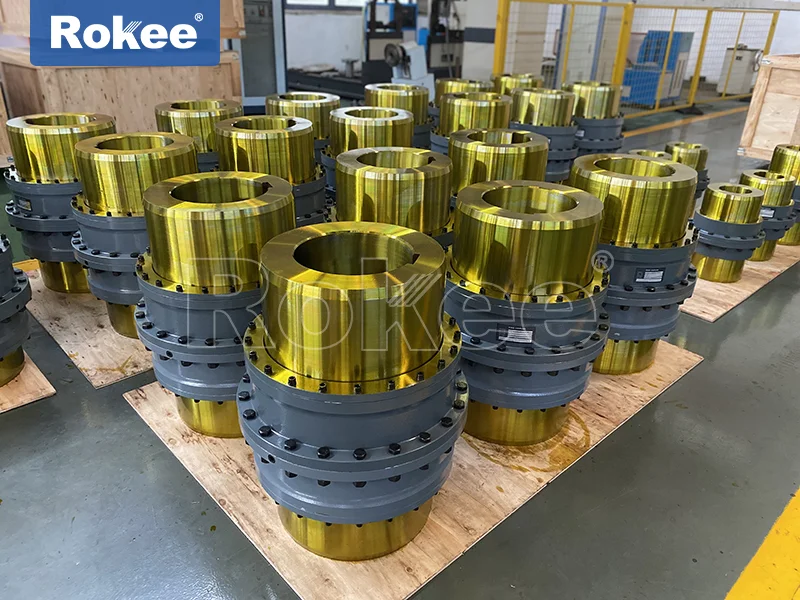
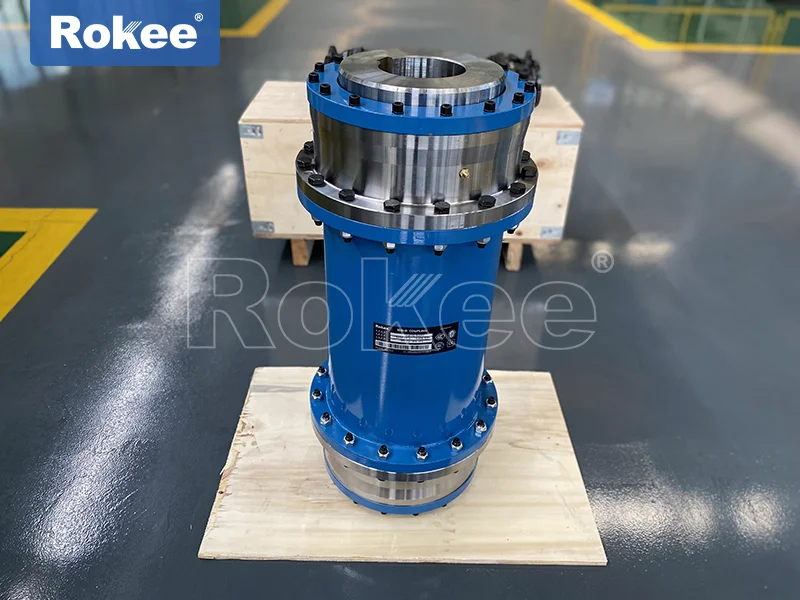
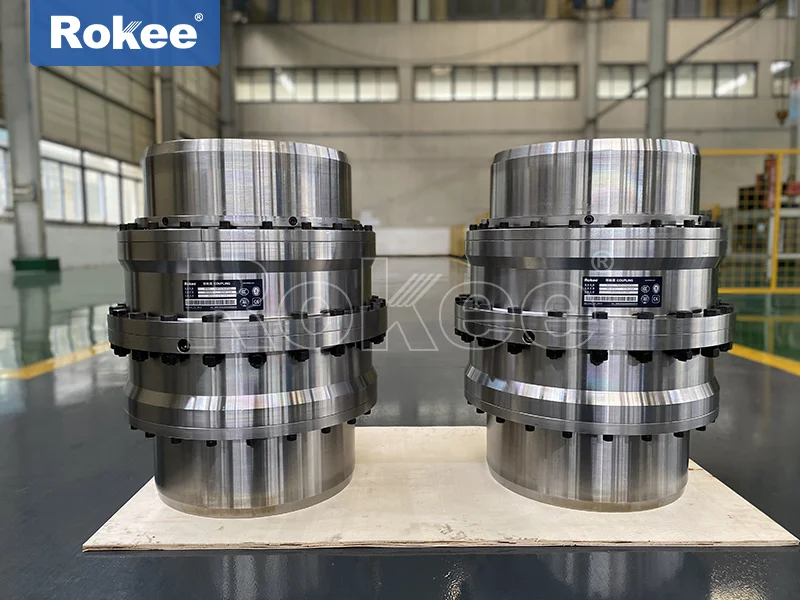
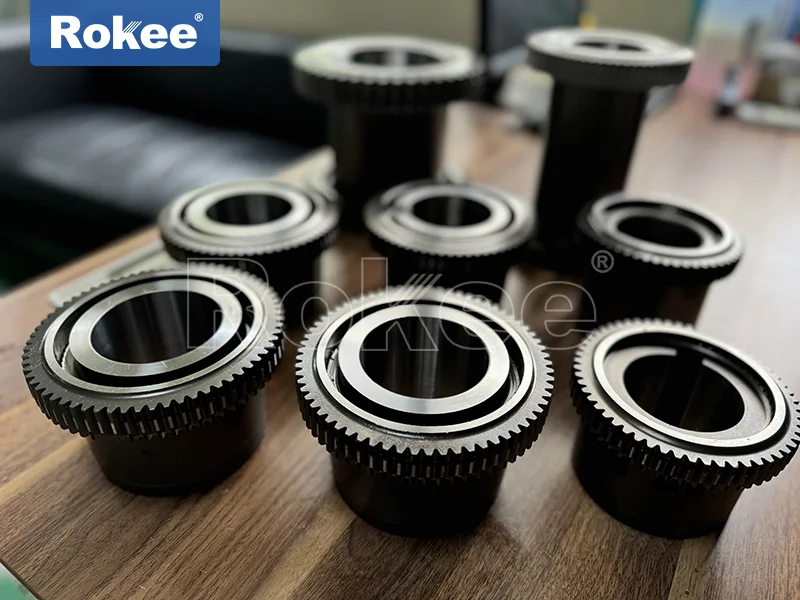
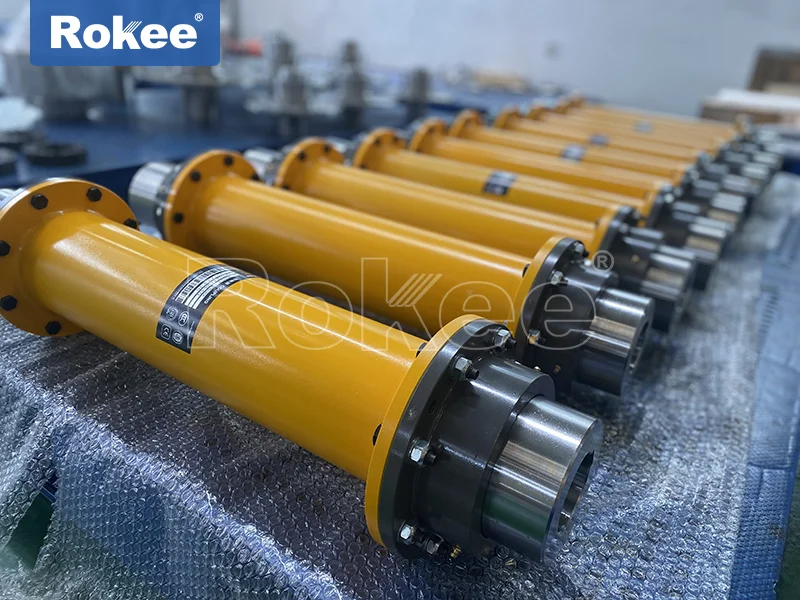
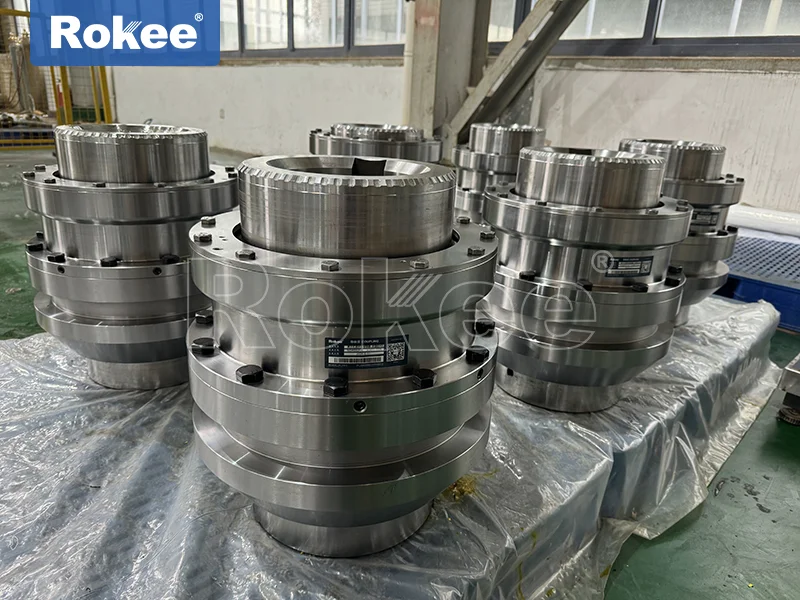
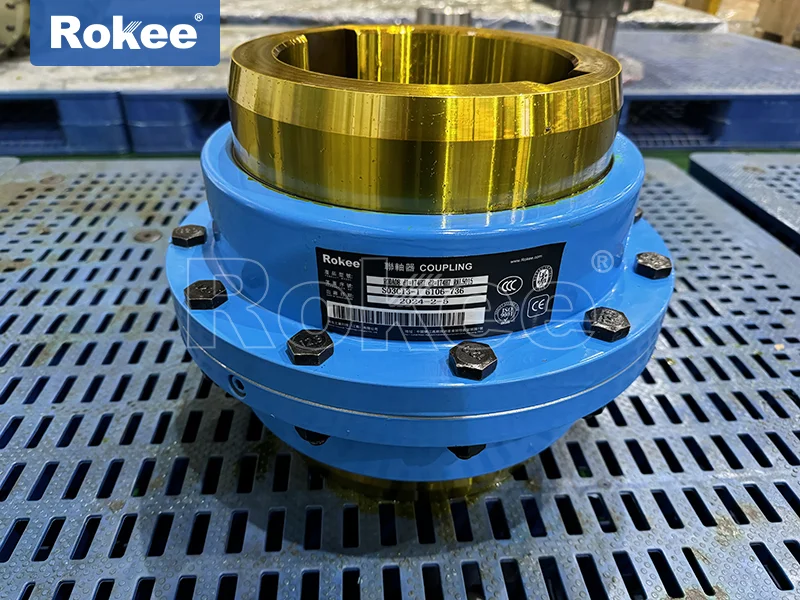
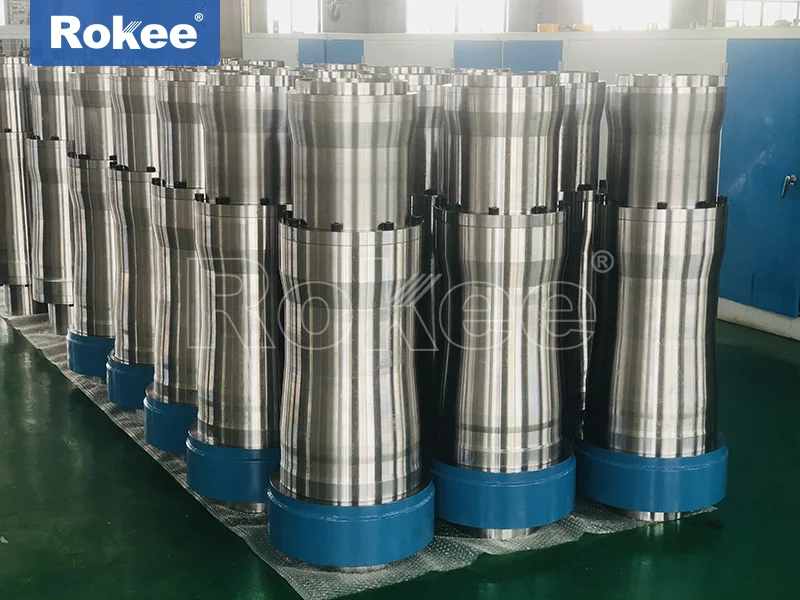
The gear coupling is a mechanical transmission component that realizes torque transmission through the meshing of internal and external gears. Its basic structure is composed of two half-couplings with external gears and a sleeve with internal gears. The two half-couplings are respectively connected to the driving shaft and the driven shaft, and the sleeve is meshed with the external gears of the two half-couplings to form a complete power transmission system. This structural design not only ensures the efficient transmission of torque, but also has good compensation performance for axis deviation, which can effectively solve the problem of slight axis misalignment caused by installation errors, equipment operation deformation and other factors in the production line. When the driving shaft rotates, the torque is transmitted to the sleeve through the meshing of the external gear of the half-coupling and the internal gear of the sleeve, and then the sleeve transmits the torque to the driven shaft through the meshing with the other half-coupling, so as to realize the synchronous operation of the driving equipment and the driven equipment. Compared with other types of couplings, the gear coupling has the advantages of high torque transmission capacity, compact structure, strong durability and good adaptability, which can fully meet the power transmission needs of the PIR sandwich panel production line.
In the PIR sandwich panel production line, the gear coupling is widely used in various key equipment, and its stable operation directly determines the stability of the entire production line. In the uncoiling and leveling link, the uncoiling machine needs to stably release the metal coil, and the leveling machine needs to flatten the metal sheet to ensure the flatness of the upper and lower panels of the sandwich panel. The gear coupling connects the motor of the uncoiling machine and the leveling machine with the transmission shaft, and transmits the torque stably to ensure that the uncoiling speed and leveling speed are synchronized with the overall speed of the production line. If the gear coupling fails in this link, it will lead to uneven uncoiling speed, deformation of the metal sheet after leveling, and even jamming of the metal coil, which will affect the subsequent lamination quality and production progress. In the roll forming link, the roll forming machine needs to form the metal sheet into the required shape according to the design requirements. This process requires a large torque to ensure that the metal sheet can be smoothly formed without cracks or deformation. The gear coupling can transmit large torque efficiently, ensuring that the roll forming machine operates stably under high load conditions, and the formed metal panel has consistent shape and size, laying a good foundation for the subsequent foaming and lamination links.
The foaming and lamination link is the core link of the PIR sandwich panel production line, which has extremely high requirements for the synchronization and stability of power transmission. The foaming machine needs to mix the PIR raw materials in a certain proportion and continuously inject the foaming material onto the lower metal panel. At the same time, the upper metal panel is covered on the foaming material through the lamination device, and the two are tightly bonded together through traction and curing. In this process, the traction device needs to provide stable traction force to ensure that the metal panels and foaming materials move forward at a uniform speed, so as to avoid uneven foaming thickness, poor bonding between the core material and the panel, and other quality problems. The gear coupling connects the motor of the traction device with the traction roller, and transmits the torque stably and evenly, ensuring that the traction speed is consistent with the foaming speed and the lamination speed. If the gear coupling has problems such as torque transmission instability or sudden failure, it will lead to uneven traction speed, resulting in foam overflow or insufficient filling, poor adhesion between the metal panel and the core material, and even delamination of the sandwich panel, which will seriously affect the product quality. In addition, the foaming process of PIR raw materials has certain requirements on the temperature and speed of the production line. The stable operation of the gear coupling can ensure that the relevant equipment maintains a constant speed, which is conducive to controlling the foaming reaction process and improving the quality of the core material.
In the cutting and stacking link of the PIR sandwich panel production line, the gear coupling also plays an important role. The cutting machine needs to cut the continuous sandwich panel into finished products of specified length according to the customer's requirements. This process requires the cutting knife to operate accurately and stably, and the cutting speed must be synchronized with the moving speed of the sandwich panel to avoid uneven cutting, burrs or excessive cutting errors. The gear coupling connects the motor of the cutting machine with the cutting shaft, ensuring that the cutting knife rotates stably and the cutting speed is accurately controlled. The stacking machine needs to stack the cut finished panels neatly and stably. The gear coupling transmits power to the stacking device, ensuring that the stacking action is smooth and accurate, avoiding damage to the finished panels due to unstable operation. The stable operation of the gear coupling in these two links can effectively improve the qualified rate of finished products and reduce the waste of materials.
The reason why the gear coupling can effectively ensure the continuous and stable operation of the PIR sandwich panel production line is closely related to its excellent performance characteristics. First of all, the gear coupling has a strong torque transmission capacity. The PIR sandwich panel production line involves a variety of heavy-duty equipment, which requires the coupling to transmit large torque under high load conditions. The gear coupling adopts the meshing transmission of internal and external gears, and the multiple gear teeth bear the torque together, which greatly improves the torque transmission capacity and can meet the power transmission needs of various equipment in the production line. Compared with other types of couplings, the gear coupling can transmit larger torque in the same volume, which makes the equipment structure more compact and saves the installation space of the production line.
Secondly, the gear coupling has good compensation performance for axis deviation. In the actual installation and operation process of the PIR sandwich panel production line, due to factors such as equipment installation errors, foundation settlement, and thermal deformation during operation, the axes of the driving shaft and the driven shaft are often slightly misaligned, including angular deviation, radial deviation and axial deviation. If the coupling does not have good compensation performance, this kind of axis deviation will cause additional stress on the shaft and the coupling, leading to wear, damage and even failure of the coupling and other components. The gear coupling, especially the drum-shaped gear coupling, has a special tooth shape design. The external gear is made into a drum shape, which can effectively compensate for the angular deviation and radial deviation between the shafts. At the same time, the axial movement between the half-coupling and the sleeve can compensate for the axial deviation. This compensation performance ensures that the gear coupling can still transmit torque stably even when there is slight axis deviation, reducing the wear of equipment components and extending the service life of the equipment.
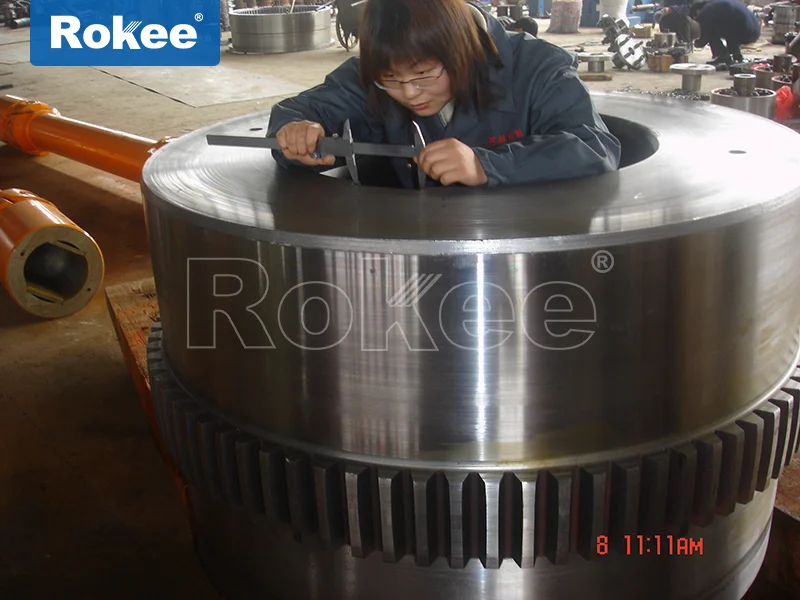
In addition, the gear coupling has strong durability and wear resistance. The PIR sandwich panel production line usually operates continuously for a long time, and the coupling is in a high-speed rotation state for a long time, which requires the coupling to have good wear resistance and fatigue resistance. The gear coupling is usually made of high-strength alloy steel, and the gear teeth are processed by precision machining and heat treatment, which greatly improves the hardness and wear resistance of the gear teeth. At the same time, the meshing surface of the gear teeth is usually coated with lubricating oil, which reduces the friction between the gear teeth, reduces wear and energy consumption, and further extends the service life of the gear coupling. In addition, the gear coupling has a compact structure and good sealing performance, which can effectively prevent dust, moisture and other impurities in the production environment from entering the inside of the coupling, avoid corrosion and wear of the gear teeth, and ensure the stable operation of the coupling for a long time.
The stable operation of the gear coupling is not only related to its own performance, but also inseparable from scientific installation and regular maintenance. In the installation process of the gear coupling in the PIR sandwich panel production line, it is necessary to strictly follow the installation specifications to ensure the accurate alignment of the driving shaft and the driven shaft, and minimize the axis deviation. Before installation, it is necessary to check the surface of the gear teeth for damage, wear or dirt, and clean and maintain it if necessary. During installation, the fit between the half-coupling and the shaft should be checked to ensure that there is no loose fit, so as to avoid slipping during torque transmission. In addition, the installation of the sleeve should be ensured to be in place, and the meshing between the internal and external gears should be good, without jamming or excessive clearance.
Regular maintenance is an important guarantee for the long-term stable operation of the gear coupling. In the daily operation of the PIR sandwich panel production line, it is necessary to regularly check the operation status of the gear coupling, including whether there is abnormal noise, vibration or temperature rise. Abnormal noise may be caused by poor gear meshing, insufficient lubrication or wear of gear teeth; excessive vibration may be caused by axis deviation exceeding the compensation range or loose installation; excessive temperature rise may be caused by insufficient lubrication or excessive friction. Once these abnormal phenomena are found, the operation of the production line should be stopped in time to check and repair the gear coupling, so as to avoid further damage to the coupling and other equipment. At the same time, regular lubrication maintenance of the gear coupling is required. The lubricating oil should be selected according to the working conditions of the coupling, and the lubricating oil should be replaced regularly to ensure that the meshing surface of the gear teeth is always in a good lubrication state, reduce friction and wear, and extend the service life of the coupling. In addition, it is necessary to regularly check the wear of the gear teeth. If the wear is serious, the gear teeth should be replaced in time to avoid torque transmission failure caused by gear tooth breakage.
In the long-term operation of the PIR sandwich panel production line, the gear coupling, as a key power transmission component, undertakes the important task of ensuring the continuous and stable operation of the production line. Its excellent torque transmission capacity, good axis deviation compensation performance and strong durability make it an indispensable part of the PIR sandwich panel production line. With the continuous development of the PIR sandwich panel industry, the requirements for the production line are getting higher and higher, and the performance requirements for the gear coupling are also constantly improving. In the future, with the continuous progress of mechanical processing technology and material science, the gear coupling will be more optimized in terms of structure design, material selection and performance, which will further improve the stability and efficiency of power transmission, and provide a more reliable guarantee for the continuous and stable operation of the PIR sandwich panel production line.
It is worth noting that the selection of gear coupling for PIR sandwich panel production line should be based on the actual working conditions of the production line, including torque requirements, speed, axis deviation range and working environment. Different types and specifications of gear couplings have different performance characteristics and application scopes. For example, the drum-shaped gear coupling has better compensation performance for axis deviation and is suitable for equipment with large axis deviation; the straight-tooth gear coupling has a simple structure and is suitable for equipment with small axis deviation and light load. Therefore, in the process of selecting the gear coupling, it is necessary to comprehensively consider the working requirements of various equipment in the production line, select the appropriate gear coupling type and specification, so as to give full play to the role of the gear coupling and ensure the continuous and stable operation of the production line.
In conclusion, the gear coupling plays a crucial role in ensuring the continuous and stable operation of the PIR sandwich panel production line. It realizes the efficient and stable transmission of torque between various equipment in the production line, solves the problem of axis deviation in the operation process, and ensures the synchronization and stability of each process of the production line. Through scientific installation and regular maintenance, the service life of the gear coupling can be extended, and its stable operation can be ensured, which provides a solid guarantee for improving the production efficiency of the PIR sandwich panel, reducing production costs and ensuring product quality. In the future, with the continuous development of the PIR sandwich panel industry, the gear coupling will continue to play an important role, and contribute more to the healthy and sustainable development of the industry.