Choose Gear Coupling For Efficient Transmission of Sandwich Panel Production Line Is More Worry-free
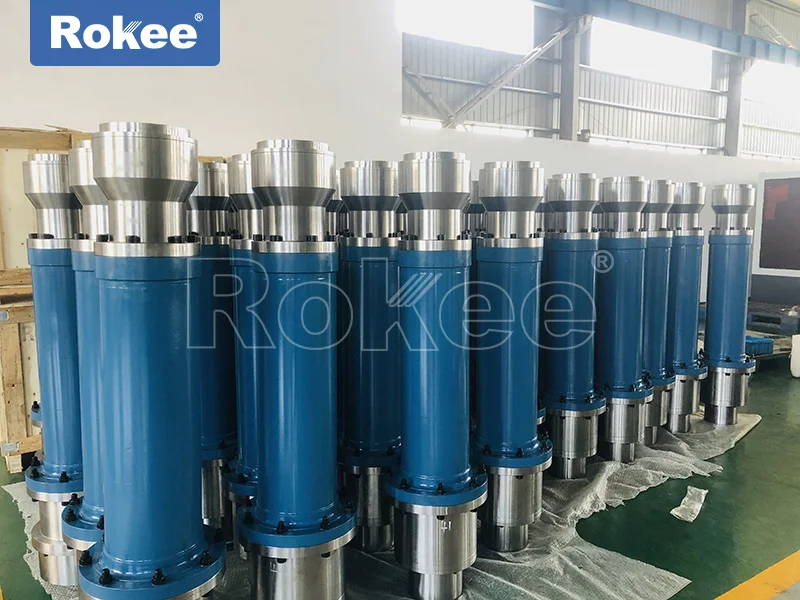
In the fast-paced world of industrial manufacturing, the efficiency and stability of production lines directly determine the competitiveness of enterprises, especially in the field of sandwich panel production. Sandwich panels, widely used in construction, transportation, and industrial fields due to their excellent thermal insulation, sound insulation, and structural stability, require a continuous and high-precision production process to ensure product quality and output. At the core of this process, the power transmission system plays a decisive role, and the choice of coupling, as a key component connecting the power source and the working machine, directly affects the overall operational efficiency and reliability of the production line. Among various types of couplings, gear couplings have gradually become the preferred choice for sandwich panel production lines due to their unique structural advantages and excellent performance, bringing a more worry-free operation experience to manufacturers.
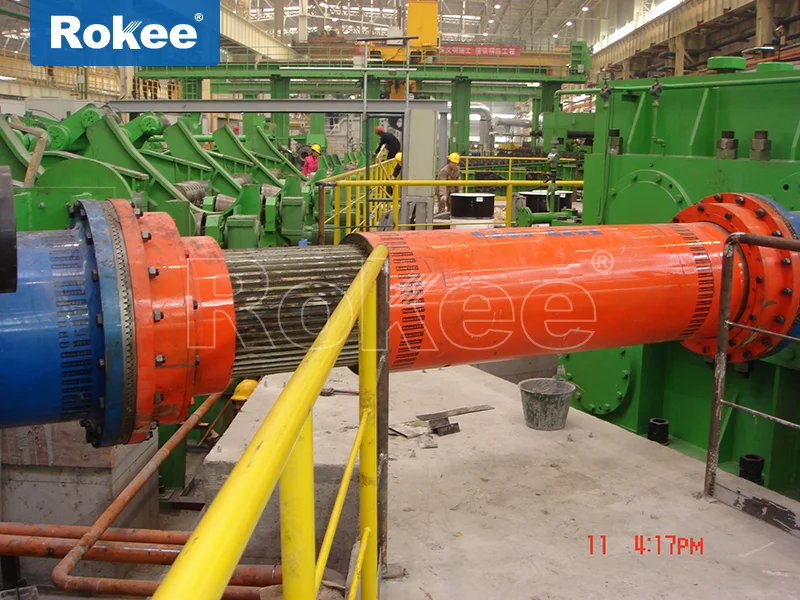
To understand why gear couplings are ideal for sandwich panel production lines, it is first necessary to clarify the working characteristics and transmission requirements of such production lines. A typical sandwich panel production line consists of multiple functional modules, including uncoiling systems, roll forming machines, foam dispensers, double belt laminators, cutting systems, and conveying devices, all of which need to operate in a coordinated and synchronized manner to achieve continuous production. The transmission system must transmit power stably and efficiently between different modules, ensuring that each part operates at the required speed and torque. Any instability in the transmission process, such as torque loss, vibration, or misalignment, will lead to problems such as uneven panel thickness, poor bonding between layers, and even production interruptions, resulting in increased production costs and reduced product qualification rates. Therefore, the coupling used in the production line must have strong torque transmission capacity, good misalignment compensation performance, high reliability, and long service life to adapt to the long-term continuous operation requirements of the sandwich panel production line.
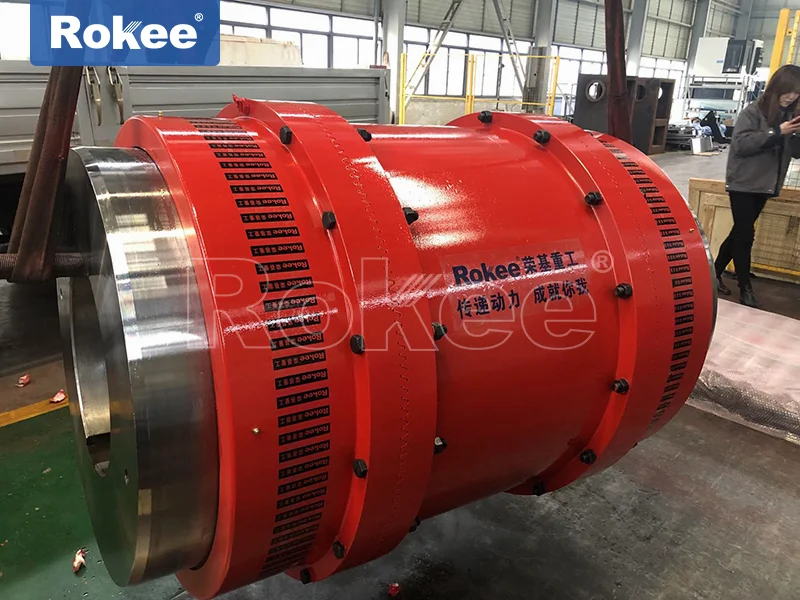
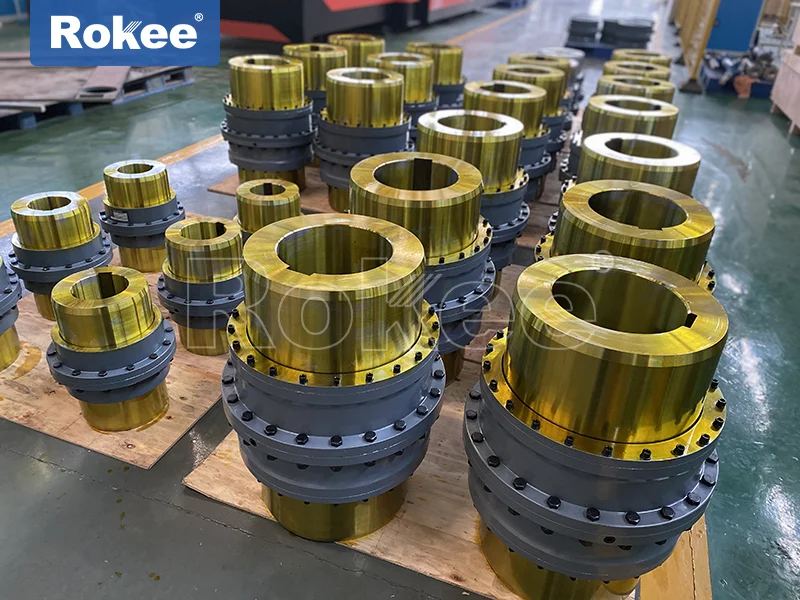
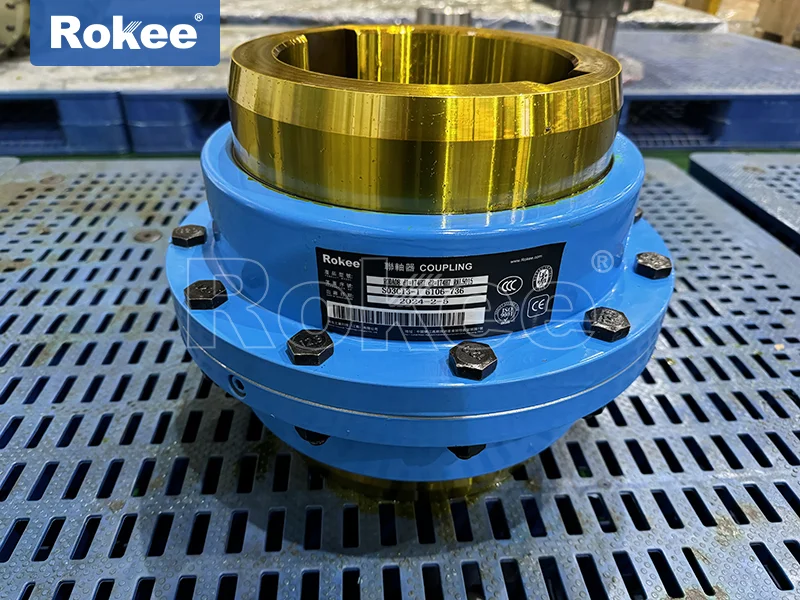
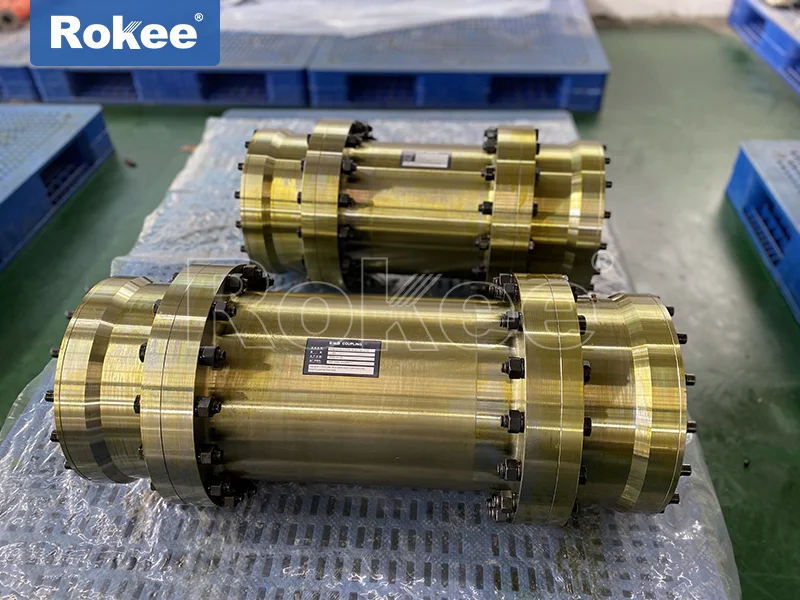
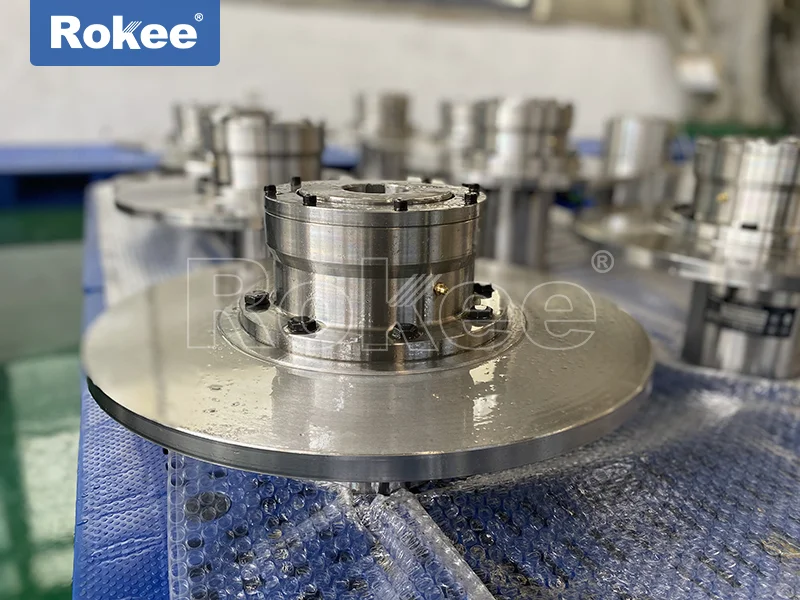
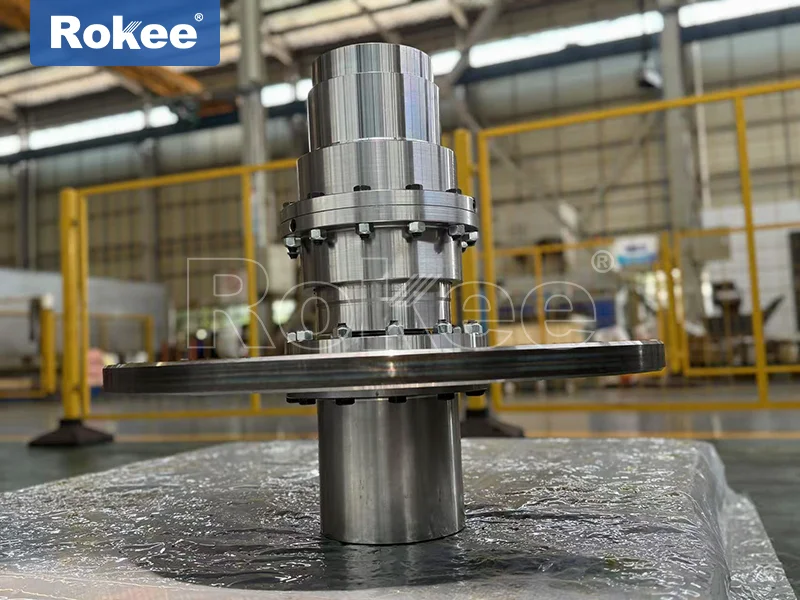
Gear couplings, as a type of rigid-flexible coupling, are composed of two hubs with external teeth and a sleeve with internal teeth that meshes with them. This structural design gives them unique advantages in power transmission, making them highly suitable for the working environment of sandwich panel production lines. Unlike some flexible couplings that rely on elastic components to transmit torque, gear couplings transmit power through the meshing of gear teeth, which allows them to bear higher torque and transmit power more efficiently. In sandwich panel production lines, especially those producing large-scale or thick panels, the roll forming machines and laminators need to output large torque to process metal sheets and press composite layers. Gear couplings can easily meet this demand, ensuring that the power from the motor is transmitted to the working components without significant loss, thereby improving the processing efficiency and reducing energy consumption. Data shows that compared with ordinary couplings, gear couplings can improve power transmission efficiency by 5% to 10% in heavy-duty transmission scenarios, which is crucial for reducing the long-term operating costs of production lines.
Another key advantage of gear couplings is their excellent misalignment compensation capacity, which is particularly important for sandwich panel production line. Due to the large scale of the production line, the installation of multiple equipment modules is often difficult to achieve absolute coaxiality, and factors such as temperature changes during operation, mechanical vibration, and equipment wear will further increase the misalignment between shafts. If the coupling cannot effectively compensate for these misalignments, it will cause additional stress on the shafts, bearings, and other components, leading to premature wear and failure of the equipment. Gear couplings, with their crowned tooth design, can effectively accommodate angular, parallel, and axial misalignments within a certain range. The crowned teeth on the hubs are designed to have a certain curvature, which allows the teeth to mesh smoothly even when there is a slight misalignment between the shafts, reducing friction and wear between the teeth and ensuring stable power transmission. This misalignment compensation capacity not only reduces the difficulty of equipment installation and debugging but also extends the service life of the entire transmission system, reducing the frequency of maintenance and replacement of components.
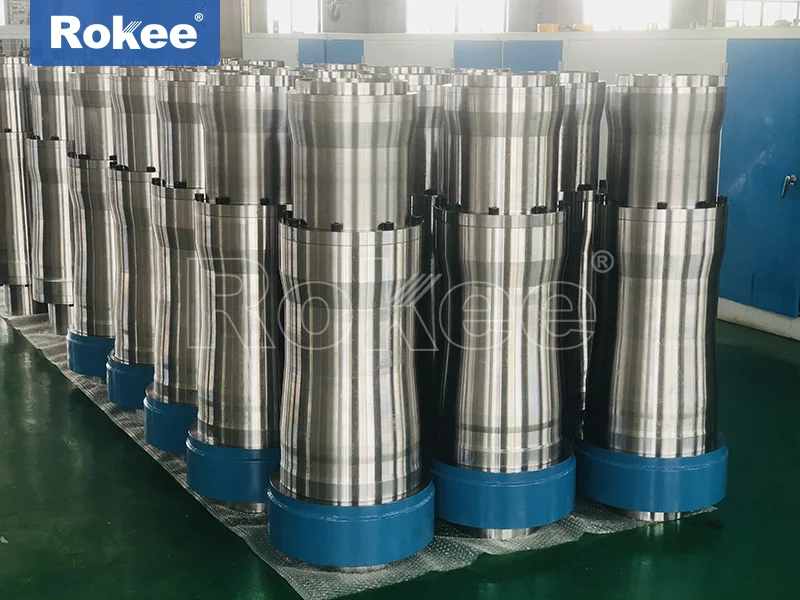
Reliability and durability are also important factors that make gear couplings the first choice for sandwich panel production lines. Sandwich panel production is usually carried out continuously for 24 hours, which places extremely high requirements on the service life and stability of the coupling. Gear couplings are usually made of high-strength alloy steel, which has excellent mechanical properties such as high tensile strength, wear resistance, and impact resistance. After precision machining and heat treatment, the gear teeth have high precision and surface hardness, which can withstand long-term heavy-load operation without easy wear or damage. In addition, the sealed structure of gear couplings can effectively prevent dust, moisture, and other impurities from entering the meshing area, avoiding corrosion and wear of the gear teeth and ensuring stable operation in harsh industrial environments. Unlike some elastic couplings that require frequent replacement of elastic components due to aging, gear couplings have a long service life, usually reaching more than 8,000 hours of continuous operation under normal maintenance conditions, which greatly reduces the downtime caused by coupling failure and improves the overall productivity of the production line.
The smooth operation of the sandwich panel production line is closely related to the stability of the transmission system, and gear couplings play a key role in reducing vibration and noise. In the production process, the operation of motors, roll forming machines, and other equipment will generate a certain amount of vibration. If these vibrations are not effectively damped, they will be transmitted to the entire production line, affecting the processing precision of the panels and accelerating the wear of equipment components. Gear couplings, through the precise meshing of gear teeth and the damping effect of the lubricating oil, can effectively absorb and dampen the vibration generated during operation, reducing the impact of vibration on the production line. At the same time, the stable meshing of the gear teeth also reduces the noise generated during transmission, creating a more comfortable working environment for the operators and reducing the impact of noise pollution on the surrounding environment. This is particularly important for modern manufacturing enterprises that pay attention to production safety and environmental protection.
Choosing the right gear coupling for the sandwich panel production line is not only about selecting a product with excellent performance but also about ensuring that it matches the specific working conditions of the production line. There are several key factors to consider when selecting a gear coupling. First, the rated torque of the coupling must be greater than the peak torque required by the production line to avoid overload failure. The peak torque of the sandwich panel production line varies according to the type of panels produced, the thickness of the metal sheets, and the speed of the production line, so it is necessary to accurately calculate the torque demand before selection. Second, the bore size of the coupling must match the diameter of the motor shaft and the driven shaft to ensure a tight fit and avoid slipping during transmission. Third, the misalignment capacity of the coupling must meet the actual installation and operation needs of the production line. For production lines with large installation errors or significant temperature changes, it is necessary to select gear couplings with a larger misalignment compensation range. In addition, the material of the coupling should also be selected according to the working environment. For production lines in humid or corrosive environments, it is necessary to choose couplings made of corrosion-resistant materials or with anti-corrosion treatment to ensure long-term stable operation.
Proper installation and maintenance of gear couplings are essential to ensure their long-term stable operation and maximize their service life. During installation, it is necessary to ensure that the coupling is correctly aligned with the motor shaft and the driven shaft, and the alignment error should be controlled within the allowable range of the coupling to avoid additional stress. The installation process should also pay attention to protecting the gear teeth and seals to avoid damage during installation. After installation, it is necessary to check the rotation flexibility of the coupling to ensure that there is no jamming or abnormal noise. In terms of maintenance, regular lubrication is the key. The meshing area of the gear teeth needs to be filled with high-quality industrial gear oil to reduce friction and wear between the teeth and prevent corrosion. The lubrication cycle should be determined according to the working environment and operating conditions of the production line. For production lines in dusty environments, the lubrication cycle should be appropriately shortened to ensure the lubrication effect. In addition, regular inspection of the coupling is also necessary, including checking the wear of the gear teeth, the integrity of the seals, and the tightness of the fasteners. If any abnormal situation is found, it should be handled in a timely manner to avoid further damage to the coupling and the transmission system.
In practical applications, many sandwich panel manufacturers have achieved significant results by using gear couplings. For example, a manufacturer specializing in the production of mineral wool sandwich panels once faced frequent failures of the coupling in the roll forming machine, which led to frequent production interruptions and increased maintenance costs. After replacing the original coupling with a gear coupling, the transmission stability of the production line was significantly improved, the failure rate of the coupling was reduced by more than 80%, and the continuous operation time of the production line was extended from 12 hours to 24 hours. At the same time, the energy consumption of the production line was reduced by about 7% due to the high transmission efficiency of the gear coupling, bringing considerable economic benefits to the manufacturer. Another manufacturer producing PIR sandwich panels found that the vibration of the production line was significantly reduced after using gear couplings, which effectively improved the flatness and bonding quality of the panels, and the product qualification rate was increased by 5% to 8%.
Compared with other types of couplings, gear couplings have obvious advantages in the application of sandwich panel production lines. For example, elastic couplings have good vibration damping performance but poor torque transmission capacity, which is not suitable for heavy-duty transmission scenarios in sandwich panel production. Membrane couplings have high transmission precision but poor misalignment compensation capacity, and their service life is easily affected by installation errors. Universal couplings have strong misalignment compensation capacity but are complex in structure and high in maintenance costs, which is not suitable for long-term continuous operation of production lines. Gear couplings, on the other hand, integrate the advantages of high torque transmission, good misalignment compensation, high reliability, and long service life, which can fully meet the transmission needs of sandwich panel production lines and bring a more worry-free operation experience to manufacturers.
With the continuous development of the sandwich panel industry, the requirements for production efficiency and product quality are getting higher and higher, which also puts forward higher requirements for the transmission system of the production line. Gear couplings, as a mature and reliable power transmission component, will play an increasingly important role in the sandwich panel production line. In the future, with the continuous advancement of manufacturing technology, gear couplings will be further optimized in terms of structure, material, and performance, such as the development of more compact structures to adapt to the miniaturization of production equipment, the use of new materials to improve wear resistance and corrosion resistance, and the integration of intelligent monitoring functions to realize real-time monitoring of the operating status of the coupling. These improvements will further enhance the performance of gear couplings, making them more suitable for the development needs of the sandwich panel production industry and providing stronger support for the efficient and stable operation of production lines.
In conclusion, choosing gear couplings for the efficient transmission of sandwich panel production lines is a wise choice that can bring more worry-free operation. Gear couplings have excellent torque transmission capacity, good misalignment compensation performance, high reliability, and long service life, which can effectively improve the operational efficiency and stability of the production line, reduce maintenance costs and production interruptions, and ensure the quality and output of sandwich panels. For sandwich panel manufacturers, selecting the right gear coupling, doing a good job in installation and maintenance, can maximize the performance of the coupling, realize the efficient and continuous operation of the production line, and thus gain greater competitive advantages in the fierce market competition. In the future, with the continuous progress of technology, gear couplings will continue to evolve and innovate, making greater contributions to the development of the sandwich panel industry.