Crown Gear Coupling Improves Operation Stability Of PIR Sandwich Panel Production Line
The continuous upgrading of modern building thermal insulation and structural materials has put forward higher requirements for the operational precision and stability of automated production lines. PIR sandwich panels, as high-performance composite materials integrating thermal insulation, fire resistance and structural rigidity, are widely used in industrial plant construction, cold chain logistics facilities and special building enclosure systems. Their production process relies entirely on the coordinated operation of multi-stage mechanical equipment, where the stability of power transmission links directly determines the forming quality, dimensional consistency and continuous production capacity of finished panels. In the long-term operation of traditional PIR sandwich panel production line, unstable power transmission, slight shaft misalignment and periodic mechanical vibration have always been core factors restricting product yield and production efficiency. The application of crown gear coupling effectively solves the above operational pain points by virtue of its unique tooth profile design, excellent misalignment compensation performance and stable torque transmission capability, realizing overall improvement in the operational stability of PIR sandwich panel production lines.
The entire production flow of PIR sandwich panels includes raw material unwinding, surface plate leveling, polyurethane foam high-pressure foaming, continuous composite pressing, fixed-length cutting and finished product conveying, forming a fully connected automated production system. Each process link is driven by independent power equipment, and the power transmission between motors, reducers and transmission shafts needs to maintain high synchronization and continuity. Once the transmission link has subtle deviations, it will trigger a series of chain reactions affecting product quality and equipment operation. For instance, unstable torque transmission in the pressing and forming stage will lead to uneven foaming density of PIR core materials, inconsistent bonding strength between core materials and metal surface plates, and local warping or thickness deviation of finished panels. Vibration and jitter generated by transmission errors in the cutting and conveying stage will cause inaccurate cutting sizing and offset conveying of semi-finished products, resulting in a large number of defective products. In addition, long-term unstable operation will accelerate the wear of transmission components, increase equipment failure frequency, and lead to frequent shutdown and maintenance, seriously affecting the continuous production rhythm of the production line.
Most traditional production lines adopt straight gear couplings or rigid couplings for power connection, which have obvious structural limitations in adapting to complex industrial operating conditions. In the actual operation of PIR sandwich panel production lines, affected by equipment installation errors, long-term operational wear, thermal expansion and contraction of mechanical components and base micro-deformation, the transmission shafts of various equipment inevitably produce angular deviation, radial offset and axial displacement. Rigid couplings cannot adapt to these subtle misalignment changes, which will cause additional stress on the shaft system during operation, resulting in increased mechanical vibration and fluctuating torque transmission. Straight gear couplings have limited tooth surface contact area and poor load dispersion performance. Under long-term alternating load operation, local stress concentration is prone to occur on the tooth surface, leading to accelerated tooth wear, reduced transmission precision and even tooth meshing jamming in severe cases. These inherent defects of traditional coupling structures make it difficult to maintain long-term stable operation of the production line, and cannot meet the high-precision and high-continuity production requirements of modern PIR sandwich panels.
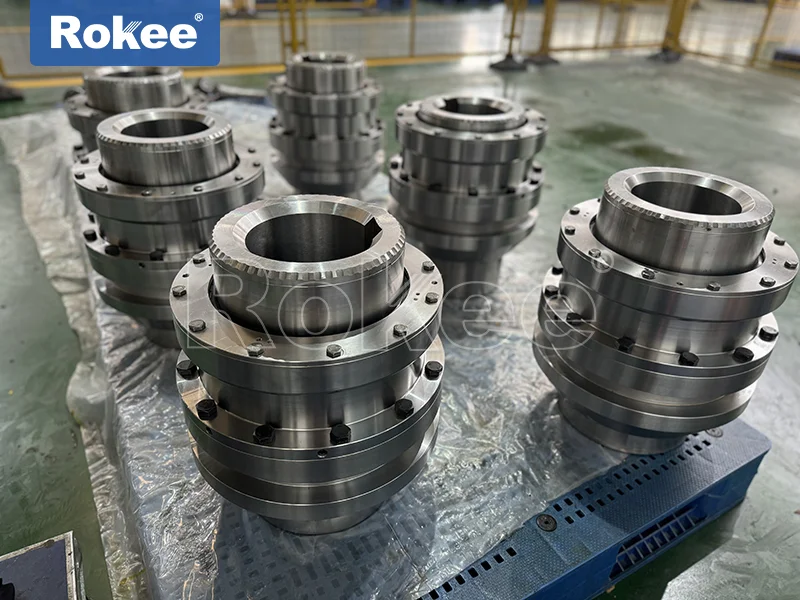
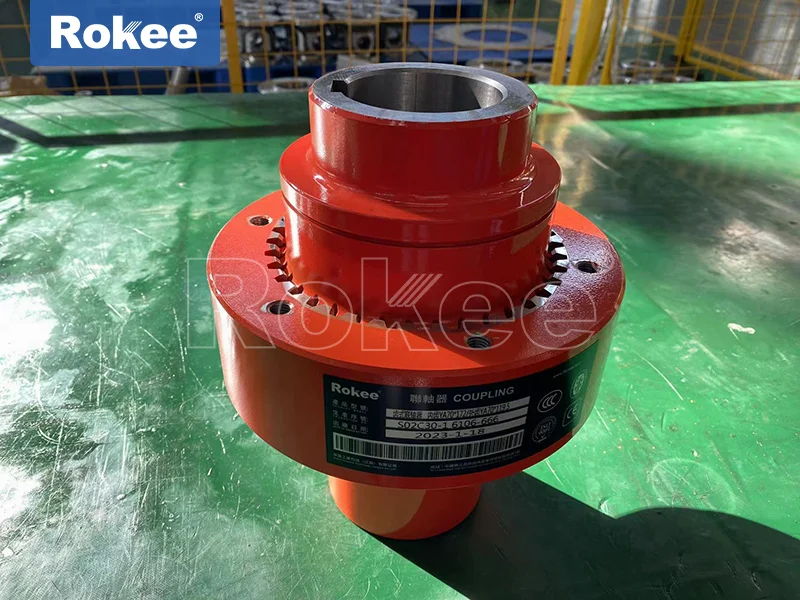
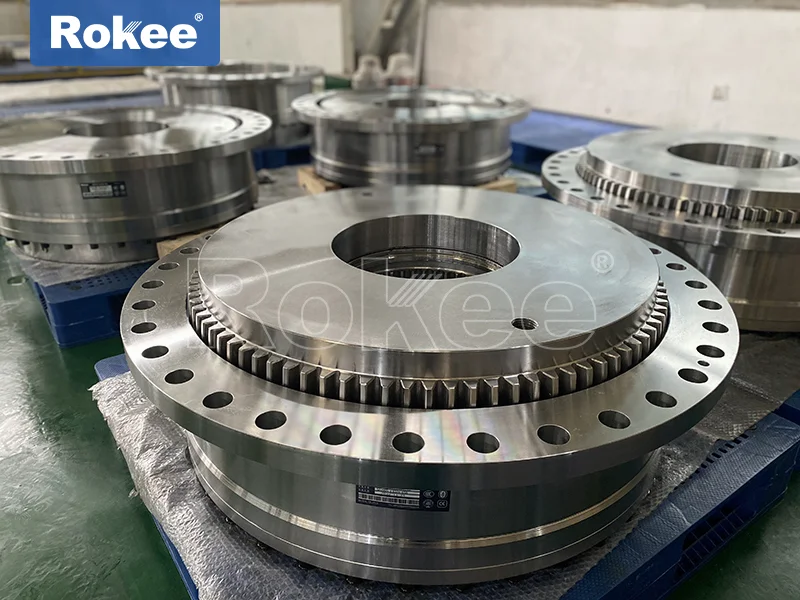
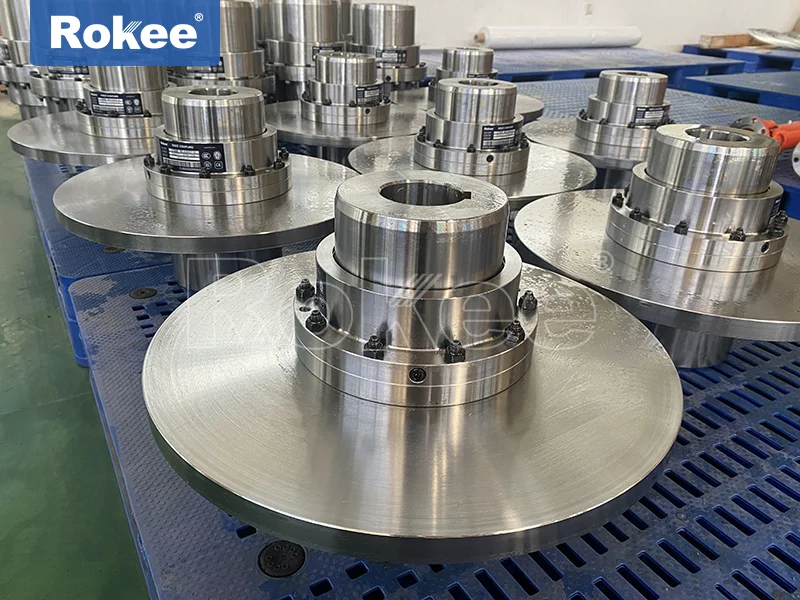
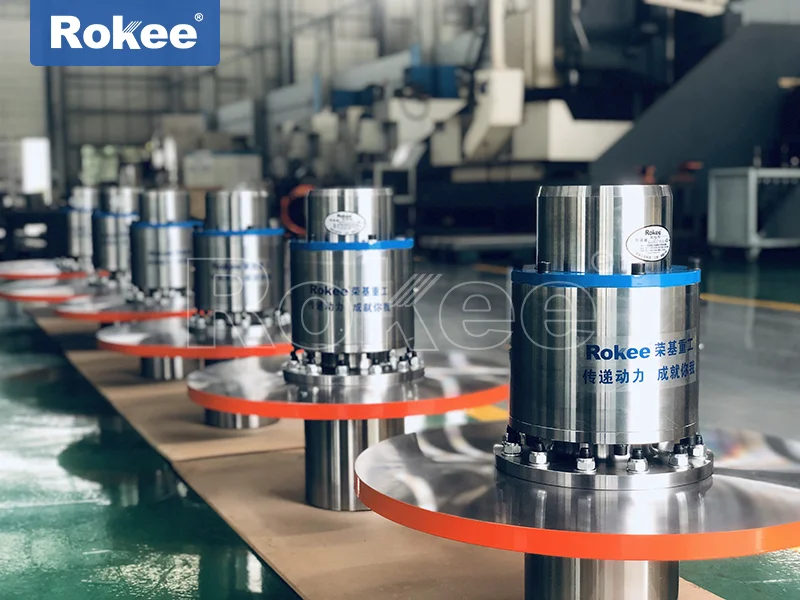
Crown gear coupling adopts optimized crowned tooth profile design, which fundamentally improves the structural defects of traditional transmission couplings and forms a highly adaptable and stable power transmission mode. Different from the linear tooth profile of ordinary gear couplings, the curved crown tooth structure enables the tooth surface to achieve optimal contact state during meshing operation. When the transmission shaft produces angular, radial and axial misalignment within a reasonable range, the crown tooth surface can automatically adjust the meshing angle and contact area, realizing flexible compensation of shaft system deviation without generating additional transmission stress or reducing torque transmission efficiency. This unique misalignment compensation characteristic enables the coupling to always maintain uniform and stable meshing state in the complex and variable operating environment of PIR sandwich panel production lines, effectively eliminating transmission vibration and torque fluctuation caused by shaft misalignment.
In terms of load-bearing performance and transmission stability, crown gear couplings show significant advantages over traditional coupling products. The special curved tooth surface structure can disperse the concentrated load generated during power transmission to the entire meshing tooth surface, avoiding local stress overload and abnormal wear. Under the same external size and operating conditions, the effective load-bearing capacity of crown gear couplings is significantly improved, which can adapt to the long-term continuous high-load operation state of PIR sandwich panel production lines. The uniform tooth surface contact pressure ensures stable torque output in the full-speed operation range of the production line, eliminates periodic transmission jitter, and maintains consistent operating speed and power output of key equipment such as pressing rollers, cutting devices and conveying mechanisms. This stable power transmission state provides a reliable mechanical guarantee for the uniform foaming, precise pressing and fixed-size cutting of PIR sandwich panels, and greatly reduces the quality fluctuation of finished products caused by transmission instability.
The operational stability improvement brought by crown gear couplings runs through the whole process of PIR sandwich panel production. In the raw material unwinding and leveling stage, stable torque transmission ensures constant tension control of metal surface plates, avoids plate deviation and uneven leveling caused by intermittent transmission jitter, and lays a foundation for the flatness of subsequent composite forming. In the core material foaming and composite pressing stage, the elimination of transmission vibration ensures the stable operation of the pressing system, makes the polyurethane foam material fill the cavity uniformly and solidify stably, and effectively improves the overall compactness and structural uniformity of the PIR core layer. The synchronous and stable operation of the upper and lower pressing rollers avoids the shear deviation between the surface plate and the core material, significantly enhances the bonding firmness of the composite structure, and reduces the defective rate of delamination and cracking of finished panels.
In the fixed-length cutting and finished product conveying stage, the high-precision and low-vibration transmission characteristics of crown gear couplings make the running speed of the cutting mechanism and conveying equipment more uniform and stable. The cutting tool can complete fixed-length cutting at a constant speed, avoiding dimensional errors and section burrs caused by speed fluctuation and vibration. The stable conveying operation ensures that semi-finished products can be accurately and stably transmitted to each processing station, eliminates position offset and stacking confusion in the conveying process, and further improves the overall processing precision and production efficiency of the production line. The overall stability of the production process is significantly improved, and the consistency of batch production of PIR sandwich panels is fully guaranteed.
In addition to improving product processing quality, the application of crown gear couplings also optimizes the long-term operational stability and service life of the entire production line equipment. The flexible misalignment compensation function greatly reduces the rigid impact and alternating stress borne by the transmission shaft, bearing and reducer components during operation, effectively slowing down the wear and fatigue aging of key mechanical parts. Traditional couplings often cause excessive local wear of tooth surfaces and frequent failure of shaft system components due to poor adaptability to misalignment, requiring regular replacement and maintenance. Crown gear couplings maintain stable meshing operation under various slight deviation conditions, reduce abnormal equipment failure points, extend the maintenance cycle of production line equipment, and reduce the shutdown time caused by transmission system failures. The stable operating state of the equipment also avoids repeated start-stop and speed adjustment caused by transmission instability, reduces the impact load of power equipment, and further optimizes the overall operational reliability of the production line.
The operational optimization effect of crown gear couplings is more prominent in long-term continuous production scenarios. PIR sandwich panel production lines mostly adopt 24-hour continuous cyclic operation mode, and the transmission system needs to bear long-term continuous alternating load and variable speed operation. The excellent fatigue resistance and stable meshing performance of crown gear couplings can adapt to this high-intensity operating condition, without transmission precision attenuation and vibration amplification caused by long-term operation. In the seasonal temperature change environment of the production workshop, the thermal expansion and contraction of mechanical structures will cause tiny changes in shaft alignment, which can be fully adapted and compensated by crown gear couplings, ensuring that the production line maintains consistent high-precision operation in different temperature environments. This all-weather stable adaptation capability makes up for the poor environmental adaptability of traditional transmission structures and realizes long-term stable and efficient operation of the production line.
From the perspective of production system operation, the stability improvement of the transmission link also brings comprehensive optimization of production management benefits. The stable operation of the production line reduces the generation of defective and waste products, improves the yield rate of finished PIR sandwich panels, and reduces the material waste and production cost caused by unstable processing. The reduction of equipment failure frequency and shutdown maintenance time significantly improves the effective operation rate of the production line, increases the actual output of unit production time, and enhances the overall production efficiency and market competitiveness of the enterprise. At the same time, the stable operating state of mechanical equipment reduces abnormal noise and vibration generated by transmission friction and meshing deviation, optimizes the on-site production environment, and reduces the mechanical loss and energy consumption caused by unstable operation, realizing the dual improvement of production efficiency and energy-saving operation level.
With the continuous development of PIR sandwich panel manufacturing technology towards high precision, high efficiency and intelligent automation, the stability requirements for the core transmission links of production lines are becoming increasingly stringent. Traditional transmission coupling structures can no longer adapt to the upgrading and development of modern production lines due to their inherent structural defects and poor stability. As an optimized transmission component, crown gear coupling takes stable torque transmission and adaptive misalignment compensation as the core advantages, perfectly matching the continuous and high-precision production characteristics of PIR sandwich panels. It solves many operational pain points such as easy vibration, unstable transmission and high failure rate of traditional production lines, and effectively promotes the overall upgrade of the operational stability, processing precision and continuous production capacity of PIR sandwich panel production lines.
In practical industrial application, the technical advantages of crown gear couplings have been fully verified in the stable operation of various automated plate production lines. Its unique crowned tooth profile design, uniform load distribution performance and flexible deviation compensation capability provide a solid mechanical foundation for the stable operation of multi-link coordinated production systems. For PIR sandwich panel production lines that pursue high-quality batch production and long-term stable operation, the popularization and application of crown gear couplings is an important technical optimization means to improve the level of production line operation, reduce operational risks and stabilize product quality. In the future, with the further improvement of mechanical transmission optimization technology, crown gear couplings will play a more important role in the intelligent and high-stability upgrading of new building material production equipment, and continuously empower the high-quality development of the PIR sandwich panel manufacturing industry.