Drum Gear Coupling Guide For Heavy Load Working Conditions Of PIR Sandwich Panel Production Line
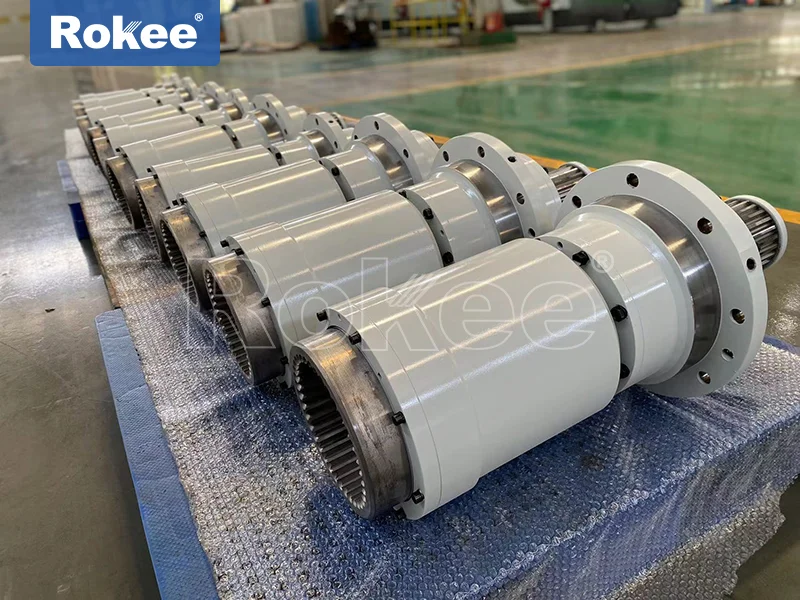
The continuous and stable operation of mechanical transmission systems serves as the core foundation for the efficient production of PIR sandwich panels, especially under heavy load working conditions that dominate the full production cycle of modern panel manufacturing lines. PIR sandwich panel production involves multiple high-intensity processing procedures, including raw material feeding, continuous foaming, pressing molding, fixed-length cutting, and finished product conveying, all of which impose long-term, stable, and high-power transmission requirements on connecting transmission components. In such complex heavy-load operating environments, the operational reliability of shaft coupling components directly determines the overall equipment operating efficiency, reduces unplanned downtime risks, and maintains the consistency of product processing accuracy. Among various mechanical transmission coupling types, drum gear couplings stand out as the optimal matching component for PIR sandwich panel production line heavy load conditions by virtue of their unique structural design, excellent load-bearing performance, and reliable misalignment compensation capability, playing an irreplaceable role in ensuring the continuous and stable operation of the entire production line transmission system.
Different from light-duty transmission equipment in general industrial scenarios, the transmission system of PIR sandwich panel production line faces persistent heavy-load impact and complex variable working conditions throughout the operation process. The raw material feeding section needs to drive large-volume raw material rolling materials and continuous feeding equipment, which generates stable high torque output for a long time; the pressing molding section relies on high-power transmission equipment to maintain uniform pressure and stable operating speed, requiring transmission components to bear continuous static heavy loads and occasional dynamic impact loads caused by material thickness deviation and equipment operation fluctuation; the finished product conveying and sorting section needs to adapt to the cyclic start-stop operation of equipment, and the instantaneous torque change during start and stop will form repeated load impact on the transmission coupling. In addition, the long-term continuous operation mode of industrial production lines leads to inevitable minor axis deviation between driving shafts and driven shafts caused by equipment foundation slight settlement, mechanical component wear, and installation accumulated errors. Traditional straight-tooth gear couplings and ordinary flexible couplings often fail to adapt to such comprehensive working conditions, prone to stress concentration, tooth surface wear, transmission jitter, and even component fracture under long-term heavy load and misalignment conditions, which seriously affects the continuity of PIR panel production and the flatness and dimensional accuracy of finished panels.
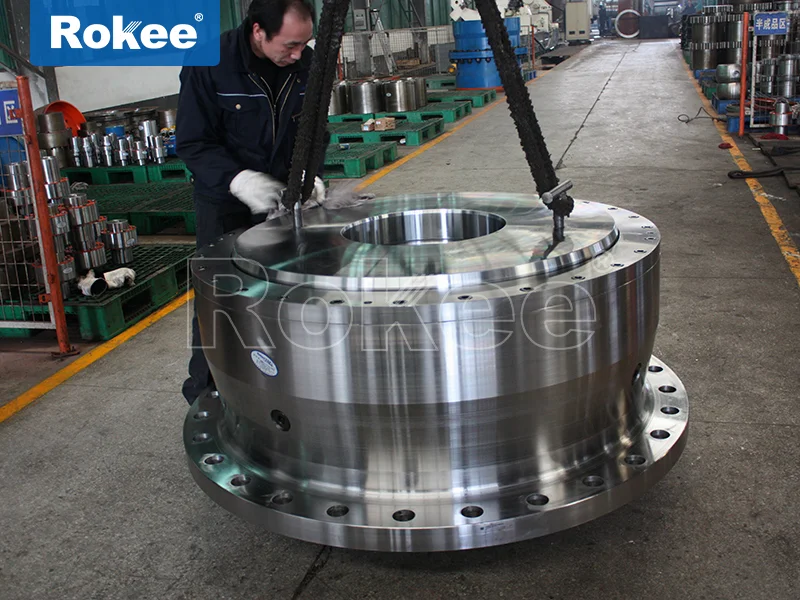
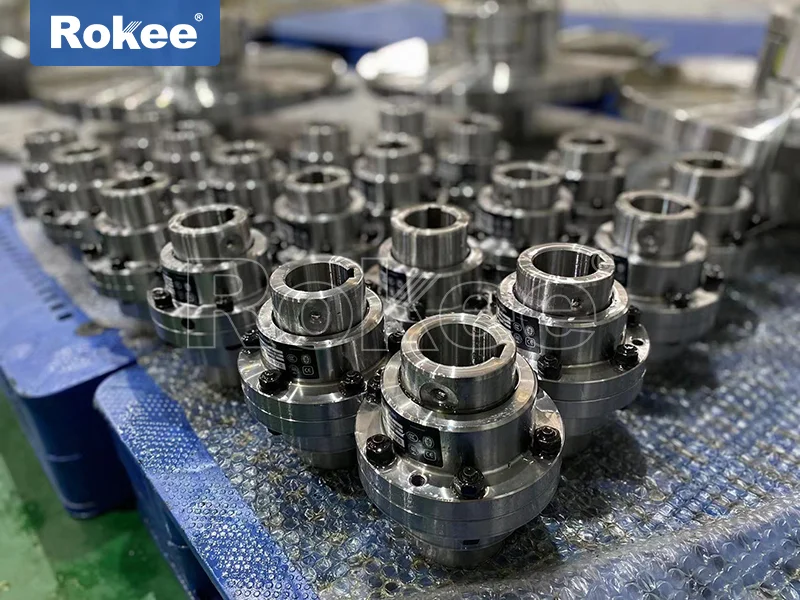
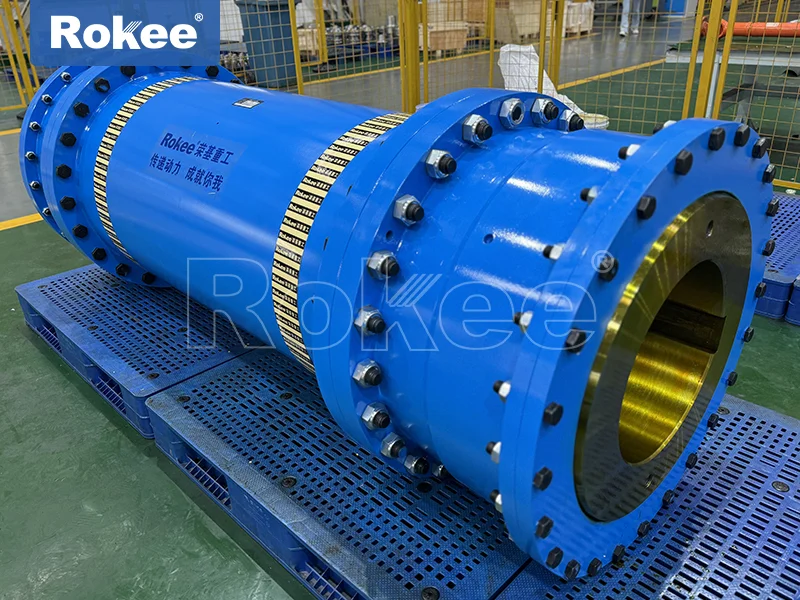
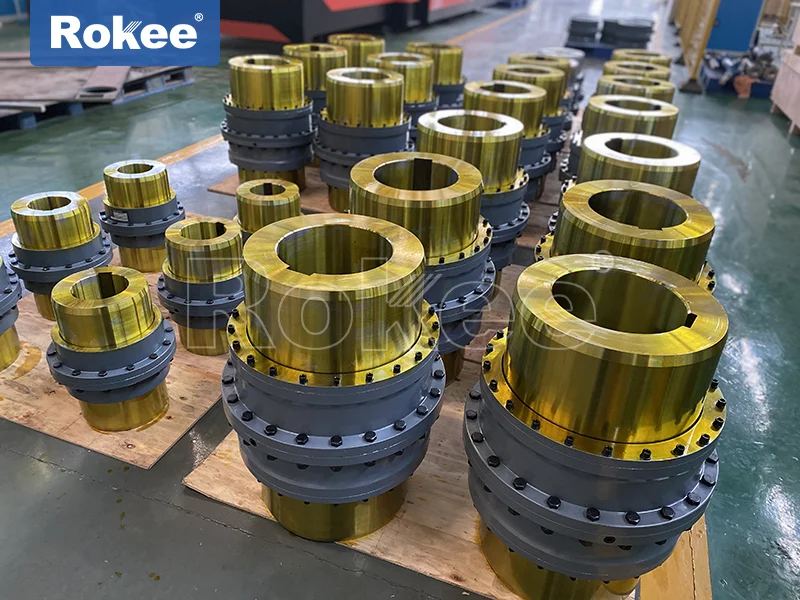
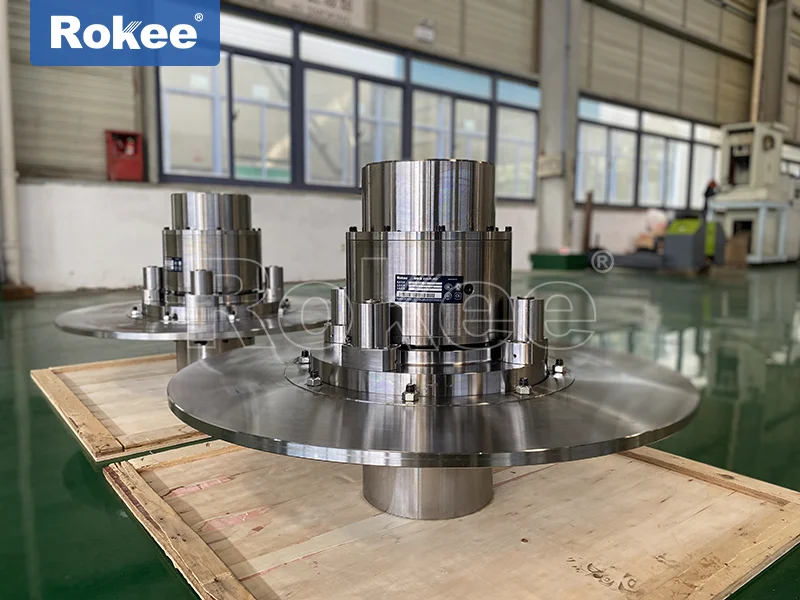
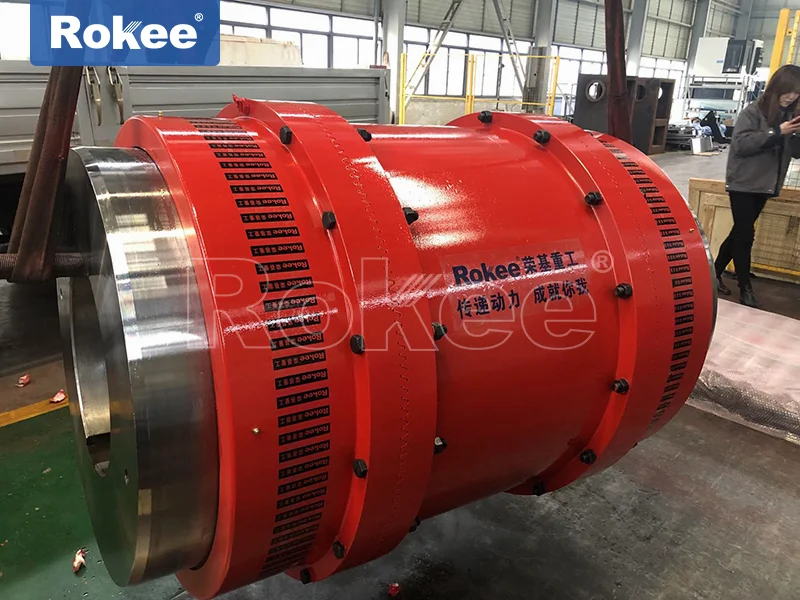
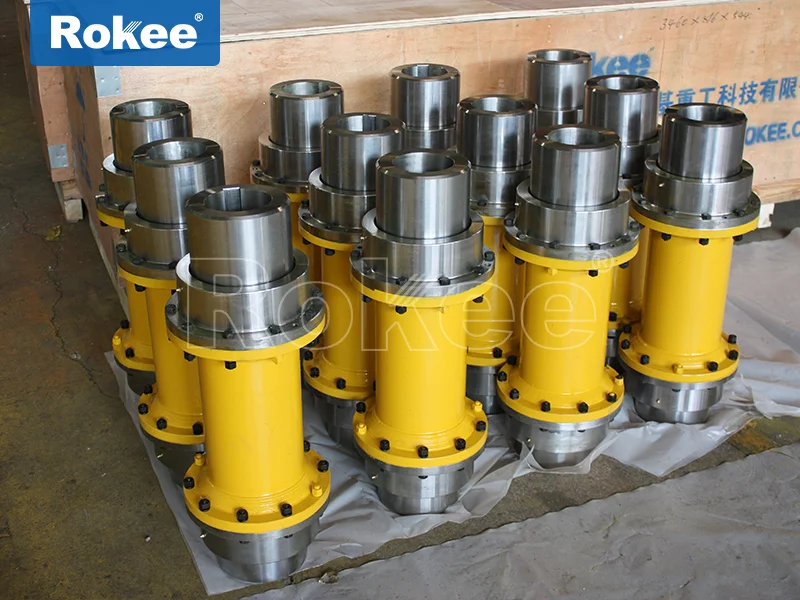
The superior performance of drum gear couplings in heavy-load industrial scenarios stems from their optimized drum-shaped tooth profile structure and reasonable mechanical design. The core structure of the coupling is composed of inner gear sleeves and outer drum-shaped gear hubs, and the arc-shaped drum tooth design fundamentally optimizes the contact state between meshing teeth compared with traditional straight-tooth structures. In the meshing process, the curved tooth surface can form a uniform contact area, effectively dispersing local stress concentration caused by load concentration and shaft misalignment. This structural feature enables the coupling to maintain stable meshing state under radial offset, angular deflection, and axial displacement conditions generated during the operation of PIR sandwich panel production lines, achieving multi-directional axis deviation compensation. The reasonable tooth side gap reserved by the drum-shaped tooth structure further buffers the instantaneous impact load generated during equipment start-stop and material processing fluctuations, avoiding rigid collision between gear teeth and greatly reducing the wear rate of transmission components under variable heavy load conditions.
In terms of load-bearing capacity, drum gear couplings have obvious advantages over conventional transmission couplings, which is the key reason why they are widely applied in heavy-load PIR panel production lines. Under the same overall structural size and installation space, the effective contact area of drum gear teeth is significantly larger than that of straight gear teeth, which enables more uniform load distribution on each meshing tooth. This uniform stress distribution eliminates the edge contact phenomenon that easily occurs in traditional couplings under heavy torque, effectively improving the overall torque transmission capacity and fatigue resistance of the coupling. For the long-term continuous operation characteristics of PIR sandwich panel production lines, this load-bearing advantage can fully meet the stable transmission requirements of high torque in all production links, avoid component fatigue failure caused by long-term overload operation, and extend the continuous service cycle of transmission components. Meanwhile, the high transmission efficiency of drum gear couplings ensures that the power output of driving equipment can be maximally transmitted to the driven operating mechanism, reducing power loss in the transmission process, maintaining the stable operating speed of production line equipment, and providing stable operating conditions for the foaming molding and pressing processes of PIR sandwich panels that have strict requirements on operating speed stability.
The adaptability of drum gear couplings to complex working environments further consolidates their application value in PIR sandwich panel production lines. The production environment of PIR sandwich panels has typical industrial characteristics, with certain dust accumulation, slight temperature change and continuous mechanical vibration. Ordinary flexible couplings are easily affected by environmental factors, resulting in aging of flexible components, reduced compensation performance and shortened service life, while drum gear couplings adopt an integral rigid-flexible combined structure with high structural rigidity and environmental adaptability. The closed meshing structure can effectively isolate external dust and fine debris, prevent foreign matters from entering the tooth meshing area to cause abrasive wear and transmission jitter, and maintain long-term stable meshing accuracy. In terms of temperature adaptability, the structural stability of gear tooth materials and mechanical design enable the coupling to maintain stable mechanical performance within the conventional operating temperature fluctuation range of production lines, without thermal deformation or performance attenuation caused by equipment continuous operation heat generation. In addition, the coupling can effectively weaken the mechanical vibration generated by equipment operation and material processing through the flexible compensation ability of drum tooth meshing, reduce vibration transmission between transmission shafts, avoid resonance problems of production line equipment, and ensure the flatness and structural uniformity of PIR sandwich panel products during continuous molding production.
In the actual operation and matching process of PIR sandwich panel production lines, the reasonable selection and installation of drum gear couplings are crucial to give full play to their heavy-load performance advantages. The model matching needs to comprehensively consider the maximum operating torque, rated operating speed, shaft deviation range and installation space of each transmission link of the production line. Different production links such as feeding, pressing, cutting and conveying have differentiated torque demand characteristics: the pressing and forming link has the highest stable torque demand and frequent slight load fluctuation, so it is necessary to select couplings with higher load-bearing redundancy and better impact resistance; the high-speed conveying link needs to focus on the dynamic balance performance and low-vibration transmission performance of the coupling to avoid finished product position deviation caused by transmission jitter. During the installation process, standardized shaft alignment operation must be implemented to minimize initial installation deviation. Although drum gear couplings have excellent misalignment compensation ability, excessive artificial installation deviation will increase the operating load of gear teeth, accelerate component wear, and reduce the overall service life of the coupling. After installation, it is necessary to check the meshing state and axial clearance of the gear teeth to ensure that the coupling has sufficient compensation space to adapt to the minor shaft displacement generated during long-term equipment operation.
Daily maintenance and scientific operation management are important guarantees to maintain the long-term stable performance of drum gear couplings in heavy-load PIR panel production scenarios. As a core transmission component operating under continuous heavy load, the coupling needs regular lubrication maintenance to reduce tooth surface friction and wear. Long-term high-load operation will consume lubricating grease and produce tiny wear debris, so periodic lubricant replacement and cleaning of the meshing cavity are required to ensure the lubrication state of the gear tooth contact surface, reduce friction resistance, and avoid dry friction damage of gear teeth. At the same time, regular visual inspection and operating state monitoring should be carried out during daily production. The abnormal vibration, noise and temperature rise of the coupling during operation are important judgment bases for component wear and failure potential risks. Timely detection and processing of minor abnormal problems can effectively avoid expanded faults and unexpected equipment shutdown.
Compared with other types of transmission couplings, the comprehensive cost performance of drum gear couplings in heavy-load PIR sandwich panel production lines is more prominent in the full life cycle. Although the structural precision and manufacturing process of drum gear couplings are more complex than ordinary couplings, their excellent fatigue resistance, wear resistance and environmental adaptability greatly reduce the frequency of component replacement and equipment maintenance. The long service life and stable operating performance effectively avoid production interruption and output loss caused by frequent coupling failure and replacement, which is more suitable for the high-efficiency continuous production mode of modern PIR sandwich panel production lines. In addition, the strong structural compatibility of drum gear couplings enables them to adapt to the transformation and upgrading of production line equipment and the adjustment of production load parameters, with high application flexibility and long-term use value.
With the continuous upgrading of PIR sandwich panel production technology towards large-scale, high-efficiency and intelligent development, the production line equipment presents higher load intensity and more precise transmission requirements, which further puts forward higher standards for the performance stability of transmission couplings. Drum gear couplings, with their mature optimized structure, reliable heavy-load transmission capacity, excellent misalignment compensation performance and strong environmental adaptability, can fully adapt to the iterative upgrading of PIR panel production equipment and working condition changes. In future industrial production applications, through more precise type selection, standardized installation and refined maintenance management, drum gear couplings can further exert their performance advantages, provide more stable and efficient power transmission support for heavy-load PIR sandwich panel production lines, help enterprises reduce equipment operating failure rate, improve continuous production capacity, and ensure stable improvement of product production quality and production efficiency.