High Torque Gear Coupling
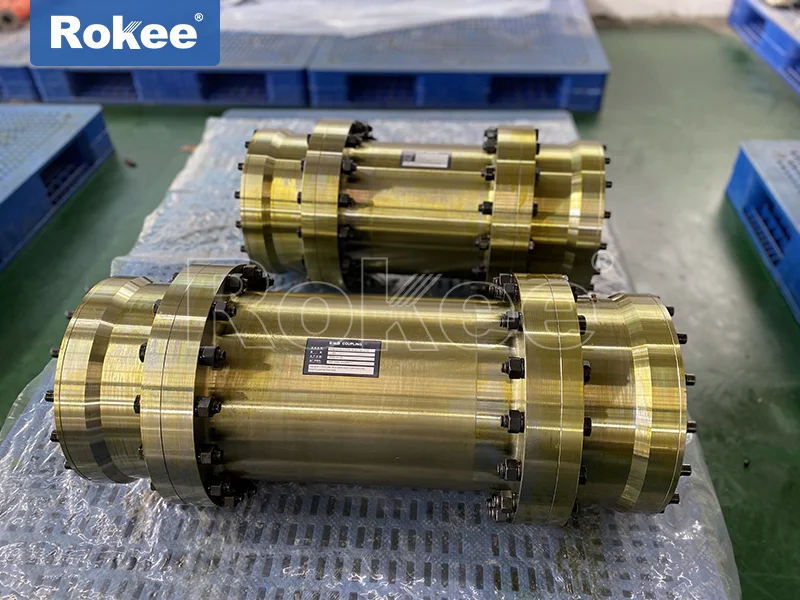
High torque gear coupling stands as one of the most reliable and efficient power transmission components widely adopted in heavy-duty mechanical transmission systems, serving as a critical connecting medium between driving and driven shafts to deliver stable, high-power torque while adapting to complex operating conditions that ordinary coupling structures cannot withstand. Unlike flexible couplings that rely on elastic deformation for power transmission or rigid couplings with zero displacement compensation capability, high torque gear couplings perfectly balance structural rigidity and adaptive flexibility, enabling them to handle ultra-high torque output, resist severe operational impact, and compensate for various shaft misalignments generated during equipment operation. This unique performance combination makes them indispensable core components in large-scale industrial mechanical equipment, supporting the stable operation of high-load, high-speed, and continuous-duty transmission systems across multiple industrial scenarios.
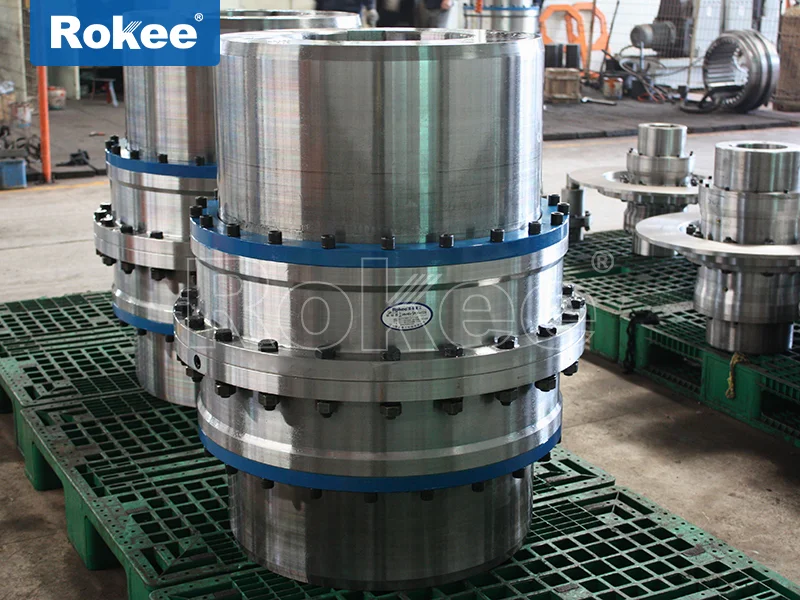
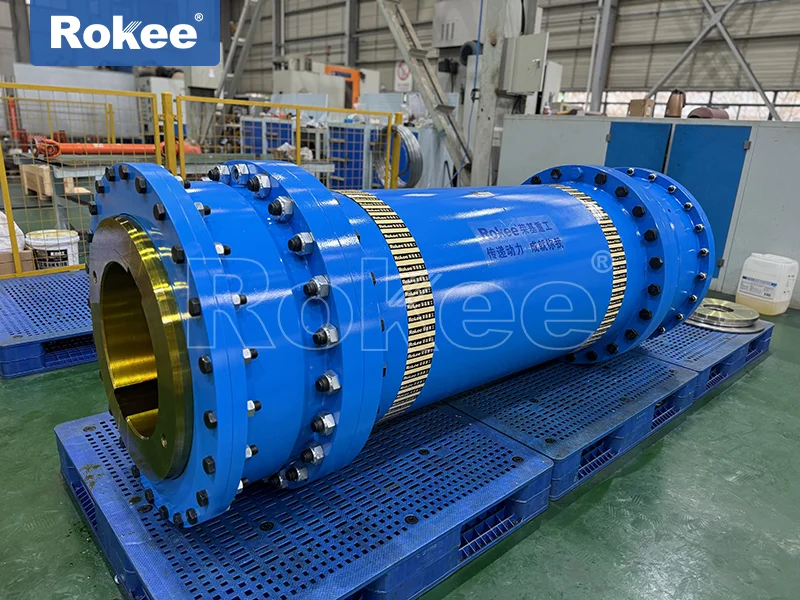
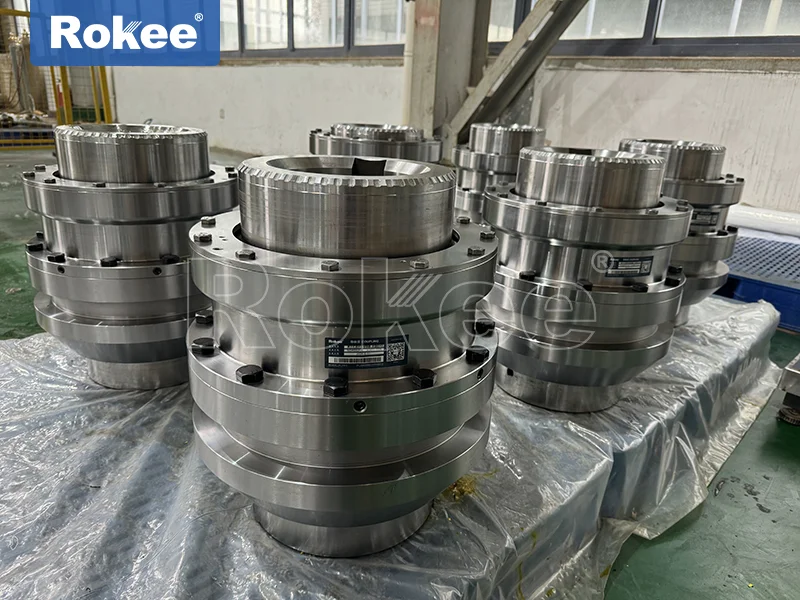
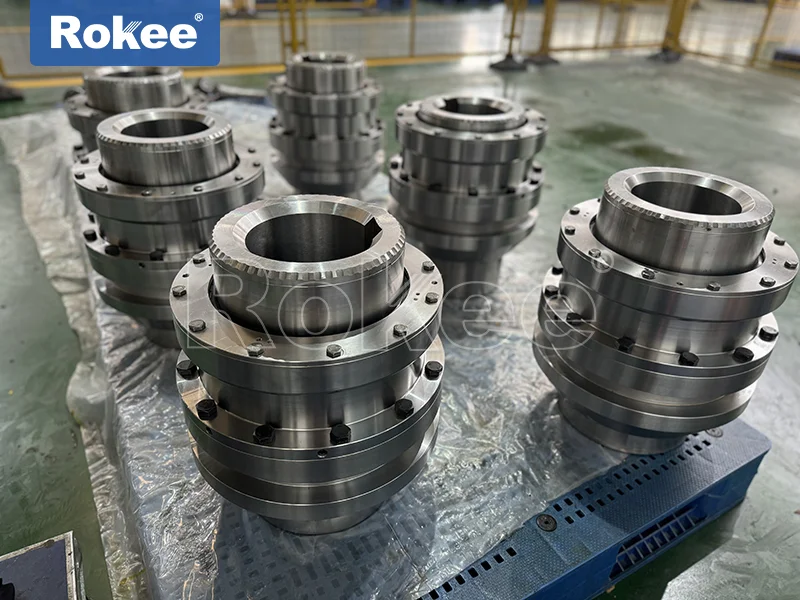
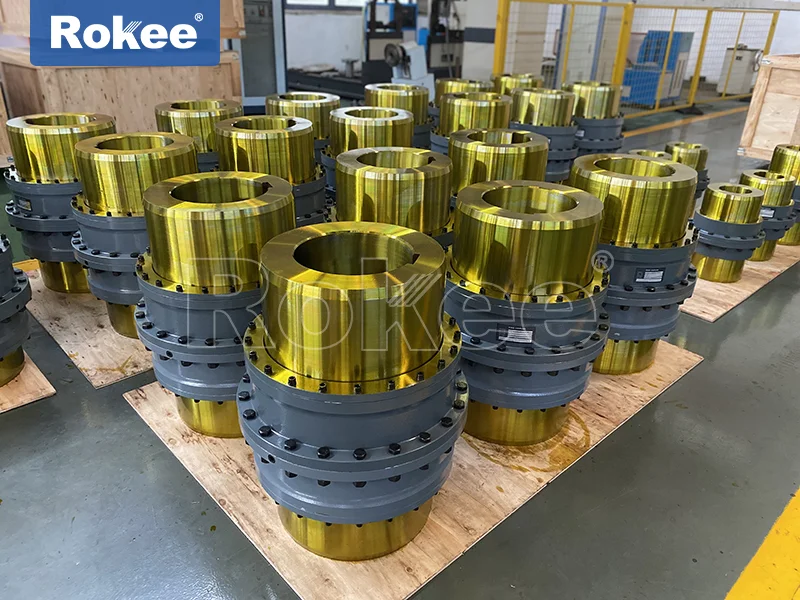
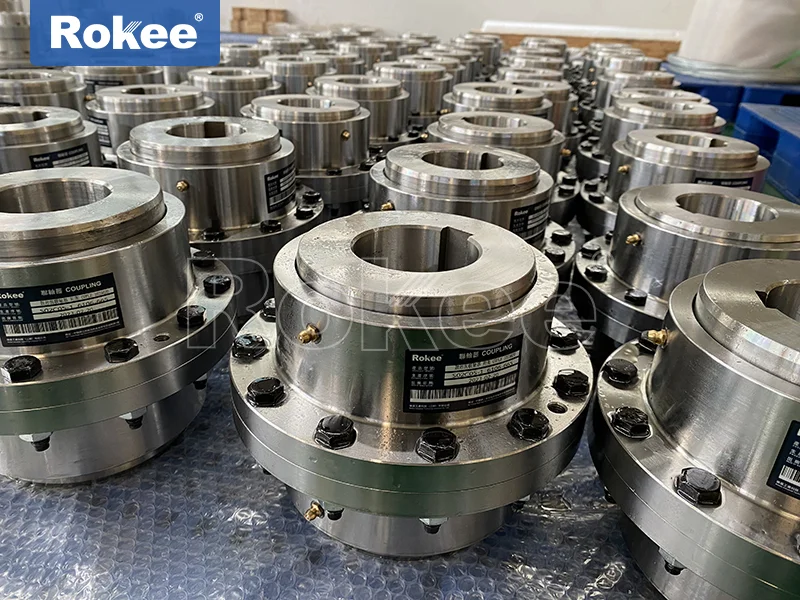
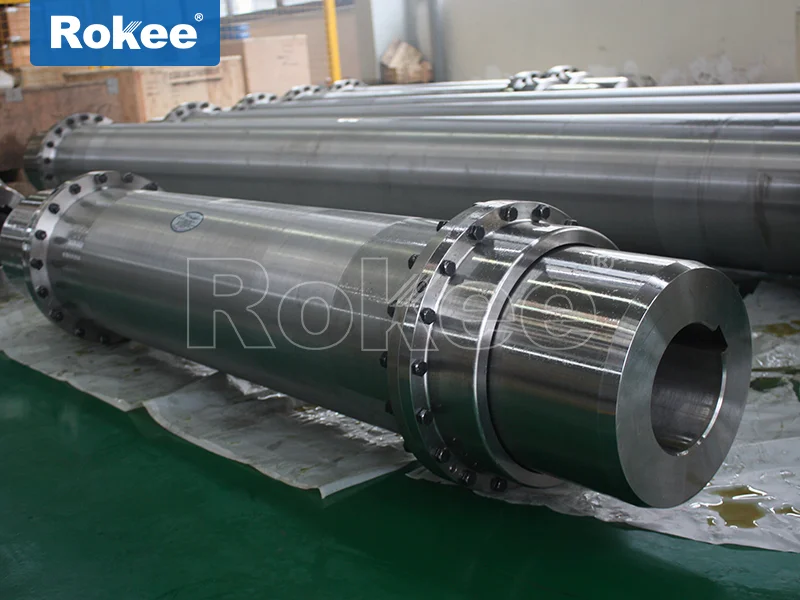
The basic structural composition of high torque teeth couplings is concise and highly practical, mainly consisting of two external gear hubs fixed on the driving and driven shafts respectively and two internal gear sleeves that mesh with the external gears. The external gear teeth are usually designed with a special crowned tooth profile, a refined structural optimization that fundamentally improves the contact state between meshing gear pairs during operation. The curved tooth surface design effectively eliminates edge contact and stress concentration at the ends of gear teeth that often occur in ordinary straight-tooth gear couplings. When the equipment operates and shaft displacement occurs, the crowned teeth can achieve uniform surface contact with the internal gear sleeve teeth, dispersing transmission pressure evenly over the entire tooth surface rather than concentrating stress on local tooth edges. This structural feature not only greatly enhances the overall load-bearing capacity of the coupling but also significantly reduces tooth surface wear and fatigue damage caused by uneven force distribution during long-term high-torque transmission. The internal gear sleeves are connected as a whole through high-strength fasteners, forming a closed meshing structure that locks the gear meshing state, ensuring synchronous rotation of the driving and driven ends without rotational hysteresis or power loss during torque transmission.
The working principle of high torque gear couplings is based on precise gear meshing transmission and adaptive displacement compensation. In the normal operating state of mechanical equipment, the power source drives the driving shaft and the fixed external gear hub to rotate synchronously, and torque and rotational power are stably transmitted to the internal gear sleeve through the meshing action of external and internal gear teeth. The integrated internal gear sleeve further drives the external gear hub on the driven shaft and the connected driven equipment to operate, realizing seamless power transmission between the two shaft systems. During this process, the special tooth profile and assembly gap of the gear structure reserve a reasonable adaptive adjustment space for shaft position deviation. In actual industrial operation, equipment inevitably produces various misalignments due to installation errors, long-term operational vibration, thermal expansion and contraction of metal components, and slight foundation settlement. These deviations include parallel offset between shafts, angular deflection, and axial displacement, all of which can be effectively absorbed and compensated by the relative sliding and slight swinging of the meshing gear pairs of high torque gear couplings. This compensation function avoids additional bending stress and shear stress generated on the shaft body due to shaft misalignment, protecting the shaft system, bearings, and related precision components from abnormal fatigue damage and extending the overall service life of the entire transmission system.
The core performance advantages of high torque gear couplings are prominently reflected in high torque density, excellent torsional rigidity, and strong operational stability. In terms of torque transmission capacity, this type of coupling can output extremely high torque within a compact structural volume, achieving far higher power transmission efficiency and load-bearing limit than diaphragm couplings, chain couplings, and rubber flexible couplings of the same volume. Its high torsional rigidity ensures that no torsional deformation or angle deviation occurs during high-load torque transmission, maintaining strict synchronous rotation accuracy between the driving and driven shafts. This characteristic is particularly critical for mechanical equipment that requires precise power output and stable speed operation, effectively avoiding transmission errors, vibration amplification, and equipment operation failure caused by torsional deformation. Meanwhile, the optimized gear meshing structure reduces surface pressure on the tooth flanks during operation, greatly lowering friction loss and wear rate. With reasonable lubrication conditions, the gear meshing pair can maintain stable transmission performance for a long time, showing excellent durability in continuous cyclic operating environments.
In terms of environmental adaptability, high torque gear couplings demonstrate strong tolerance to harsh industrial operating conditions, which is another key reason for their wide application in heavy industry fields. Different from elastic couplings that are susceptible to temperature changes, aging, and corrosion, the all-metal rigid structure of gear couplings can adapt to high-temperature, low-temperature, dusty, and slightly corrosive operating environments. The metal gear components undergo professional heat treatment and surface strengthening processes, with high surface hardness and structural toughness, enabling them to resist impact load, alternating load, and mechanical abrasion generated during equipment start-stop and variable-load operation. In heavy-load working scenarios with frequent equipment start-ups and instantaneous torque fluctuations, high torque gear couplings can effectively buffer instantaneous impact force through the cooperative action of multiple gear meshing points, avoiding instantaneous overload damage to the transmission shaft system and power components. This excellent impact resistance and environmental adaptability make them fully competent for long-term uninterrupted industrial production tasks, reducing equipment failure rates caused by coupling performance attenuation.
High torque gear couplings have extremely extensive application coverage in modern industrial systems, almost covering all mechanical scenarios requiring high-power and high-stability torque transmission. In heavy mining machinery, they are applied to large crushers, belt conveyors, and mining hoisting equipment, stably transmitting ultra-high torque required for crushing hard materials and long-distance material transportation, and adapting to severe working conditions such as heavy dust, frequent impact, and variable load operation on mining sites. In metallurgical and steel production equipment, the couplings match rolling mills, smelting auxiliary transmission equipment, and steel conveying machinery, maintaining stable power output under high-temperature operating environments and continuous high-load operation, ensuring the continuity and stability of steel rolling and smelting production processes. In marine and offshore engineering equipment, they are used for power transmission of propulsion systems and large deck machinery, adapting to complex working conditions such as hull vibration, shaft displacement, and humid salt spray environments, and providing reliable power connection for marine mechanical systems.
In addition, high torque gear couplings also play an important role in large-scale pumping and fan equipment, cement production machinery, and energy power equipment. Large industrial water pumps and high-power fans require long-term continuous operation, and the high stability and low failure rate of gear couplings can effectively reduce equipment shutdown maintenance times and improve operational efficiency. Cement rotary kilns and grinding equipment operate under long-term heavy-load and vibration conditions, and the excellent misalignment compensation and impact resistance of high torque gear couplings can effectively resolve shaft system deviation problems caused by equipment vibration and thermal deformation, ensuring the stable operation of large rotary equipment. In wind power, thermal power, and other energy equipment, the couplings undertake the power transmission task between power generation units and auxiliary transmission systems, maintaining high-precision and high-efficiency torque transmission under long-term variable-speed and variable-load operating states, supporting the stable output of energy power equipment.
Lubrication maintenance is a key factor determining the operating performance and service life of high torque gear couplings, and scientific and standardized lubrication management can maximize the working efficiency and service cycle of the equipment. The gear meshing pair of the coupling relies on lubricating oil to form a uniform oil film on the tooth surface, which can isolate metal direct contact, reduce friction and wear, and also play a role in heat dissipation, vibration reduction, and corrosion prevention. During high-speed and high-torque operation, the friction between gear pairs will generate a certain amount of heat, and the circulating lubricating oil can timely take away the heat generated by meshing friction, avoiding local overheating of the tooth surface, lubricant deterioration, and accelerated component aging caused by heat accumulation. In actual operation, insufficient lubrication or lubricant failure will directly lead to dry friction of gear teeth, rapid wear of tooth surfaces, increased transmission vibration and noise, and even tooth surface peeling, tooth breakage, and other serious failures in severe cases. Therefore, regular replacement of lubricating media and inspection of lubrication status are essential daily maintenance work for high torque gear couplings.
In addition to lubrication maintenance, daily inspection and standardized installation also have a decisive impact on the operating state of high torque gear couplings. The installation process needs to ensure reasonable coaxiality of the driving and driven shafts within the allowable compensation range of the coupling. Excessive manual installation deviation will exceed the adaptive adjustment limit of the gear structure, resulting in abnormal stress on the gear pair, accelerated wear, and shortened service life. Daily inspection work mainly includes checking the operating vibration and noise state of the coupling, observing whether there is lubricant leakage, and detecting abnormal temperature rise of the coupling shell. Slight vibration and noise generated during normal operation are within the allowable range, but sudden increased vibration, harsh friction noise, or continuous temperature rise often indicate abnormal meshing state of gear pairs, insufficient lubrication, or excessive shaft misalignment, which requires timely shutdown inspection and troubleshooting to avoid minor faults evolving into major equipment failures.
In terms of performance optimization and structural iteration, modern high torque gear couplings are constantly upgraded and improved in structural design and manufacturing technology to adapt to increasingly complex industrial working conditions. On the basis of traditional crowned tooth design, optimized tooth profile modification is adopted to further improve the meshing coincidence degree of gear pairs, making torque transmission more uniform and stable, and improving the vibration reduction and noise reduction effect during operation. At the same time, the overall structural lightweight optimization is carried out on the premise of ensuring high torque load-bearing capacity, reducing the self-weight of the coupling, lowering the additional load of the shaft system, and improving the dynamic balance performance of high-speed operation. The application of high-strength alloy materials and precision processing technology further improves the structural toughness, wear resistance, and fatigue resistance of the coupling, enabling the product to maintain stable performance in longer service cycles and more severe working environments.
Compared with other types of transmission couplings, the comprehensive performance advantages of high torque gear couplings in heavy-duty transmission scenarios are irreplaceable. Elastic couplings have limited torque transmission capacity and are prone to aging and deformation under long-term high-load operation, making them unable to adapt to ultra-high torque working conditions. Ordinary rigid couplings have no displacement compensation capability, and slight shaft misalignment will cause severe shaft system stress and equipment vibration, greatly limiting their application range. Diaphragm couplings have high precision but poor impact resistance and low tolerance for instantaneous overload, which is not suitable for equipment with frequent impact and variable load operation. High torque gear couplings integrate high load-bearing capacity, strong impact resistance, excellent misalignment compensation, and long service life, perfectly matching the core performance requirements of heavy industrial equipment for power transmission components, and have become the preferred transmission solution for high-power mechanical systems.
With the continuous development of industrial equipment towards large-scale, high-power, and high-efficiency operation, the market demand for high-performance high torque gear couplings is constantly upgrading, and their application fields are further expanded. Modern industrial production puts forward higher requirements for the stability, durability, and maintenance convenience of transmission components, which also promotes the continuous technological innovation of high torque gear couplings. Through continuous optimization of tooth profile design, material selection, processing technology, and maintenance structure, high torque gear couplings are developing towards higher torque density, lower operating noise, longer service life, and simpler daily maintenance. As a key basic component of mechanical transmission systems, high torque gear couplings will continue to play an important supporting role in the stable operation and efficient production of modern heavy industry, energy, engineering machinery, and other fields, providing reliable power transmission guarantee for the development of industrial mechanical equipment.