Universal Joint Couplings
In the realm of mechanical power transmission, the universal joint coupling stands as a fundamental and versatile component, engineered to bridge the gap between misaligned rotating shafts while ensuring seamless torque transfer. Unlike rigid couplings that demand perfect shaft alignment, this specialized device accommodates angular, axial, and even minor parallel misalignments, making it indispensable across countless industrial, automotive, and engineering systems. Its design marries simplicity with functional resilience, adapting to dynamic operating conditions and mechanical stresses that would compromise the performance of standard transmission components.
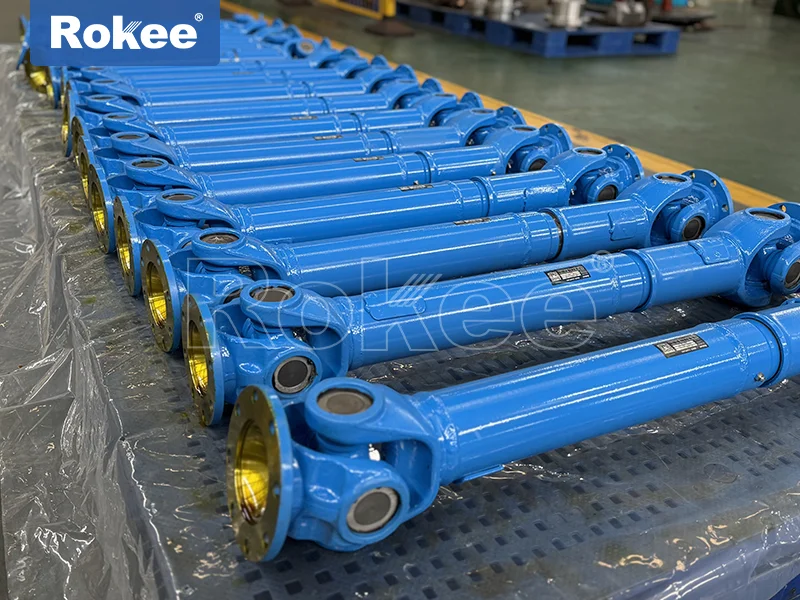
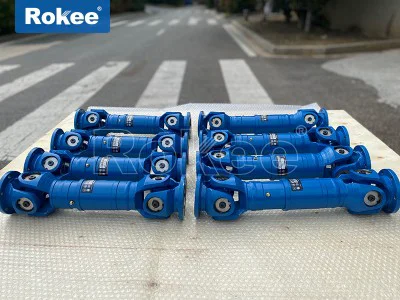
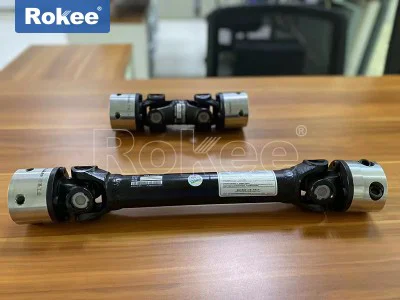
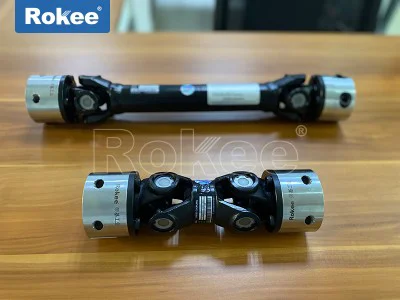
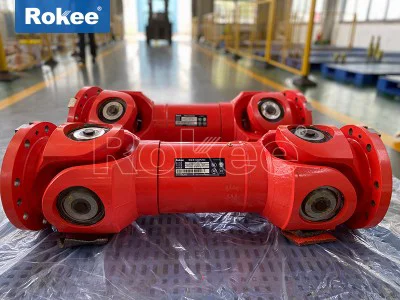
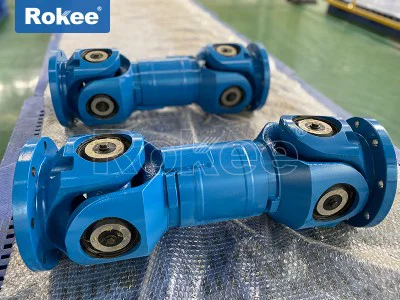
At its most basic level, the universal joint coupling features a streamlined yet robust structural framework, with the classic cross-type (Hooke’s joint) representing the most prevalent configuration. This design centers on a cross-shaped central component, commonly referred to as a spider, which serves as the pivotal connection point between two yoke-shaped end fittings. Each arm of the cross is fitted with precision bearings—typically needle roller bearings, chosen for their high load-bearing capacity and low friction—to facilitate smooth rotational movement and reduce wear during angular deflection. The yokes, one attached to the driving shaft and the other to the driven shaft, are positioned perpendicularly to one another, creating a flexible hinge-like mechanism that allows the shafts to pivot within a defined angular range. Complementing these core parts are sealing elements, such as dust boots and oil seals, that shield internal bearing surfaces from contaminants like dirt, moisture, and debris, while retaining lubricants to sustain long-term operational efficiency. Some variants incorporate additional features, including splined shafts for axial adjustability or intermediate connecting shafts to extend transmission reach, enhancing adaptability for complex installation scenarios. Advanced iterations may integrate reinforced bearing housings or hardened surface treatments on critical wear points, boosting durability without altering the core functional structure.
The performance characteristics of universal joint couplings are tailored to address the challenges of misaligned shaft transmission, balancing load capacity, flexibility, and operational stability. One of its defining strengths is its exceptional angular misalignment compensation ability, with standard models accommodating deflection angles ranging from 15 to 45 degrees, depending on the design and size; specialized heavy-duty variants can handle even greater angles for extreme applications. This flexibility eliminates the need for ultra-precise shaft alignment during installation, reducing assembly time and minimizing stress on connected machinery components such as motors, gearboxes, and drive shafts. In terms of torque transmission, these couplings deliver consistent power transfer across varying misalignment angles, maintaining mechanical efficiency even under dynamic load conditions, though efficiency may slightly dip at maximum deflection due to minor frictional losses. Torsional stiffness is another key performance metric, with rigid structural designs ensuring minimal backlash and precise motion transmission, making them suitable for applications requiring accurate rotational synchronization. Additionally, universal joint couplings exhibit strong resistance to shock loads and vibration, absorbing minor mechanical disturbances to protect upstream and downstream equipment; models with dampening elements further enhance this trait, reducing noise and prolonging the lifespan of the entire transmission system. Durability is also a hallmark, with high-grade alloy steel construction and precision machining enabling prolonged operation under heavy loads, high rotational speeds, and harsh environmental conditions, provided proper lubrication and maintenance are observed.
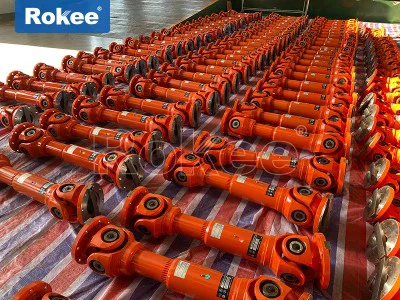
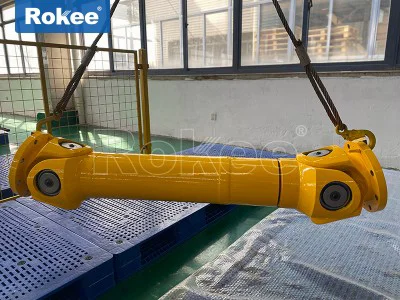
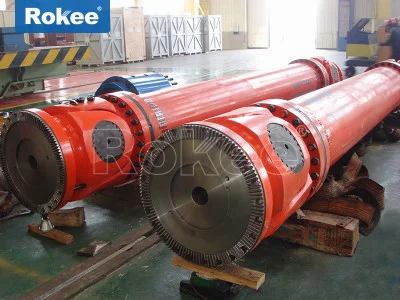
Beyond the standard cross-type design, universal joint couplings are categorized into distinct types based on structural variations, performance capabilities, and intended use cases, each engineered to excel in specific operating environments. The single universal joint, the simplest and most cost-effective variant, consists of a single cross-spider and two yokes, ideal for applications with moderate angular misalignment and low-to-moderate torque requirements. While highly versatile, it exhibits a minor speed fluctuation at higher deflection angles, a limitation that restricts its use in ultra-smooth transmission scenarios. To overcome this flaw, the double universal joint was developed, featuring two single joints linked by an intermediate shaft, positioned to cancel out velocity variations and deliver near-constant velocity rotation. This design maintains smooth power transfer even at steep angles, making it ideal for high-speed, high-precision applications where speed consistency is paramount. Constant velocity (CV) joints represent a more advanced category, engineered to eliminate speed fluctuations entirely through a refined internal structure, often utilizing ball bearings and a cage mechanism to keep torque transmission uniform regardless of shaft angle. CV joints offer superior smoothness, higher speed ratings, and greater angular flexibility, making them the preferred choice for demanding applications such as automotive drive systems and precision industrial machinery. Other specialized types include telescopic universal joints, which integrate a sliding spline shaft to accommodate axial displacement alongside angular misalignment, and heavy-duty industrial universal joints, built with reinforced components to handle extreme torque loads in heavy machinery. Each type is optimized to balance flexibility, load capacity, and smoothness, ensuring a suitable option exists for nearly every transmission challenge.
The adaptability of universal joint couplings translates to an extensive portfolio of real-world applications, spanning automotive, industrial manufacturing, construction, agriculture, marine, and precision engineering sectors. In the automotive industry, these couplings are integral to vehicle drivetrains, steering systems, and propeller shafts, connecting engine and transmission components to drive wheels while accommodating the constant movement and misalignment caused by suspension travel and steering maneuvers. CV joints, in particular, are essential for front-wheel-drive and all-wheel-drive vehicles, enabling smooth power delivery even when wheels are turned or navigating uneven terrain. Industrial manufacturing relies heavily on universal joint couplings for conveyor systems, packaging machinery, textile equipment, and machine tool drives, where they compensate for thermal expansion-induced shaft misalignment and maintain consistent production flow. Heavy machinery, including construction equipment, agricultural tractors, and mining machinery, utilizes heavy-duty universal joints to transmit high torque across unevenly aligned shafts, withstanding the rigorous vibrations and shock loads common in off-highway operations. Marine applications leverage these couplings for propulsion systems, steering mechanisms, and auxiliary equipment, where they resist corrosion and maintain performance in damp, salt-rich environments. Precision engineering fields, such as robotics, aerospace testing equipment, and medical machinery, use compact, low-backlash universal joints to ensure accurate motion control and reliable torque transmission in tight spaces with strict alignment constraints. Even in smaller-scale applications, like hand tools, pumps, and compressors, universal joint couplings provide the flexibility needed to optimize power transfer and extend equipment lifespan.
Selecting the appropriate universal joint coupling requires careful consideration of multiple operational factors to ensure optimal performance and longevity. Key considerations include the required torque capacity, which must align with the peak load demands of the application to prevent premature failure; the maximum angular, axial, and parallel misalignment expected in the system; operating rotational speeds, as high-speed applications demand dynamically balanced designs to avoid vibration; environmental conditions, such as temperature extremes, moisture, or corrosive agents, which may require specialized materials or coatings; and installation constraints, including space limitations and shaft connection types. Proper maintenance is equally vital to preserve performance, with routine lubrication to reduce friction, regular inspections for wear on bearings and yokes, and prompt replacement of damaged sealing elements to prevent contamination. Neglecting these steps can lead to increased friction, excessive wear, noise, and eventual component failure, disrupting operations and incurring costly downtime.
In summary, the universal joint coupling remains a cornerstone of mechanical power transmission, valued for its unique ability to reconcile misaligned shafts while delivering reliable torque transfer across diverse applications. Its well-engineered structural design balances simplicity and strength, while its performance traits address the practical challenges of real-world machinery operation. The wide array of types ensures compatibility with every conceivable transmission scenario, from lightweight precision systems to heavy-duty industrial rigs, solidifying its status as a versatile and irreplaceable component. As machinery design continues to evolve toward greater efficiency, flexibility, and durability, the universal joint coupling will adapt alongside it, retaining its critical role in connecting moving parts and powering the functionality of countless mechanical systems worldwide. Its enduring relevance stems not from complex innovation alone, but from its ability to solve a fundamental mechanical problem with reliability, adaptability, and cost-effectiveness—qualities that will keep it integral to engineering and manufacturing for years to come.