Cross Joint Shafts
In the realm of mechanical power transmission, the cross joint shaft, also widely referred to as a universal joint shaft or Cardan shaft, stands as one of the most fundamental and indispensable components. It serves as a critical bridge between two rotating shafts that are not aligned on a single axis, enabling the smooth transfer of torque and rotational motion even when angular misalignment, axial displacement, or radial offset exists between the driving and driven shafts. Unlike rigid shaft couplings that demand perfect coaxial alignment for efficient operation, the cross joint shaft’s unique cross-shaped core structure grants it exceptional flexibility and adaptability, making it a staple across countless industrial, automotive, marine, and heavy machinery applications.
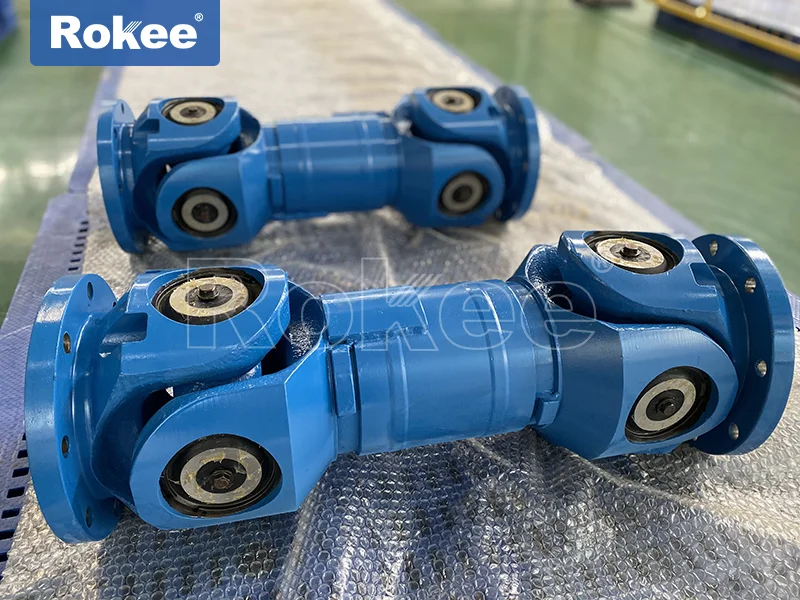
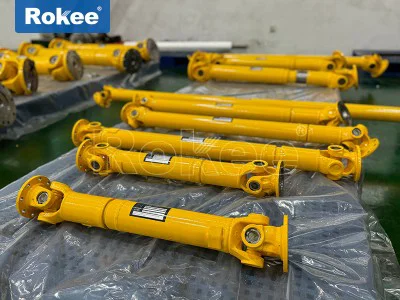
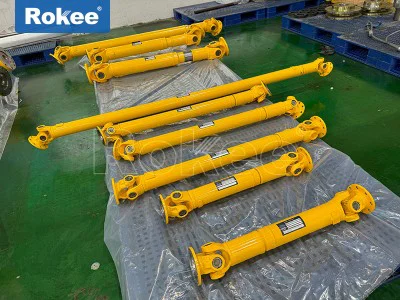
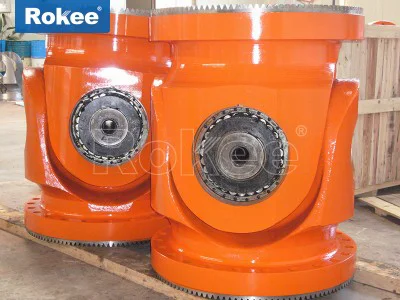
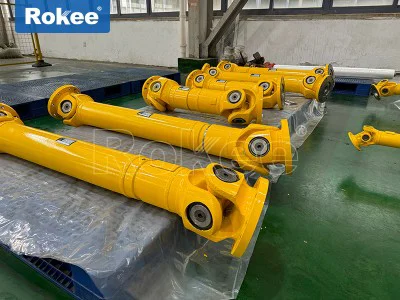
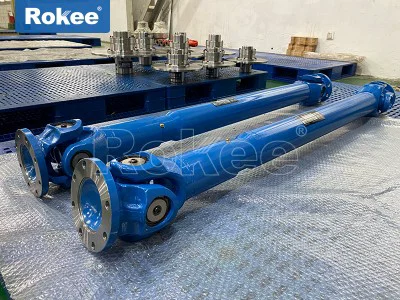
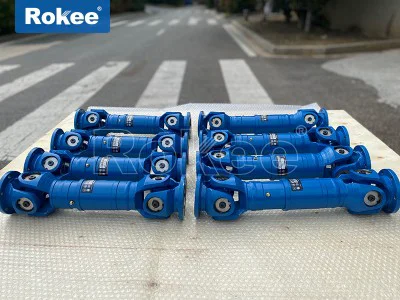
At its core, the cross joint shaft features a minimalist yet robust structural composition that underpins its reliable performance. The primary components include two yoke assemblies (also called fork joints), a central cross-shaped shaft (commonly known as a spider), and four sets of precision bearing systems, typically needle roller bearings for optimal friction reduction. The two yokes are attached to the driving shaft and driven shaft respectively, either via flanged connections, splined sleeves, or welded joints, depending on the application’s load and installation requirements. The cross-shaped spider sits orthogonally between the two yokes, with its four cylindrical journals fitting into the bearing housings integrated into each yoke arm. This orthogonal arrangement allows the yokes to pivot freely relative to one another, accommodating angular misalignment without compromising torque transmission. The needle roller bearings between the spider journals and yoke housings are pivotal to reducing sliding friction and minimizing wear during continuous rotation; they distribute contact stress evenly across the mating surfaces, preventing premature failure even under high loads and high rotational speeds. Many cross joint shafts also feature internal lubrication passages within the cross spider, designed to deliver grease or lubricating oil directly to the bearing surfaces, ensuring consistent lubrication and extending the operational lifespan of the entire assembly. The materials used in manufacturing cross joint shafts are carefully selected to withstand extreme mechanical stress: high-strength alloy steels are standard for the cross spider and yokes, often subjected to heat treatments such as carburizing, quenching, and tempering to enhance hardness, toughness, and wear resistance, while bearing components are crafted from hardened steel to handle repeated contact and rotational forces.
The performance characteristics of cross joint shafts are defined by their ability to address common transmission challenges, with angular compensation capacity, torque transmission efficiency, load-bearing capability, and operational stability standing out as the most critical metrics. One of the defining advantages of cross joint shafts is their exceptional angular misalignment tolerance: standard industrial-grade models can accommodate angular offsets ranging from 5 degrees to 45 degrees between the input and output shafts, with specialized heavy-duty designs capable of handling even greater angles for specific harsh environments. This flexibility eliminates the need for ultra-precise shaft alignment during installation, reducing assembly complexity and accommodating dynamic shifts in shaft position caused by load-induced deformation, thermal expansion, or mechanical vibration during operation. In terms of torque transmission, cross joint shafts boast high efficiency levels, typically exceeding 95% even under moderate angular misalignment, with some precision-engineered models reaching efficiency rates of up to 98%. This minimal power loss ensures that the vast majority of rotational energy from the driving shaft is transferred to the driven shaft, making the component highly energy-efficient for both low-speed, high-torque and high-speed, low-torque applications. Load-bearing performance varies significantly based on structural design and size, with cross joint shafts engineered to handle a wide spectrum of torque loads, from small-scale light-duty applications requiring just a few Newton-meters of torque to heavy industrial settings demanding thousands of kilonewton-meters. Additionally, these shafts exhibit strong resistance to shock loads and intermittent stress spikes, a trait that makes them ideal for equipment subjected to sudden changes in load, such as construction machinery, rolling mills, and agricultural equipment. While standard cross joint shafts operate as non-constant velocity joints, meaning slight fluctuations in rotational speed occur as the angle between shafts increases, this limitation is mitigated in specialized designs, and for most industrial applications, the speed variation is negligible and does not hinder operational performance. Operational stability is further enhanced by precision balancing of the shaft assembly, which reduces vibration and noise during high-speed rotation, preventing premature wear on adjacent components and ensuring smooth, consistent operation over extended periods.
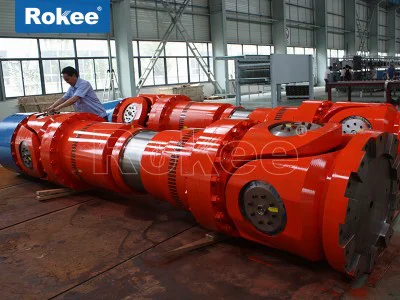
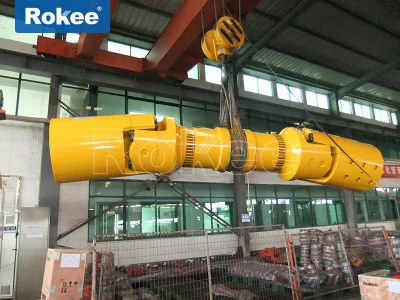
Cross joint shafts are classified into distinct varieties based on multiple criteria, including structural configuration, load capacity, telescopic functionality, and operational design, each tailored to meet specific application requirements and environmental conditions. The most common classification is based on structural form, which divides cross joint shafts into single cross joint shafts, double cross joint shafts (also known as double Cardan shafts), and constant velocity (CV) cross joint shafts. Single cross joint shafts represent the simplest and most widely used variant, featuring a single cross spider and two yokes; they are cost-effective, easy to manufacture, and suitable for applications with moderate angular misalignment and standard torque loads, such as small industrial machinery, automotive drive trains, and agricultural implements. Double cross joint shafts consist of two single cross joint assemblies connected by a central intermediate shaft or yoke, which effectively cancels out the non-constant velocity characteristic of single joints, delivering near-uniform rotational speed even at larger shaft angles. This design is preferred for applications requiring smooth, vibration-free power transmission at significant misalignment angles, including heavy-duty trucks, marine propulsion systems, and large industrial processing equipment. Constant velocity cross joint shafts are a specialized variant engineered to maintain perfectly consistent rotational speed between input and output shafts regardless of the operating angle, eliminating speed fluctuations and associated vibration entirely; these are commonly used in high-precision machinery, front-wheel-drive vehicles, and aerospace equipment where smooth power delivery is non-negotiable. Another key classification is based on load-bearing capacity, which categorizes cross joint shafts into light-duty, medium-duty, heavy-duty, and extra-heavy-duty models. Light-duty cross joint shafts are compact in size, designed for low-torque, high-speed applications such as small pumps, fans, and precision instruments, with torque ratings ranging from a few N·m to around 1000 N·m. Medium-duty models strike a balance between size and strength, suitable for general industrial equipment like conveyors, mixers, and machine tools, handling torque loads up to 40,000 N·m. Heavy-duty and extra-heavy-duty cross joint shafts feature reinforced yokes, larger cross spiders, and heavy-gauge bearings, built to withstand extreme torque loads and harsh operating conditions; these are deployed in heavy industries such as metallurgy, mining, and shipbuilding, where torque ratings can exceed 8,000,000 N·m for the largest custom-built units. Cross joint shafts can also be classified by telescopic functionality, distinguishing between fixed-length shafts and telescopic shafts. Fixed-length cross joint shafts have a set axial length and are ideal for applications with stable shaft spacing, while telescopic models feature a splined shaft section that allows for axial length adjustment, compensating for changes in shaft distance caused by thermal expansion, mechanical movement, or installation tolerances. This telescopic design is particularly valuable in mobile machinery, long-distance transmission systems, and equipment subject to frequent positional shifts.
The versatility of cross joint shafts, rooted in their structural resilience and performance flexibility, has led to their widespread adoption across an expansive range of industries and applications, spanning from small-scale precision equipment to massive heavy-duty industrial machinery. In the automotive and transportation sector, cross joint shafts are integral components of drive train systems, connecting the transmission to the differential in rear-wheel-drive and four-wheel-drive vehicles, accommodating the vertical movement of the rear axle and ensuring consistent power delivery to the wheels. They are also used in steering systems, agricultural vehicles such as tractors and harvesters, and commercial trucks, where they handle the high torque demands of heavy loads and navigate uneven terrain-induced shaft misalignment. In the industrial machinery domain, cross joint shafts are ubiquitous in rolling mills, continuous casting machines, and other metallurgical equipment, where they transmit extreme torque while compensating for shaft deformation caused by heavy rolling loads and high temperatures. They are also widely employed in conveyor systems, crushers, mixers, and packaging machinery, providing reliable power transmission in production lines where shaft alignment is challenging. The marine industry relies heavily on cross joint shafts for propulsion systems, connecting the engine to the propeller shaft and accommodating the dynamic movement of the vessel’s hull, as well as in auxiliary equipment such as winches, pumps, and steering mechanisms. In construction and heavy machinery, including excavators, cranes, bulldozers, and concrete mixers, cross joint shafts endure constant shock loads and extreme angular misalignment, ensuring uninterrupted operation in rugged, off-road environments. Beyond these core sectors, cross joint shafts find use in aerospace auxiliary systems, power generation equipment (including wind turbines and generator sets), oil and gas drilling machinery, and precision manufacturing tools such as CNC machine tools and robotic arms. In each of these applications, the cross joint shaft’s ability to bridge misaligned shafts, transmit high torque efficiently, and withstand harsh operating conditions makes it an irreplaceable component, enabling the seamless operation of complex mechanical systems that form the backbone of modern industry and infrastructure.
Beyond their core functional applications, the design and performance of cross joint shafts continue to evolve alongside advancements in materials science, manufacturing technology, and mechanical engineering, further expanding their utility and enhancing their reliability. Modern manufacturing techniques such as precision forging, computer numerical control (CNC) machining, and finite element analysis (FEA) have refined the structural design of cross joint shafts, optimizing stress distribution, reducing weight, and increasing load-bearing capacity without compromising durability. Advanced surface treatments and coating technologies have also improved wear resistance and corrosion protection, allowing cross joint shafts to operate reliably in harsh environments with high humidity, chemical exposure, or extreme temperatures. Additionally, customized cross joint shaft designs are increasingly common, with manufacturers tailoring dimensions, load ratings, and structural features to meet the unique requirements of specialized applications, ensuring a perfect fit for niche industrial and mechanical systems. Despite the emergence of alternative transmission components, the cross joint shaft remains a preferred choice for engineers worldwide due to its simple design, cost-effectiveness, high reliability, and unparalleled ability to handle angular misalignment. Its enduring relevance stems from its ability to solve a universal mechanical challenge—transmitting power between non-aligned shafts—with unmatched efficiency and versatility. As mechanical systems continue to grow more complex and demanding, the cross joint shaft will undoubtedly retain its status as a cornerstone component, adapting to new technological demands and continuing to support critical operations across every major industry.
In summary, the cross joint shaft is a masterclass in mechanical engineering simplicity and functionality, with its cross-shaped core structure enabling exceptional angular compensation, high torque transmission efficiency, and robust load-bearing capabilities. Its diverse varieties, ranging from single joint light-duty models to double joint heavy-duty and constant velocity designs, cater to every conceivable transmission requirement, while its widespread applications across automotive, industrial, marine, and construction sectors underscore its universal utility. The performance of cross joint shafts is not only defined by their mechanical attributes but also by their adaptability to evolving engineering needs, making them a timeless and essential component in the global mechanical landscape. Whether in a small precision instrument or a massive industrial rolling mill, the cross joint shaft plays a vital role in ensuring reliable, efficient power transmission, solidifying its position as an indispensable part of modern mechanical design and operation.