Cardan Drive Shafts
The Cardan drive shaft, a cornerstone of mechanical power transmission systems, serves as a critical intermediate component that transfers rotational torque and motion between two non-collinear shafts, accommodating angular misalignment, axial displacement, and radial offset that are unavoidable in most mechanical assemblies. Unlike rigid shaft couplings that demand perfect axial alignment, this versatile component enables continuous, stable power delivery even when the driving and driven shafts operate at varying angles or experience positional shifts during operation, making it indispensable across automotive, industrial, agricultural, and marine engineering sectors. Its design and functionality have evolved over decades of engineering refinement, balancing structural robustness, transmission efficiency, and adaptability to diverse operating conditions, with every structural element tailored to enhance load-bearing capacity, reduce energy loss, and prolong service life in both light-duty and heavy-duty operational scenarios.

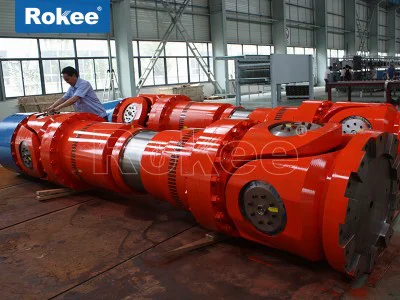
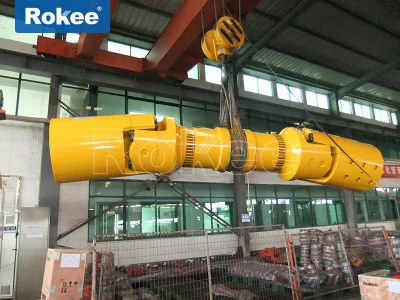
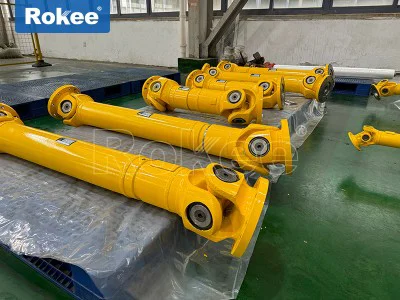
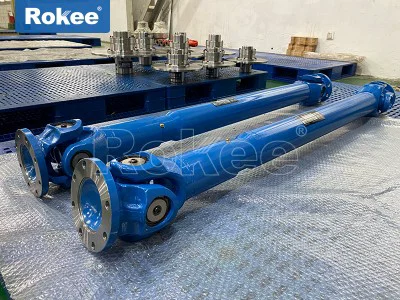
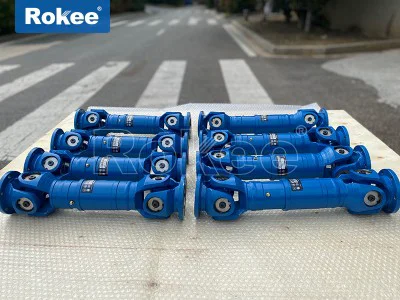
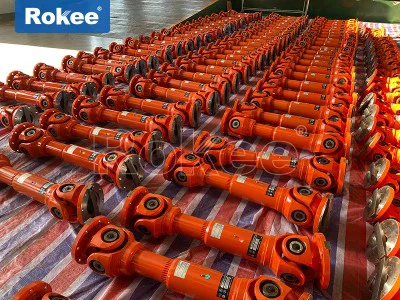
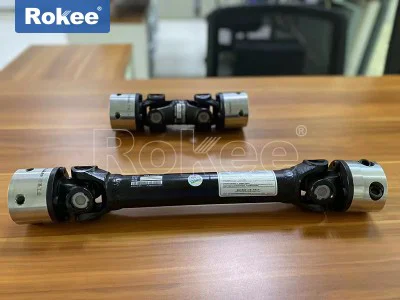
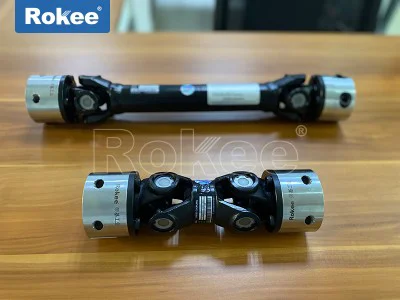
At its core, the standard Cardan drive shaft features a modular, streamlined structure composed of several key integrated parts, each fulfilling a distinct and irreplaceable role in the transmission process. The primary structural elements include universal joint assemblies, a central shaft tube, splined connection components, bearing supports, and fastening fixtures, with no redundant parts to optimize weight and performance. The universal joint, the heart of the Cardan shaft assembly, typically adopts a cross-axis design in conventional configurations, consisting of a cross-shaped spindle, four sets of needle bearings, and two yoke connectors that link the cross spindle to the driving and driven shafts respectively. This cross-axis configuration allows the shaft to flex and rotate in two mutually perpendicular planes, accommodating angular misalignment up to significant degrees without disrupting power transmission. The central shaft tube, often crafted from high-strength alloy steel or lightweight aluminum alloy, acts as the main torque-transmitting body, balancing torsional rigidity and structural weight; hollow shaft tube designs are widely preferred for their high strength-to-weight ratio, reducing rotational inertia and minimizing vibration during high-speed operation. Splined connections, integrated at either end of the shaft tube or between segmented shaft components, enable adjustable axial length, compensating for thermal expansion, mechanical vibration, and installation tolerances that occur in dynamic operating environments. Bearing components, precision-engineered to withstand radial and axial loads, reduce friction between moving parts, while robust fastening fixtures ensure secure, backlash-free connections between the Cardan shaft and adjacent transmission components, preventing disengagement or performance degradation under heavy loads or high rotational speeds.
The performance attributes of Cardan drive shafts are defined by a set of interconnected mechanical and operational characteristics that dictate their suitability for specific applications, with engineers prioritizing key metrics to match component performance to operational demands. Foremost among these is torque transmission capacity, which refers to the maximum rotational force the shaft can transfer without structural deformation, fatigue failure, or slippage; this parameter is heavily influenced by material strength, cross-sectional dimensions, and universal joint design, with heavy-duty variants engineered to handle extreme torque loads in industrial machinery. Transmission efficiency, another critical performance metric, reflects the ratio of output power to input power, with minimal energy loss attributed to low-friction bearings, smooth surface finishes, and optimized joint geometry. High-efficiency Cardan shafts reduce heat generation and energy waste, making them ideal for continuous-operation systems where energy conservation is paramount. Angular misalignment tolerance defines the maximum angle between driving and driven shafts that the component can accommodate while maintaining stable transmission; standard cross-axis joints offer moderate angular flexibility, while specialized designs expand this range to suit complex mechanical layouts. Dynamic balance is essential for high-speed applications, as unbalanced rotational mass causes excessive vibration, noise, and premature wear of bearings and joints; precision machining and dynamic balancing processes ensure uniform mass distribution, enabling smooth operation at elevated rotational speeds without compromising stability. Durability and fatigue resistance are also pivotal, as Cardan shafts are subjected to cyclic loading, shock loads, and harsh environmental conditions such as dust, moisture, and temperature fluctuations; high-quality materials, heat treatment processes, and protective surface coatings enhance resistance to wear, corrosion, and metal fatigue, extending service life and reducing maintenance requirements. Additionally, the component exhibits excellent adaptability to variable operating speeds, performing reliably across low-speed, high-torque industrial settings and high-speed automotive drivetrain applications alike, with no significant drop-off in performance under fluctuating load conditions.
Cardan drive shafts are classified into distinct categories based on structural design, load-bearing capacity, operational speed, and intended application, with each category engineered to address specific transmission challenges and operational constraints. One primary classification is based on universal joint configuration, which divides the components into cross-axis universal joint shafts, double Cardan joint shafts, and constant velocity (CV) joint shafts, each with unique structural and performance traits. Cross-axis universal joint shafts, the most widely used variant, feature a simple, rugged cross-spindle joint design, offering high torque capacity and easy maintenance, though they exhibit minor speed fluctuations at larger misalignment angles, making them suitable for moderate-speed, high-load applications. Double Cardan joint shafts integrate two cross-axis joints linked by an intermediate shaft, effectively canceling out speed variations and reducing vibration associated with single cross-joint designs, delivering smoother power transmission at greater misalignment angles and ideal for heavy-duty vehicles and industrial equipment requiring enhanced stability. Constant velocity joint shafts, designed with specialized ball-and-cage or tripod joint mechanisms, maintain consistent output speed regardless of misalignment angle, eliminating rotational fluctuations and minimizing vibration; these shafts excel in high-speed, precision-critical applications where smooth operation is non-negotiable, despite a more complex manufacturing process. A secondary classification system is based on load-bearing capacity and operational duty, separating Cardan shafts into light-duty, medium-duty, heavy-duty, and ultra-heavy-duty variants. Light-duty Cardan shafts feature compact dimensions, low rotational inertia, and moderate torque capacity, tailored for small-scale machinery, precision equipment, and light automotive applications with minimal load demands. Medium-duty shafts strike a balance between load capacity and weight, suitable for general industrial machinery, passenger vehicles, and agricultural equipment with moderate torque and speed requirements. Heavy-duty and ultra-heavy-duty shafts are constructed with thickened, high-strength materials, reinforced joints, and oversized bearings, engineered to withstand extreme torque loads, shock impacts, and continuous heavy use in large industrial machinery, construction equipment, marine propulsion systems, and heavy commercial vehicles. Additional classifications include telescopic and non-telescopic shafts, segmented and single-piece shafts, and material-specific variants (steel or aluminum alloy), each designed to address spatial constraints, installation requirements, and weight reduction goals in diverse mechanical systems.
The versatility of Cardan drive shafts, stemming from their unique structural design and exceptional performance characteristics, has led to their widespread adoption across an extensive range of industries and mechanical applications, serving as a vital transmission link in nearly every sector that relies on rotational power transfer. In the automotive industry, Cardan drive shafts are integral components of vehicle drivetrains, connecting the transmission system to the drive axles in rear-wheel-drive, four-wheel-drive, and all-wheel-drive vehicles; they accommodate the vertical movement of suspension components and angular shifts between the transmission and axles, ensuring consistent power delivery to the wheels during acceleration, cornering, and traversal of uneven terrain. Light passenger vehicles utilize compact, lightweight Cardan shafts for balanced performance and fuel efficiency, while heavy commercial vehicles such as trucks and buses rely on heavy-duty variants to handle the high torque outputs of large engines and the rigors of long-haul transportation. In agricultural machinery, Cardan drive shafts play a pivotal role in powering a wide array of farming equipment, including tractors, harvesters, plows, and seeders; they transfer power from the tractor’s power take-off (PTO) system to attached implements, accommodating the uneven ground conditions and frequent positional adjustments inherent in agricultural operations, with rugged designs resistant to dust, mud, and debris that characterize farm environments.
Industrial engineering represents another major application area, where Cardan drive shafts facilitate power transmission in heavy machinery and manufacturing equipment across metallurgical, mining, construction, and manufacturing sectors. In steel rolling mills, they connect drive motors to rolling mill rollers, transmitting extreme torque to shape and form metal sheets and profiles under high pressure, with ultra-heavy-duty variants withstand continuous heavy loads and harsh industrial conditions. Mining equipment such as crushers, conveyors, and drilling rigs rely on robust Cardan shafts to transfer power in rugged, low-speed operational settings, enduring shock loads and abrasive materials without failure. Construction machinery, including excavators, loaders, and bulldozers, uses Cardan shafts to link engine power to hydraulic systems and moving components, adapting to the frequent angular shifts and heavy vibrations typical of construction sites. In material handling systems, such as conveyor belts and lifting cranes, Cardan shafts ensure reliable power transfer across misaligned drive components, enabling smooth and efficient movement of goods and heavy loads in warehouses, ports, and production facilities.
Marine engineering also leverages the unique capabilities of Cardan drive shafts, where they serve as critical components in marine propulsion systems, connecting boat engines to propeller shafts. Marine-grade Cardan shafts are designed to resist corrosion from saltwater and moisture, accommodating the angular misalignment caused by hull flexing and propeller movement, ensuring stable propulsion in both small recreational watercraft and large commercial vessels. Additionally, Cardan drive shafts find application in aerospace support equipment, railway transportation systems, power generation machinery, and various precision mechanical instruments, adapting to the unique transmission demands of each sector. In aerospace ground support equipment, they power hydraulic and mechanical systems with compact, lightweight designs; in railway locomotives, they transfer power between engine and wheel assemblies, enduring high speeds and heavy loads; in power generation units, they link turbines to generators, ensuring efficient energy conversion with minimal power loss. Even in small-scale precision equipment, such as laboratory machinery and automated production tools, specialized light-duty Cardan shafts enable precise, smooth power transmission in confined spaces with strict alignment constraints.
Beyond their core functional applications, the ongoing evolution of Cardan drive shaft design continues to expand their utility, with engineering advancements focused on enhancing material performance, optimizing structural geometry, and improving operational efficiency. Modern manufacturing techniques, such as precision forging, computer numerical control (CNC) machining, and advanced heat treatment processes, have elevated the structural integrity and performance consistency of Cardan shafts, while material innovations, including high-strength alloy steels and composite materials, have boosted torque capacity, reduced weight, and enhanced corrosion resistance. Engineers also continue to refine universal joint designs to minimize friction, reduce vibration, and extend service life, addressing the evolving demands of modern mechanical systems for higher efficiency, greater durability, and lower maintenance needs. As industrial and automotive technologies advance, the Cardan drive shaft remains a timeless and adaptable component, its fundamental design principles enduring while its performance capabilities are continuously upgraded to meet the challenges of next-generation mechanical transmission systems. Its ability to bridge misaligned shafts, transmit power reliably, and adapt to diverse operating conditions solidifies its status as an essential element in global mechanical engineering, supporting the functionality of countless pieces of equipment and machinery that underpin modern industry, transportation, and agriculture.
In summary, the Cardan drive shaft stands as a testament to engineering ingenuity, merging simple structural design with exceptional functional versatility to solve the universal challenge of misaligned power transmission. Its well-engineered structural components work in harmony to deliver robust torque transmission, angular flexibility, and dynamic stability, while its diverse classifications cater to the full spectrum of light to ultra-heavy-duty operational demands. From everyday passenger vehicles to heavy industrial machinery, from agricultural farm equipment to marine propulsion systems, the Cardan drive shaft plays an unassuming yet irreplaceable role, ensuring seamless power transfer and reliable mechanical operation across countless applications. As mechanical systems continue to evolve and demand higher performance, the Cardan drive shaft will remain a critical transmission component, adapting to new challenges and maintaining its position as a fundamental building block of modern mechanical engineering.