Telescopic Drive Shafts
In the realm of mechanical power transmission, the telescopic drive shaft stands as a critical and versatile component, engineered to address the inherent challenges of dynamic length adjustment while maintaining consistent torque delivery across moving mechanical assemblies. Unlike fixed-length drive shafts that operate effectively only in static or minimally shifting setups, telescopic drive shafts are purpose-built to accommodate axial movement, angular misalignment, and positional changes between driving and driven components, making them indispensable in systems where relative motion between power sources and load-bearing parts is unavoidable. This component integrates specialized structural design, tailored material selection, and precision engineering to deliver reliable performance under diverse operating conditions, with variations in construction and configuration tailored to meet the unique demands of different industries and mechanical systems. By examining its core structural attributes, key performance metrics, distinct classification criteria, and wide-ranging practical applications, a comprehensive understanding of the telescopic drive shaft’s role in modern mechanical engineering emerges, highlighting its adaptability, durability, and functional necessity across both heavy-duty industrial and light-duty automotive environments.
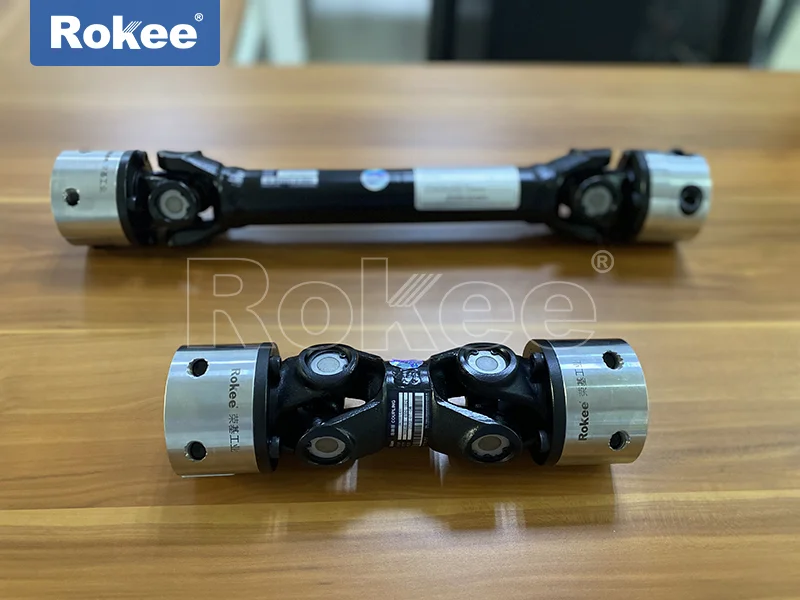
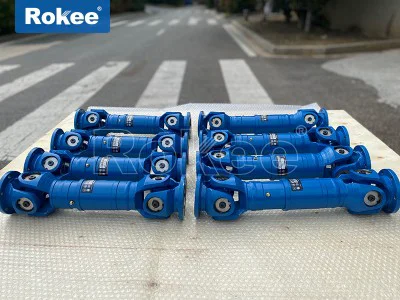
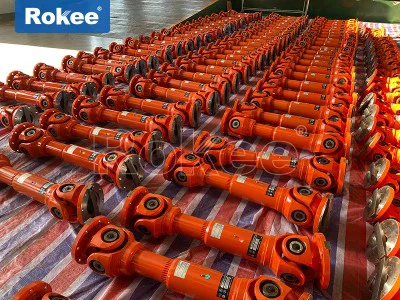
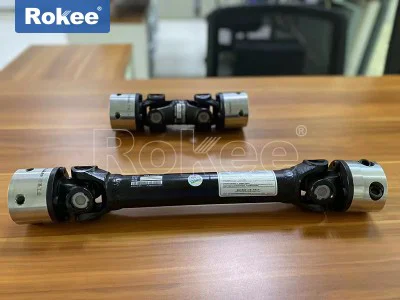
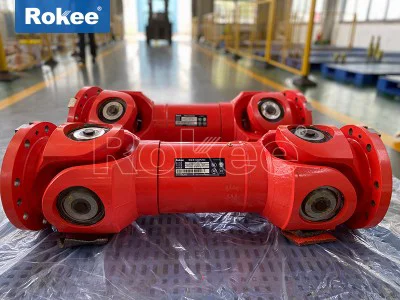
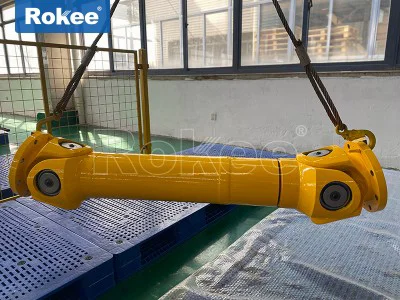
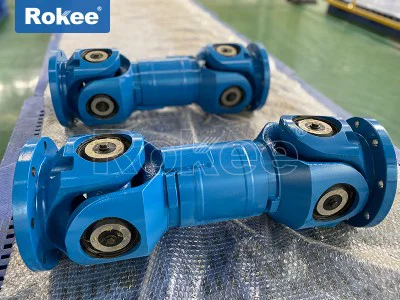
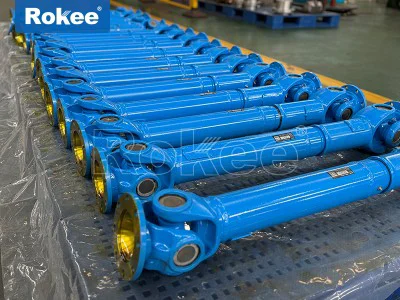
At its core, the telescopic drive shaft features a modular, sliding structural design that enables seamless length variation without disrupting power transmission. The fundamental structure consists of two primary interlocking shaft sections: an outer hollow shaft and an inner solid or hollow shaft that fits snugly within the outer component, creating a telescoping mechanism that can extend or retract along the longitudinal axis. The critical interface between these two sections is equipped with precision-machined splines, which serve dual purposes: they facilitate smooth axial sliding while ensuring positive torque transfer between the inner and outer shafts, eliminating slippage and maintaining rotational synchronization. These splines are engineered with tight tolerances to balance free movement and torque-carrying capacity, with profiles optimized to distribute stress evenly across the contact surfaces, reducing wear and fatigue over extended operation. In most configurations, the assembly also incorporates bearing supports at key junctions to minimize friction during telescopic movement and radial loading during rotation, alongside sealing elements to prevent the ingress of contaminants such as dust, moisture, and debris, and to retain lubricants that preserve the integrity of the splined interface. Additional components may include universal joints or constant-velocity joints at either end of the telescopic assembly, which complement the axial adjustability by accommodating angular deflection, further enhancing the shaft’s ability to operate effectively in non-linear power transmission paths. The structural design prioritizes rigidity to resist torsional deformation under load, paired with sufficient flexibility to handle the dynamic shifts inherent to its intended applications, creating a harmonious balance between strength and adaptability that defines the component’s functionality.
Performance characteristics of telescopic drive shafts are meticulously calibrated to align with their structural design, with key metrics including torque capacity, axial travel range, rotational speed tolerance, wear resistance, and operational stability. Torque capacity stands as a foundational performance parameter, determined by factors such as shaft material thickness, spline tooth geometry, contact area between inner and outer shafts, and overall shaft diameter. Heavy-duty variants are engineered to transmit exceptionally high torque loads, suitable for industrial machinery and heavy commercial equipment, while light-duty models offer optimized torque delivery for smaller automotive and precision mechanical systems, ensuring efficient power transfer without unnecessary bulk or weight. The axial travel range, or the total distance the shaft can extend and retract, varies widely based on application requirements; some designs feature minimal travel for minor positional adjustments, while others offer extended telescopic range to accommodate large-scale movement in off-road vehicles, construction equipment, or articulated machinery. Rotational speed tolerance is another critical performance attribute, as telescopic drive shafts must maintain balance and smooth operation across low, medium, and high rotational speeds without inducing excessive vibration, noise, or harmonic resonance. This is achieved through precision balancing during manufacturing, uniform material distribution, and robust bearing systems that dampen rotational instability. Wear resistance is enhanced through specialized surface treatments on splined surfaces, such as heat treatment, case hardening, or corrosion-resistant coatings, which prolong service life by reducing friction-induced degradation and protecting against environmental damage. Operational stability is further bolstered by the shaft’s ability to maintain consistent power delivery despite continuous length adjustments, ensuring that mechanical systems operate reliably even under fluctuating load conditions and dynamic positional changes. Unlike standard drive shafts, telescopic models are engineered to mitigate stress concentrations caused by axial movement, preventing premature failure and extending the operational lifespan of both the shaft itself and the surrounding drivetrain components.
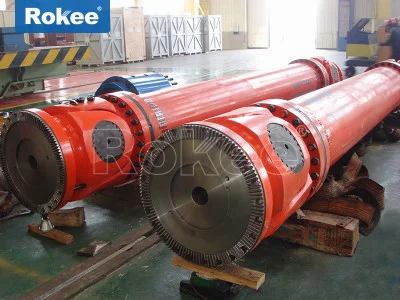
Telescopic drive shafts are categorized into distinct types based on structural configuration, operational design, and intended application, with each variant tailored to address specific mechanical challenges and performance requirements. One primary classification is based on the joint integration at the shaft ends, distinguishing between universal joint telescopic drive shafts and constant-velocity joint telescopic drive shafts. Universal joint variants feature traditional cross-type universal joints, which excel at accommodating moderate angular misalignment and are cost-effective for heavy-duty, low-to-medium speed applications where precise rotational smoothness is not the top priority. These shafts are widely favored in rugged industrial and off-road settings, prioritizing durability and torque capacity over ultra-smooth power delivery. Constant-velocity joint telescopic drive shafts, by contrast, incorporate advanced constant-velocity joints that eliminate rotational speed fluctuations caused by angular deflection, delivering exceptionally smooth power transfer even at extreme angles and high rotational speeds. This makes them ideal for automotive applications, particularly passenger vehicles, light trucks, and performance machines, where ride comfort, reduced noise, and vibration-free operation are paramount. Another key classification is based on structural complexity and load-bearing capacity, separating single-section telescopic shafts and multi-section telescopic shafts. Single-section models feature the basic two-part inner-outer shaft design, offering compact dimensions, straightforward maintenance, and sufficient travel for most standard applications; they are lightweight, easy to install, and suitable for moderate load and travel requirements. Multi-section telescopic drive shafts feature three or more interlocking shaft segments, enabling significantly extended axial travel while maintaining structural rigidity, making them essential for specialized equipment requiring extensive length adjustment, such as large construction machinery, agricultural implements, and marine propulsion systems. Additionally, telescopic drive shafts can be classified by material composition, including steel alloy shafts, aluminum alloy shafts, and composite material shafts. Steel alloy variants offer exceptional strength and durability, ideal for heavy-load industrial and commercial applications; aluminum alloy shafts provide a lightweight alternative with good torque capacity, reducing rotational inertia and improving efficiency in automotive and light industrial systems; composite material shafts, though less common, offer high strength-to-weight ratios, corrosion resistance, and vibration damping properties, suited for specialized high-performance and niche industrial applications.
The adaptability of telescopic drive shafts, rooted in their unique structural and performance traits, translates to a vast array of practical applications across multiple industries, spanning automotive, construction, agriculture, marine, aerospace, and general industrial sectors. In the automotive industry, telescopic drive shafts are integral components of rear-wheel-drive, all-wheel-drive, and four-wheel-drive vehicles, where they compensate for the vertical movement of rear axles caused by suspension travel. As vehicles traverse uneven terrain, navigate bumps, or handle load shifts, the telescopic mechanism adjusts its length in real time, preventing drivetrain stress, maintaining consistent power delivery to the wheels, and enhancing vehicle stability and ride quality. They are equally vital in off-road vehicles, pickup trucks, and SUVs, which frequently encounter rough, uneven surfaces and require enhanced drivetrain flexibility to withstand extreme operational conditions. In the construction and heavy machinery sector, telescopic drive shafts power a wide range of equipment, including excavators, loaders, bulldozers, and cranes. These machines feature articulated frames, moving booms, and variable positioning of power sources and working components, and the telescopic drive shaft’s ability to adjust length while transmitting high torque ensures uninterrupted operation during digging, lifting, and material handling tasks. The robust construction of heavy-duty telescopic shafts also withstands the harsh operating conditions of construction sites, including dust, debris, and heavy impact loads, ensuring reliable performance in high-stress environments.
Agricultural machinery relies heavily on telescopic drive shafts to facilitate efficient farm operations, with applications in tractors, harvesters, plows, and other field equipment. Agricultural implements often require connection to tractor power take-off systems, and the telescopic design accommodates the variable positioning of implements relative to the tractor, enabling smooth power transfer during planting, harvesting, tilling, and other farming activities. The shafts are engineered to resist exposure to soil, moisture, and agricultural chemicals, with durable sealing and surface treatments that preserve functionality in outdoor, rural settings. In the marine industry, telescopic drive shafts are used in various watercraft, including boats, yachts, and small commercial vessels, to connect engines to propellers while accommodating the movement of hulls and drive systems. They adjust to changes in shaft alignment caused by wave impact, hull flex, and propeller movement, ensuring reliable propulsion and reducing wear on marine drivetrain components. For aerospace and aviation support equipment, telescopic drive shafts play a role in ground support machinery, aircraft landing gear systems, and auxiliary power units, where compact design, precise length adjustment, and high reliability are critical to safe and efficient aircraft operations.
Beyond these core industries, telescopic drive shafts find utility in a multitude of general industrial applications, including conveyor systems, material handling equipment, manufacturing machinery, and robotic assemblies. In conveyor systems, they accommodate thermal expansion and contraction of conveyor frames, maintaining consistent power transmission across long distances and variable operating temperatures. In manufacturing machinery, they enable dynamic movement of production line components, allowing for flexible positioning of tools and workpieces without disrupting power flow. Robotic systems leverage telescopic drive shafts for articulated arm movement, providing the necessary axial adjustability to reach diverse work areas while delivering precise torque for manipulation tasks. Even in renewable energy systems, such as wind turbine pitch control mechanisms and solar tracking systems, telescopic drive shafts facilitate the dynamic adjustment of components to optimize energy capture, adapting to changing environmental conditions and mechanical positioning requirements.
The enduring relevance of the telescopic drive shaft in modern engineering stems from its unique ability to merge length adjustability with reliable power transmission, solving a fundamental mechanical challenge that fixed-length shafts cannot address. Its evolution continues alongside advancements in material science, manufacturing precision, and mechanical design, with ongoing refinements aimed at enhancing torque capacity, reducing weight, extending service life, and improving operational efficiency. As industries increasingly demand more adaptable, durable, and high-performance mechanical components, the telescopic drive shaft remains a cornerstone of power transmission systems, evolving to meet the ever-changing needs of automotive, industrial, agricultural, and marine applications. Whether operating in the rugged conditions of a construction site, the dynamic environment of an off-road vehicle, or the precise setting of a manufacturing assembly line, the telescopic drive shaft delivers consistent, efficient performance, underscoring its status as an indispensable component in the global landscape of mechanical engineering. Its diverse structural variants, tailored performance characteristics, and wide-ranging applications collectively highlight its versatility and critical role in enabling the seamless operation of countless mechanical systems that underpin modern industry and daily life.