Universal Joint Shafts
A universal joint shaft, also widely referred to as a Cardan shaft or U-joint shaft, stands as a critical mechanical component dedicated to transmitting torque and rotational motion between two shafts that are not aligned collinearly, featuring a certain angular offset between their central axes. Unlike rigid couplings that demand strict axial alignment for stable operation, universal joint shafts are engineered to accommodate angular, radial, and even limited axial misalignments, ensuring uninterrupted power delivery in dynamic mechanical systems. This unique adaptability makes them indispensable across countless industrial and mechanical scenarios, where fixed shaft alignment is impractical or impossible to maintain during operation.

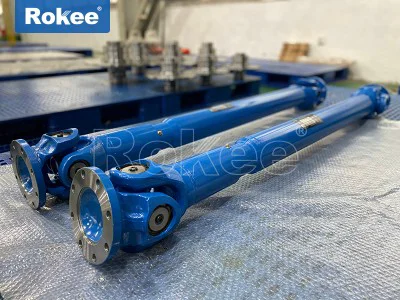
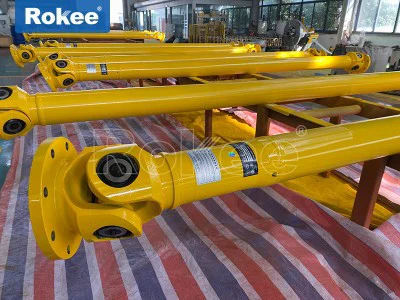
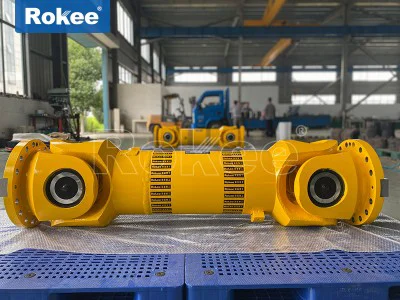
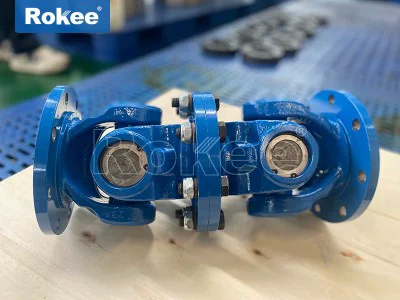
At its core, the structural design of a universal joint shaft is built around a few key modular components, each tailored to withstand mechanical stress, reduce friction, and sustain reliable torque transmission. The foundational element of nearly all universal joint shafts is the cross-shaped spider, a precision-machined component with four perpendicular arms that serve as the pivot point for the entire assembly. This spider is paired with two yoke assemblies, typically fork-shaped or flange-mounted, positioned at opposite ends of the spider and oriented at a 90-degree angle to one another; one yoke connects to the driving shaft, while the other links to the driven shaft, creating a flexible hinge-like connection that enables angular movement. To minimize friction and enhance wear resistance between the spider arms and the yoke bores, high-precision bearing components are integrated, most commonly needle roller bearings chosen for their compact size, high load-bearing capacity, and ability to handle both radial and thrust loads. In heavy-duty and high-speed applications, these bearings are often sealed with durable gaskets or dust covers to prevent the ingress of contaminants such as dust, moisture, and debris, while also retaining lubricants to maintain smooth operation and extend service life. Many universal joint shafts also feature a telescopic central shaft section, equipped with splined or involute profiles that allow for axial length adjustment, compensating for thermal expansion, mechanical vibration, or minor positional shifts between the driving and driven equipment. The entire shaft body is typically fabricated from high-strength alloy steels, subjected to specialized heat treatments including quenching and tempering to boost tensile strength, toughness, and fatigue resistance, ensuring the structure can endure repeated cyclic loads, sudden torque spikes, and prolonged operational stress without deformation or failure.
The performance attributes of universal joint shafts are defined by a set of measurable and functional characteristics that dictate their operational limits and suitability for diverse environments. Foremost among these is torque transmission capacity, which refers to the maximum rotational force the shaft can transfer continuously without structural damage or performance degradation; this capacity varies widely based on shaft diameter, material strength, bearing size, and joint design, ranging from modest torque values for light-duty precision machinery to extremely high torque ratings for heavy industrial equipment. Angular misalignment tolerance is another pivotal performance metric, representing the maximum angle between the driving and driven shafts that the universal joint can accommodate while maintaining smooth power transmission. Standard universal joint shafts typically handle angular offsets ranging from 15 to 30 degrees, with specialized heavy-duty designs capable of tolerating even greater angles, though excessive misalignment can introduce rotational speed fluctuations and increased wear. Operational speed range is equally critical, as high-speed applications demand balanced, low-vibration shaft designs to prevent resonance, excessive heat buildup, and premature bearing failure; precision-engineered universal joint shafts undergo dynamic balancing to ensure stable performance at elevated rotational speeds, while heavy-duty models are optimized for lower speeds and higher torque loads. Durability and service life are also core performance indicators, shaped by material quality, lubrication systems, sealing effectiveness, and resistance to environmental factors such as corrosion, abrasion, and extreme temperatures. Additionally, transmission efficiency plays a vital role, with well-designed universal joint shafts minimizing energy loss due to friction and mechanical backlash, ensuring that the vast majority of input power is transferred to the driven component rather than being dissipated as heat or vibration. Collectively, these performance traits are carefully calibrated during the design and manufacturing phases to align with the unique demands of each intended application, striking a balance between flexibility, strength, and efficiency.
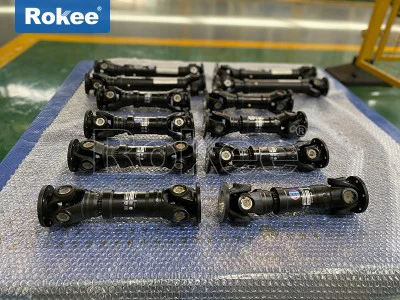
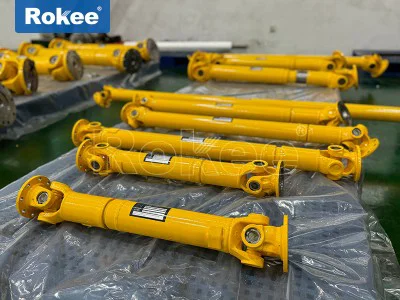
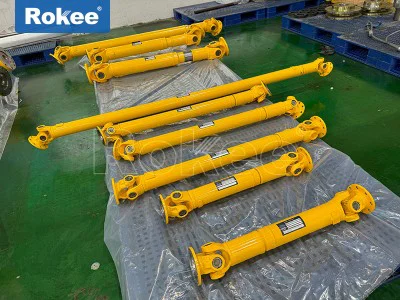
Universal joint shafts are categorized into distinct types based on structural design, operational principles, and performance capabilities, each tailored to address specific mechanical challenges and application requirements. The most prevalent and widely used category is the cross-type universal joint shaft, also known as the Hooke joint shaft, characterized by its simple yet robust cross spider and fork yoke configuration. This type offers exceptional load-bearing capacity, ease of installation and maintenance, and cost-effective production, making it a staple in general industrial and mechanical systems. However, it exhibits non-constant velocity transmission, meaning the driven shaft rotates with minor speed fluctuations when operating at significant angular offsets; to mitigate this issue, double cross-type universal joint shafts are employed, featuring two single cross joints connected by an intermediate shaft, which cancels out speed variations and delivers near-uniform rotational motion even at moderate to high angles. A second major category is the constant velocity (CV) universal joint shaft, engineered to eliminate rotational speed fluctuations entirely, maintaining consistent velocity between the driving and driven shafts regardless of angular misalignment. This design utilizes specialized ball-bearing or tripod mechanisms to distribute torque evenly across the joint, enabling smooth, vibration-free operation at high speeds and large angles, making it ideal for precision-driven and high-performance applications. CV joint shafts are further subdivided into subtypes such as Rzeppa joints, tripod joints, and double offset joints, each optimized for specific angular ranges and load conditions. Beyond these primary types, universal joint shafts are also classified by structural configuration, including fixed-length shafts for applications with stable shaft spacing and telescopic shafts for variable spacing scenarios, as well as single-joint shafts for simple misalignment compensation and multi-joint shafts for complex, multi-angle power transmission. Additionally, they are grouped by load capacity into light-duty, medium-duty, and heavy-duty variants, with light-duty models serving small precision instruments, medium-duty models catering to general machinery, and heavy-duty models engineered for extreme load applications in heavy industry. Each classification offers a unique blend of structural flexibility, performance efficiency, and durability, allowing engineers to select the optimal universal joint shaft for every mechanical setup.
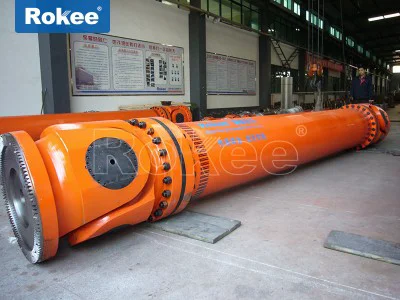
The versatility of universal joint shafts is reflected in their extensive range of applications across nearly every sector of mechanical engineering, spanning automotive systems, agricultural machinery, industrial manufacturing equipment, construction machinery, marine propulsion systems, and precision industrial instruments. In the automotive industry, universal joint shafts are integral components of vehicle drivelines, connecting the transmission to the drive axle, compensating for vertical movement of the suspension and angular changes between the engine and wheels during steering and vehicle operation. Both cross-type and constant velocity universal joint shafts are utilized here, with CV joints dominating front-wheel drive and all-wheel drive vehicles for smooth high-speed performance, while cross-type joints are favored in heavy commercial vehicles for their superior load-bearing capabilities. Agricultural machinery relies heavily on universal joint shafts for power take-off (PTO) systems, transferring engine power from tractors to attached implements such as plows, balers, mowers, and seeders; these shafts must withstand harsh outdoor conditions, including dust, mud, and uneven terrain, while accommodating significant angular and axial misalignments as implements move across variable ground surfaces. In industrial manufacturing, universal joint shafts are deployed in a wide array of machinery, including rolling mills, conveyor systems, pumping equipment, machine tools, and textile machinery, facilitating torque transmission between misaligned shafts in fixed production lines. Heavy-duty universal joint shafts are particularly critical in steel rolling mills and large-scale material handling equipment, where they transmit extremely high torques while enduring continuous heavy loads and mechanical shock. Construction machinery, such as excavators, loaders, bulldozers, and cranes, depends on universal joint shafts to transfer power between engine components and working attachments, adapting to the constant movement and positional shifts of heavy equipment on construction sites. Marine applications utilize waterproofed and corrosion-resistant universal joint shafts in propulsion and steering systems, transmitting power from marine engines to propellers while accommodating the flexing of ship hulls and wave-induced vibrations. Even in precision engineering and small-scale machinery, such as medical equipment, robotic systems, and laboratory instrumentation, compact universal joint shafts enable precise torque transmission in confined spaces with minor shaft misalignments. This broad spectrum of applications underscores the universal joint shaft’s role as a foundational mechanical component, bridging the gap between misaligned shafts and ensuring reliable, efficient power transmission across every corner of modern engineering and industry.
In summary, the universal joint shaft’s enduring relevance in mechanical engineering stems from its innovative structural design, adaptable performance characteristics, diverse classification options, and unparalleled versatility in real-world applications. By seamlessly accommodating shaft misalignment and reliably transmitting torque in dynamic and static mechanical systems alike, it solves a fundamental challenge of power transmission that rigid couplings cannot address. The continuous evolution of universal joint shaft design, driven by advancements in material science, precision manufacturing, and engineering simulation, has further enhanced their load capacity, efficiency, and durability, expanding their potential applications and improving operational performance across all sectors. Whether deployed in heavy industrial machinery, high-performance automotive systems, rugged agricultural equipment, or delicate precision instruments, universal joint shafts remain a cornerstone of modern mechanical design, balancing strength, flexibility, and efficiency to keep countless mechanical systems operating smoothly and reliably. As industrial and mechanical technologies continue to advance, the universal joint shaft will undoubtedly retain its status as an essential component, adapting to new engineering challenges and maintaining its critical role in power transmission systems worldwide.