Fork Couplings
In the intricate web of modern mechanical transmission systems, the fork coupling stands as a vital and versatile mechanical component, engineered to connect two rotating shafts, transfer torque efficiently, and accommodate certain degrees of shaft misalignment and operational vibrations. Unlike conventional rigid couplings that demand perfect shaft alignment and offer no flexibility, or basic flexible couplings that lack robust torque-bearing capacity, the fork coupling integrates a distinctive fork-shaped structural design with tailored material configurations, striking a delicate balance between transmission stability, misalignment compensation, and load adaptability. This unique combination has cemented its role across diverse industrial sectors, from heavy-duty manufacturing and power generation to light industrial machinery and automotive auxiliary systems.
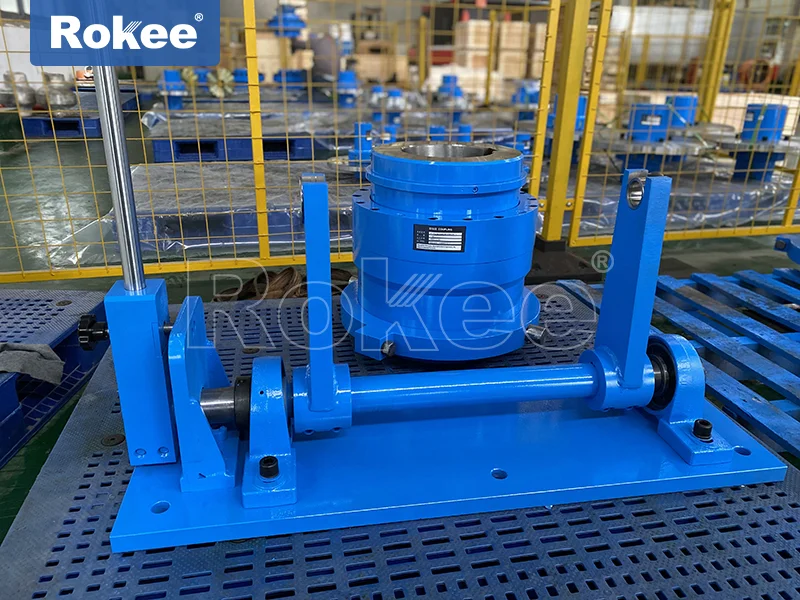
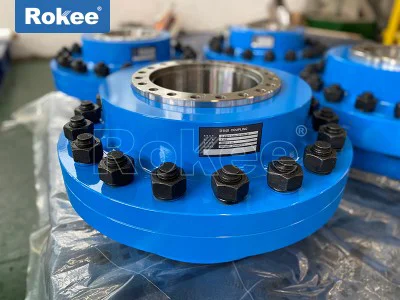
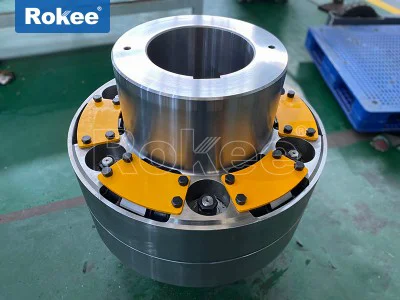
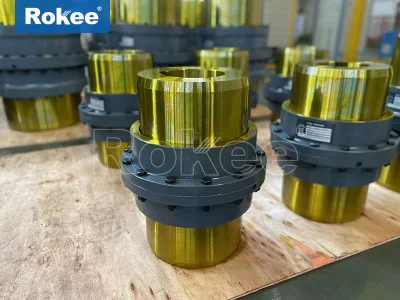
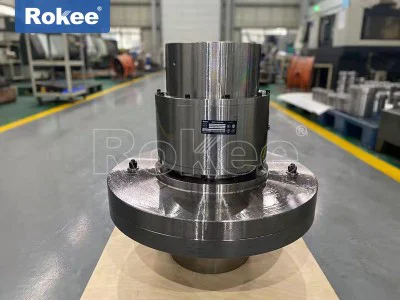
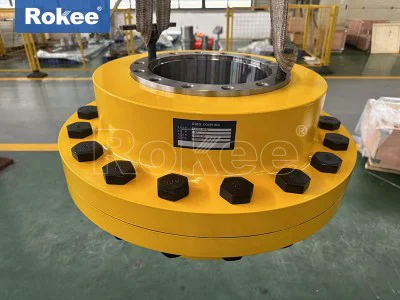
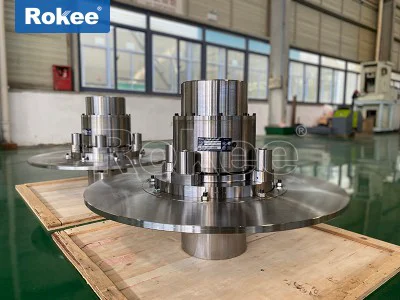
At its core, the fork coupling’s structure is defined by precision-engineered components that work in tandem to deliver consistent power transmission, with every element tailored to withstand mechanical stress, thermal fluctuations, and environmental wear. The foundational component is the fork body, typically forged from high-strength alloy steel or carbon steel that undergoes rigorous heat treatment and precision machining to enhance toughness, wear resistance, and load-bearing capacity. Shaped like a tuning fork with symmetrically distributed fork arms, this component serves as the core transmission carrier, with contoured ends designed to securely lock with matching connecting parts or elastic elements, eliminating slippage during high-torque operation. Complementing the fork body are the hub assemblies, which are fixed firmly to the driving and driven shafts via keyways, tapered sleeves, or interference fits, ensuring a tight, non-slip connection that prevents power loss even under sudden load spikes. Many fork coupling designs also incorporate intermediate connecting elements, which can be rigid metal inserts or flexible polymer components, bridging the gap between the two fork bodies and dictating the coupling’s overall flexibility and misalignment tolerance. In advanced modular designs, the fork body and intermediate elements are assembled via precision press-fitting rather than traditional bolted connections, reducing stress concentration, minimizing part count, and simplifying installation and maintenance workflows. This streamlined structural layout not only boosts mechanical efficiency but also enhances durability by eliminating weak points prone to fatigue failure under repeated rotational stress.
The performance characteristics of fork couplings are deeply intertwined with their structural details and material selections, giving rise to distinct varieties tailored to meet diverse operational demands. These varieties are primarily categorized based on flexibility levels, load-bearing capabilities, environmental adaptability, and functional features, each engineered to address specific pain points in mechanical transmission systems. The first and most widely used category is the standard rigid fork coupling, designed for scenarios where shaft alignment is tightly controlled and minimal misalignment is present. Constructed with solid metal fork bodies and rigid intermediate connectors, this variant prioritizes maximum torque transmission efficiency, often reaching up to 99% efficiency under optimal operating conditions. It excels in maintaining synchronous rotation between shafts, eliminating backlash and ensuring precise motion transfer, making it ideal for high-precision machinery where positional accuracy is critical. While it lacks flexibility for misalignment compensation, its robust structural integrity allows it to handle heavy, steady loads without deformation, offering exceptional longevity in low-vibration, stable operating environments. Its rigid nature also means it requires minimal maintenance, as there are no flexible components prone to degradation, reducing downtime and operational hassle for end-users.
Contrasting sharply with rigid fork couplings is the flexible fork coupling, the second major category, which is engineered to tackle common industrial challenges such as installation errors, thermal expansion-induced shaft displacement, foundation settlement, and mechanical vibration. This variant replaces rigid intermediate connectors with high-performance elastic elements, typically crafted from polyurethane, rubber, or composite polymer materials selected for their exceptional elasticity, shock absorption, and wear resistance. The elastic core acts as a buffer, absorbing impact loads and dampening vibrations that would otherwise damage connected shafts, gears, or bearings, while also compensating for axial, radial, and angular misalignment simultaneously—a three-dimensional compensation capability that sets it apart from many other flexible coupling types. Flexible fork couplings are further subdivided based on the hardness and composition of their elastic elements: low-hardness elastic models offer superior vibration damping and greater misalignment tolerance, suited for equipment with frequent start-stop cycles and high vibration levels; high-hardness elastic models strike a balance between flexibility and torque capacity, ideal for applications requiring moderate misalignment compensation and steady power transfer. Unlike rigid variants, these flexible couplings do not require lubrication, cutting down on maintenance costs and making them suitable for hard-to-reach installation spaces where regular upkeep is challenging.
Beyond rigid and flexible classifications, specialized fork coupling variants have emerged to meet extreme operational conditions, expanding their applicability across harsh industrial environments. High-temperature resistant fork couplings feature elastic elements made from heat-stable materials like silicone rubber or fluororubber, paired with corrosion-resistant, thermally stable metal fork bodies, enabling reliable operation in settings with elevated temperatures, such as metallurgical plants, glass manufacturing facilities, and thermal power generation units. These couplings retain their structural and functional integrity even under prolonged high-heat exposure, avoiding premature hardening, cracking, or deformation of flexible components. Corrosion-resistant fork couplings, on the other hand, utilize stainless steel fork bodies or adopt specialized surface anti-corrosion treatments, paired with chemical-resistant elastic elements, to withstand exposure to moisture, acidic or alkaline substances, and industrial pollutants. This makes them indispensable for marine engineering, chemical processing plants, and wastewater treatment facilities, where standard metal couplings would quickly succumb to rust and corrosion. Additionally, high-load fork couplings feature reinforced fork arm structures, thicker cross-sections, and high-strength composite intermediate elements, engineered to transmit ultra-high torque values in heavy machinery such as mining crushers, large-scale conveyor systems, and marine propulsion drives. These specialized variants retain core fork coupling advantages while adapting to extreme loads, temperatures, and corrosive agents, filling critical gaps in industrial transmission solutions.
Another distinct performance-based category is the quick-connect/disconnect fork coupling, which integrates a mechanical, hydraulic, or pneumatically actuated fork mechanism to enable rapid engagement and disengagement of shafts without complex disassembly. This design prioritizes operational flexibility, allowing operators to swiftly cut or restore power transmission during equipment maintenance, mode switching, or emergency shutdowns. When activated, the fork mechanism drives a sliding sleeve or toothed component to mesh or separate the driving and driven ends, interrupting torque transfer instantly to prevent damage from forced shutdowns or misoperation. This variant combines the torque transmission capabilities of standard fork couplings with the convenience of a clutch, making it a preferred choice for systems requiring frequent operational adjustments, such as rolling mill transmission lines, generator set auxiliary drives, and automated production line power units. The actuation mechanism can be customized to fit operational needs: manual mechanical actuation suits small-scale, low-power equipment; hydraulic or pneumatic actuation is ideal for large, high-power machinery, offering smooth, controlled operation with minimal manual effort. Each subtype within this category maintains reliable torque transmission when engaged, ensuring no power loss during normal operation, while delivering swift, hassle-free disconnection when required.
The diverse performance profiles of fork couplings directly translate to targeted, industry-specific applications, with each variant deployed to solve unique transmission challenges and optimize overall equipment performance. Standard rigid fork couplings, with their high precision and maximum torque efficiency, are predominantly used in high-precision mechanical systems where shaft alignment is strictly maintained and synchronous rotation is non-negotiable. Common applications include machine tool spindles, precision instrumentation drives, textile manufacturing machinery, and small-scale automated assembly lines. In these settings, the elimination of backlash and consistent power transfer ensure operational accuracy, enhancing product quality and production consistency. The low-maintenance, durable design of rigid fork couplings also makes them suitable for long-running equipment with minimal downtime, reducing the need for frequent inspections and part replacements and supporting uninterrupted production workflows.
Flexible fork couplings, with their misalignment compensation and vibration damping traits, boast the broadest application range across general and heavy industrial sectors, addressing the most prevalent transmission issues in real-world operations. In pump and fan systems, including centrifugal pumps, axial fans, and vacuum pumps, these couplings absorb shaft displacement caused by thermal expansion during operation and dampen fluid-induced pulsation, reducing wear on bearings and seals and extending equipment lifespan. In compressor systems, such as screw and piston compressors, they buffer the impact of frequent start-stop cycles and fluctuating torque loads, stabilizing operation and minimizing noise and vibration. Heavy machinery, including construction equipment, agricultural machinery, and material handling systems, relies on flexible fork couplings to adapt to shaft deformation under heavy, uneven loads, maintaining reliable power transfer even in rugged, dynamic working conditions. Power generation equipment, from diesel generator sets to small gas turbines, uses these couplings to ensure smooth power transmission, counteracting minor misalignment from foundation shifts and reducing mechanical stress on core engine components. Additionally, they are widely used in marine propulsion systems, compensating for hull deformation-induced shaft misalignment and delivering stable performance in marine environments.
Specialized high-temperature and corrosion-resistant fork couplings carve out critical niches in extreme industrial environments where standard couplings would fail rapidly. In the metallurgical and steel industry, high-temperature variants operate reliably near rolling mills, smelting furnaces, and heat treatment lines, withstanding extreme heat and radiant energy without performance degradation. In chemical and petrochemical plants, corrosion-resistant models handle exposure to corrosive gases, liquids, and dust, maintaining structural integrity and transmission efficiency in harsh chemical environments. Marine engineering applications, including shipboard drive systems and offshore drilling equipment, depend on corrosion-resistant fork couplings to resist saltwater corrosion and humidity, ensuring consistent performance in demanding marine conditions. High-load fork couplings, meanwhile, are the backbone of heavy industrial transmission, powering mining crushing equipment, large-scale hoisting machinery, and heavy-duty conveyor systems. Their ultra-high torque capacity and reinforced structure withstand the extreme, fluctuating loads of these applications, preventing premature failure and supporting continuous heavy-duty operation.
Quick-connect/disconnect fork couplings find their calling in systems requiring frequent power interruption or operational mode switching, offering unparalleled convenience and operational safety. In cold rolling and hot rolling mill production lines, they enable rapid power disconnection during roll changes, equipment maintenance, or emergency stops, reducing downtime and boosting production efficiency. In power generation auxiliary systems, such as feed pumps and fan drives, they allow for quick isolation of faulty components without shutting down the entire unit, enhancing system reliability and reducing maintenance complexity. Automated manufacturing lines use these couplings to switch between different operational modes or power sources swiftly, supporting flexible, adaptive production workflows. Their reliable engagement and disengagement mechanisms also enhance workplace safety, preventing accidental startup during maintenance and reducing the risk of mechanical accidents.
As industrial technology continues to evolve toward higher efficiency, intelligence, and durability, the design and performance of fork couplings are advancing in tandem to meet increasingly stringent operational demands. Modern iterations feature optimized structural geometries to reduce weight while boosting load capacity, integrated condition monitoring interfaces to track real-time operating parameters like torque, temperature, and wear, and eco-friendly, long-lasting materials to align with sustainable industrial practices. These innovations further expand the versatility of fork couplings, making them adaptable to next-generation mechanical systems that demand higher precision, greater resilience, and smarter operation. Despite the emergence of advanced transmission components, the fork coupling remains irreplaceable due to its simple, robust design, customizable performance, and cost-effective operational benefits.
In summary, the fork coupling’s value lies in its harmonious fusion of specialized structural design, tailored performance characteristics, and wide-ranging applicability. From rigid models that prioritize precision and high torque transmission to flexible variants that absorb vibration and compensate for misalignment, and from extreme-environment specialized couplings to quick-connect functional models, each type addresses distinct industrial needs, supporting stable, efficient mechanical operation across countless scenarios. Understanding the link between structural composition, performance varieties, and practical uses is crucial for selecting the optimal fork coupling for specific applications, ensuring enhanced equipment reliability, extended service life, and improved overall operational efficiency. As a cornerstone of mechanical transmission systems, the fork coupling will continue to evolve alongside industrial progress, adapting to new challenges and remaining an indispensable component in global manufacturing and machinery operations for years to come.