Plate Couplings
In the realm of mechanical power transmission, plate couplings stand as indispensable components that bridge rotating shafts, facilitating efficient torque transfer while addressing common operational challenges such as shaft misalignment, vibration, and thermal expansion. Unlike rigid couplings that demand perfect shaft alignment and offer no flexibility, plate couplings integrate thin, resilient metal plates or diaphragm assemblies into their core design, endowing them with a unique blend of rigidity and flexibility that makes them versatile across countless industrial and precision engineering scenarios. Their structural simplicity, coupled with exceptional mechanical performance, has cemented their status as a preferred choice over many traditional coupling types, catering to low-speed, high-torque heavy-duty operations as well as high-speed, precision-driven motion control systems alike.

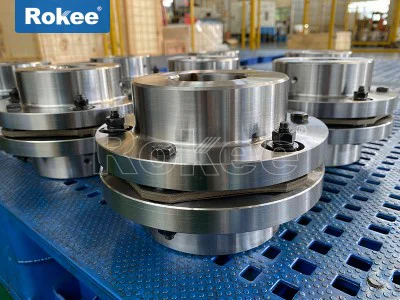
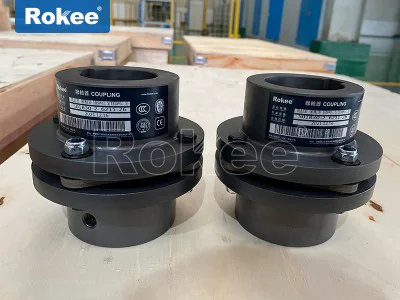
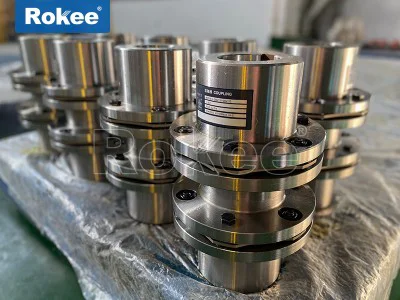
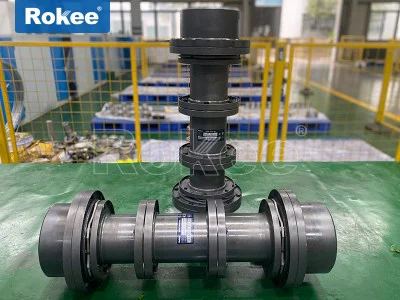
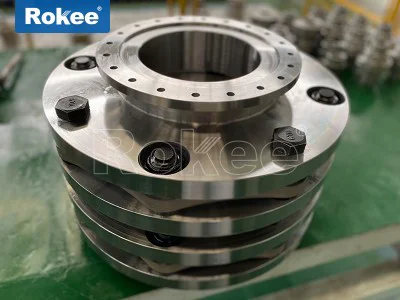
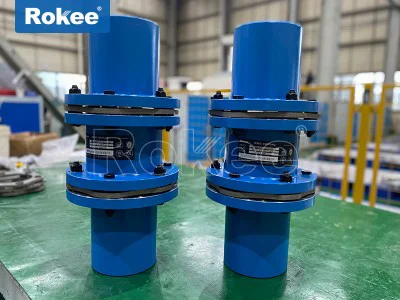
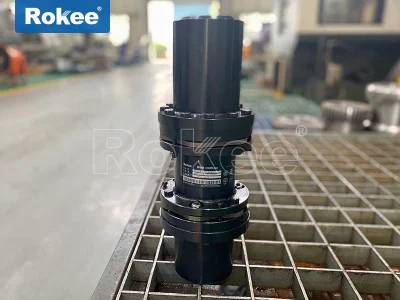
At its core, the structure of a standard plate coupling is streamlined and robust, typically consisting of two hub halves, a set of thin, flexible metal plates (often referred to as diaphragms or disc springs), and high-strength fasteners that secure the plates to the hubs. The hubs are precision-machined to fit snugly onto the driving and driven shafts, with clamping mechanisms or keyway designs ensuring a secure, slip-free connection that prevents torque loss during operation. The star of the structural design is the flexible plate assembly, crafted from high-grade alloys—most commonly stainless steel, carbon steel, or aluminum alloys—chosen for their optimal balance of tensile strength, fatigue resistance, and elastic deformability. These thin plates are stacked or layered in precise configurations, allowing them to bend, stretch, and compress slightly under load without permanent deformation, a trait that separates plate couplings from rigid alternatives. Unlike gear couplings or elastomeric couplings that rely on meshed teeth or rubber components, plate couplings have no moving parts that require lubrication, no friction surfaces that wear rapidly, and no elastic materials that degrade over time due to heat, oil, or chemical exposure. This lubrication-free, maintenance-friendly structure is a defining advantage, reducing downtime and long-term operational costs for equipment. The overall profile of plate couplings is compact and lightweight, with a streamlined radial and axial footprint that makes them suitable for installations with limited space, a key benefit in densely packed machinery layouts and compact mechanical assemblies.
The performance characteristics of plate couplings are tailored to meet the rigorous demands of modern mechanical systems, with several standout traits that define their operational excellence. Foremost is their exceptional torque transmission capacity, which ranges from modest values for small-scale precision equipment to extremely high ratings for heavy industrial machinery. The flexible plates distribute torque evenly across their surface, eliminating localized stress concentrations and enabling consistent power delivery even under fluctuating load conditions. This uniform load distribution also enhances fatigue resistance, allowing plate couplings to withstand millions of rotational cycles without cracking, warping, or losing structural integrity—a critical attribute for continuous-operation equipment. Another pivotal performance feature is their ability to compensate for multiple forms of shaft misalignment, including angular misalignment, radial offset, and axial displacement. In real-world operating environments, perfect shaft alignment is rarely achievable due to manufacturing tolerances, thermal expansion of components, mechanical wear, or foundation settling; plate couplings absorb these deviations through the elastic deformation of their metal plates, preventing excessive stress on shafts, bearings, and gearboxes that would otherwise lead to premature failure. This misalignment compensation not only extends the lifespan of connected equipment but also reduces vibration and noise levels, creating smoother, quieter operational conditions. Additionally, plate couplings exhibit remarkable environmental resilience, performing reliably across extreme temperature ranges, from frigid sub-zero conditions to high-heat industrial settings, and resisting corrosion, oil contamination, and chemical exposure that would compromise the performance of elastomeric or plastic-based couplings. They also maintain zero backlash during operation, a vital characteristic for precision motion control applications where positional accuracy and repeatability are non-negotiable, ensuring that rotational movement is transferred instantaneously without lag or play.
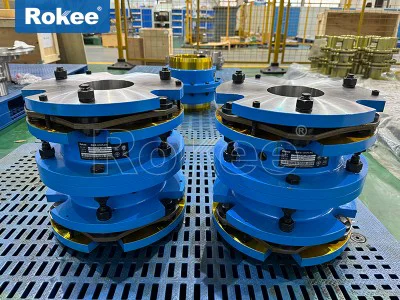
Plate couplings are categorized into distinct types based on their structural design, plate configuration, and intended functional focus, each tailored to address specific operational requirements and misalignment challenges. The most fundamental classification is based on the number of flexible plate assemblies, dividing them into single-plate and multi-plate (or double-plate) couplings. Single-plate couplings feature a single set of flexible plates connecting the two hubs, offering a simple, cost-effective design ideal for applications with minimal misalignment and moderate torque loads. They excel in scenarios where axial displacement is the primary concern and angular or radial misalignment is negligible, such as small electric motors, light-duty fans, and portable mechanical equipment. While their misalignment compensation is limited compared to multi-plate variants, their compact size and straightforward installation make them a practical choice for low-demand, space-constrained setups. Multi-plate couplings, by contrast, incorporate two or more sets of flexible plates, often separated by a spacer sleeve, to deliver enhanced flexibility and greater misalignment tolerance. The dual-plate design enables simultaneous compensation for angular, radial, and axial misalignment, making them suitable for heavy-duty, high-torque applications where shaft positioning is less precise. This type distributes load across multiple plate layers, boosting torque capacity and fatigue resistance, and is the go-to choice for industrial machinery operating under continuous, high-stress conditions.
Beyond the single vs. multi-plate distinction, plate couplings are further classified by their structural geometry and functional specialization, including radial plate couplings, spiral plate couplings, and shock-absorbing plate couplings. Radial plate couplings feature flexible plates arranged in a radial pattern around the hub circumference, designed to prioritize radial misalignment compensation and axial flexibility. This design evenly distributes stress across the radial plates, minimizing wear and extending service life, making it well-suited for large motors, pump systems, and drive trains where thermal expansion causes significant radial shaft movement. Spiral plate couplings utilize curved, spiral-shaped flexible plates that offer heightened elasticity and smooth, progressive deformation under load. This design minimizes stress concentrations during bending, allowing for greater misalignment compensation and smoother torque transmission, with zero backlash and exceptional precision. These couplings are predominantly used in high-precision fields such as robotics, aerospace instrumentation, and CNC machinery, where positional accuracy and smooth motion are paramount. Shock-absorbing plate couplings are engineered with specialized plate geometries and material compositions to dampen dynamic loads, impact shocks, and torsional vibrations generated during startup, shutdown, or sudden load changes. They absorb excess energy rather than transferring it to connected components, protecting delicate machinery and reducing the risk of mechanical failure in high-shock environments such as marine drive systems, compressors, and heavy construction equipment. Each type retains the core benefits of plate coupling technology—maintenance-free operation, environmental resistance, and durable torque transmission—while fine-tuning performance to match specific application needs.
The versatility of plate couplings is reflected in their widespread adoption across an extensive array of industries and applications, spanning light precision engineering to heavy industrial manufacturing, and from stationary machinery to mobile equipment. In general industrial manufacturing, plate couplings are ubiquitous in pump systems, fan assemblies, conveyor drives, and mixer units, where they ensure reliable power transmission while accommodating the misalignment and vibration inherent to continuous production lines. Their lubrication-free design is particularly valuable in manufacturing environments where oil leaks could contaminate products or disrupt operations, and their durability reduces maintenance intervals in high-output facilities. In the energy sector, including conventional power generation and renewable energy systems, plate couplings play a critical role in turbine drives, generator sets, wind turbine gearboxes, and hydraulic power units. They withstand the high speeds, heavy torques, and extreme temperatures of these systems, compensating for shaft misalignment caused by tower flexing in wind turbines or thermal expansion in power plant machinery, while their resistance to fatigue ensures uninterrupted energy production. For precision engineering and automation, such as CNC machine tools, robotic arms, printing machinery, and semiconductor manufacturing equipment, zero-backlash plate couplings are essential for maintaining micron-level positional accuracy. They isolate motor vibration from sensitive working components, ensuring smooth, precise motion that is critical for high-quality production and tight tolerances.
In heavy machinery and rugged operational settings, including mining equipment, agricultural machinery, and marine systems, multi-plate and shock-absorbing plate couplings thrive due to their high torque capacity and impact resistance. Agricultural equipment such as tractors, harvesters, and irrigation systems rely on plate couplings to connect power take-off shafts to attached implements, enduring the uneven loads and field-induced misalignment common in farming operations. Marine drive systems use these couplings to dampen engine vibrations and withstand the corrosive effects of saltwater, delivering reliable performance in harsh maritime environments. Additionally, plate couplings find specialized use in aerospace and defense applications, where lightweight construction, high reliability, and resistance to extreme conditions are non-negotiable. They are integrated into avionics systems, missile guidance mechanisms, and aircraft auxiliary power units, where their failure-free operation and precision torque transmission support mission-critical functions. Even in automotive and transportation applications, plate couplings are used in drivetrain systems and auxiliary components to reduce noise, vibration, and harshness (NVH) levels, enhancing vehicle durability and passenger comfort.
The enduring popularity of plate couplings in diverse sectors stems from their unique ability to balance performance, durability, and practicality. Unlike rigid couplings, they adapt to real-world operational imperfections; unlike elastomeric couplings, they resist degradation and require minimal upkeep; unlike complex gear couplings, they offer a cost-effective, low-maintenance solution without sacrificing torque capacity or misalignment tolerance. As industrial technology continues to advance toward higher speeds, greater precision, and more demanding operational conditions, the role of plate couplings becomes even more pivotal. Engineers and designers consistently select plate couplings for new equipment designs and retrofits alike, trusting in their consistent performance to enhance equipment reliability, reduce maintenance costs, and extend the service life of entire mechanical systems. Whether in a small precision instrument or a large-scale industrial production line, plate couplings prove that simple, well-engineered structural design can deliver exceptional functionality, making them an irreplaceable component in the landscape of mechanical power transmission.
In summary, plate couplings represent a pinnacle of practical mechanical design, merging streamlined structural engineering with high-performance functional capabilities. Their core structure of hubs and flexible metal plates delivers reliable torque transmission, while their ability to compensate for misalignment, resist environmental stressors, and operate without maintenance sets them apart from competing coupling technologies. The diverse range of plate coupling types—from single-plate to multi-plate, radial to spiral, and shock-absorbing variants—ensures there is a tailored solution for every mechanical transmission need, spanning precision, heavy-duty, high-speed, and high-shock applications. As industries continue to evolve and demand more from their mechanical components, plate couplings will remain a foundational choice, offering unmatched versatility, durability, and efficiency to keep critical machinery operating smoothly across countless applications worldwide.