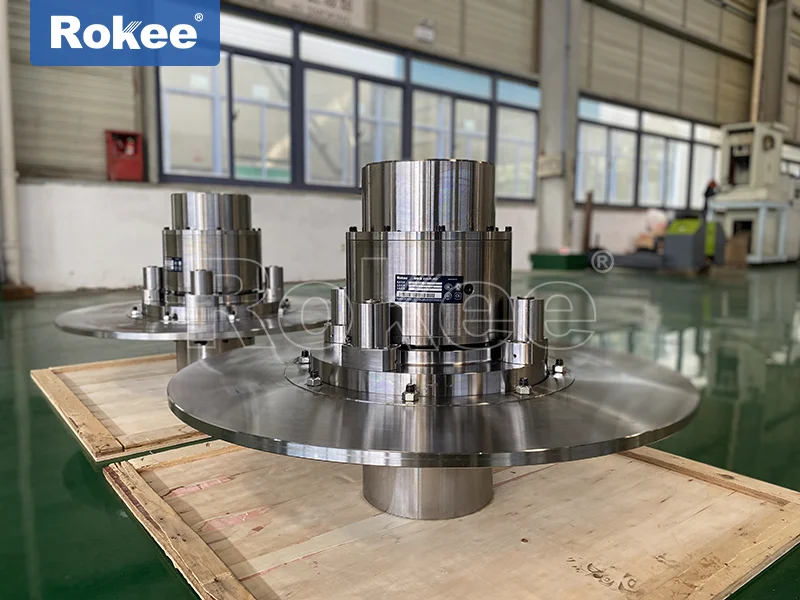
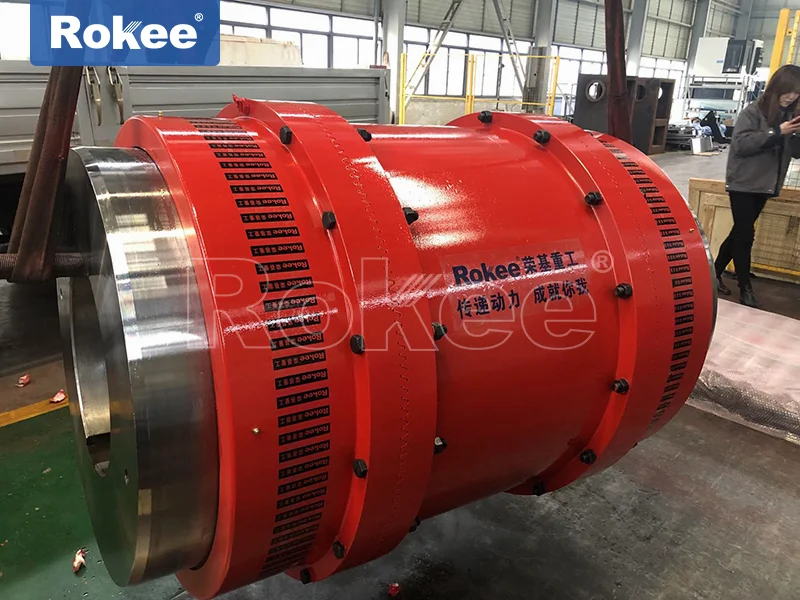
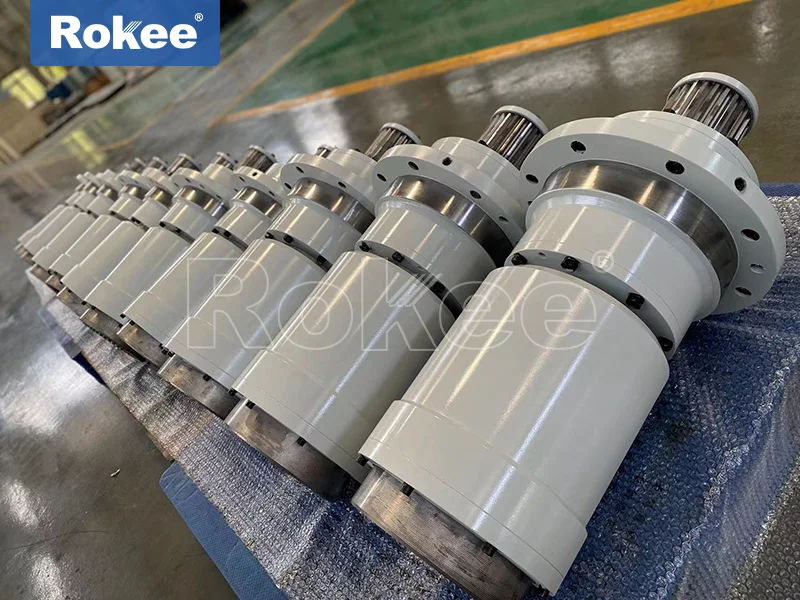
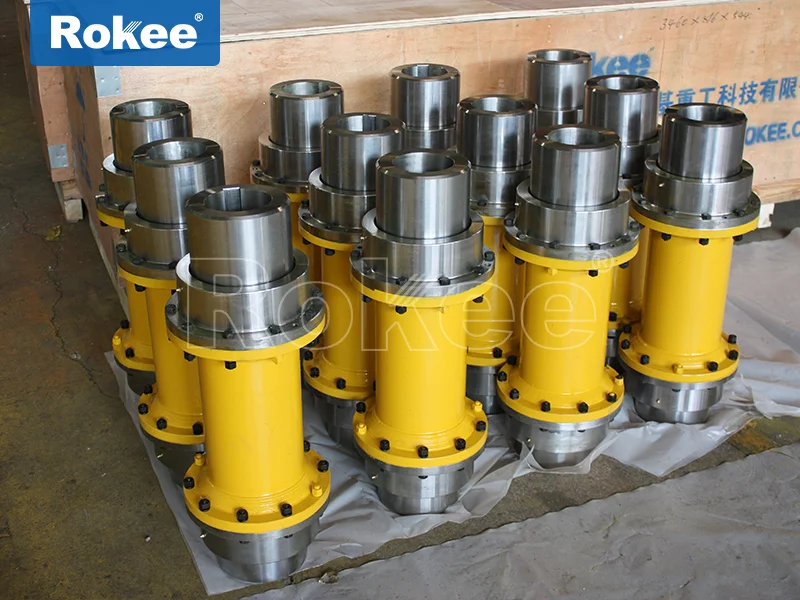
Transmission System Optimization Of Polyurethane Sandwich Panel Manufacturing Line Preferred Accessory Of Barrel Gear Coupling
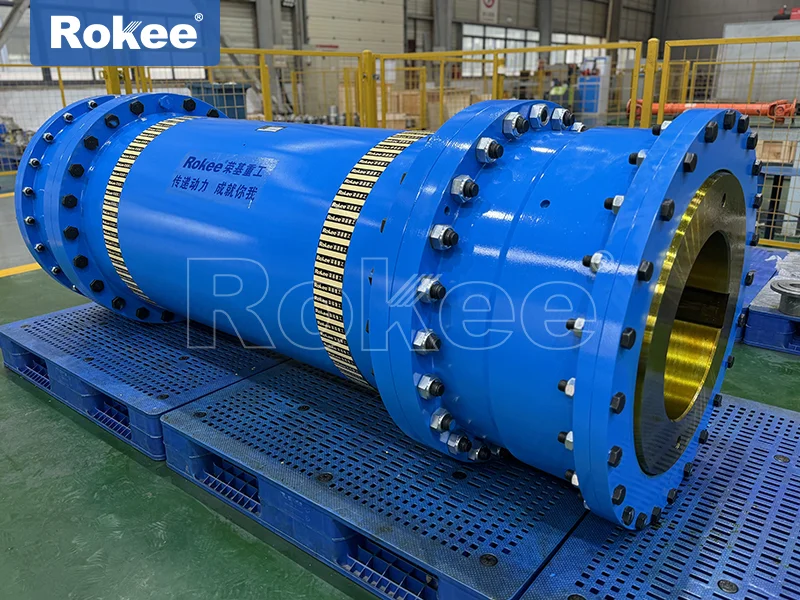
The continuous production and stable operational efficiency of polyurethane sandwich panel manufacturing lines are fundamentally dependent on the reliable and coordinated operation of the entire transmission system, which serves as the core power transmission carrier connecting all functional processing units throughout the production workflow. Polyurethane sandwich panels, as essential composite building materials with excellent thermal insulation, structural stability and sound insulation performance, are widely applied in industrial factory enclosures, cold storage construction, commercial building exterior walls and various prefabricated building projects, putting forward higher and more stringent requirements for the continuous production precision and long-term operational stability of supporting manufacturing equipment. The entire production process of polyurethane sandwich panels covers multiple key links including raw material coil unwinding, surface material preheating and roll forming, high-pressure polyurethane foaming and uniform distribution, double-track laminating and pressure curing, fixed-size cutting and finished product conveying and stacking, and every production link is closely linked and mutually constrained by the power transmission effect of the transmission system. Any slight instability, power transmission deviation or component wear and failure in the transmission link will directly lead to inconsistent feeding speed of upper and lower surface materials, uneven foaming thickness of polyurethane core materials, dislocation bonding of composite layers, surface indentation deformation of finished panels and other product quality defects, and will also cause frequent equipment shutdown maintenance, shorten the continuous operation cycle of the production line, increase equipment operation and maintenance costs, and seriously restrict the overall production capacity and economic operation benefit of the entire manufacturing line. In the actual industrial production scenario, polyurethane sandwich panel manufacturing lines usually operate in long-term continuous working conditions, with frequent start-stop adjustments, variable load changes and complex mechanical vibration interference generated during the lamination and curing process, which makes the transmission system bear alternating torque, radial and axial displacement deviation and continuous mechanical impact for a long time. Traditional transmission connection accessories often have limited compensation performance for installation deviation and operation displacement, poor buffering and damping effect under variable load conditions, and rapid wear of matching parts during long-term high-intensity operation, which cannot adapt to the high-precision and high-stability operation requirements of modern large-scale polyurethane sandwich panel continuous production lines. Therefore, carrying out targeted optimization and upgrading of the transmission system of polyurethane sandwich panel manufacturing lines and selecting reasonable and high-performance transmission connection accessories is a key technical measure to improve production line operation stability, reduce failure rate, extend equipment service life and stabilize finished product processing quality, and barrel gear coupling has become the preferred core supporting accessory for transmission system optimization by virtue of its excellent torque transmission capacity, reliable displacement compensation performance, good damping and buffering effect and strong adaptability to harsh industrial working conditions.
The transmission system of polyurethane sandwich panel manufacturing line is composed of multiple sets of driving motors, reduction gearboxes, transmission shafts, conveying rollers, chain transmission mechanisms and various connecting coupling components, forming a multi-node and multi-stage power transmission network covering the whole production process. Each functional unit in the production line has different power demand and operation speed requirements, and the transmission system needs to realize synchronous matching of operating speed between the front and rear processes, stable output of transmission torque and flexible adaptation to dynamic load changes in different production stages. In the raw material unwinding and surface material feeding stage, the transmission system needs to maintain low-speed and uniform power output to ensure the slow and stable release of metal coil raw materials, avoid tension fluctuation caused by unstable transmission speed leading to surface material deviation and wrinkling, and lay a good foundation for subsequent roll forming and composite processing. In the roll forming and surface material preheating stage, the transmission system needs to maintain medium-speed continuous operation with stable torque output to ensure that the metal surface material is continuously and stably sent to the forming equipment for profile processing, and cooperate with the preheating system to complete uniform temperature rise treatment of the surface material, ensuring the subsequent bonding firmness between polyurethane foam core material and metal surface material. In the core foaming and double-track laminating curing stage, which is the core processing link of polyurethane sandwich panel production, the transmission system bears the most complex load changes and mechanical operation pressure. The double-track laminating conveyor needs to maintain constant-speed synchronous operation up and down, apply uniform pressure to the polyurethane composite structure in the foaming and curing stage, and the transmission system needs to resist the mechanical vibration generated by pressure extrusion and the alternating load impact caused by foam expansion and contraction, so as to ensure that the moving speed of the composite board in the curing process is consistent and the pressure distribution is uniform, avoiding product quality problems such as uneven core material density and inconsistent board thickness caused by asynchronous transmission. In the later fixed-size cutting and finished product conveying and stacking stage, the transmission system needs to realize rapid switching between variable speed operation and fixed-position stable stop, ensuring the cutting precision of finished panels and the orderly conveying and stacking of finished products. In the actual long-term operation process of the production line, affected by equipment installation errors, thermal deformation of mechanical components during long-term heating operation, mechanical wear of transmission parts and foundation slight settlement, different degrees of radial displacement, axial displacement and angular displacement will inevitably occur between the driving end and driven end of each transmission shaft section of the transmission system. These displacements cannot be effectively eliminated by conventional installation and debugging means, and if there is no coupling accessory with excellent displacement compensation performance for adaptive adjustment, additional mechanical stress will be generated in the transmission link, resulting in increased vibration and noise during equipment operation, accelerated wear of gears, bearings and other core transmission components, increased transmission power loss, and even frequent loosening and damage of connecting parts in severe cases, forcing the production line to shut down for maintenance and repair, seriously affecting continuous production efficiency.
The inherent structural performance defects of traditional coupling accessories used in the original transmission system of polyurethane sandwich panel manufacturing lines are the main root causes of frequent transmission system failures and restricted production line operation stability. Most of the traditional transmission couplings adopted in the early design of the production line are rigid couplings or simple elastic couplings. Rigid couplings have a simple structure and low manufacturing cost, but they do not have any displacement compensation function at all. They require extremely high installation precision of transmission shafts, and cannot adapt to the displacement deviation generated by thermal deformation and mechanical wear during long-term operation. Once installation deviation or operation displacement occurs, rigid connection will cause rigid friction and impact between transmission components, resulting in rapid heating and wear of shaft heads and matching parts, increased transmission energy consumption and shortened service life of transmission equipment. Simple elastic couplings rely on ordinary elastic rubber parts for buffering and transmission, which have certain axial displacement compensation capacity and buffering effect on small vibration, but their torque transmission capacity is limited, and they are prone to aging, deformation and damage of elastic components under long-term high-load and high-temperature working conditions. The polyurethane sandwich panel production line needs to work continuously for a long time, and the foaming and laminating area is accompanied by certain ambient temperature rise, which will accelerate the aging of rubber elastic parts of traditional elastic couplings, lead to reduced buffering performance, failure of displacement compensation function, and even fracture and failure of elastic parts in serious cases, resulting in disconnection of power transmission and sudden shutdown of the production line. In addition, traditional couplings have poor adaptability to variable alternating loads. In the frequent start-stop and speed regulation process of the polyurethane sandwich panel production line, the instantaneous torque impact generated by load changes cannot be effectively buffered and absorbed, resulting in fatigue damage of transmission shaft parts and frequent failure of connecting fasteners, increasing the daily maintenance workload and maintenance cost of the equipment, and making it difficult to meet the long-term stable and high-efficiency operation needs of modern large-scale continuous production lines. In contrast, barrel gear coupling adopts a special curved tooth profile and meshing structure design, with reasonable internal stress distribution and strong comprehensive mechanical performance, which can perfectly make up for the performance deficiencies of traditional coupling accessories, and provide reliable guarantee for the optimized operation of the transmission system of polyurethane sandwich panel manufacturing lines from the core link of power connection and transmission.
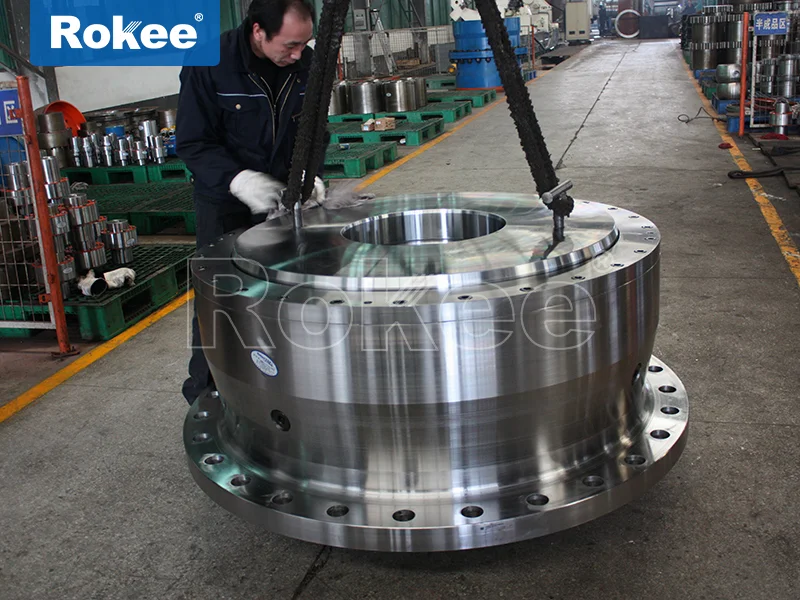
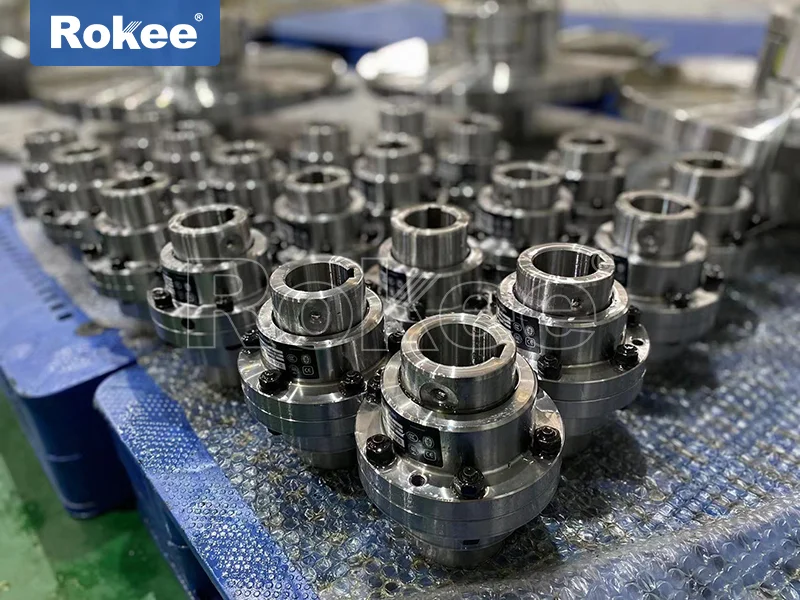
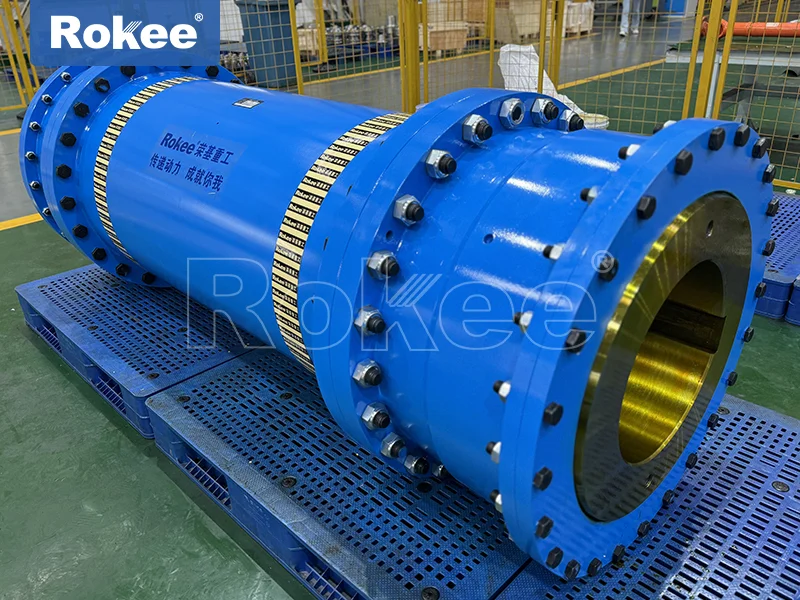
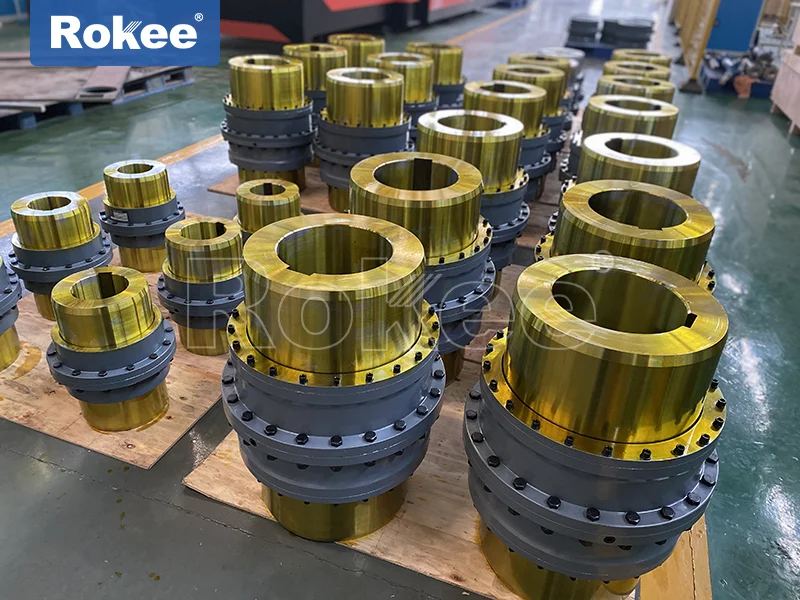
The excellent structural characteristics and mechanical properties of barrel gear coupling make it highly compatible with the complex working conditions and operation requirements of the transmission system of polyurethane sandwich panel manufacturing lines, and become the optimal supporting accessory for transmission system optimization and upgrading. The core structure of barrel gear coupling is composed of inner gear sleeve and outer gear shaft with special barrel-shaped curved teeth. The curved tooth profile design enables the gear meshing part to have larger contact area and more uniform stress distribution during power transmission, which can bear large torque load and alternating impact load generated during the operation of the production line, and ensure stable and efficient power transmission without power attenuation under long-term high-intensity working conditions. Different from the straight tooth structure of ordinary gear couplings, the barrel-shaped curved teeth of barrel gear coupling can effectively reduce the meshing friction resistance during power transmission, reduce the abrasion loss of gear meshing parts, lower the heat generation during equipment operation, and effectively avoid the performance degradation and failure of transmission components caused by long-term high-temperature operation. More importantly, barrel gear coupling has excellent comprehensive displacement compensation performance, which can simultaneously and effectively compensate radial displacement, axial displacement and angular displacement between the driving shaft and driven shaft of the transmission system generated by equipment installation errors, thermal deformation, mechanical wear and foundation settlement. In the long-term continuous operation of polyurethane sandwich panel manufacturing lines, the slight displacement deviation generated in each transmission link can be adaptively adjusted and eliminated by the flexible meshing structure of barrel gear coupling, avoiding the generation of additional mechanical stress in the transmission link, reducing the vibration and noise of equipment operation, and realizing stable and coordinated power transmission of each functional unit of the production line. In terms of buffering and damping performance, the internal meshing gap and flexible contact structure of barrel gear coupling can effectively absorb the instantaneous torque impact and mechanical vibration generated by frequent start-stop, speed regulation and load change of the production line, protect core transmission components such as driving motors, reduction gearboxes and transmission shafts from fatigue damage caused by impact load, greatly reduce the failure rate of transmission system components, and extend the overall service life of production line equipment.
The practical application effect of applying barrel gear coupling to optimize the transmission system of polyurethane sandwich panel manufacturing lines is reflected in multiple key links of production operation, equipment maintenance and product quality improvement, bringing significant comprehensive optimization benefits to the entire production and operation process. After the replacement and optimization of transmission connection accessories with barrel gear coupling, the power transmission efficiency of the entire transmission system of the production line is significantly improved. The meshing transmission mode of barrel-shaped curved teeth reduces transmission friction loss and power waste, making the power output of the driving motor more efficiently transmitted to each conveying and processing unit, reducing the invalid energy consumption of equipment operation, and realizing energy-saving operation of the production line on the premise of ensuring production efficiency. The good displacement compensation and vibration damping performance of barrel gear coupling make the operation of each transmission shaft section and conveying mechanism of the production line more stable, the synchronous coordination of each production link more accurate, the feeding speed of metal surface material and the operation speed of double-track laminating conveyor maintain high consistency, effectively avoiding product quality problems such as uneven polyurethane core foaming, inconsistent panel thickness and composite layer dislocation bonding caused by asynchronous transmission and unstable operation. The stable transmission operation state directly improves the yield and qualification rate of finished polyurethane sandwich panels, reduces the product rework and waste loss caused by transmission system failures, and improves the economic benefits of production and processing. In terms of equipment operation and maintenance, the application of barrel gear coupling greatly reduces the wear and failure frequency of core transmission components such as gears, bearings and shafts. The buffering and impact resistance performance protects the transmission system from frequent load impact damage, the wear degree of connecting parts is significantly reduced, and the service cycle of transmission components is effectively prolonged. The structure of barrel gear coupling is firm and durable, with strong fatigue resistance and aging resistance, adapting to the long-term continuous operation and certain temperature and vibration working environment of the polyurethane sandwich panel production line, without frequent replacement and maintenance like traditional elastic couplings. The daily maintenance work of the equipment is only routine lubrication and inspection, which greatly reduces the maintenance time and maintenance labor cost of the production line, improves the continuous operation rate and effective production time of the manufacturing line, and realizes the long-term stable and efficient operation of the equipment. In addition, the stable operation of the transmission system optimized by barrel gear coupling also reduces the vibration and noise generated during the operation of the production line, improves the on-site working environment of production operations, reduces the mechanical vibration interference to other precision processing components of the production line, and further consolidates the stable foundation for the long-term standardized operation of the entire polyurethane sandwich panel manufacturing production system.
In the overall development trend of the polyurethane sandwich panel manufacturing industry towards large-scale continuous production, intelligent precise processing and low-energy efficient operation, the optimization and upgrading of the transmission system, as an important part of equipment technical upgrading, plays an irreplaceable basic role in improving the comprehensive operation level of production lines. The matching selection of transmission connection accessories directly determines the operation stability, transmission efficiency and maintenance cycle of the entire transmission system, and then affects product quality, production capacity and operation cost. Barrel gear coupling, with its superior torque transmission capacity, comprehensive displacement compensation performance, excellent buffering and damping effect and strong adaptability to harsh working conditions, perfectly fits the actual operation characteristics and optimization needs of the transmission system of polyurethane sandwich panel manufacturing lines, and has become the most ideal and preferred supporting accessory for transmission system optimization and transformation. For polyurethane sandwich panel production enterprises and equipment operation and management departments, attaching importance to the optimization and upgrading of the transmission system, reasonably selecting high-performance barrel gear coupling to replace traditional backward transmission connection accessories, and carrying out scientific matching installation and daily maintenance management can not only effectively solve various operation hidden dangers and quality problems caused by unstable transmission of production lines, but also realize long-term stable operation of equipment, energy-saving and consumption reduction in production, stable improvement of product quality and continuous reduction of operation and maintenance costs. With the continuous improvement of market requirements for the quality and production efficiency of polyurethane sandwich panel products and the continuous upgrading and iteration of manufacturing equipment technology, the application value and popularization significance of barrel gear coupling in the transmission system optimization of polyurethane sandwich panel manufacturing lines will be further highlighted, providing solid technical support and reliable equipment guarantee for the high-quality and efficient development of the entire polyurethane sandwich panel manufacturing industry.