Transmission Innovation Of Sandwich Panel Production Machine With Core Support From Curved Tooth Coupling
In the modern construction and industrial manufacturing fields, the demand for high-efficiency, energy-saving and high-precision building materials has been continuously rising, driving the iterative upgrading of production equipment. Sandwich panels, as a kind of composite material with excellent comprehensive performance, are widely used in industrial workshops, warehouses, commercial venues, prefabricated buildings and other fields due to their lightweight, high strength, thermal insulation, sound insulation and corrosion resistance. The production efficiency and product quality of sandwich panels are directly determined by the performance of the production machine, and the transmission system, as the "heart" of the sandwich panel production machine, is the core link affecting the stable operation and production precision of the equipment. In recent years, with the continuous improvement of production automation and the increasing demand for product precision, the traditional transmission system of sandwich panel production machines has gradually exposed defects such as poor alignment compensation, low torque transmission efficiency, high vibration and noise, and high maintenance frequency, which can no longer meet the needs of modern large-scale and high-precision production. Against this background, the application of curved tooth coupling in the transmission system of sandwich panel production machines has brought a major innovation, providing strong core support for the optimization of the transmission system, promoting the transformation of the production machine towards high efficiency, stability and precision, and injecting new vitality into the development of the sandwich panel manufacturing industry.
To understand the transmission innovation of sandwich panel production machines supported by curved tooth coupling, it is necessary to first clarify the working characteristics of the sandwich panel production machine and the core challenges faced by its traditional transmission system. A modern sandwich panel production machine is a complex integrated automated equipment, which involves multiple continuous processes such as uncoiling of surface materials, leveling, core material foaming, composite pressing, shaping, cooling and cutting. Each process is closely connected, and the power needs to be transmitted accurately and stably between different functional modules to ensure the synchronization and consistency of the entire production line. The transmission system of the production machine needs to bear the load of long-term continuous operation, and face the problems of installation deviation, thermal expansion and vibration caused by equipment operation. The traditional transmission system usually adopts straight tooth coupling or other common transmission components, which have obvious limitations in practical application. Straight tooth coupling has poor angular and radial compensation capacity. Due to the influence of installation precision, foundation settlement and thermal expansion during long-term operation, the axes of the driving shaft and the driven shaft are prone to misalignment, which leads to edge contact between the teeth, concentrated stress, easy wear, point corrosion or even tooth breakage, affecting the stability of power transmission. At the same time, the straight tooth coupling has a small contact area between teeth, low torque density, which cannot meet the demand of high-power transmission in large-scale production lines, and its vibration and noise during operation are relatively large, which not only affects the service life of the equipment, but also may lead to uneven thickness of the sandwich panel, poor bonding between the surface material and the core material, and other quality problems, restricting the improvement of production efficiency and product qualification rate.
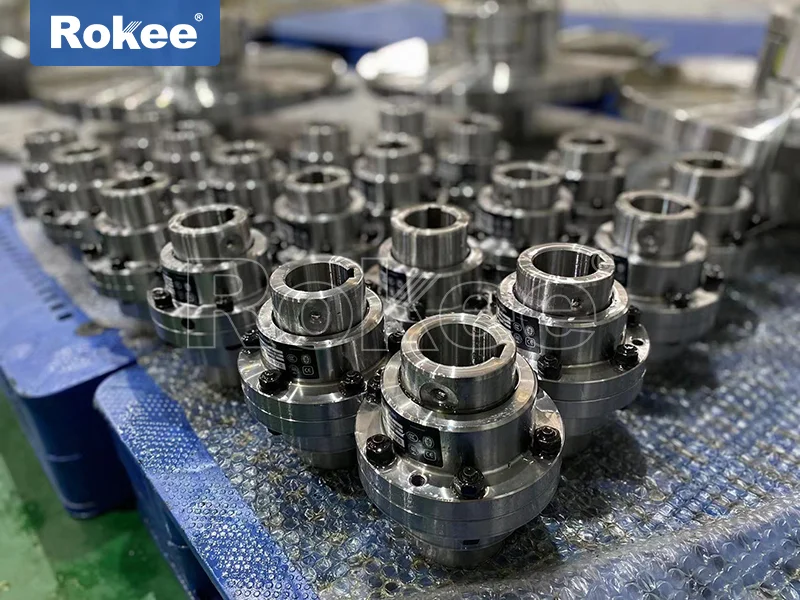
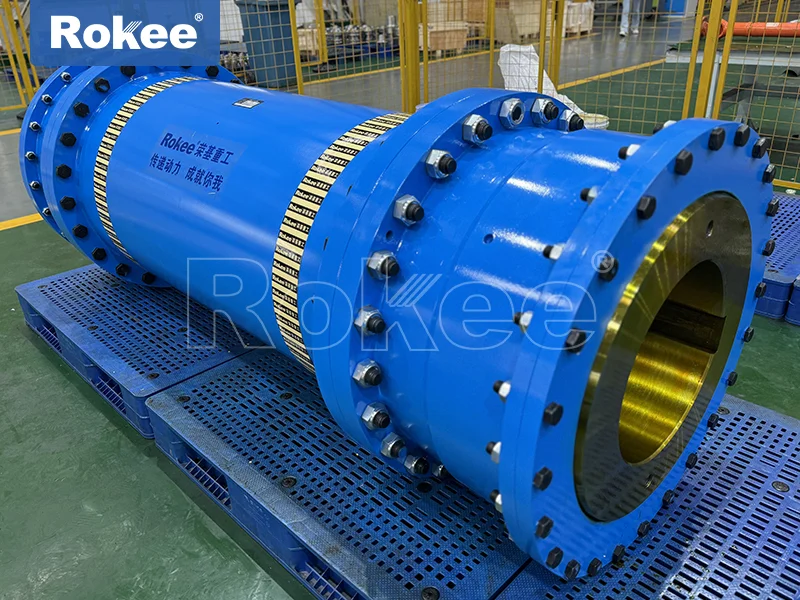
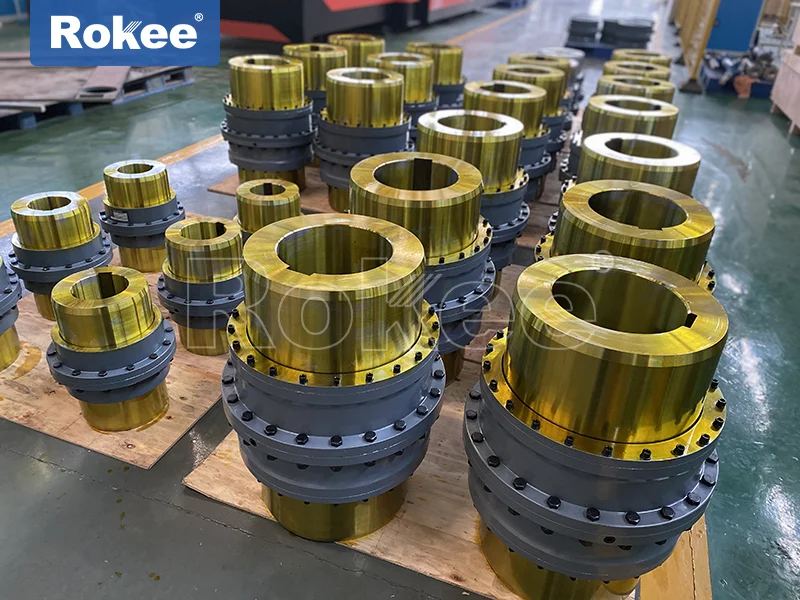
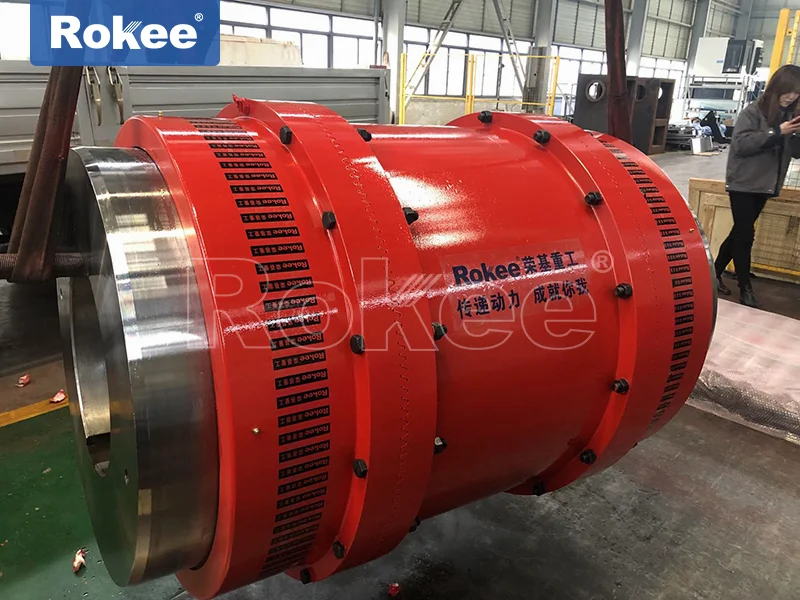
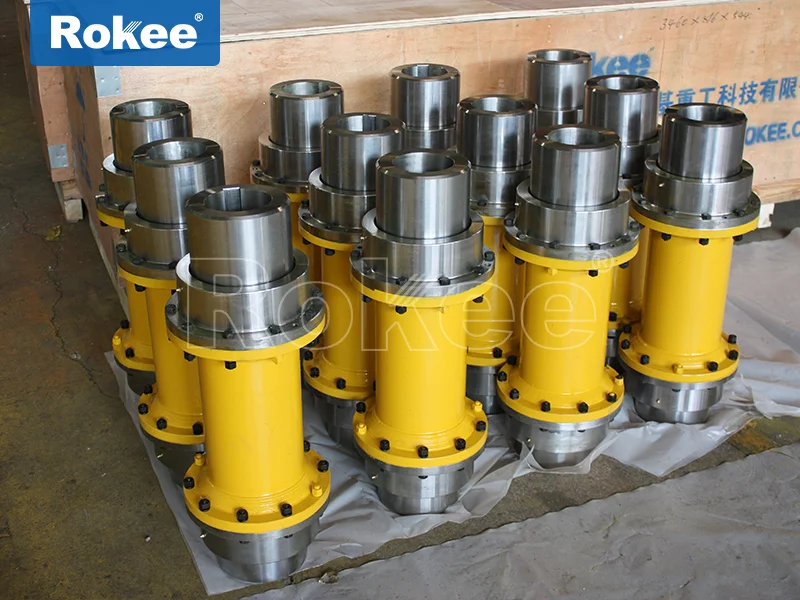
The curved tooth coupling, as an advanced flexible mechanical transmission component, has unique structural design and excellent performance, which just makes up for the defects of the traditional transmission system, and becomes the core support for the transmission innovation of sandwich panel production machines. Different from the straight tooth coupling with linear tooth engagement, the outer gear tooth profile of the curved tooth coupling is designed into a drum shape, that is, the tooth surface is a section of spherical surface, and the center of the sphere is on the gear axis. This special structural design endows the curved tooth coupling with a series of advantages that are difficult to compare with traditional transmission components, and provides a reliable technical guarantee for the optimization of the transmission system of the sandwich panel production machine. The core advantage of the curved tooth coupling is its excellent angular and radial compensation capacity. In the actual operation of the sandwich panel production machine, due to the limitations of equipment structure and production process, the axes of each functional module cannot be completely coaxial, and there will be certain angular deviation and radial displacement. The drum-shaped tooth surface of the curved tooth coupling changes the contact mode between teeth from line contact of straight tooth coupling to surface contact, so that when the axes are misaligned, the tooth pairs can realize smooth rolling and sliding, effectively absorbing and compensating the displacement deviation. Generally, the single-side angular compensation capacity of the curved tooth coupling can reach more than 1.5 degrees, and the comprehensive radial and axial compensation capacity is far higher than that of the straight tooth coupling of the same specification, which can effectively avoid the stress concentration caused by misalignment, reduce the wear of the tooth surface, and ensure the stable transmission of power between different modules of the production machine.
Another important advantage of the curved tooth coupling is its high load-bearing capacity and torque density, which provides strong support for the high-power and high-speed operation of the sandwich panel production machine. With the expansion of the production scale of sandwich panels, the demand for power transmission of the production machine is increasing, and the installation space of the transmission system is often limited due to the integration of the equipment. The surface contact characteristic of the curved tooth coupling significantly increases the contact area of the teeth participating in meshing at the same time, making the load distribution more uniform. This means that under the same external dimension, the curved tooth coupling can transmit greater torque, or under the condition of transmitting the same torque, its structure is more compact, which effectively solves the dilemma of "large torque demand and small installation space" faced by the design of the transmission system of the sandwich panel production machine. In addition, through the optimization of tooth surface heat treatment process, such as deep carburizing and quenching, the tooth core of the curved tooth coupling can maintain good toughness, while the tooth surface can reach high hardness, which further improves the torque density and wear resistance of the coupling. Compared with the traditional straight tooth coupling, the torque density of the curved tooth coupling can be increased by 15% to 25%, which can meet the demand of high-power transmission of the production machine, realize the high-speed operation of the production line, and improve the production efficiency on the premise of ensuring the stability of the equipment.
The excellent vibration and shock absorption performance of the curved tooth coupling also plays an important role in optimizing the transmission system of the sandwich panel production machine. During the operation of the sandwich panel production machine, the motor start, load mutation and gear meshing will generate instantaneous peak torque and vibration, which will be transmitted along the transmission chain, affecting the stability of the equipment and the quality of the products. The meshing characteristics of the curved tooth coupling give it a certain damping effect, which can partially absorb and buffer these vibrations and instantaneous peak torques, reduce the impact on the transmission chain and the key components of the production machine, such as motors, reducers and rollers. This not only reduces the vibration and noise of the equipment during operation, creates a better working environment, but also effectively protects the key components of the production machine, reduces the failure rate of the equipment, and extends the service life of the entire production line. In the traditional transmission system, the vibration generated during operation often leads to the loosening of fasteners, the wear of rollers, and even the uneven foaming of the core material of the sandwich panel and the deviation of the surface material, which affects the product quality. After the application of the curved tooth coupling, the vibration of the equipment is significantly reduced, the stability of the production process is improved, and the qualification rate of the sandwich panel products is effectively increased.
The application of curved tooth coupling in the transmission system of sandwich panel production machines not only optimizes the performance of the transmission system, but also promotes the innovation of the overall structure and production mode of the production machine, realizing the transformation of the production machine towards intelligence, energy conservation and environmental protection. In the traditional sandwich panel production machine, due to the poor performance of the transmission system, the coordination between each functional module is poor, and the adjustment of production parameters is cumbersome, which is difficult to adapt to the production needs of different specifications and types of sandwich panels. After adopting the curved tooth coupling, the transmission efficiency of the production machine is significantly improved, the energy loss in the power transmission process is reduced, and the energy consumption of the equipment is effectively reduced. The transmission efficiency of the curved tooth coupling can reach up to 99.7%, which is much higher than that of the traditional straight tooth coupling. This means that under the same production output, the energy consumption of the production machine can be reduced by a certain proportion, in line with the development concept of energy conservation and environmental protection in modern manufacturing industry.
In addition, the curved tooth coupling has good running-in performance, which makes the tooth surface wear tend to be uniform, avoiding the common "edge wear" of straight tooth coupling, and reducing the maintenance frequency and maintenance cost of the transmission system. The traditional transmission system needs regular maintenance and replacement of transmission components due to serious wear, which not only increases the operation cost of the enterprise, but also affects the continuity of production. The curved tooth coupling has a long service life, and under the condition of reasonable lubrication, it can operate continuously for a long time without frequent maintenance. The lubrication system of the curved tooth coupling is relatively simple, and thin oil lubrication can be adopted, which not only reduces wear to about 10% of grease lubrication, but also takes away the heat generated by meshing, preventing the degradation of material performance and ensuring the stable operation of the coupling. This reduces the maintenance cost of the enterprise, improves the continuity of production, and further improves the economic benefits of the enterprise.
The innovation of the transmission system of the sandwich panel production machine supported by the curved tooth coupling is also reflected in the improvement of production precision and product quality. The sandwich panel has high requirements on the thickness uniformity, surface flatness and bonding strength between the surface material and the core material. The stable and precise power transmission is the key to ensuring these quality indicators. The curved tooth coupling can realize the precise transmission of power, ensure the synchronization of each functional module of the production machine, avoid the speed fluctuation caused by unstable transmission, and thus ensure the uniform thickness of the sandwich panel. In the core material foaming link, the stable transmission of the curved tooth coupling ensures that the foaming agent and the core material are fully mixed, forming a uniform and dense foaming structure, which improves the thermal insulation and mechanical properties of the sandwich panel. In the composite pressing link, the stable power transmission ensures that the surface material and the core material are closely bonded, avoiding the problems of delamination and bubbling, and improving the structural stability and service life of the sandwich panel. At the same time, the reduction of equipment vibration also reduces the surface scratches and deformation of the sandwich panel, improving the appearance quality of the product.
With the continuous development of the sandwich panel manufacturing industry, the requirements for the production machine are becoming higher and higher, not only requiring high efficiency and stability, but also requiring strong flexibility and adaptability to meet the production needs of different specifications, different materials and different application scenarios. The curved tooth coupling has good structural flexibility and adaptability, which can be flexibly matched with different types of sandwich panel production machines, including PU sandwich panel production machines, rock wool sandwich panel production machines, glass wool sandwich panel production machines, etc. It can also be adjusted according to the actual production needs to adapt to the transmission requirements of different power and speed, providing a flexible solution for the design and transformation of the production machine. In addition, the curved tooth coupling has a simple structure, convenient installation and disassembly, which is conducive to the maintenance and transformation of the production machine, and reduces the difficulty and cost of equipment transformation.
In the process of applying the curved tooth coupling to the transmission innovation of the sandwich panel production machine, it is also necessary to pay attention to the reasonable design and selection of the coupling to ensure that it can play its optimal performance. The design of the curved tooth coupling needs to be combined with the working parameters of the sandwich panel production machine, such as transmission power, speed, torque, installation space and the working environment of the equipment, to determine the appropriate modulus, number of teeth, drum curvature and other parameters. The drum curvature curve is the core of the design of the curved tooth coupling, which directly affects the compensation capacity of the coupling and the contact state of the tooth surface. In the design process, it is necessary to avoid edge contact, ensure that the tooth surface maintains surface contact at the maximum axial inclination angle, and optimize the load distribution to reduce the contact stress of the tooth surface. At the same time, the selection of materials for the curved tooth coupling is also very important. High-strength alloy steel is usually used to ensure the strength and wear resistance of the coupling, and the surface treatment process is adopted to improve the corrosion resistance of the coupling, adapting to the harsh working environment of the sandwich panel production workshop, such as dust, humidity and temperature changes.
The transmission innovation of the sandwich panel production machine supported by the curved tooth coupling is not only a technical improvement of the transmission system, but also promotes the transformation and upgrading of the entire sandwich panel manufacturing industry. In the context of the increasing demand for green and low-carbon development, the energy-saving and efficient advantages of the curved tooth coupling are more prominent, which helps enterprises reduce energy consumption, reduce carbon emissions, and achieve green production. At the same time, the improvement of production efficiency and product quality helps enterprises enhance their market competitiveness, expand market share, and promote the healthy and sustainable development of the sandwich panel industry. With the continuous progress of mechanical manufacturing technology, the curved tooth coupling is also constantly being optimized and upgraded, such as the integration of intelligent monitoring technology, which can realize real-time monitoring of the operating state of the coupling, predict potential faults, and further improve the reliability and intelligence level of the transmission system of the sandwich panel production machine.
In conclusion, the curved tooth coupling, with its unique structural design and excellent performance, provides strong core support for the transmission innovation of the sandwich panel production machine. It solves the defects of the traditional transmission system, such as poor alignment compensation, low torque density, high vibration and noise, and high maintenance frequency, and optimizes the transmission efficiency, stability and precision of the production machine. The application of the curved tooth coupling not only improves the production efficiency and product quality of the sandwich panel, reduces the operation and maintenance costs of the enterprise, but also promotes the transformation of the sandwich panel production machine towards intelligence, energy conservation and environmental protection, injecting new power into the development of the sandwich panel manufacturing industry. In the future, with the continuous deepening of innovation and the continuous improvement of technology, the application of the curved tooth coupling in the sandwich panel production machine will be more extensive and in-depth, and will play a more important role in promoting the technological progress and industrial upgrading of the entire industry.