Polyurethane Sandwich Panel Line Adopts Barrel Gear Coupling To Reduce Operation Loss
The continuous production and stable operation of polyurethane sandwich panel production lines are core prerequisites for ensuring consistent product forming quality, standardized thermal insulation performance, and long-term efficient manufacturing output in the building energy conservation material industry. These production lines belong to heavy-duty continuous processing mechanical systems, integrating raw material feeding, continuous foaming, composite pressing, fixed-length cutting, surface trimming and finished product conveying into one complete automated production process. Every link in the whole production flow relies on stable power transmission between driving motors, reduction gearboxes, transmission shafts and driven processing equipment, and the smoothness and stability of the power transmission process directly determine the overall operating efficiency of the production line and the magnitude of ineffective operation loss generated during long-term running. In actual industrial production scenarios, most polyurethane sandwich panel production lines have long been equipped with traditional ordinary transmission connecting parts, which can only meet the most basic torque transmission requirements in the initial stage of equipment operation. However, with the extension of operating time, the gradual aging of mechanical components, subtle deformation of equipment frames caused by long-term heavy load bearing, and unavoidable shaft misalignment generated by frequent start-stop and load fluctuation in daily production, traditional transmission structures are prone to produce obvious mechanical friction loss, vibration impact energy consumption, component wear and tear, and even occasional transmission jamming and equipment shutdown failures. These hidden mechanical problems not only greatly increase the ineffective operation loss of the entire production line, leading to increased energy consumption per unit of finished polyurethane sandwich panels, but also accelerate the fatigue damage of key transmission components, shorten the overall service life of production equipment, and bring additional hidden dangers to continuous and stable industrial production. In order to fundamentally solve the various operation loss problems caused by unstable power transmission in the production process, more and more polyurethane sandwich panel production and processing enterprises have begun to optimize and upgrade the core transmission connecting components of production lines, and the application of barrel gear coupling has become a key effective measure to reduce comprehensive operation loss, stabilize transmission operation state, improve equipment continuous working cycle and reduce unnecessary mechanical energy consumption in the whole production process.
Polyurethane sandwich panel line maintain a continuous high-load operating state for a long time in actual production work, and the internal power transmission system of the equipment needs to bear complex and variable working loads all year round, including stable rated load during normal continuous production, instantaneous impact load at equipment start-up and shutdown, alternating load caused by raw material feeding fluctuation and pressing forming pressure adjustment, and additional mechanical stress generated by slight vibration of the equipment frame during high-speed operation. Such complex and changeable load working conditions put forward extremely high requirements on the basic performance, structural stability and deformation adaptability of the transmission connection parts between various mechanical equipment in the production line. Ordinary traditional coupling parts adopted in the early stage have relatively simple structural design, single stress-bearing mode and weak adaptive adjustment capacity, and can only adapt to ideal working conditions with accurate shaft alignment, stable load and low operating frequency in a short time. Once facing the long-term heavy-duty continuous operation environment of polyurethane sandwich panel production lines, various inherent defects of traditional transmission connections will be fully exposed. The most prominent problem is that traditional couplings cannot effectively compensate for angular misalignment, radial offset and axial displacement between the driving shaft and driven shaft generated during long-term equipment operation. Due to the influence of long-term mechanical vibration and heavy load pressure, the installation position of the motor and reduction gearbox of the production line will have subtle deviation changes, and the connecting shafts between different transmission components will inevitably produce different degrees of misalignment deviation. Traditional rigid or semi-rigid transmission structures cannot buffer and adjust these deviations in time, resulting in rigid contact and forced friction between gear meshing parts and shaft connecting parts in the transmission process. A large amount of mechanical energy is converted into useless friction heat and vibration energy instead of being efficiently transmitted to the production and processing execution end, which directly forms the main part of the operation loss of the polyurethane sandwich panel production line. At the same time, long-term rigid friction and unbuffered vibration impact will cause rapid wear of transmission component surfaces, early fatigue cracks on key stress parts, and frequent loosening of connecting fasteners, which not only further increases additional operation loss and energy waste, but also leads to frequent equipment maintenance and parts replacement, affecting the continuity of production work and reducing the overall production efficiency of the enterprise.
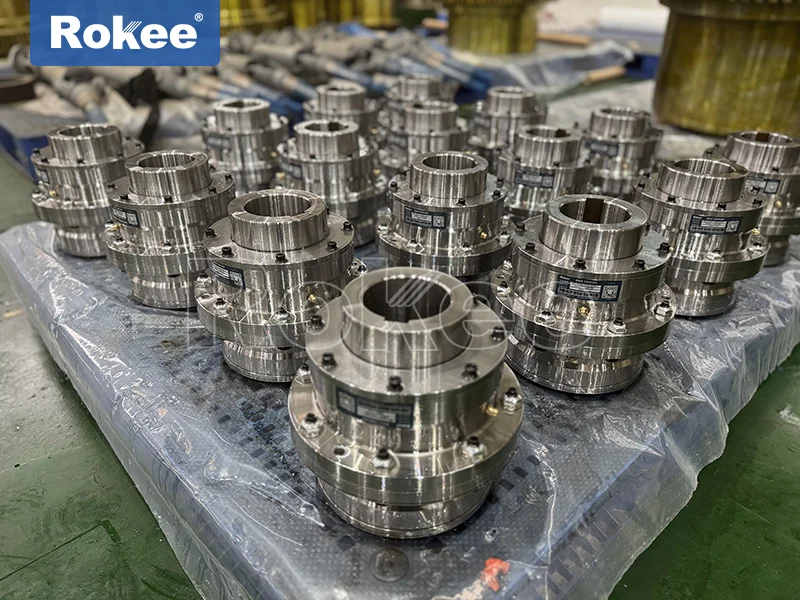
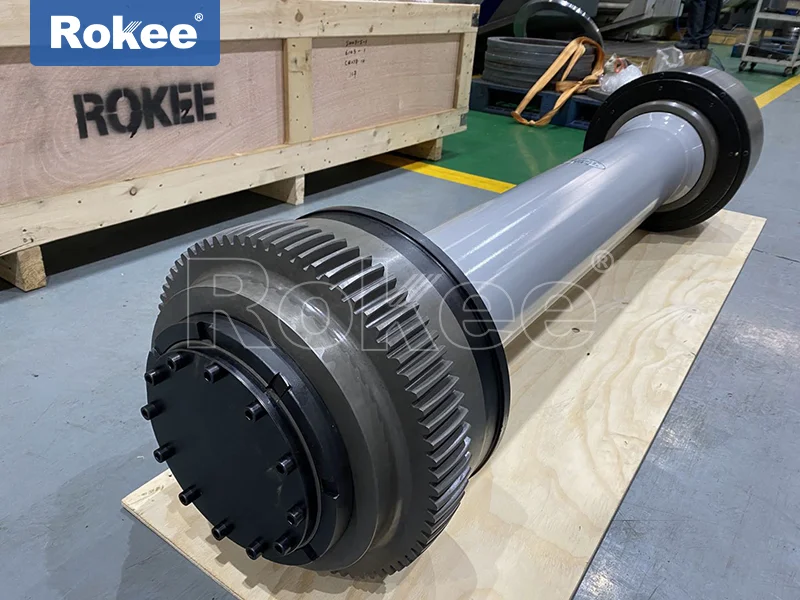
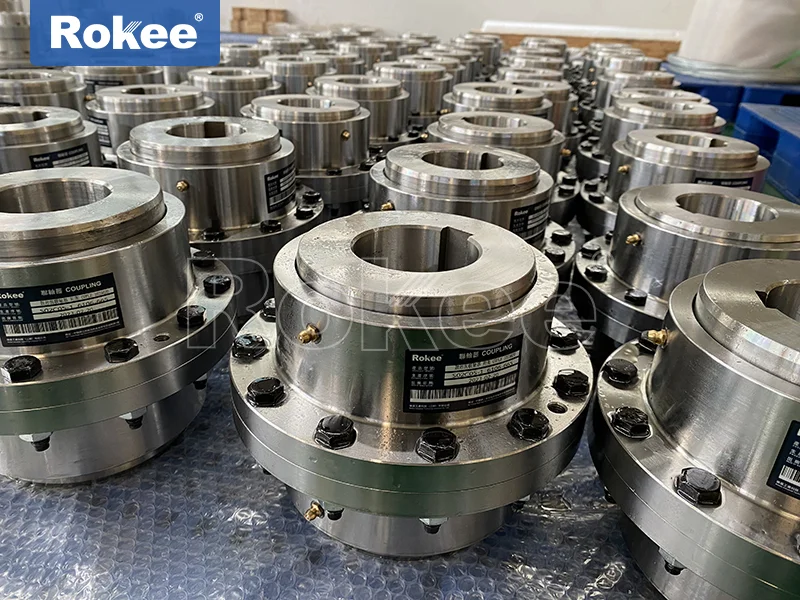
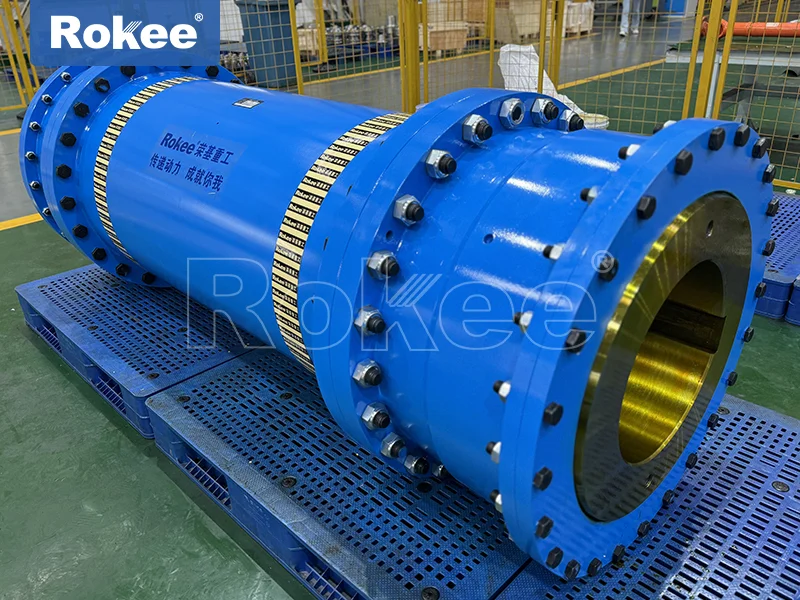
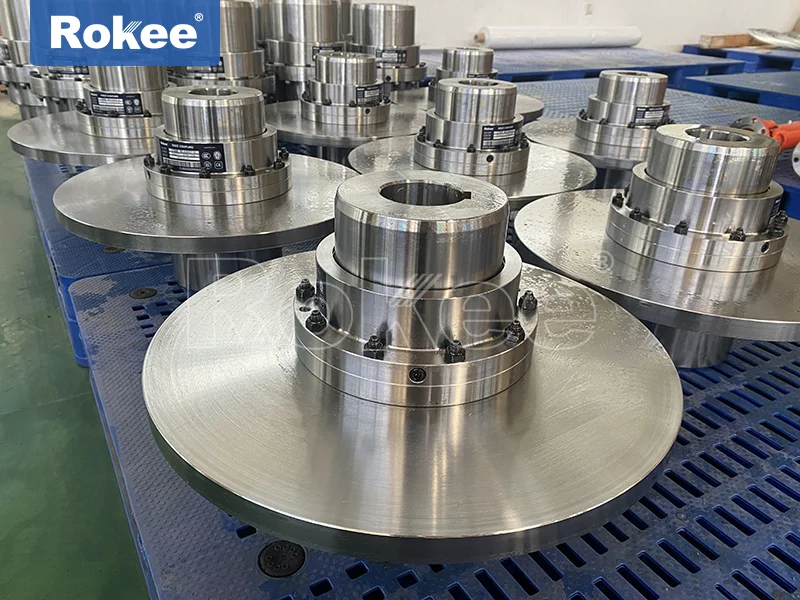
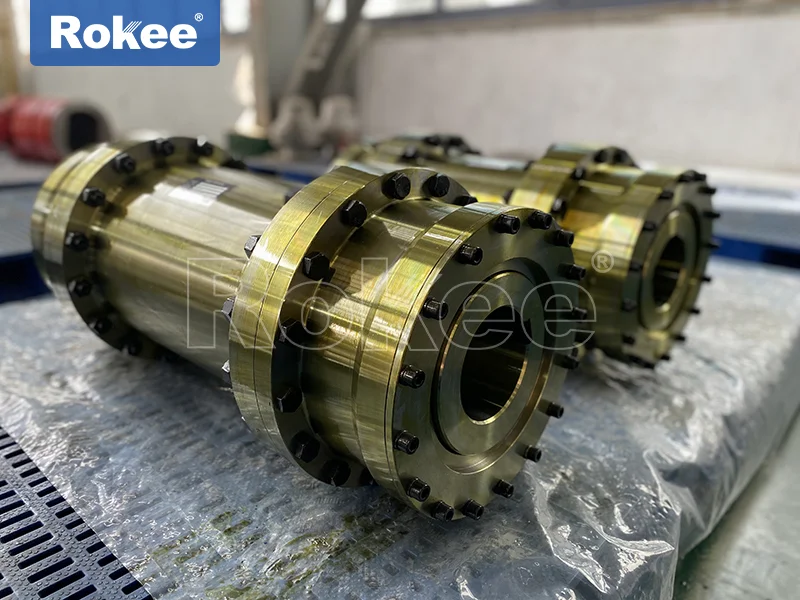
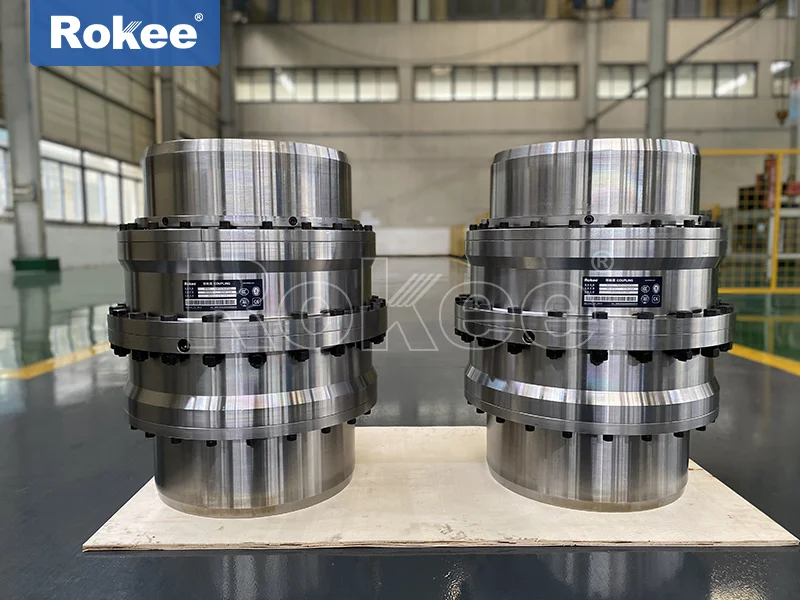
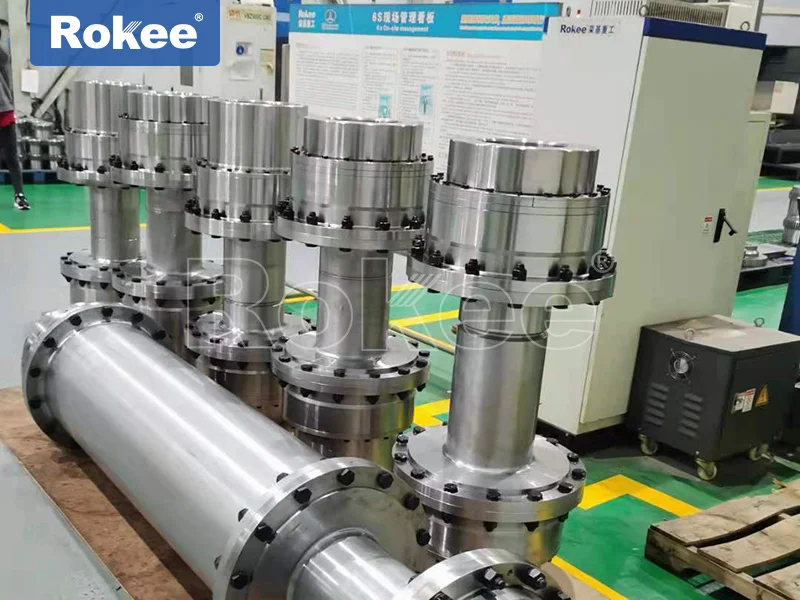
The fundamental structural design advantages of barrel gear coupling make it perfectly adapted to the heavy-duty continuous operation characteristics and complex load working conditions of polyurethane sandwich panel production lines, and its unique barrel-shaped tooth profile structure is the core reason why it can significantly reduce equipment operation loss and optimize power transmission efficiency. Different from the straight tooth design of ordinary gear couplings, the external teeth of the barrel gear coupling are processed into a smooth spherical curved structure, and the spherical center of the curved teeth is accurately located on the central axis of the gear body. This special tooth profile design enables the internal meshing structure of the coupling to have excellent flexible adjustment performance while maintaining high torsional rigidity and strong torque transmission capacity. When the polyurethane sandwich panel production line is running, even if the driving shaft and driven shaft of the transmission system produce angular misalignment, radial offset and axial displacement due to long-term vibration, heavy load deformation and equipment aging, the barrel-shaped curved teeth can still maintain stable and smooth meshing contact with the internal teeth of the outer sleeve. The meshing process will not produce rigid extrusion and violent friction due to shaft misalignment deviation, but realizes uniform force bearing and smooth power transmission through the rolling-slipping composite motion between the meshing tooth surfaces. This efficient and stable meshing transmission mode fundamentally avoids the ineffective mechanical friction and vibration energy loss caused by shaft misalignment in traditional transmission structures, ensures that most of the power output by the driving motor is efficiently transmitted to each processing link of the polyurethane sandwich panel production line, and greatly reduces the invalid operation loss generated in the power transmission process. In addition, the reasonable tooth clearance design of the barrel gear coupling further enhances its impact load resistance and reverse load bearing capacity. The production line will inevitably generate instantaneous inertial impact load during frequent start-stop and production parameter adjustment, and the flexible buffer space formed by the optimized tooth clearance can effectively absorb and relieve these instantaneous impact forces, avoid rigid impact damage between transmission components, reduce the vibration amplitude of the equipment during operation, and further reduce the vibration-derived energy consumption and mechanical wear loss of the production line in daily operation.
In the actual operation and application process of polyurethane sandwich panel production lines, the application of barrel gear couplings effectively reduces various types of operation loss from multiple dimensions, covering mechanical friction loss in power transmission, vibration impact energy loss, component wear and tear loss, and downtime production loss caused by equipment failure and maintenance. In terms of mechanical friction loss reduction, the surface contact transmission mode formed by the barrel-shaped tooth profile of the barrel gear coupling makes the stress distribution on each meshing tooth surface more uniform, avoids local stress concentration and excessive friction pressure often occurring in traditional couplings, and greatly reduces the friction coefficient in the torque transmission process. Compared with traditional ordinary transmission connecting parts, the rolling-slipping composite motion between the meshing parts of the barrel gear coupling can effectively reduce the wear degree of the contact surface, ensure long-term low-friction operation of the transmission system, and avoid the continuous increase of friction loss caused by component wear and aging. In terms of vibration impact energy loss control, the good misalignment compensation performance of the barrel gear coupling can adapt to the slight shaft position deviation and equipment frame vibration generated during the long-term operation of the production line, eliminate the resonance phenomenon and violent vibration caused by transmission misalignment, reduce the vibration energy dissipated into the surrounding environment in the form of heat and noise, and make the operation of the entire production line transmission system more stable and quiet. The reduction of vibration amplitude also effectively protects the motor, reduction gearbox and other core power equipment, reduces the additional mechanical loss caused by vibration operation of power equipment, and realizes the dual optimization of transmission efficiency and equipment operating state.
In terms of component wear loss and maintenance loss reduction, the barrel gear coupling has excellent load-bearing performance and fatigue resistance, its hardened tooth surface structure can withstand long-term heavy load operation and frequent alternating load impact, and will not produce rapid wear and local damage like traditional couplings. The effective compensation of shaft misalignment avoids abnormal stress and fatigue damage of connecting shafts, bearings and other adjacent mechanical components, reduces the probability of equipment failure caused by transmission system problems, and extends the stable service cycle of key transmission components. In the daily production and operation of polyurethane sandwich panel production lines, equipment downtime maintenance and parts replacement will not only directly interrupt the continuous production process and reduce production output, but also produce additional maintenance labor costs and parts replacement costs, which are all important invisible operation losses for production enterprises. After adopting barrel gear couplings, the failure frequency of the transmission system is significantly reduced, the maintenance cycle of the production line is effectively prolonged, the number of downtime maintenance and parts replacement is greatly reduced, and the invisible operation loss caused by production interruption and maintenance work is fundamentally reduced. At the same time, the good sealing and lubrication retention performance of the barrel gear coupling structure can prevent external dust, debris and moisture in the production workshop from entering the meshing interior, avoid lubricant leakage and pollution, maintain the long-term good lubrication state of the meshing parts, further reduce wear and tear, and ensure that the low-loss operation state of the transmission system can be maintained for a long time.
The long-term application practice of a large number of polyurethane sandwich panel production enterprises has proved that after the production line is equipped with barrel gear couplings, the overall operation energy consumption of the equipment is significantly reduced, the effective power utilization rate of the driving motor is effectively improved, the mechanical failure rate of the production line transmission system is reduced to a very low level, and the continuous and stable production capacity of the equipment is significantly enhanced. In the production process of polyurethane sandwich panels, the consistency of production equipment operation state directly affects the foaming uniformity of polyurethane raw materials, the composite bonding firmness of panel layers and the dimensional accuracy of finished products. The stable low-loss transmission brought by barrel gear couplings ensures the synchronization accuracy and operation stability of each processing link of the production line, avoids product quality fluctuations and defective product problems caused by transmission jitter and unstable power output, not only reduces the operation loss of mechanical equipment itself, but also reduces the production loss caused by defective products and rework processing. For the polyurethane sandwich panel manufacturing industry with fierce market competition and increasing requirements for production cost control and product quality stability, reducing equipment operation loss, improving production efficiency and stabilizing product quality are the core keys to improving enterprise market competitiveness. The simple and reliable structural design, convenient installation and maintenance, and excellent low-loss operation performance of barrel gear couplings make it an ideal transmission matching part for upgrading and optimizing polyurethane sandwich panel production lines.
With the continuous development of the building energy conservation industry, the market demand for high-performance polyurethane sandwich panels continues to grow, and the production scale and continuous production time of related production enterprises are constantly expanding, which also puts forward higher requirements for the long-term stable and low-loss operation of polyurethane sandwich panel production lines. The traditional backward transmission connection mode can no longer meet the current production demand for energy conservation, efficiency and stable operation, and optimizing the transmission system configuration and adopting high-efficiency and low-loss transmission connecting components have become an inevitable trend for the upgrading and development of polyurethane sandwich panel production equipment. The application of barrel gear couplings perfectly solves various operation loss pain points in the power transmission link of production lines, relies on its unique structural advantages and excellent comprehensive performance, realizes efficient torque transmission, effective misalignment compensation, good vibration buffering and long-term wear resistance, effectively reduces all kinds of ineffective operation loss in the production process, extends the service life of production equipment, reduces enterprise production and maintenance costs, and ensures the stable and efficient operation of polyurethane sandwich panel production lines for a long time. In the future, with the continuous progress of mechanical transmission technology, barrel gear couplings will be more widely used in various heavy-duty continuous production mechanical equipment related to building material processing, and continue to play an important role in reducing equipment operation loss, improving production efficiency and promoting the high-quality development of the building energy conservation material manufacturing industry.