Combination Of Barrel Gear Coupling And Sandwich Panel Production Line Is More Reliable Transmission
In the field of modern industrial manufacturing, the stability and reliability of transmission systems directly determine the efficiency of production lines, the consistency of product quality, and the long-term operational costs of enterprises. Sandwich panel production lines, as key equipment for manufacturing high-performance building and industrial materials, rely heavily on continuous and stable power transmission to complete the entire process from raw material uncoiling, shaping, foaming, compounding to cutting and stacking. Any interruption or instability in the transmission link will lead to production stoppages, increased waste rates, and even damage to equipment components, bringing unnecessary economic losses to enterprises. Among the numerous transmission components, the barrel gear coupling has gradually become the preferred choice for sandwich panel production lines due to its unique structural advantages and excellent performance, and its combination with sandwich panel production lines has significantly improved the reliability of the transmission system, providing a strong guarantee for the efficient and stable operation of the production lines.
To understand why the combination of barrel gear coupling and sandwich panel production line can achieve more reliable transmission, it is first necessary to clarify the working characteristics of sandwich panel production lines and the core requirements for transmission components. Sandwich panel production is a continuous and high-precision process. The production line is composed of multiple functional modules, including uncoiling system, leveling and shaping device, preheating system, foaming and pouring unit, composite pressing mechanism, cooling setting system, precision cutting equipment, and automatic conveying and stacking system. Each module needs to operate in a coordinated manner with consistent speed and stable torque to ensure that the surface panels and core materials are perfectly compounded, and the size and performance of the finished sandwich panels meet the preset standards. This requires the transmission system to have strong torque transmission capacity, good deviation compensation performance, high wear resistance, and the ability to adapt to long-term continuous operation under complex working conditions. In addition, the working environment of sandwich panel production lines is often accompanied by dust, vibration, and temperature changes, which puts higher requirements on the durability and stability of transmission components.
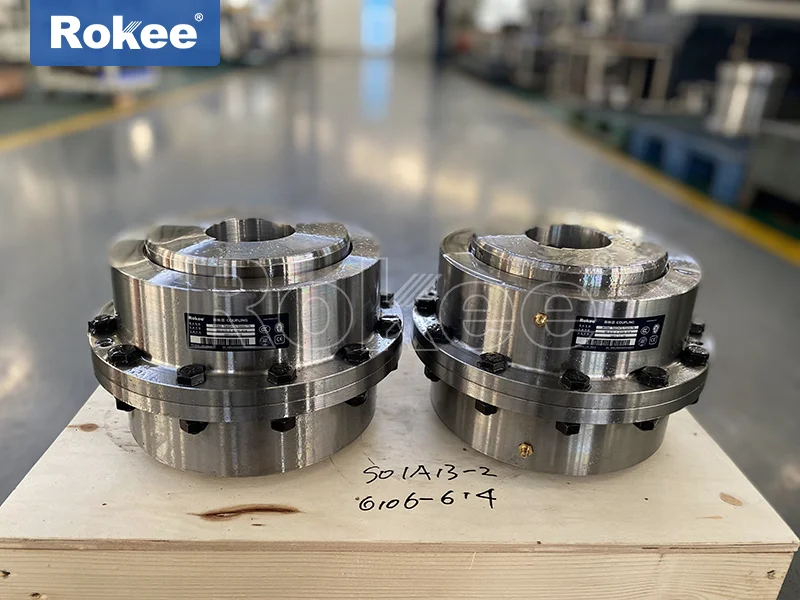
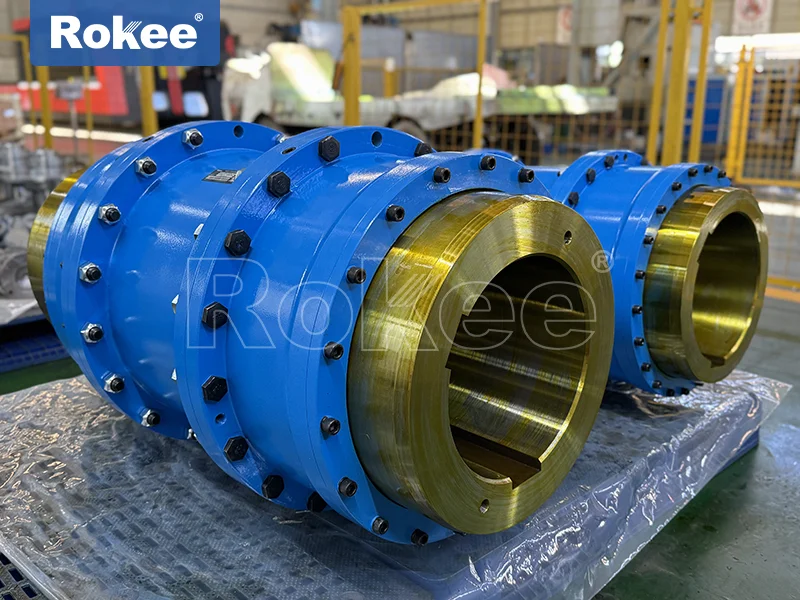
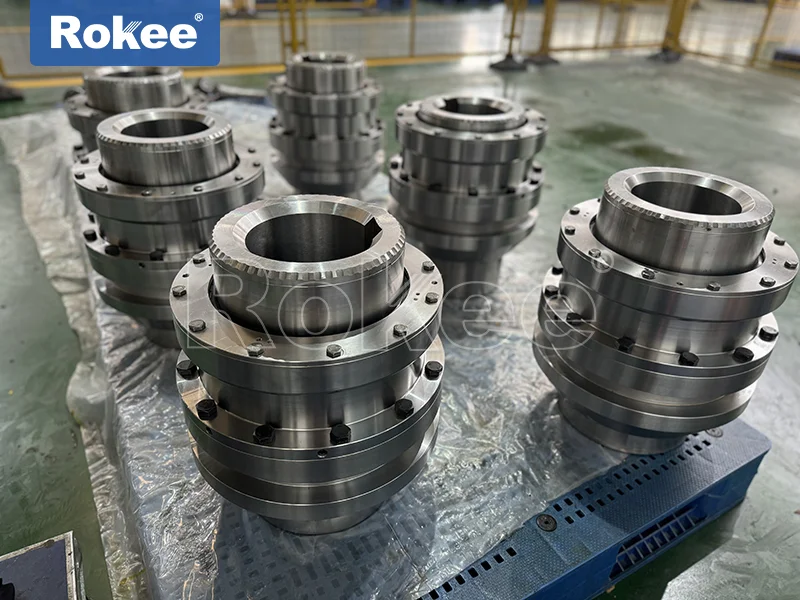
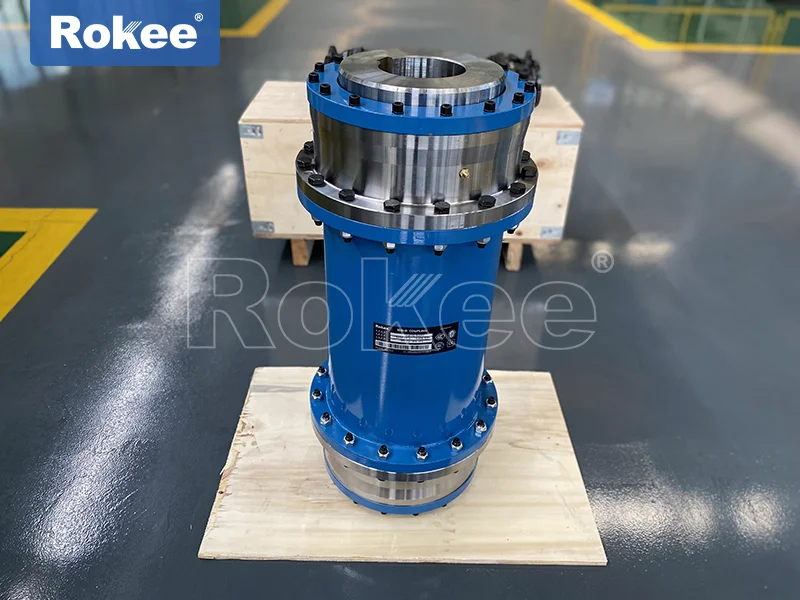
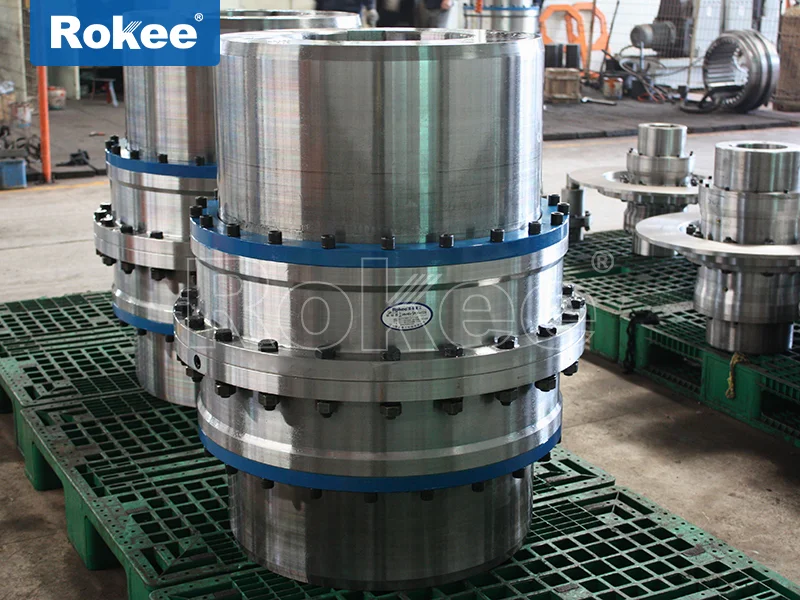
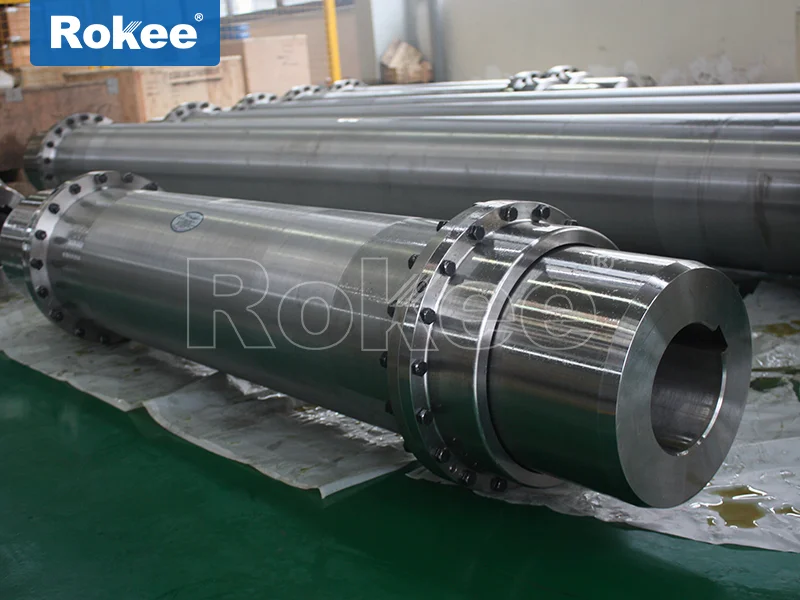
The barrel gear coupling, as a heavy-duty transmission component with excellent performance, has structural characteristics that are highly compatible with the working needs of sandwich panel production lines. Unlike traditional couplings, the barrel gear coupling is composed of an inner gear ring and an outer gear sleeve, with its core innovation lying in the unique design of the tooth shape. The outer teeth of the outer gear sleeve are designed into a drum shape, which enables the coupling to have three key compensation capabilities: radial deviation compensation, angular deviation compensation, and axial floating. This means that even if there is a certain degree of installation error between the connected shafts, or thermal deformation occurs during the operation of the equipment, the barrel gear coupling can effectively absorb these deviations, avoid additional loads on the shafts and bearings, and ensure the smooth operation of the transmission system. For sandwich panel production lines, which have high requirements for the coordination of multiple modules, this deviation compensation capability is particularly important. For example, during the long-term operation of the composite pressing mechanism and the conveying system, slight misalignment may occur between the motor shaft and the reducer shaft due to vibration and wear. The barrel gear coupling can effectively compensate for these misalignments, preventing excessive stress concentration and avoiding component damage.
Another key advantage of the barrel gear coupling is its strong torque transmission capacity and wear resistance, which is well adapted to the high-load working characteristics of sandwich panel production lines. The production process of sandwich panels, especially the composite pressing link, requires the transmission system to provide stable and sufficient torque to ensure that the surface panels and core materials are closely bonded without gaps. The barrel gear coupling adopts a surface contact structure between the drum-shaped pins and the bushing, which is very different from the line or point contact of traditional straight pin couplings. This surface contact design significantly increases the contact area, distributes the load over a larger area, and greatly reduces the unit area stress, thus improving the load-bearing capacity by 2 to 5 times depending on the diameter and curvature of the components. At the same time, the relative motion between the pin and the bushing in the barrel gear coupling is a composite friction mode of "rolling + micro-sliding", which is different from the pure sliding friction of traditional couplings. This friction mode not only reduces the friction coefficient and frictional heat but also forms stable wear tracks, further improving the contact adaptability and reducing the wear rate of the components. As a result, the service life of the pins and bushings can be extended by 30% to 300%, which greatly reduces the frequency of maintenance and replacement of transmission components in sandwich panel production lines, and improves the continuity of production.
In addition, the barrel gear coupling has good sealing performance and dustproof ability, which can adapt to the harsh working environment of sandwich panel production lines. During the production of sandwich panels, especially when using foam core materials, a certain amount of dust and foam particles will be generated, which may enter the interior of the transmission components and cause wear, jamming, and other failures. The barrel gear coupling is usually equipped with integrated inner and outer covers and lip seals, which can effectively prevent foreign objects such as dust and particles from penetrating into the coupling interior and prevent lubricants from escaping. This sealing design ensures that the internal components of the coupling can work normally under harsh environmental conditions, further improving the reliability and service life of the transmission system. Compared with other types of couplings that are prone to failure due to dust intrusion, the barrel gear coupling can maintain stable performance for a long time in the working environment of sandwich panel production lines, reducing the probability of unplanned production stoppages.
The practical application effect of the combination of barrel gear coupling and sandwich panel production line has been fully verified in many industrial scenarios. In traditional sandwich panel production lines, some enterprises used ordinary rigid couplings or elastic couplings. These couplings have poor deviation compensation ability, low load-bearing capacity, and fast wear, which often lead to frequent transmission failures. For example, the ordinary rigid coupling cannot compensate for the misalignment between the shafts, which will cause excessive vibration of the equipment during operation, resulting in loose connections between components, increased noise, and even damage to the motor and reducer in severe cases. Elastic couplings, although having a certain degree of deviation compensation ability, have poor wear resistance and cannot bear large torques, which are not suitable for the high-load working conditions of sandwich panel production lines. After replacing with barrel gear couplings, these problems have been effectively solved. The deviation compensation ability of the barrel gear coupling reduces the vibration of the equipment, the strong load-bearing capacity ensures the stable transmission of torque, and the good wear resistance and sealing performance reduce the frequency of maintenance and failure.
Taking a continuous PU sandwich panel production line as an example, before adopting the barrel gear coupling, the transmission system often had problems such as coupling wear, shaft impact, and frequent maintenance. The average monthly maintenance time of the transmission system reached 8 to 10 hours, and the unplanned production stoppage caused by transmission failures accounted for 30% of the total stoppage time. After replacing all the key transmission positions with barrel gear couplings, the monthly maintenance time was reduced to 2 to 3 hours, and the unplanned production stoppage caused by transmission failures was reduced by more than 80%. At the same time, the stability of the production line was significantly improved, the product qualification rate increased by 5% to 8%, and the energy consumption of the transmission system was reduced by about 10%. This is because the barrel gear coupling can effectively absorb the vibration and deviation generated during the operation of the production line, reduce the energy loss caused by friction and stress concentration, and ensure that each module of the production line operates in a coordinated and stable manner. In addition, the long service life of the barrel gear coupling reduces the cost of purchasing and replacing components, further reducing the overall operational cost of the enterprise.
The reliability of the combination of barrel gear coupling and sandwich panel production line is also reflected in its easy maintenance and strong adaptability. The structure of the barrel gear coupling is relatively simple, and the installation and disassembly are convenient. During the daily maintenance process, the staff only need to regularly check the lubrication status, tightness of the connection parts, and wear of the components, and carry out simple maintenance such as adding lubricants and tightening bolts, which does not require complex professional skills and equipment. This greatly reduces the maintenance difficulty and cost of the transmission system, and ensures that the maintenance work can be completed quickly, reducing the impact of maintenance on production. At the same time, the barrel gear coupling can be customized according to the specific parameters of the sandwich panel production line, such as torque, speed, and installation space, to meet the different needs of different production lines. Whether it is a small-scale sandwich panel production line or a large-scale continuous production line, the barrel gear coupling can be perfectly matched, providing reliable transmission support for the production line.
It should be noted that to maximize the reliability of the transmission system formed by the combination of barrel gear coupling and sandwich panel production line, reasonable selection, installation, and maintenance are essential. In the selection process, enterprises should comprehensively consider the working parameters of the production line, such as the required torque, speed, and the maximum possible deviation between the shafts, and select the appropriate model and specification of the barrel gear coupling to ensure that its performance meets the working needs of the production line. In the installation process, the staff should strictly follow the installation specifications, ensure the accurate alignment of the coupling and the connected shafts, avoid forced installation, and prevent the generation of additional stress. In the daily maintenance process, regular lubrication is crucial. High-quality lubricants with appropriate viscosity should be used to ensure the formation of a stable lubricating film between the contact surfaces, reduce friction and wear, and prevent the occurrence of failures such as pitting and tooth breakage. At the same time, the lubrication system should be kept clean to avoid contamination of the lubricant by dust and particles, which affects the lubrication effect. In addition, regular inspection of the wear status of the coupling components, such as the drum-shaped pins, bushings, and gear teeth, and timely replacement of worn components can effectively prevent the expansion of failures and ensure the long-term stable operation of the transmission system.
With the continuous development of industrial automation technology, the requirements for the efficiency and reliability of sandwich panel production lines are getting higher and higher. The transmission system, as the core component of the production line, has become the key to improving the competitiveness of enterprises. The barrel gear coupling, with its unique structural advantages and excellent performance, has become an ideal matching component for sandwich panel production lines. Its combination with sandwich panel production lines not only improves the reliability and stability of the transmission system but also reduces the maintenance cost and production loss of enterprises, and improves the production efficiency and product quality. Compared with other types of couplings, the barrel gear coupling has obvious advantages in load-bearing capacity, deviation compensation, wear resistance, and sealing performance, which can better adapt to the complex working conditions of sandwich panel production lines.
In the future, with the continuous progress of material science and manufacturing technology, the performance of barrel gear couplings will be further improved. New high-strength and wear-resistant materials will be widely used, making the barrel gear coupling have higher load-bearing capacity and longer service life. At the same time, the design of the barrel gear coupling will be more optimized, better adapting to the development trend of high speed, high efficiency, and intelligence of sandwich panel production lines. The combination of barrel gear coupling and sandwich panel production line will be more close, providing more reliable transmission support for the sustainable development of the sandwich panel manufacturing industry. For enterprises, choosing to use barrel gear couplings in sandwich panel production lines is a wise investment, which can not only improve the operational stability of the production line but also reduce the long-term operational cost, enhance the market competitiveness of enterprises, and achieve better economic and social benefits.
In conclusion, the combination of barrel gear coupling and sandwich panel production line can significantly improve the reliability of the transmission system, which is determined by the structural advantages of the barrel gear coupling and the working characteristics of the sandwich panel production line. The barrel gear coupling's excellent deviation compensation ability, strong torque transmission capacity, good wear resistance, and sealing performance can well meet the high requirements of sandwich panel production lines for transmission components. The practical application results show that this combination can effectively reduce the frequency of transmission failures, improve production efficiency and product quality, and reduce maintenance costs and production losses. With the continuous development of industrial technology, the application of barrel gear coupling in sandwich panel production lines will be more extensive, and it will play a more important role in promoting the development of the sandwich panel manufacturing industry towards high efficiency, stability, and sustainability. Enterprises should pay full attention to the role of barrel gear couplings, reasonably select, install and maintain them, and give full play to the advantages of the combination of barrel gear couplings and sandwich panel production lines to achieve better development in the fierce market competition.