Cardan Universal Joints
The Cardan universal joint, a cornerstone of mechanical power transmission systems, stands as one of the most versatile and widely utilized mechanical components across industrial, automotive, aerospace, agricultural, and marine sectors. Engineered to transmit rotational torque and motion between two shafts that are not collinear, intersecting at a fixed or variable angle, this ingenious device solves a fundamental challenge in mechanical engineering: maintaining consistent power delivery despite axial misalignment, angular deflection, or positional shifts during operation. Unlike rigid shaft couplings that demand perfect alignment and fail under even minor displacement, the Cardan universal joint offers exceptional flexibility, durability, and adaptability, making it indispensable in machinery where shaft alignment cannot be guaranteed or where dynamic movement is inherent to operational functionality. Its design has evolved significantly since its conceptualization, with refinements to materials, bearing systems, and structural configurations enhancing its load-bearing capacity, operational efficiency, and service life, while preserving the core mechanical principles that define its functionality.

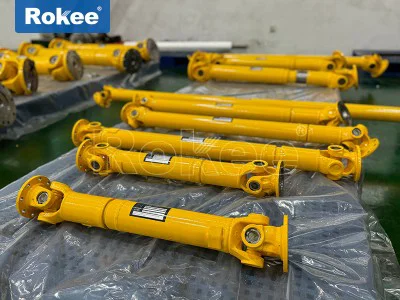
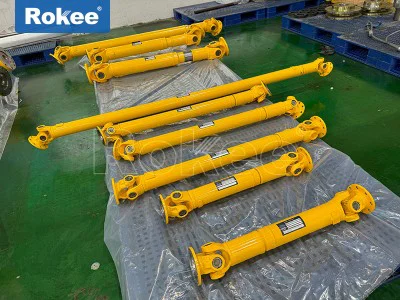
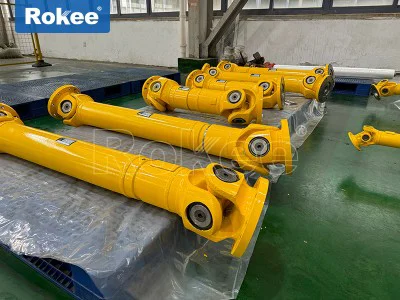
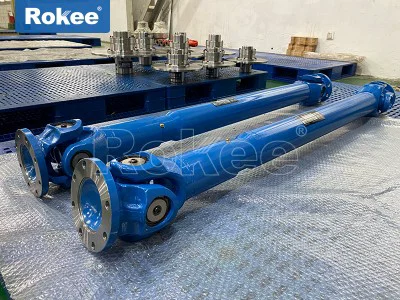
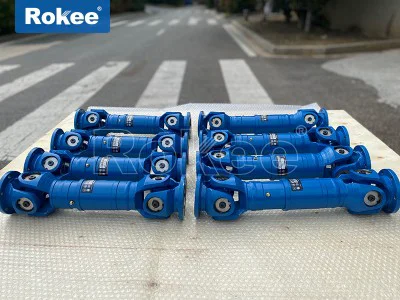
At its core, the standard Cardan universal joint features a straightforward yet robust structural design that balances simplicity with mechanical efficiency, consisting of three primary interconnected components: two yoke assemblies (also referred to as fork ends) and a central cross-shaped spider, often called a cross journal. Each yoke is securely attached to the end of one of the two shafts being connected, with precision-machined bearing seats designed to accommodate the protruding arms of the central spider. The cross spider, the heart of the joint, features four perpendicular journal arms that fit into corresponding bearing housings within the yokes, creating a articulated pivot point that permits angular movement between the two shafts. The bearing systems integrated into the joint are pivotal to its performance; most modern Cardan joints utilize needle roller bearings within the yoke seats, as these bearings minimize friction, handle high radial and thrust loads, and reduce wear during continuous rotation, even under moderate to heavy torque loads. In some heavy-duty variants, plain sleeve bearings or roller bearings may be employed to withstand extreme operational stresses, though needle bearings remain the preferred choice for most standard applications due to their compact size and superior friction-reducing properties. The entire assembly is engineered with tight tolerances to ensure seamless articulation, with the yokes and spider typically forged from high-strength alloy steel or carbon steel to resist deformation, fatigue, and shear stress during operation. Critical to long-term performance is the inclusion of sealing mechanisms, such as rubber gaskets or dust boots, which prevent the ingress of contaminants like dirt, dust, moisture, and debris while retaining lubricants within the bearing chambers, safeguarding internal components from premature wear and corrosion. This basic structural layout remains consistent across most Cardan joint variants, with modifications made to accommodate specific load requirements, operational angles, and environmental conditions, rather than altering the fundamental articulated pivot design that defines the joint’s functionality.
The performance characteristics of the Cardan universal joint are shaped by its structural design, material selection, and bearing configuration, defining its suitability for distinct operational scenarios. One of its most defining performance traits is its ability to accommodate angular misalignment between input and output shafts, with standard single Cardan joints typically supporting operating angles ranging from 15 to 30 degrees under continuous operation, and peak angles reaching up to 45 degrees in short-duration, low-load conditions. Exceeding these recommended angle thresholds impairs performance, leading to increased vibration, uneven torque transmission, and accelerated wear, as the joint’s geometric design introduces minor velocity fluctuations between the input and output shafts at non-zero angles—a inherent trait of single Cardan joints that is mitigated in specialized variants. Torque transmission capacity is another core performance metric, varying widely based on the joint’s size, material strength, and bearing design; compact lightweight joints handle low to moderate torque loads for precision machinery, while heavy-duty industrial joints are engineered to transmit extremely high torque values, making them suitable for heavy machinery and large-scale mechanical systems. Durability and fatigue resistance are equally vital, with high-quality forged steel components and precision bearings enabling the joint to withstand repetitive loading, cyclic stress, and prolonged operational use without failure, even in harsh working environments. Friction efficiency is a key performance consideration as well, with needle bearing-equipped joints delivering minimal rotational resistance, reducing energy loss and heat generation during operation, which boosts overall system efficiency and lowers the risk of overheating under continuous use. Additionally, Cardan universal joints exhibit strong axial compliance, allowing for minor axial shaft movement without imposing excessive stress on the joint or connected machinery, a valuable trait in systems where thermal expansion or minor shaft displacement occurs during operation. Maintenance requirements are relatively modest, with periodic lubrication and seal inspections being the primary upkeep tasks; proper lubrication preserves bearing performance, while intact seals prevent contamination, both of which extend the joint’s service life and reduce downtime for repairs or replacements.
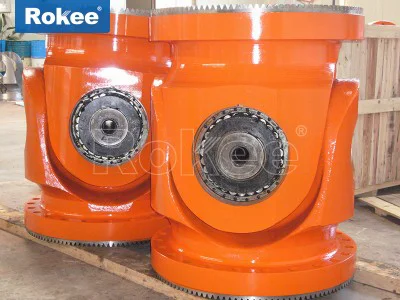
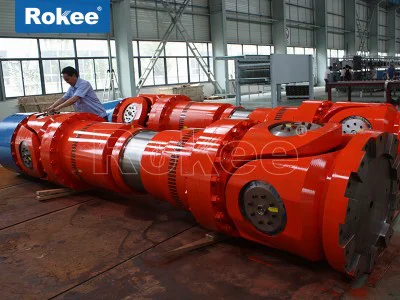
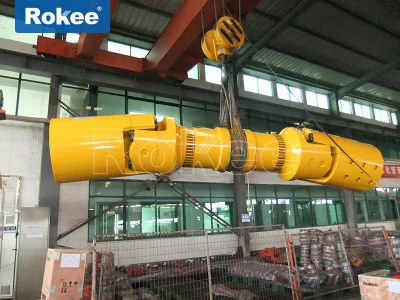
While the basic single Cardan (Hooke) joint is the most prevalent variant, the Cardan universal joint family encompasses several specialized classifications, each engineered to address specific operational limitations and performance demands, expanding the component’s versatility across diverse applications. The single Cardan joint, the simplest and most cost-effective variant, retains the classic two-yoke and cross-spider design, ideal for applications with small to moderate shaft angles, low to moderate torque loads, and minimal sensitivity to minor velocity fluctuations. It excels in scenarios where simplicity, compactness, and affordability are prioritized, and where operational speeds are moderate to prevent excessive vibration caused by its inherent non-constant velocity output. The double Cardan joint, a refined iteration designed to overcome the single joint’s velocity fluctuation limitation, consists of two single Cardan joints linked by a short intermediate shaft and a centering mechanism that aligns the joint angles symmetrically. This configuration cancels out the non-uniform rotational output of individual single joints, delivering near-constant velocity transmission, reduced vibration, and smoother operation at larger shaft angles—making it ideal for high-speed applications and systems requiring precise, consistent motion. Constant velocity (CV) Cardan joints, a specialized subset of universal joints, integrate advanced ball-bearing or cage-based designs to eliminate velocity fluctuations entirely, providing perfectly uniform rotational motion regardless of shaft angle. These joints feature a spherical inner race, outer race, and steel ball bearings held in place by a precision cage, enabling torque transmission through rolling contact rather than pivotal articulation, offering superior smoothness at high speeds and extreme angles, albeit with a more complex design and higher manufacturing complexity. Heavy-duty Cardan joints are engineered for extreme industrial applications, featuring reinforced yokes, larger cross spiders, heavy-duty roller bearings, and thicker high-strength steel construction to handle massive torque loads, shock loads, and harsh operating conditions such as heavy vibration, extreme temperatures, and exposure to abrasive materials. Compact miniature Cardan joints, by contrast, are scaled down for precision equipment, featuring lightweight alloys, small-diameter cross spiders, and miniature needle bearings to transmit low torque loads in tight spaces, prioritizing compactness and precision over heavy-load capacity. Additionally, sliding Cardan joints integrate a telescopic shaft section within the assembly, combining angular misalignment compensation with axial length adjustment, making them perfect for systems where shaft distance varies during operation, such as movable machinery or adjustable mechanical assemblies. Each classification retains the core purpose of transmitting torque across misaligned shafts but is optimized to address specific operational challenges, ensuring engineers can select the ideal joint variant for every unique mechanical setup.
The adaptability and reliable performance of Cardan universal joints have cemented their status as a ubiquitous component across nearly every industry that relies on rotational power transmission, with applications spanning automotive systems, agricultural machinery, industrial manufacturing equipment, aerospace and marine systems, construction machinery, and precision mechanical devices. In the automotive sector, Cardan joints are integral to driveline systems, connecting the gearbox to the drive axle, facilitating power transfer between the engine and wheels while accommodating suspension movement and wheel articulation. Single Cardan joints are commonly used in rear-wheel-drive vehicles for standard driveline applications, while double Cardan and CV joints are employed in front-wheel-drive, all-wheel-drive, and high-performance vehicles to ensure smooth power delivery at steeper angles and higher speeds, reducing driveline vibration and enhancing ride quality. Agricultural machinery relies heavily on Cardan joints, particularly in power take-off (PTO) systems that transfer power from tractors to attached implements such as mowers, balers, seeders, plows, and harvesters. These joints withstand the rugged, dusty, and high-torque conditions of farm work, accommodating the misalignment that occurs as implements move over uneven terrain, ensuring consistent power delivery to maximize operational efficiency. Industrial manufacturing environments utilize Cardan joints across a vast array of machinery, including conveyor systems, milling machines, lathes, printing presses, crushers, mixers, and rolling mills. In these settings, the joints compensate for shaft misalignment caused by machine vibration, thermal expansion, or imperfect installation, maintaining reliable power transmission in heavy-duty production equipment that operates continuously for extended periods. Heavy-duty Cardan joints are especially prevalent in industrial machinery, enduring the high torque and harsh conditions of manufacturing and material processing operations. Aerospace and marine applications demand the highest standards of precision and reliability, making Cardan joints a critical component in these sectors. In aerospace systems, they are used in flight control mechanisms, rotor drive systems for aircraft, and auxiliary power units, transmitting motion smoothly even in high-altitude, low-friction environments where precision is non-negotiable. Marine equipment, such as boat propeller shafts, marine engines, and steering systems, uses corrosion-resistant Cardan joints to transfer power through angled shafts, withstand the moist, saline marine environment, and accommodate hull movement and shaft displacement. Construction machinery, including excavators, cranes, bulldozers, loaders, and pavers, relies on heavy-duty Cardan joints to operate reliably on rough construction sites. These joints handle extreme shock loads, heavy torque demands, and constant angular adjustments as machinery articulates and moves across uneven ground, ensuring durable performance in the most demanding construction applications. Beyond these major industries, Cardan joints find use in precision instruments, medical devices, robotics, material handling equipment, and even household appliances, wherever rotational motion must be transferred between non-collinear shafts. Their universal utility stems from their ability to balance simplicity, flexibility, and durability, providing a cost-effective, reliable solution to a universal mechanical challenge.
In summary, the Cardan universal joint remains an irreplaceable pillar of modern mechanical engineering, blending a simple, elegant design with exceptional functional versatility to enable seamless power transmission across misaligned shafts. Its fundamental structural components—precision-machined yokes, robust cross spiders, and high-performance bearings—work in tandem to deliver reliable torque transfer, while its diverse classifications cater to every conceivable operational demand, from low-speed, heavy-duty industrial use to high-speed, precision-driven automotive and aerospace applications. The joint’s key performance attributes, including angular misalignment compensation, high torque capacity, friction efficiency, and durable construction, make it adaptable to harsh environments and dynamic operating conditions, while its minimal maintenance requirements enhance its practicality across long-term use cases. As mechanical systems continue to evolve, with demands for higher efficiency, greater precision, and enhanced durability, the Cardan universal joint will remain a critical component, with ongoing material and design refinements further boosting its performance and expanding its application potential. Whether in a heavy industrial machine, a passenger vehicle, a piece of agricultural equipment, or a precision aerospace device, the Cardan universal joint stands as a testament to the enduring value of simple, effective mechanical design, solving core transmission challenges and enabling the functionality of countless mechanical systems that power modern industry and daily life.