Flexible Membrane Couplings
In the realm of modern mechanical power transmission, flexible membrane couplings stand as indispensable components that bridge the gap between driving and driven shafts, addressing the inherent challenges of shaft misalignment, vibration transmission, and torque delivery across diverse industrial systems. Unlike rigid couplings that offer no tolerance for positional errors or flexible couplings reliant on elastomeric materials prone to wear and aging, flexible membrane couplings leverage the elastic deformation of high-performance metal membranes to fulfill dual core functions: efficient torque transmission and reliable compensation for shaft deviations. This unique design philosophy has propelled their widespread adoption across high-precision, high-speed, heavy-duty, and extreme-environment applications, marking a pivotal evolution in power transmission technology.

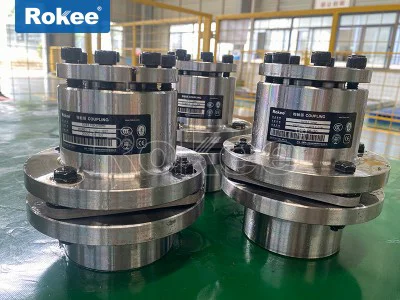
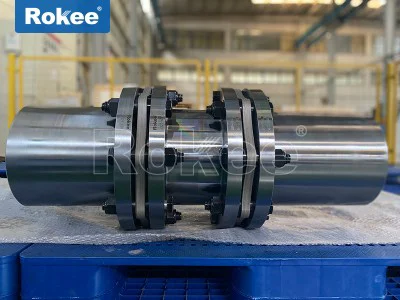
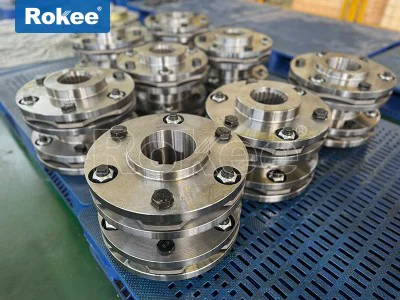
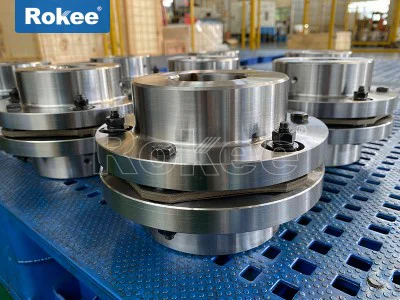
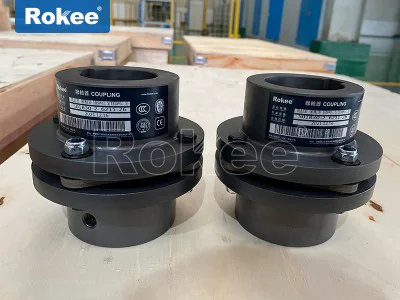
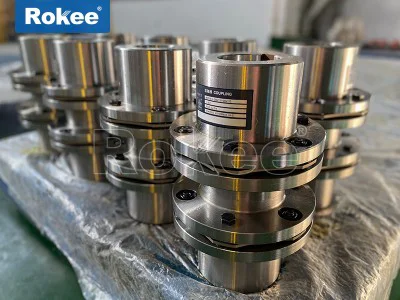
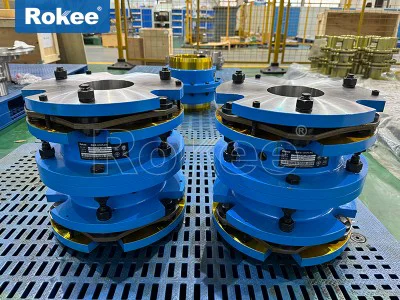
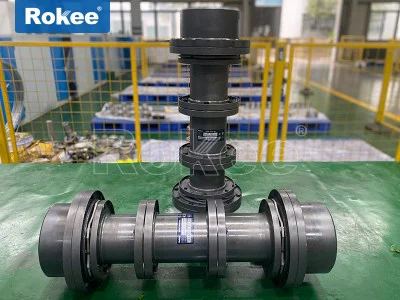
At its core, the structure of a flexible membrane coupling is elegantly engineered yet mechanically robust, consisting of three primary modular components: two hub half-couplings, a set of precision-formed metal membrane groups, and high-strength connecting fasteners. The hub half-couplings serve as the interface between the coupling and the drive/driven shafts, crafted from durable alloy steels or lightweight high-strength aluminum alloys to balance torsional rigidity and weight efficiency; their inner bores are machined to tight tolerances to ensure a secure, backlash-free fit with the shaft, whether via keyway connections, clamping designs, or keyless expansion sleeve configurations. The heart of the coupling lies in the metal membrane groups, typically fabricated from high-grade stainless steel or specialized nickel-based alloys renowned for exceptional elasticity, fatigue resistance, and mechanical strength. Each membrane group is composed of multiple ultra-thin, precisely stamped metal sheets stacked in layers, with the number of sheets varying based on torque capacity and flexibility requirements—ranging from four to twelve sheets in standard designs. These membranes are not rigidly fixed but are connected to the hub half-couplings in a staggered, alternating pattern via precision fasteners, allowing for controlled elastic deformation without compromising structural integrity. The connecting fasteners, engineered for high tensile strength and fatigue life, are installed with calibrated torque to secure the membrane stacks firmly to the hubs while maintaining the critical flexibility needed for deviation compensation. Notably, the entire structure lacks sliding friction surfaces, lubrication cavities, or wearable elastomeric parts, a design choice that eliminates common failure modes associated with traditional couplings and lays the foundation for long-term, maintenance-free operation.
The operating principle of flexible membrane couplings revolves around the elastic deformation of the metal membrane groups, a mechanism that enables seamless power transfer while mitigating the adverse effects of shaft misalignment. When the driving shaft rotates, torque is transmitted from the driving hub to the membrane groups through the fasteners; the membranes, acting as flexible load-bearing elements, transfer this rotational force to the driven hub and subsequently to the driven shaft, ensuring consistent torque delivery with minimal power loss. In scenarios where the driving and driven shafts exhibit positional deviations—common in real-world installations due to manufacturing tolerances, foundation settlement, thermal expansion, or mechanical vibration—the membrane groups undergo controlled elastic deformation to compensate. Axial displacement, the linear movement of shafts along their central axis, triggers planar stretching and contraction of the membranes; radial displacement, the parallel offset between shaft centerlines, induces lateral bending and shear deformation; angular displacement, the tilting of one shaft relative to the other, causes cyclic flexing of the membrane stacks. Crucially, this deformation is purely elastic and reversible, meaning the membranes return to their original shape once the misalignment is resolved, without permanent damage or performance degradation. This non-friction, non-wear operating mechanism distinguishes flexible membrane couplings from gear couplings, which require constant lubrication to reduce friction, and elastomeric couplings, which degrade over time due to material fatigue, chemical exposure, or temperature fluctuations.
The performance characteristics of flexible membrane couplings are tailored to meet the rigorous demands of modern industrial machinery, encompassing exceptional misalignment compensation, high torque transmission efficiency, superior environmental adaptability, low vibration transmission, and extended service life. One of their most standout performance traits is their multi-directional misalignment compensation capability, with standard models accommodating axial displacements ranging from ±0.5mm to ±5mm, radial displacements from 0.2mm to 1.5mm, and angular displacements from 0.5° to 1.5°, depending on the specific design and size. This flexibility prevents excessive mechanical stress on shaft bearings, gearboxes, and motor rotors, reducing premature wear and extending the operational lifespan of connected equipment. In terms of torque transmission, these couplings boast an efficiency rating exceeding 99.8%, nearly eliminating power loss during operation; they maintain zero backlash throughout their service life, making them ideal for precision-driven applications where rotational accuracy is paramount, such as CNC machinery, servo drive systems, and measuring equipment. Their environmental resilience is equally impressive: the all-metal construction withstands extreme temperature fluctuations, operating reliably in ranges from -80°C to 300°C in standard configurations, with specialized models adapted for cryogenic or ultra-high-temperature environments. Additionally, the corrosion-resistant properties of stainless steel and nickel-alloy membranes enable performance in harsh conditions involving acidic, alkaline, or saline media, without the degradation seen in polymer-based flexible components. Vibration damping is another key performance advantage; the elastic deformation of the membranes absorbs and dissipates vibrational energy generated during operation, reducing noise levels and minimizing resonant vibrations that can disrupt system stability. Combined with the absence of wearable parts, these performance features translate to an exceptionally long service life, often spanning 10 to 20 years with only routine visual inspections required, significantly lowering total operational and maintenance costs for industrial systems.
Flexible membrane couplings are categorized into distinct types based on structural design, membrane configuration, shaft connection methods, and application-specific requirements, each engineered to excel in particular operating conditions. The most fundamental classification is based on the number of membrane groups, dividing couplings into single-membrane and double-membrane variants. Single-membrane flexible couplings feature a single set of membrane stacks between the two hub half-couplings, resulting in a compact, lightweight design with minimal axial space requirements. These models offer efficient torque transmission and moderate misalignment compensation, primarily suited for applications with high shaft alignment accuracy, limited installation space, and low-to-medium torque loads, such as small pumps, fans, and precision instrumentation. Double-membrane flexible couplings incorporate two separate membrane groups with an intermediate spacer or hub section between them, a design that drastically enhances misalignment compensation capabilities, particularly for radial and angular deviations. The dual-membrane setup allows independent deformation of each membrane stack, accommodating larger positional errors without increasing reaction forces on connected shafts, making them the preferred choice for heavy-duty machinery, long-shaft drives, and installations with poor shaft centering. Beyond membrane count, classifications also extend to shaft connection styles: keyed membrane couplings feature traditional keyway slots for torque transmission via shear force, a cost-effective and widely compatible design suitable for general industrial use; keyless clamping membrane couplings use external clamping forces to secure the hub to the shaft, eliminating keyway-related stress concentration and enabling quick installation and disassembly, ideal for high-precision servo systems and equipment requiring frequent maintenance; expansion sleeve membrane couplings utilize interference fit via tapered expansion sleeves, delivering uniform torque distribution and enhanced shock resistance, perfect for high-torque, heavy-load applications such as compressors and mill drives. Additional specialized types include micro-membrane couplings, miniaturized designs for small-scale precision equipment like encoders and medical devices, and stepped-membrane couplings, engineered with reinforced membrane profiles to handle extreme torque loads in heavy industrial machinery. Each type retains the core advantages of metal membrane flexibility while optimizing specific attributes to match unique operational demands, ensuring a tailored solution for nearly every power transmission scenario.
The versatility of flexible membrane couplings, rooted in their robust structure, exceptional performance, and diverse design variations, has led to their integration across a vast spectrum of industrial sectors, where they solve critical power transmission challenges and enhance overall system reliability. In the manufacturing and machining industry, they are a staple in high-precision CNC machine tools, machining centers, and servo-driven automation lines, where zero backlash, precise torque delivery, and vibration damping are essential for maintaining machining accuracy and surface finish quality. Their ability to compensate for minor shaft misalignments ensures consistent performance even under prolonged operational stress, reducing downtime for adjustments and repairs. In the fluid processing and petrochemical sector, flexible membrane couplings are widely employed in pumps, compressors, blowers, and agitators, operating reliably in corrosive, high-temperature, and high-pressure environments. The absence of lubrication eliminates the risk of oil contamination in process fluids, making them suitable for food and beverage processing, pharmaceutical manufacturing, and water treatment facilities where cleanliness and hygiene are non-negotiable. In the energy and power generation industry, these couplings play a vital role in turbines, generators, fans, and conveyor systems, withstanding the high speeds and heavy loads characteristic of power production equipment. Their durability and low maintenance requirements make them ideal for remote or hard-to-access power generation installations, minimizing service interruptions. The transportation and marine engineering sector also relies heavily on flexible membrane couplings, utilizing them in ship propulsion systems, auxiliary machinery, and automotive test benches, where they absorb shock loads generated by engine vibration and wave motion, while compensating for shaft misalignment caused by hull flexing. Additionally, they find extensive use in aerospace testing equipment, mining machinery, textile manufacturing lines, and printing presses, adapting to the unique demands of each industry—from the ultra-high precision of aerospace components to the heavy-duty, continuous operation of mining equipment. Across all these applications, the core value of flexible membrane couplings remains consistent: they enable reliable, efficient power transmission while protecting connected equipment from the damaging effects of misalignment and vibration, ultimately boosting operational efficiency, reducing maintenance costs, and extending the service life of entire mechanical systems.
As industrial technology continues to advance toward higher precision, greater efficiency, and more extreme operating conditions, the role of flexible membrane couplings in power transmission systems will only grow in significance. Ongoing innovations in material science, such as the development of high-strength, lightweight alloy membranes, and design optimization via finite element analysis, are further enhancing their torque capacity, fatigue life, and misalignment tolerance, expanding their applicability into even more specialized fields. Unlike conventional coupling solutions that struggle to balance flexibility, rigidity, and durability, flexible membrane couplings have proven to be a versatile, long-lasting answer to the complex challenges of modern mechanical power transmission. Their simple yet robust structure, exceptional performance metrics, diverse type variations, and broad industrial applicability solidify their status as a cornerstone component in contemporary engineering. By understanding their structural mechanics, performance capabilities, classification nuances, and real-world uses, engineers and equipment designers can make informed selection decisions, maximizing the efficiency, reliability, and longevity of power transmission systems across every industrial discipline.