Barrel Gear Coupling Shows Strength of No Noise In Transmission Of Sandwich Panel Manufacturing Line
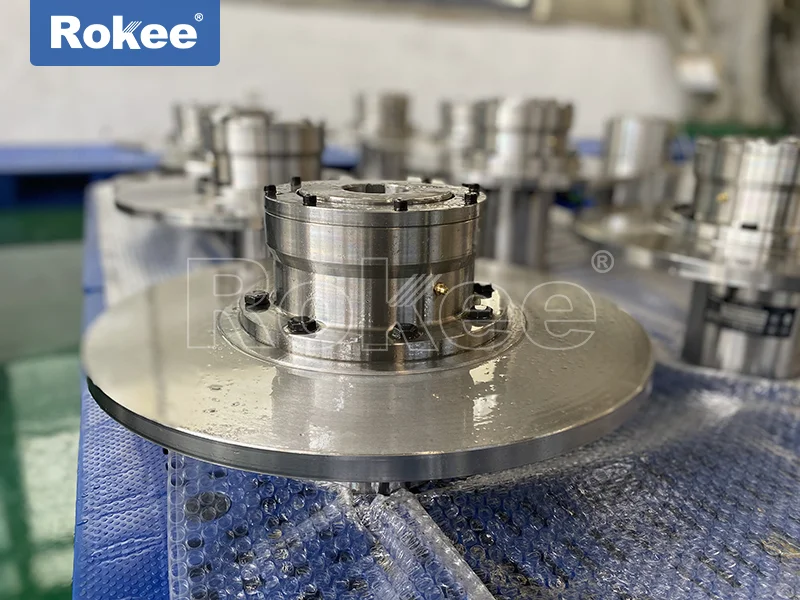
In the modern manufacturing industry, the sandwich panel has become an indispensable material in various fields such as construction, cold storage, and prefabricated buildings due to its excellent thermal insulation, structural stability, and lightweight performance. The continuous and efficient operation of the sandwich panel manufacturing line is the key to ensuring product quality and production efficiency, and the transmission system, as the core component of the production line, directly determines the stability, smoothness, and noise level of the entire equipment operation. Among the numerous transmission components, the barrel gear coupling stands out with its unique structural design and excellent transmission performance, especially in terms of noise control, which has become an important support for the stable operation of the sandwich panel manufacturing line. Its noiseless transmission advantage not only improves the working environment of the workshop but also ensures the precision and consistency of the production process, highlighting its irreplaceable role in the field of sandwich panel manufacturing.
To understand the noiseless transmission strength of the barrel gear coupling in the sandwich panel manufacturing line, it is first necessary to clarify the working characteristics of the sandwich panel manufacturing line and the core requirements for the transmission system. The sandwich panel manufacturing line is a complex integrated system that integrates mechanical, electrical, and chemical technologies, involving multiple continuous processes such as uncoiling of facing materials, roll forming, preheating, core material foaming, lamination, curing, and cutting. Each process requires precise and stable power transmission to ensure that the speed, pressure, and coordination between various components meet the production standards. Unlike other manufacturing equipment, the sandwich panel production process has strict requirements on the stability of the transmission system: any slight vibration or noise may affect the bonding effect between the facing material and the core material, leading to defects such as uneven thickness, poor adhesion, and surface scratches of the sandwich panel, thereby reducing product qualification rate. In addition, the production line usually operates continuously for a long time, and the high noise generated by the transmission system will not only damage the physical and mental health of the operators but also accelerate the wear of mechanical components, increasing maintenance costs and reducing production efficiency. Therefore, the transmission system of the sandwich panel manufacturing line must have the characteristics of stable transmission, low noise, strong load-bearing capacity, and good compensation performance, and the barrel gear coupling just meets all these requirements with its unique structural advantages.
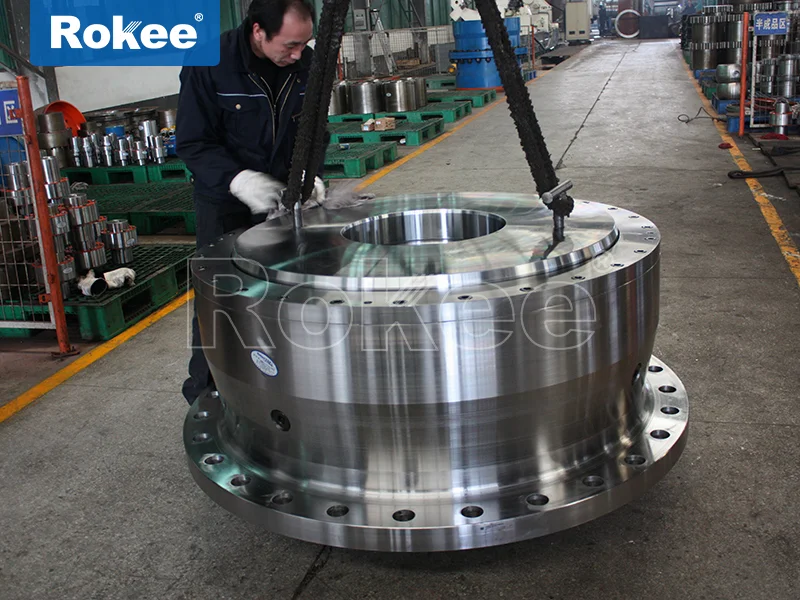
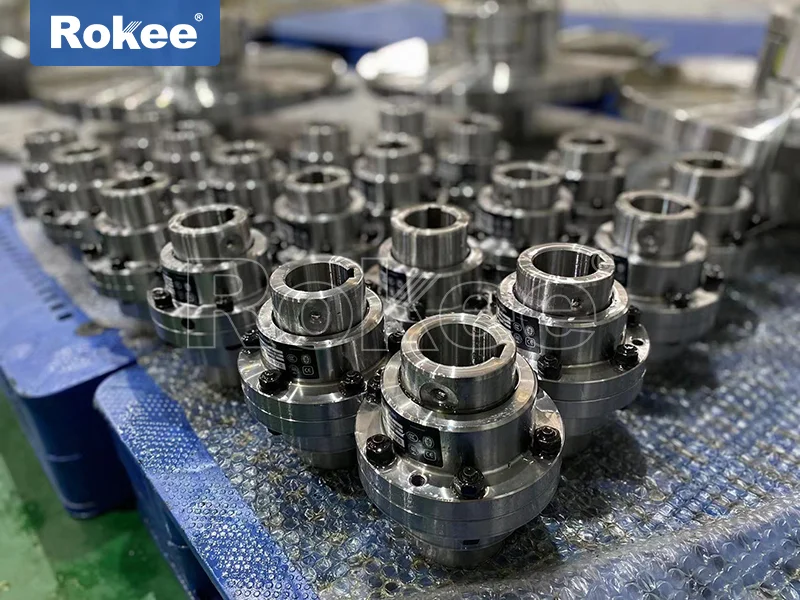
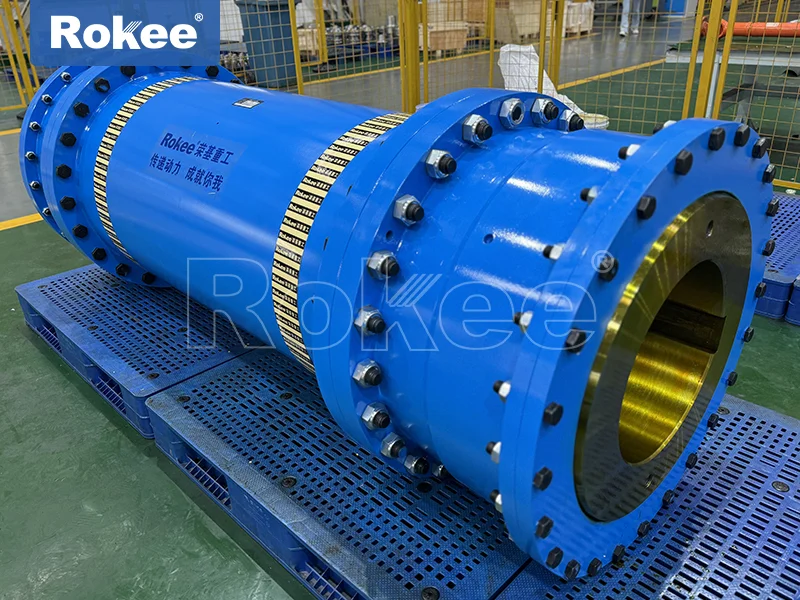
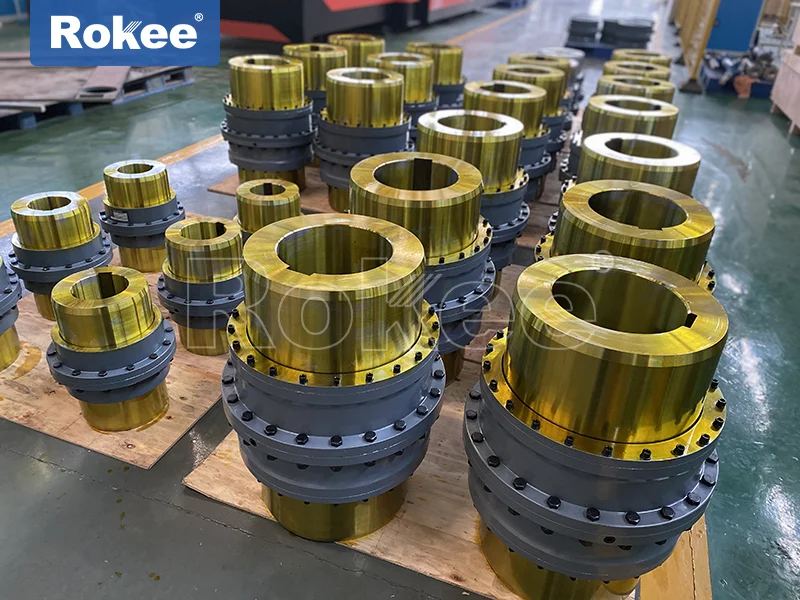
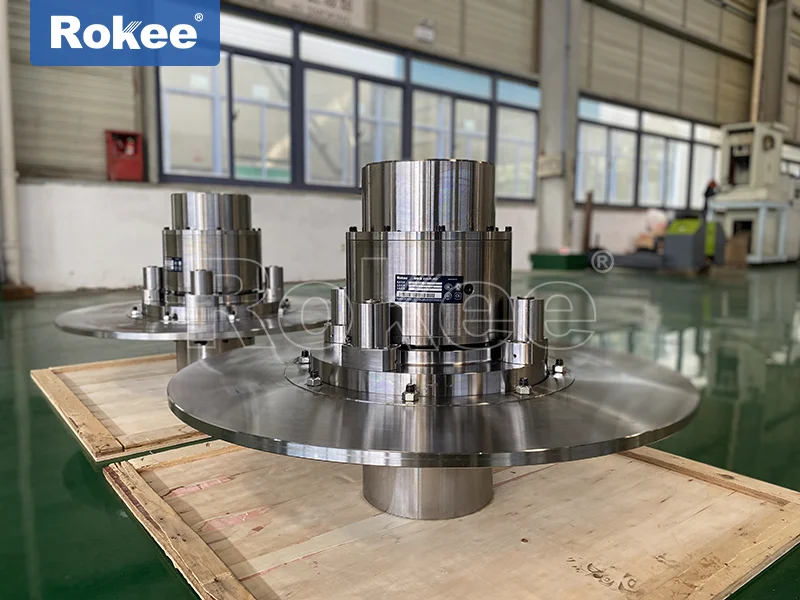
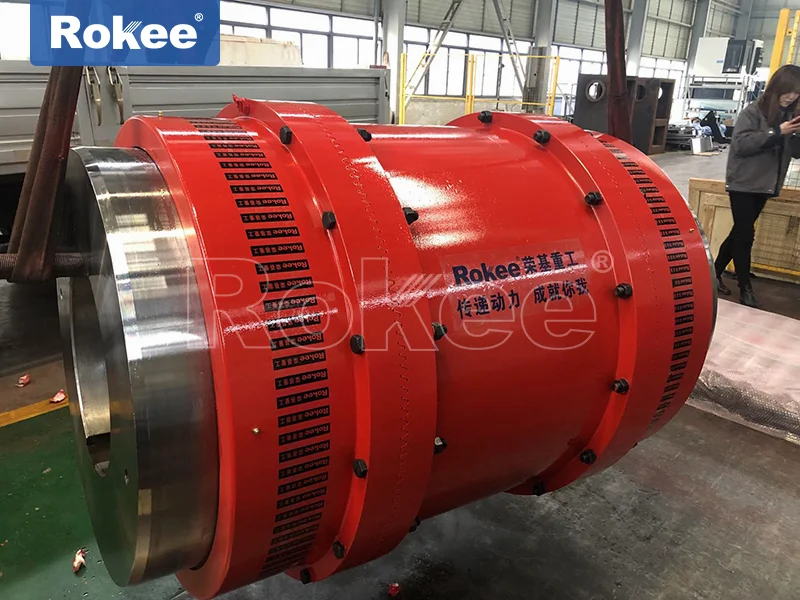
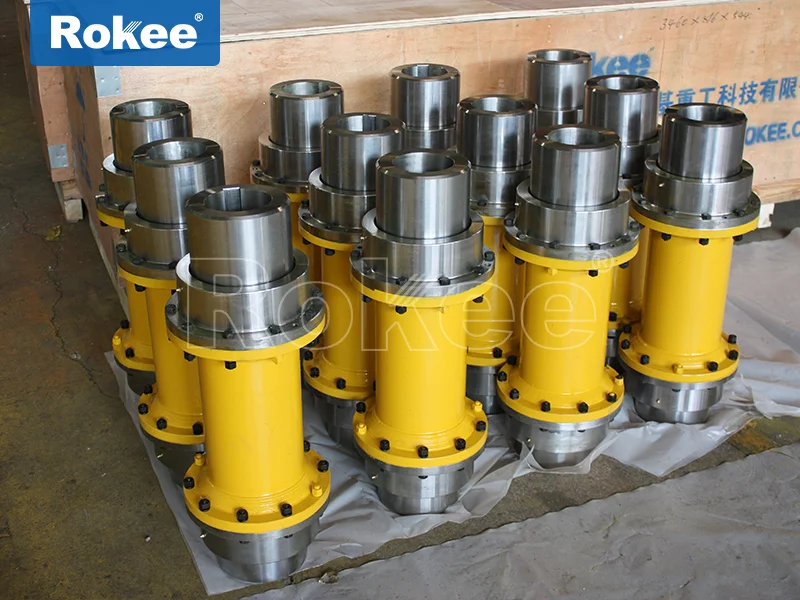
The noiseless transmission performance of the barrel gear coupling is closely related to its special structural design. Different from the traditional gear coupling, the external teeth of the barrel gear coupling are made into a spherical drum shape, with the center of the sphere located on the axis of the gear, which is the core design that distinguishes it from other couplings and also the key to achieving noiseless transmission. This drum-shaped tooth design makes the meshing between the internal and external teeth no longer a rigid point or line contact, but a surface contact with a larger contact area. When the coupling is in operation, the load can be evenly distributed over the entire tooth surface, avoiding the stress concentration caused by point or line contact in traditional couplings. Stress concentration is not only the main cause of component wear but also an important source of transmission noise—when the traditional coupling is in operation, the uneven stress on the tooth surface will cause slight deformation and vibration of the teeth, which will generate harsh noise during meshing. The barrel gear coupling, with its surface contact design, effectively disperses the load, reduces the unit area stress of the tooth surface, avoids the vibration caused by uneven stress, and thus fundamentally reduces the generation of transmission noise.
In addition to the drum-shaped tooth design, the reasonable tooth clearance setting of the barrel gear coupling also plays an important role in achieving noiseless transmission. The tooth clearance of the barrel gear coupling is slightly larger than that of ordinary gear couplings, which is not only to adapt to the installation deviation and thermal expansion of the shaft system during the operation of the production line but also to reduce the friction and impact between the teeth during meshing. In the continuous operation of the sandwich panel manufacturing line, the transmission shaft will inevitably have slight axial, radial, and angular deviations due to factors such as installation errors, equipment vibration, and thermal expansion. If the tooth clearance is too small, the teeth will be stuck or rubbed against each other when the shaft system deviates, resulting in severe noise and even tooth damage. The barrel gear coupling, with its reasonable tooth clearance design, can effectively compensate for various deviations of the shaft system, ensure that the meshing between the teeth is smooth and free of interference, avoid the friction and impact caused by deviation, and maintain the noiseless state of transmission. At the same time, the tooth surface of the barrel gear coupling is usually subjected to precision grinding and polishing processes, which greatly reduces the surface roughness of the tooth surface. Under the microscope, the tooth surface of the barrel gear coupling is smooth and free of obvious burrs and unevenness, which reduces the friction between the teeth during meshing, further suppressing the generation of noise. This precision processing technology makes the meshing between the teeth more smooth, like the "soft landing" of gear transmission, eliminating the harsh noise caused by rough tooth surface friction.
The rolling-sliding composite motion between the components of the barrel gear coupling also contributes to its noiseless performance. Unlike the pure sliding friction of traditional couplings, the relative motion between the drum-shaped teeth and the matching bushing of the barrel gear coupling is a composite motion of rolling and micro-sliding. This motion mode not only reduces the friction coefficient between the components but also reduces the frictional heat generated during operation. The reduction of frictional heat can avoid the thermal deformation of the tooth surface, which would otherwise lead to uneven meshing and noise. At the same time, the micro-sliding motion can form a stable wear track on the tooth surface, further improving the contact adaptability between the teeth, making the meshing more stable and smooth, and reducing the noise caused by unstable meshing. In the sandwich panel manufacturing line, the transmission system needs to maintain a stable speed for a long time, and the rolling-sliding composite motion of the barrel gear coupling can ensure that the transmission process is stable and noiseless even under long-term continuous operation, avoiding the noise increase caused by the wear of traditional couplings after long-term use.
The vibration damping performance of the barrel gear coupling is another important factor to achieve noiseless transmission in the sandwich panel manufacturing line. Vibration is the main source of noise in mechanical equipment, and the transmission system of the sandwich panel manufacturing line is often affected by vibration from the motor, reducer, and other components. The barrel gear coupling has a certain elastic buffer capacity due to its structural design, which can absorb the vibration generated by the power source and the transmission process, and prevent the vibration from propagating to the entire production line. The drum-shaped tooth structure and reasonable clearance setting enable the coupling to have a certain degree of flexibility, which can buffer the impact of the power transmission and reduce the vibration amplitude of the shaft system. When the motor starts or the load changes, the barrel gear coupling can absorb the impact load through its own structural deformation, avoid the rigid impact between the components, and thus reduce the noise generated by vibration. In addition, the internal sealing system of the barrel gear coupling can effectively prevent dust, impurities, and lubricating oil leakage, ensuring that the internal components are in a good lubrication state. Good lubrication not only reduces the friction between the components but also reduces the vibration caused by friction, further ensuring the noiseless transmission of the coupling. The lubricating oil forms a thin oil film between the tooth surfaces, which acts as a buffer and lubrication, reducing the direct contact between the teeth, thereby reducing friction noise and extending the service life of the coupling.
In the actual application of the sandwich panel manufacturing line, the noiseless transmission advantage of the barrel gear coupling is fully reflected in various processes. Taking the roll forming process as an example, this process requires the power to be transmitted to the forming roller stably and evenly to ensure that the facing material is formed into the required shape. If the transmission system generates noise, it means that the power transmission is unstable, which will lead to uneven stress on the facing material, resulting in deformation, wrinkles, or scratches of the formed plate. The barrel gear coupling, with its noiseless and stable transmission performance, ensures that the forming roller rotates at a constant speed, the stress on the facing material is uniform, and the quality of the formed plate is effectively guaranteed. In the core material foaming and lamination process, the stability of the transmission system is even more critical. The foaming process requires the conveyor belt to run at a constant speed to ensure that the foaming agent is evenly distributed between the two facing materials and fully foamed. The lamination process requires precise coordination between the pressing roller and the conveyor belt to ensure that the facing material and the core material are closely bonded without gaps. The noiseless transmission of the barrel gear coupling ensures that the conveyor belt, pressing roller, and other components operate synchronously and stably, avoiding the impact of vibration and noise on the foaming and lamination effect, and improving the bonding strength and flatness of the sandwich panel.
The noiseless transmission of the barrel gear coupling not only improves the product quality of the sandwich panel but also brings significant economic and environmental benefits to the manufacturing enterprise. From the perspective of the working environment, the low noise of the transmission system reduces the noise pollution in the workshop, improves the working comfort of the operators, reduces the damage to the hearing of the operators, and is conducive to improving work efficiency and reducing staff turnover. In modern manufacturing enterprises, the improvement of the working environment has become an important part of enterprise management, and the application of the barrel gear coupling helps enterprises meet the requirements of environmental protection and occupational health, enhancing the core competitiveness of enterprises. From the perspective of equipment maintenance, the noiseless operation of the barrel gear coupling indicates that the internal components are in good working condition, with small wear and stable performance. This reduces the frequency of equipment maintenance, shortens the maintenance time, reduces the maintenance cost of the enterprise, and ensures the continuous operation of the production line. Compared with traditional couplings, the barrel gear coupling has a longer service life due to its reasonable structural design and low wear, which further reduces the cost of replacing components for the enterprise.
In addition, the barrel gear coupling also has the advantages of strong load-bearing capacity and good deviation compensation performance, which are closely combined with its noiseless transmission advantage to provide comprehensive support for the sandwich panel manufacturing line. The sandwich panel manufacturing line often needs to bear large torque and radial load during operation, especially in the process of conveying heavy raw materials and finished products. The barrel gear coupling, with its surface contact tooth design and high-strength material selection, can transmit large torque and bear large radial load, ensuring the stable operation of the transmission system under heavy load conditions. At the same time, its excellent deviation compensation performance can adapt to the installation deviation and thermal expansion of the shaft system in the production line, avoiding the damage to the coupling and other components caused by deviation, and ensuring the long-term noiseless and stable operation of the transmission system. In the actual production process, the installation of the sandwich panel manufacturing line is often limited by the workshop space and equipment layout, resulting in the inability of the driving shaft and the driven shaft to be perfectly aligned. The barrel gear coupling can effectively compensate for the angular, radial, and axial deviations between the shafts, ensuring that the transmission is smooth and noiseless even under the condition of misalignment.
It is worth noting that the noiseless transmission performance of the barrel gear coupling in the sandwich panel manufacturing line also depends on correct installation and regular maintenance. During installation, it is necessary to ensure the accurate alignment of the coupling and the shaft, avoid excessive installation deviation, otherwise, it will affect the meshing state of the teeth, leading to noise generation. At the same time, the installation torque should be controlled within a reasonable range to avoid the deformation of the coupling components due to excessive torque. In terms of maintenance, regular inspection of the lubrication state of the coupling is required, and lubricating oil should be added or replaced in time to ensure that the internal components are in good lubrication condition. In addition, it is necessary to regularly check the wear of the tooth surface and other components, and replace the worn components in time to avoid the increase of noise caused by component wear. Only through correct installation and regular maintenance can the barrel gear coupling give full play to its noiseless transmission advantage and provide long-term and stable support for the sandwich panel manufacturing line.
With the continuous development of the sandwich panel manufacturing industry, the requirements for the performance of the transmission system are getting higher and higher. The traditional coupling can no longer meet the needs of high efficiency, low noise, and high stability of the modern production line. The barrel gear coupling, with its unique structural design and excellent noiseless transmission performance, has become the preferred transmission component for the sandwich panel manufacturing line. Its application not only improves the product quality and production efficiency of the sandwich panel but also optimizes the workshop working environment, reduces the enterprise's maintenance cost, and promotes the sustainable development of the sandwich panel manufacturing industry. In the future, with the continuous progress of mechanical processing technology, the structural design of the barrel gear coupling will be further optimized, and its noiseless transmission performance and comprehensive performance will be further improved, bringing more benefits to the sandwich panel manufacturing industry. Whether it is the production of polyurethane sandwich panels, rock wool sandwich panels, or other types of sandwich panels, the barrel gear coupling can play its unique advantages, showing strong strength in noiseless transmission, and becoming an indispensable core component in the sandwich panel manufacturing line.
In conclusion, the barrel gear coupling has become a key component in the transmission system of the sandwich panel manufacturing line due to its noiseless transmission performance, strong load-bearing capacity, and good deviation compensation performance. Its unique drum-shaped tooth design, reasonable tooth clearance setting, rolling-sliding composite motion, and vibration damping performance work together to ensure the smooth and noiseless operation of the transmission system, providing a reliable guarantee for the stable production of the sandwich panel. In the context of the continuous pursuit of high quality, high efficiency, and environmental protection in the manufacturing industry, the barrel gear coupling will play a more important role in the sandwich panel manufacturing line, helping enterprises improve their core competitiveness and promote the healthy and sustainable development of the industry. The noiseless transmission strength of the barrel gear coupling is not only a reflection of its own structural advantages but also a powerful support for the upgrading and development of the sandwich panel manufacturing industry, bringing new vitality to the modern manufacturing field.