Advantages Of Gear Coupling Empower The Upgrading Of PU Sandwich Panel Line
In the modern construction and industrial fields, polyurethane (PU) sandwich panels have become indispensable core materials due to their excellent thermal insulation, structural stability, sound insulation, and fire resistance. These panels, composed of two outer facing materials and a rigid PU foam core, are widely used in prefabricated buildings, cold storage facilities, industrial workshops, and residential constructions, driving the continuous development and upgrading of PU sandwich panel production technology. The PU sandwich panel line is a complex integrated system that integrates multiple processes, including uncoiling of facing materials, roll forming, preheating, PU foaming, lamination, curing, and cutting. Each link requires precise, stable, and efficient power transmission to ensure the consistency of product quality, the continuity of production processes, and the improvement of production efficiency. Among the numerous components that constitute the transmission system of the production line, gear couplings stand out as key core components. Their unique structural design and excellent performance advantages not only solve the pain points of traditional transmission components in the operation of PU sandwich panel lines but also strongly empower the upgrading and transformation of the production lines, promoting the industry towards higher efficiency, stability, and intelligence.
To understand how the advantages of gear couplings empower the upgrading of PU sandwich panel lines, it is first necessary to clarify the working characteristics of the PU sandwich panel production process and the core requirements for the transmission system. A modern PU sandwich panel line is a continuous and automated production system that integrates mechanical, electrical, hydraulic, and chemical reaction technologies. It requires the coordinated operation of multiple subsystems, such as the uncoiling system, roll forming system, foaming system, double-belt lamination system, cutting system, and conveying system. Each subsystem is driven by an independent power source, and the power needs to be transmitted to various executive components accurately and stably to ensure that the entire production line operates in a synchronized manner. The transmission system of the production line faces several key challenges: first, due to the limitations of the production process and the overall structure of the equipment, the installation and layout of each subsystem are often not on the same axis, resulting in angular, parallel, or axial misalignment between the driving shaft and the driven shaft; second, during the long-term continuous operation of the production line, the equipment will generate vibration and thermal expansion, leading to changes in the relative position of the shafts, which requires the transmission component to have a certain compensation capacity; third, the production process of PU sandwich panels involves heavy-load operations such as roll forming of metal facing materials and continuous conveying of finished panels, which requires the transmission component to have high torque-bearing capacity and wear resistance; fourth, in the context of industrial upgrading, the production line is developing towards high speed and automation, which puts forward higher requirements for the response speed, stability, and maintenance convenience of the transmission system. It is against this background that gear couplings, with their comprehensive performance advantages, have become the preferred transmission components for PU sandwich panel lines, effectively addressing the above challenges and promoting the upgrading of the production lines.
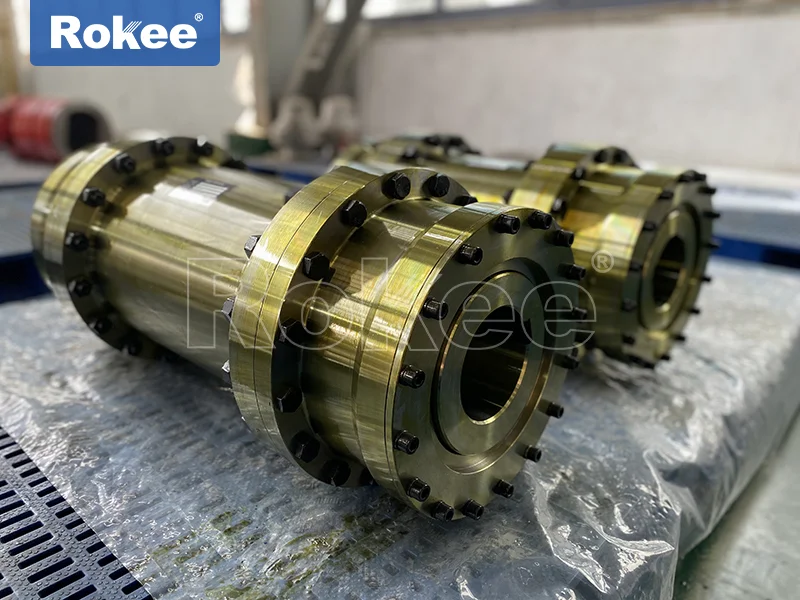
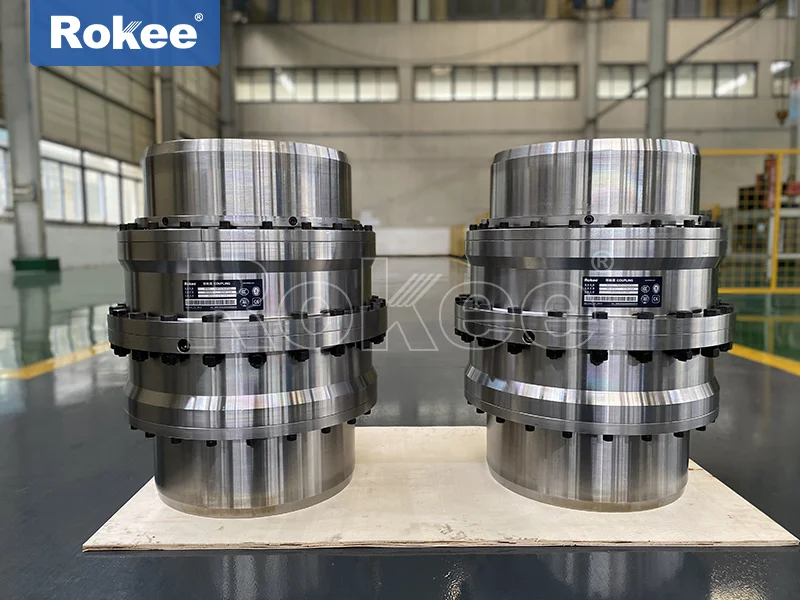
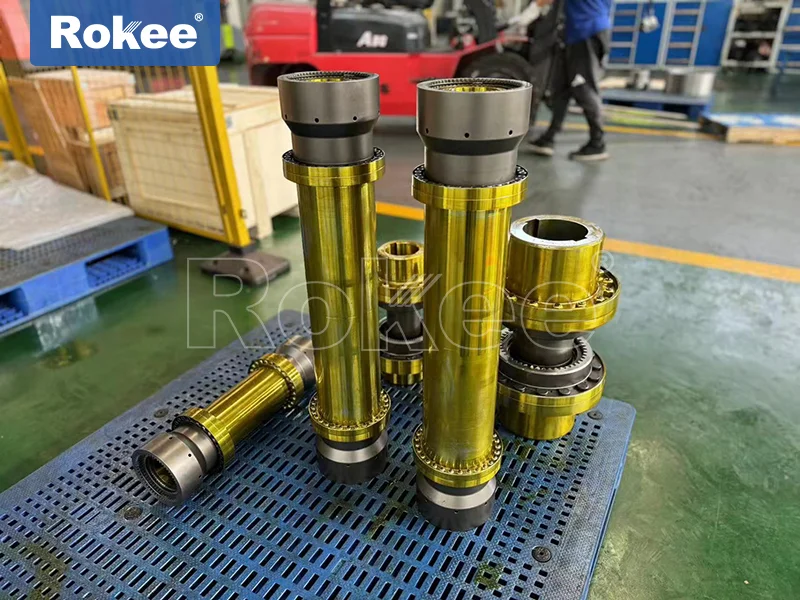
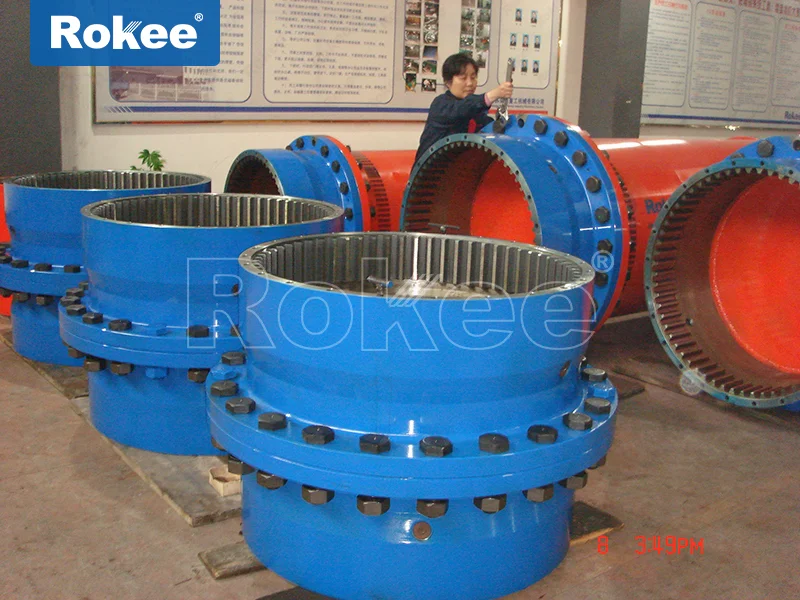
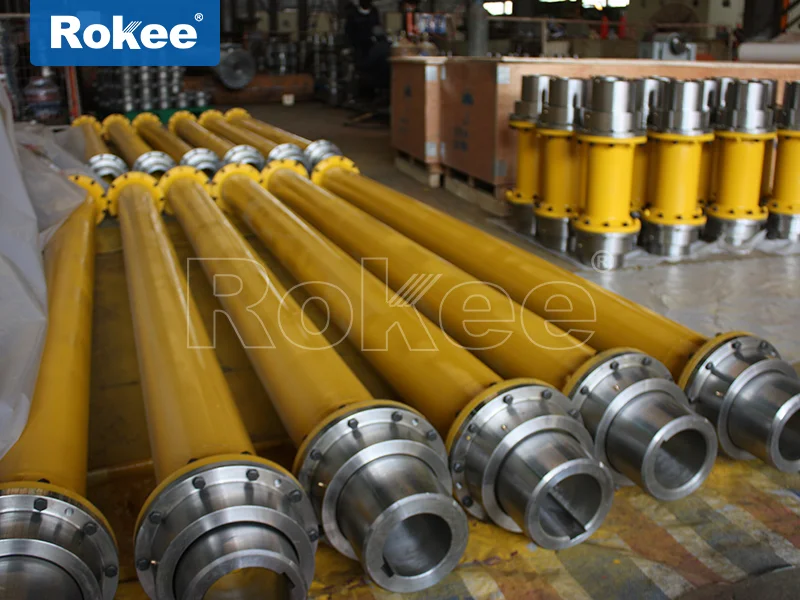
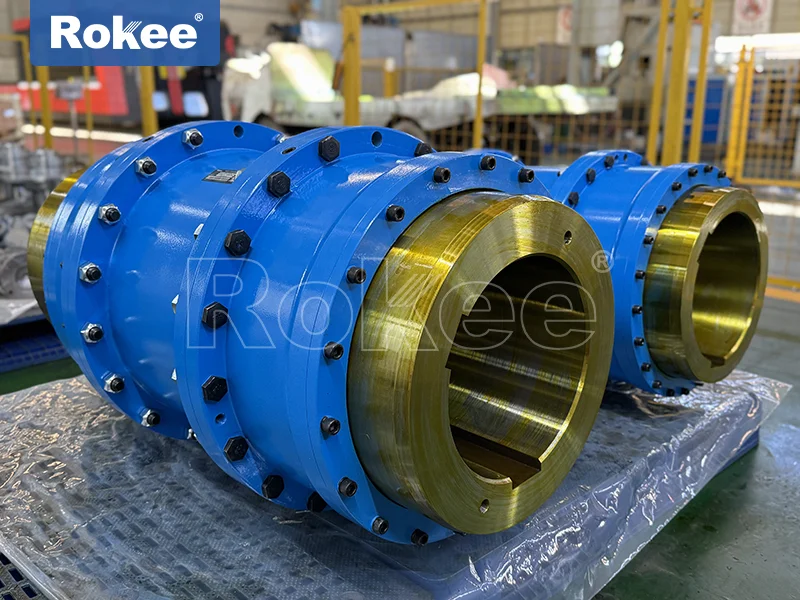
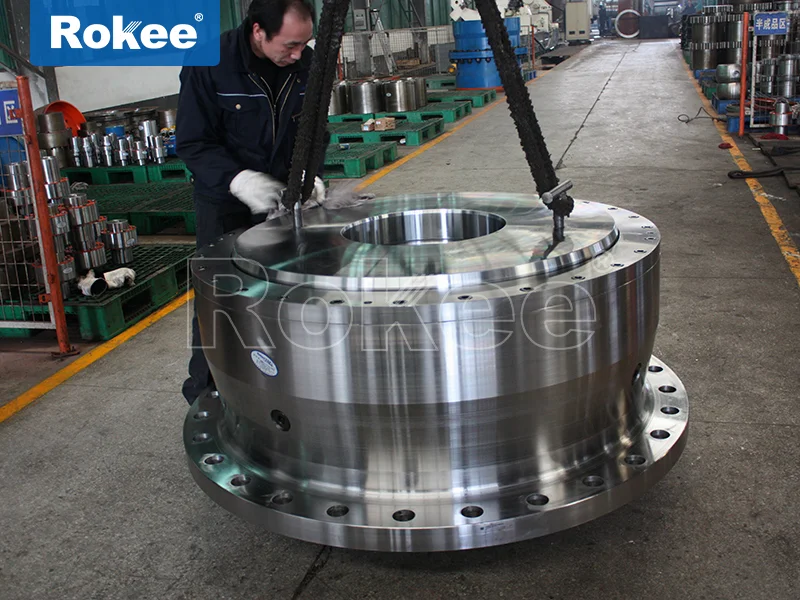
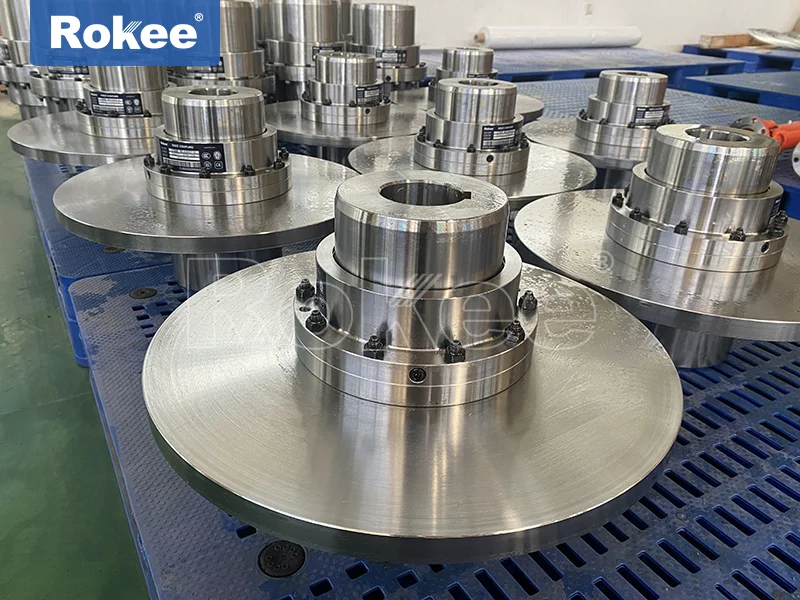
The high torque-bearing capacity of gear couplings is one of the core advantages that empower the upgrading of PU sandwich panel lines. The production process of PU sandwich panels involves multiple heavy-load links. For example, in the roll forming process of metal facing materials, the roll forming machine needs to apply a large pressure to bend the metal coil into the designed profile, which requires the transmission system to provide sufficient torque to ensure the smooth progress of the forming process; in the double-belt lamination process, the conveyor belt needs to drive the panel blank to move forward stably under high pressure, and the transmission component must bear the combined torque of the conveyor belt operation and the lamination pressure; in the cutting process of finished panels, the cutting machine needs to output a large torque in a short time to cut the cured PU sandwich panel into the specified length, which places high requirements on the torque transmission capacity of the transmission component. Gear couplings are composed of two hubs with external gear teeth and a sleeve with internal gear teeth. The meshing of the gear teeth enables efficient torque transmission. The gear teeth are usually made of high-strength alloy steel and undergo heat treatment processes such as quenching and tempering to enhance their hardness and wear resistance, allowing them to transmit large amounts of torque efficiently without deformation or damage. Compared with other types of couplings, gear couplings have a higher torque-bearing capacity under the same volume, which can meet the heavy-load transmission needs of each link of the PU sandwich panel line. This advantage not only ensures the stable operation of the production line under heavy-load conditions but also provides a strong guarantee for the upgrading of the production line towards high output and large specifications. For example, in the production of large-width and thick PU sandwich panels, the load of the transmission system will increase significantly. The high torque-bearing capacity of gear couplings can ensure that the power is transmitted stably, avoiding production interruptions caused by insufficient torque of the transmission component, thereby improving the production efficiency and product qualification rate of the production line.
The excellent misalignment compensation capacity of gear couplings is another key advantage that promotes the upgrading of PU sandwich panel lines. As mentioned earlier, due to the complex structure and multiple subsystems of the PU sandwich panel line, it is difficult to ensure that all shafts are completely coaxial during installation. In addition, during the long-term operation of the equipment, factors such as mechanical vibration, thermal expansion, and foundation settlement will further increase the misalignment between the driving shaft and the driven shaft. If the transmission component cannot effectively compensate for these misalignments, it will cause additional stress on the shaft, bearing, and other components, leading to increased wear, reduced service life of the equipment, and even frequent failures of the production line, affecting the continuity of production. Gear couplings can effectively compensate for angular, parallel, and axial misalignments between shafts through the meshing of gear teeth. The gear teeth of the coupling are designed with a certain tooth width and tooth profile, which allows a small amount of relative movement between the hubs and the sleeve, thereby offsetting the misalignment between the shafts. Among them, the drum-shaped gear coupling, a special type of gear coupling, has an outer tooth made into a spherical shape, whose center is on the axis of the gear. This design not only increases the contact area of gear meshing, reduces local stress but also further improves the capacity of angular misalignment compensation, which can adapt to larger angular deviations between shafts. This misalignment compensation capacity of gear couplings reduces the requirements for the installation accuracy of the production line, simplifies the installation process, and reduces the installation cost. At the same time, it also reduces the wear and tear of shafts, bearings, and other components, extends the service life of the equipment, reduces the frequency of maintenance and replacement of components, and ensures the continuous and stable operation of the PU sandwich panel line. For example, in the foaming and lamination section of the production line, the thermal expansion of the equipment due to the high temperature of the PU foaming reaction will cause axial displacement of the shaft. The axial misalignment compensation capacity of the gear coupling can effectively absorb this displacement, avoiding the occurrence of equipment jamming or component damage, ensuring the stability of the foaming and lamination quality.
The compact structure and high transmission efficiency of gear couplings also provide strong support for the upgrading of PU sandwich panel lines. The PU sandwich panel line usually has a compact layout, and the installation space of the transmission component is limited. Gear couplings have a simple and compact structural design, which can realize efficient power transmission in a relatively small space, making full use of the installation space of the production line and facilitating the integration and optimization of the production line structure. Compared with other types of couplings with the same torque-bearing capacity, gear couplings have a smaller volume and lighter weight, which not only reduces the load of the equipment itself but also facilitates the installation, disassembly, and maintenance of the coupling. In addition, the transmission efficiency of gear couplings is extremely high. Due to the rigid meshing of gear teeth, the power loss during the transmission process is very small, and the transmission efficiency can reach more than 99%. This high transmission efficiency can effectively reduce the energy consumption of the production line, reduce the production cost, and meet the requirements of energy conservation and environmental protection in industrial upgrading. In the context of increasing emphasis on energy conservation and emission reduction, the high transmission efficiency of gear couplings has become an important factor in promoting the green upgrading of PU sandwich panel lines. For example, a large-scale PU sandwich panel production line that operates continuously for 24 hours can save a great deal of energy every year by using gear couplings with high transmission efficiency, which not only reduces the production cost of enterprises but also contributes to the realization of the dual carbon goal.
The strong durability and low maintenance requirements of gear couplings further enhance the reliability of the PU sandwich panel line and promote the upgrading of the production line towards intelligence and low maintenance. The production of PU sandwich panels usually requires continuous operation for a long time, which puts high requirements on the durability and service life of the transmission components. Gear couplings are made of high-strength materials, and the gear teeth are subjected to strict heat treatment, which makes them have excellent wear resistance, corrosion resistance, and impact resistance, and can adapt to the harsh working environment of the production line. For example, in the production environment with more dust and humidity, the sealed structure of the gear coupling can effectively prevent dust, moisture, and other impurities from entering the interior of the coupling, avoiding the wear and corrosion of the gear teeth, and ensuring the stable operation of the coupling. In addition, the maintenance requirements of gear couplings are relatively low. As long as regular lubrication and simple inspection are carried out, the long-term stable operation of the coupling can be ensured. The lubrication of gear couplings is mainly to apply appropriate lubricating oil or grease to the gear meshing surface to reduce friction and wear, and the lubrication cycle can be adjusted according to the working conditions of the production line. For example, in a clean production environment, the lubrication cycle can be appropriately extended; in a harsh environment with more dust and heavy load, the lubrication cycle can be shortened. Regular lubrication can not only extend the service life of the coupling but also ensure its transmission efficiency and misalignment compensation capacity. Compared with other types of couplings that require frequent maintenance and replacement, gear couplings can significantly reduce the maintenance time and maintenance cost of the production line, improve the operation rate of the equipment, and provide a reliable guarantee for the automated and intelligent upgrading of the production line. With the continuous development of industrial automation technology, the PU sandwich panel line is gradually moving towards unmanned operation. The low maintenance requirements of gear couplings can reduce the frequency of manual intervention, adapt to the needs of unmanned operation, and promote the intelligent upgrading of the production line.
The adaptability of gear couplings to various working conditions also provides a broad space for the diversification and upgrading of PU sandwich panel lines. With the continuous expansion of the application field of PU sandwich panels, the production line needs to produce panels of different specifications, different thicknesses, and different materials to meet the diverse needs of the market. The production of different types of PU sandwich panels will lead to changes in the load, speed, and working environment of the production line, which requires the transmission component to have strong adaptability. Gear couplings can be customized according to the specific working conditions of the production line, such as adjusting the size of the coupling, the material of the gear teeth, and the type of lubrication, to adapt to different load and speed requirements. For example, in the production of thin PU sandwich panels for residential buildings, the load of the production line is relatively small, and a small-sized gear coupling can be selected to meet the transmission needs; in the production of thick PU sandwich panels for industrial workshops and cold storage facilities, a large-sized gear coupling with high torque-bearing capacity can be selected. In addition, gear couplings can adapt to different working temperatures. Whether in a high-temperature environment of the foaming section or a normal temperature environment of the cutting section, gear couplings can operate stably, ensuring the consistency of the production process. This strong adaptability enables the PU sandwich panel line to flexibly adjust the production plan according to market demand, realize the production of diversified products, and enhance the market competitiveness of enterprises. At the same time, it also provides conditions for the upgrading of the production line towards multi-functional and flexible production.
In addition to the above advantages, the good compatibility of gear couplings with automated control systems also promotes the intelligent upgrading of PU sandwich panel lines. With the development of industrial 4.0, the PU sandwich panel line is gradually integrating automated control technologies such as PLC, sensors, and frequency converters to realize the automatic control and intelligent monitoring of the production process. Gear couplings, as the core component of the transmission system, can well cooperate with the automated control system. For example, sensors can be installed on the gear coupling to monitor parameters such as the operating speed, torque, and temperature of the coupling in real time, and transmit the monitoring data to the control system. The control system can adjust the operation parameters of the production line according to the monitoring data, ensuring the stable operation of the production line. If the monitoring data shows that the torque of the coupling exceeds the limit or the temperature is too high, the control system can issue an alarm in time and take corresponding measures to avoid equipment failure. This combination of gear couplings and automated control systems not only improves the intelligence level of the production line but also reduces the labor intensity of operators, improves the accuracy and stability of production control, and promotes the upgrading of the PU sandwich panel line towards intelligence and refinement.
It is undeniable that the application of gear couplings in PU sandwich panel lines has brought significant changes to the production mode of the industry, promoting the upgrading of the production line from traditional manual and semi-automatic production to automated, intelligent, and high-efficiency production. In the past, the transmission system of the PU sandwich panel line often used ordinary couplings, which had problems such as insufficient torque-bearing capacity, poor misalignment compensation, low transmission efficiency, and high maintenance requirements, leading to low production efficiency, poor product quality consistency, high production costs, and frequent equipment failures. With the application of gear couplings, these problems have been effectively solved. The high torque-bearing capacity ensures the stable operation of the production line under heavy load; the excellent misalignment compensation capacity reduces equipment wear and installation difficulty; the compact structure and high transmission efficiency save energy and space; the strong durability and low maintenance requirements improve the equipment operation rate and reduce production costs; the good adaptability and compatibility with automated control systems promote the diversification and intelligent upgrading of the production line. All these advantages of gear couplings work together to empower the upgrading of the PU sandwich panel line, making the production line more efficient, stable, energy-saving, and intelligent, and promoting the high-quality development of the PU sandwich panel industry.
Looking forward to the future, with the continuous progress of material science and manufacturing technology, gear couplings will be further optimized and upgraded, and their performance will be continuously improved. For example, the application of new high-strength and wear-resistant materials will further enhance the torque-bearing capacity and service life of gear couplings; the optimization of structural design will further improve the misalignment compensation capacity and transmission efficiency of the coupling; the integration of intelligent monitoring technology will make the operation status of the coupling more transparent and controllable. These improvements will further promote the upgrading of the PU sandwich panel line, making the production line more in line with the needs of the times such as energy conservation, environmental protection, and intelligence. At the same time, with the continuous expansion of the application field of PU sandwich panels, the demand for high-efficiency and high-quality production lines will continue to increase, and gear couplings, as the core transmission component, will play a more important role in the upgrading and development of the industry.
In conclusion, gear couplings have become an indispensable core component in the PU sandwich panel line with their unique advantages such as high torque-bearing capacity, excellent misalignment compensation, compact structure, high transmission efficiency, strong durability, low maintenance requirements, good adaptability, and compatibility with automated control systems. These advantages not only solve the pain points of the traditional transmission system in the operation of the PU sandwich panel line but also strongly empower the upgrading of the production line, promoting the production line to move towards higher efficiency, stability, energy conservation, and intelligence. The application of gear couplings not only improves the production efficiency and product quality of enterprises but also reduces production costs and enhances market competitiveness, laying a solid foundation for the high-quality development of the PU sandwich panel industry. In the process of industrial upgrading and transformation, the role of gear couplings will become more prominent, and they will continue to inject new vitality into the upgrading and development of the PU sandwich panel line.