Curved Tooth Coupling Improves Transmission Stability And Reliability Of PU Sandwich Panel Production Line
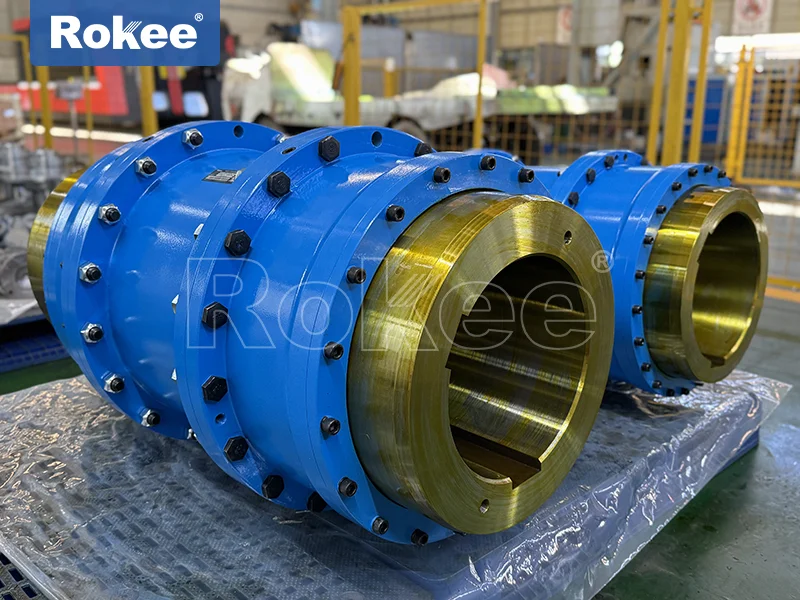
The manufacturing of PU sandwich panels relies entirely on the continuous and coordinated operation of automated production lines, where every link from raw material feeding, foam injection, composite pressing to finished product cutting and conveying requires precise and consistent power transmission support. As the core connecting component between driving motors, reduction gearboxes, drive rollers and various processing equipment in the production line, the performance of transmission couplings directly determines the overall operating state of the entire production system, and even affects the dimensional accuracy, surface flatness and structural uniformity of finished PU sandwich panels. In the actual long-term production operation, traditional straight-tooth couplings and ordinary elastic couplings often expose prominent application defects in the face of the heavy-load, continuous-operation and multi-dimensional displacement working conditions of PU sandwich panel production lines. These conventional coupling structures are prone to uneven load distribution during torque transmission, obvious edge extrusion friction between meshing parts, severe vibration and impact during equipment start-up and shutdown, and rapid wear and aging of key components after long-term continuous operation. Such hidden mechanical problems will not only cause unstable transmission speed of production line equipment, resulting in inconsistent foaming density of PU materials, uneven bonding strength between panel core materials and surface layers, and dimensional deviation of cut finished panels, but also lead to frequent equipment failure shutdowns, increased manual maintenance workload and shortened service life of the entire transmission system, seriously restricting the continuous production efficiency and product quality stability of PU sandwich panel manufacturing enterprises. Against this industry production background, the application of curved tooth couplings in PU sandwich panel production lines has become an effective technical optimization measure to solve the above pain points, relying on its unique curved tooth profile design, excellent displacement compensation performance, uniform torque transmission characteristics and strong heavy-load bearing capacity, which fundamentally optimizes the transmission operation state of the core links of the production line and comprehensively improves the long-term operation stability and overall service reliability of the entire automated production system.
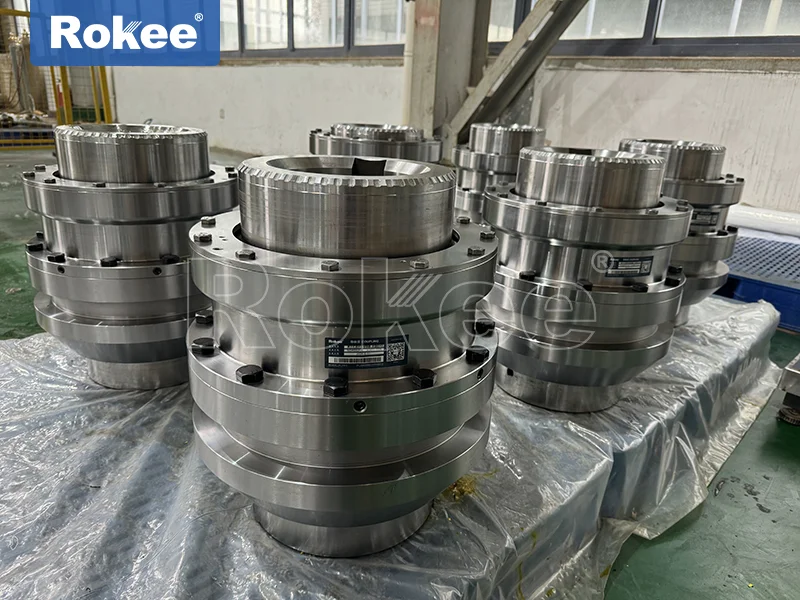
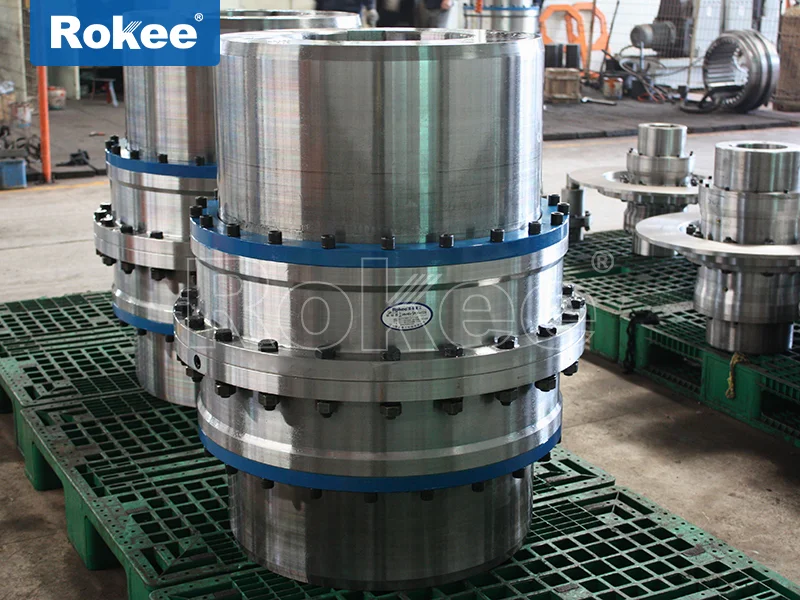
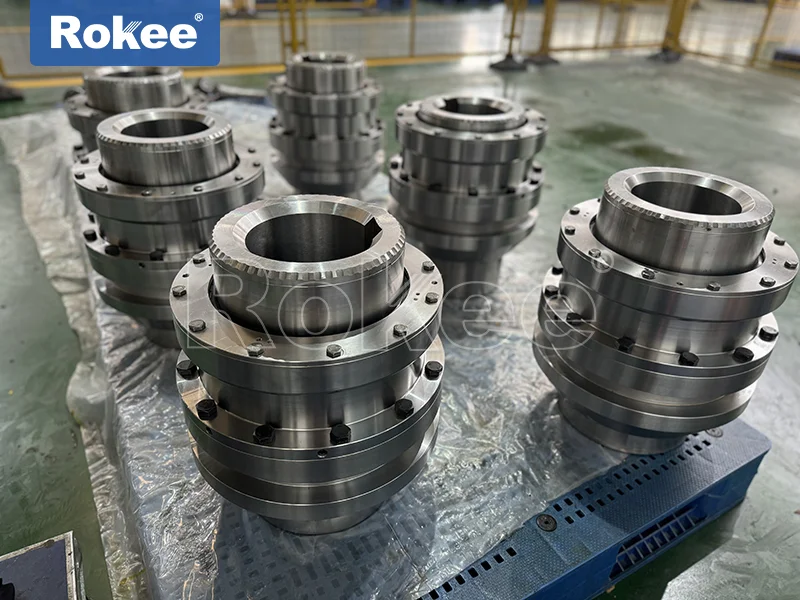
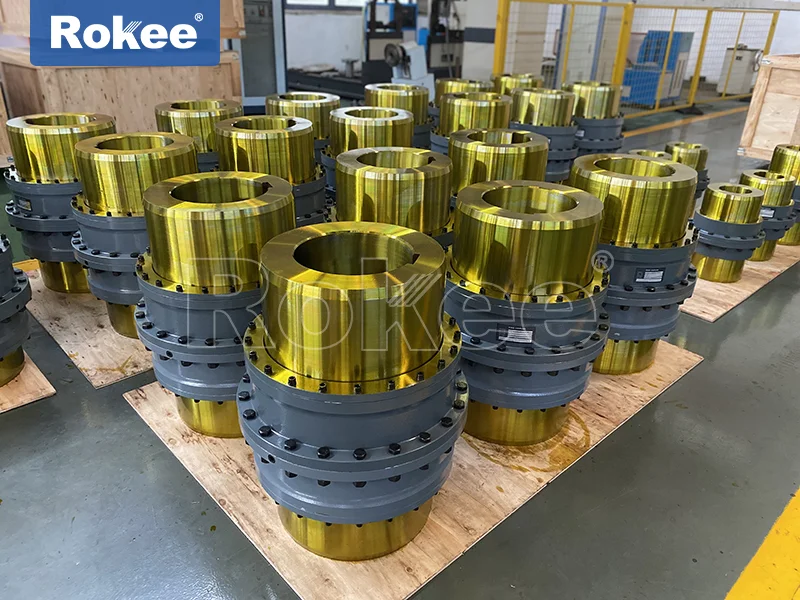
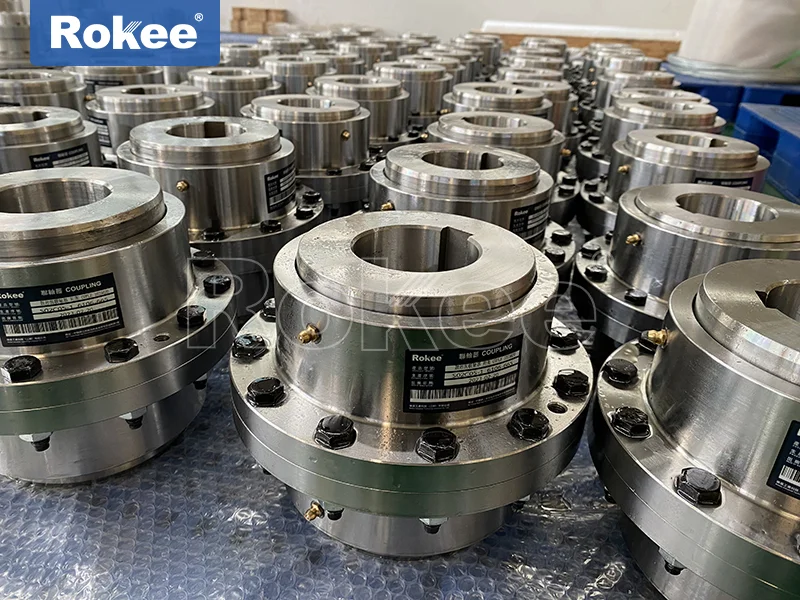
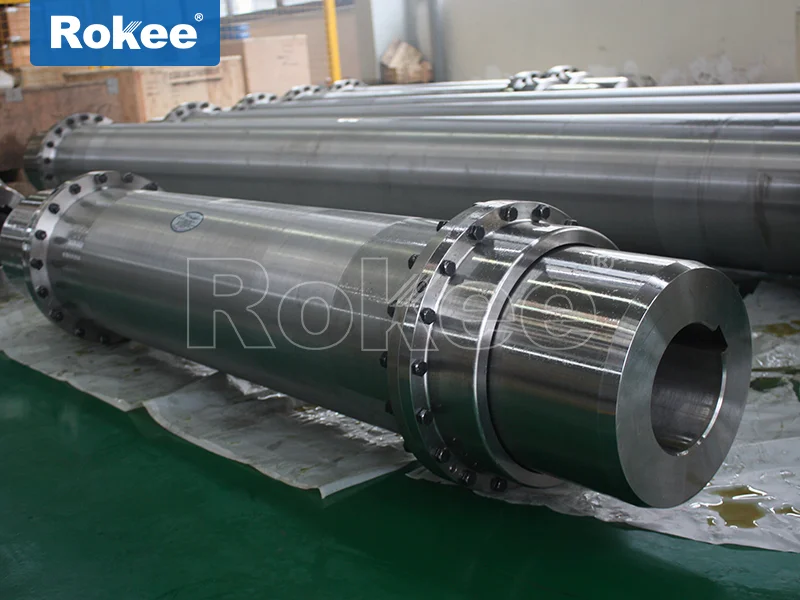
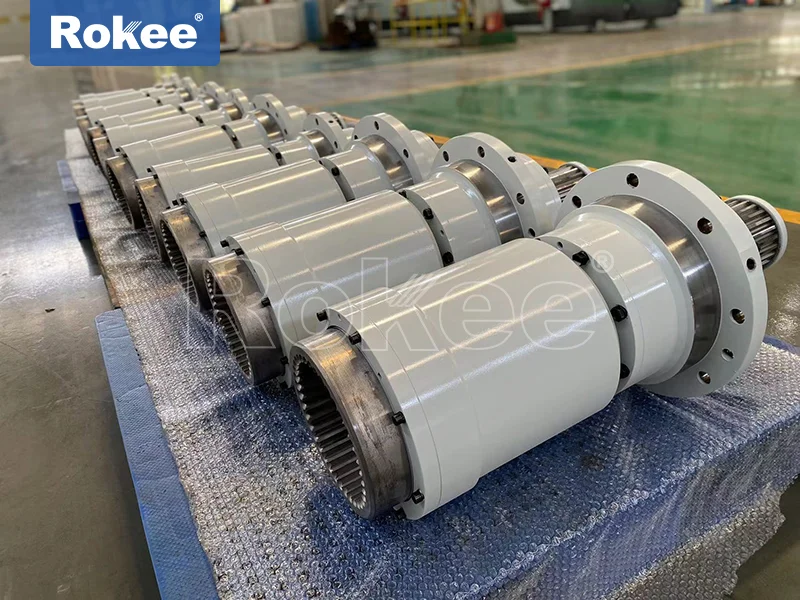
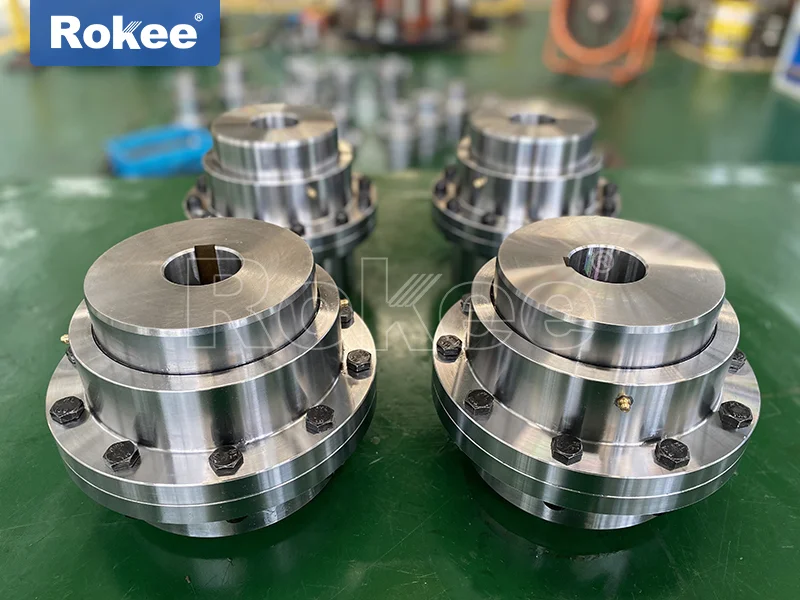
The basic structural design and working principle of curved tooth couplings lay a solid mechanical foundation for its excellent transmission performance in PU sandwich panel production lines. Different from the straight tooth structure of traditional gear couplings, the core structural feature of curved tooth couplings lies in the special spherical curved design of the external teeth on the gear hub, with the spherical center of the curved teeth accurately located on the central axis of the matching gear shaft. The overall structure of the coupling is composed of two gear hubs with curved external teeth and an outer sleeve equipped with internal meshing teeth, forming a compact and integrated meshing transmission structure with reasonable stress distribution and reliable connection performance. In the actual power transmission process of the PU sandwich panel production line, the driving shaft connected to the power motor drives one gear hub to rotate synchronously, and the curved external teeth on the gear hub mesh stably with the internal teeth of the outer sleeve. The rotational torque and power are continuously and efficiently transmitted from the driving end to the driven end through the close meshing fit between the curved tooth surfaces, and then the driven gear hub drives the connected production line processing equipment and conveying rollers to operate synchronously, realizing the stable power output required for the continuous production of PU sandwich panels. The ingenious curved tooth profile design fundamentally changes the contact state between meshing teeth during torque transmission. Unlike straight teeth that only form linear contact and are prone to local stress concentration and edge extrusion when there is slight shaft displacement, the curved tooth surface of the coupling can form a wide and uniform surface contact state during meshing. This structural optimization greatly increases the effective contact area between the meshing teeth, makes the load stress generated during torque transmission evenly distributed on each tooth surface, avoids local overpressure and abnormal friction wear at the edge of the teeth, and ensures that the torque transmission process maintains high efficiency and stability even under long-term heavy-load operation conditions. At the same time, the reasonable tooth gap design of the curved tooth coupling further enhances the flexibility of the meshing structure, enabling it to naturally adapt to the normal slight axial, radial and angular displacement between the driving shaft and the driven shaft generated during the operation of the PU sandwich panel production line, without generating additional rigid extrusion force and mechanical vibration, and maintaining the continuity and smoothness of power transmission at all times.
The excellent multi-dimensional displacement compensation capability of curved tooth couplings is the key to improving the transmission stability of PU sandwich panel production line under complex operating conditions. In the daily operation process of PU sandwich panel automated production lines, affected by many objective factors such as equipment installation errors, long-term mechanical operation vibration, thermal expansion and contraction of metal components after continuous heating of foaming and pressing equipment, and slight foundation settlement of the production workshop, the driving shaft and driven shaft of each transmission link will inevitably produce different degrees of axial deviation, radial misalignment and angular deflection. For traditional straight-tooth couplings and ordinary rigid couplings, these slight shaft displacements cannot be effectively buffered and compensated, and the rigid connection structure will directly transfer the displacement stress to the meshing parts and equipment bearings. This will cause severe rigid friction and impact between the coupling teeth, increase the vibration and noise of the production line during operation, lead to unstable rotating speed of key equipment such as pressing rollers and conveying rollers, and directly affect the composite pressing effect of PU sandwich panels and the uniform conveying speed of finished products. When the rotating speed of the pressing roller fluctuates periodically, the pressure on the PU foaming core material and the surface metal plate will be unstable, resulting in uneven foaming expansion of the core material, inconsistent bonding thickness between the core material and the surface layer, and even local degumming and bulging of the finished panel, reducing the overall quality qualification rate of the product. The curved tooth coupling is designed with a spherical curved tooth structure that can adapt to multi-directional displacement changes, and its internal meshing fit can freely adjust the meshing angle and contact position according to the actual displacement between the two connected shafts. When angular deflection or radial misalignment occurs between the driving shaft and the driven shaft of the production line transmission equipment, the curved teeth can automatically fit and adjust the contact angle during meshing, eliminating the edge extrusion and local stress concentration caused by shaft misalignment, and will not generate additional restoring force and mechanical vibration. This effective displacement compensation effect ensures that the torque transmission process is always in a stable and balanced state, the rotating speed of each key equipment of the production line remains uniform and consistent, the operation vibration of the entire transmission system is significantly reduced, and the processing and conveying links of PU sandwich panels are carried out in a stable mechanical environment, effectively avoiding product quality problems caused by unstable transmission.
Curved tooth couplings have outstanding heavy-load torque transmission capacity and low wear characteristics, which effectively enhance the long-term operation reliability and continuous production sustainability of PU sandwich panel production lines. The production and processing of PU sandwich panels belong to continuous heavy-duty industrial production work. The production line needs to operate uninterrupted for a long time every day, and the links such as raw material composite pressing and finished product heavy conveying need the transmission system to provide stable and large torque output. Ordinary elastic couplings have limited torque bearing capacity and are easy to deform and age under long-term heavy-load operation, while traditional straight-tooth couplings have serious local wear of meshing teeth under heavy-load torque transmission, and the tooth surface is prone to scratches, abrasion and even tooth breakage after a period of operation. Once the coupling is damaged and fails, the production line must be shut down for maintenance and replacement, which not only interrupts the continuous production rhythm, reduces the daily output of PU sandwich panels, but also increases the maintenance time and labor cost, and affects the delivery cycle of enterprise products. The curved tooth coupling adopts high-strength integral forging and precise tooth surface processing technology, and the uniform load distribution brought by the curved tooth profile makes each meshing tooth bear smaller average pressure under the same heavy-load torque condition. The tooth surface wear degree is greatly reduced, and the overall structural rigidity and fatigue resistance are significantly improved, enabling it to bear long-term stable heavy-load torque transmission without obvious deformation and abnormal wear. The transmission efficiency of the curved tooth coupling remains at an extremely high level during long-term operation, with almost no power loss in the torque transmission process, ensuring that the power output by the motor can be fully applied to the production and processing links of PU sandwich panels, avoiding energy waste while maintaining stable production power supply. In addition, the meshing structure of the curved tooth coupling is compact and reasonable, with good sealing performance and low requirement for daily maintenance. It can maintain stable working performance in the harsh production environment with more dust and slight humidity in the PU sandwich panel production workshop, and will not be affected by external environmental factors to cause performance attenuation and failure. The long service life of the curved tooth coupling reduces the frequency of equipment maintenance and parts replacement of the production line, avoids frequent production shutdowns caused by coupling failure, ensures the continuous and uninterrupted operation of the PU sandwich panel production line for a long time, and greatly improves the overall operation reliability and production efficiency of the production system.
The stable transmission performance of curved tooth couplings also brings long-term product quality optimization and production cost reduction benefits for PU sandwich panel manufacturing enterprises. The core quality requirements of PU sandwich panels focus on overall dimensional accuracy, internal foaming uniformity, bonding firmness between layers and surface flatness, and all these quality indicators are closely related to the stable operation of the production line transmission system. The smooth and vibration-free torque transmission realized by curved tooth couplings ensures that the operating speed and working pressure of key processing equipment such as foaming injection equipment, composite pressing machines and fixed-length cutting equipment are always kept within the standard fluctuation range. The feeding speed of PU raw materials is uniform, the foaming injection volume is stable, the pressing pressure of the composite panel is balanced, and the cutting size of the finished product is accurate, which effectively reduces the defective rate of products caused by transmission instability, improves the overall product quality level and market competitiveness of enterprises. At the same time, the low wear and long-life characteristics of curved tooth couplings reduce the consumption of wearing parts and the frequency of equipment maintenance, cutting the daily operation and maintenance cost of the production line. The stable and continuous production state avoids production loss and order delay caused by shutdown maintenance, improves the effective production time and unit output of the production line, and brings stable economic benefits for manufacturing enterprises. In the long-term production operation, the application advantage of curved tooth couplings is not only reflected in the optimization of mechanical transmission performance, but also in the comprehensive improvement of production line operation efficiency, product quality control and enterprise operation cost control, becoming an indispensable key supporting component for the high-quality and efficient production of modern PU sandwich panel production lines.
With the continuous upgrading of the construction insulation and building enclosure material industry, the market has higher and higher requirements for the quality precision and production efficiency of PU sandwich panels, and the operation stability and transmission reliability of automated production lines have become important core factors restricting the development of manufacturing enterprises. The traditional transmission coupling products can no longer meet the long-term stable and high-precision production needs of modern PU sandwich panel production lines due to their inherent structural defects and insufficient performance. The popularization and application of curved tooth couplings have effectively made up for the performance shortcomings of traditional couplings, optimized the core transmission links of the production line from the mechanical structure level, realized stable torque transmission, effective displacement compensation, low wear operation and long-term reliable use. By improving the transmission stability and operation reliability of the production line, curved tooth couplings not only ensure the stable improvement of the quality of PU sandwich panel products, but also promote the continuous improvement of the continuous production capacity and comprehensive operation efficiency of the production line. In the future, with the continuous development of PU sandwich panel production line automation and intelligent upgrading, curved tooth couplings will play a more important role in the field of production line transmission supporting, and provide solid mechanical transmission guarantee for the high-quality, high-efficiency and low-consumption sustainable production of PU sandwich panel manufacturing enterprises.