Teeth Coupling For Hydraulic Oil Pump
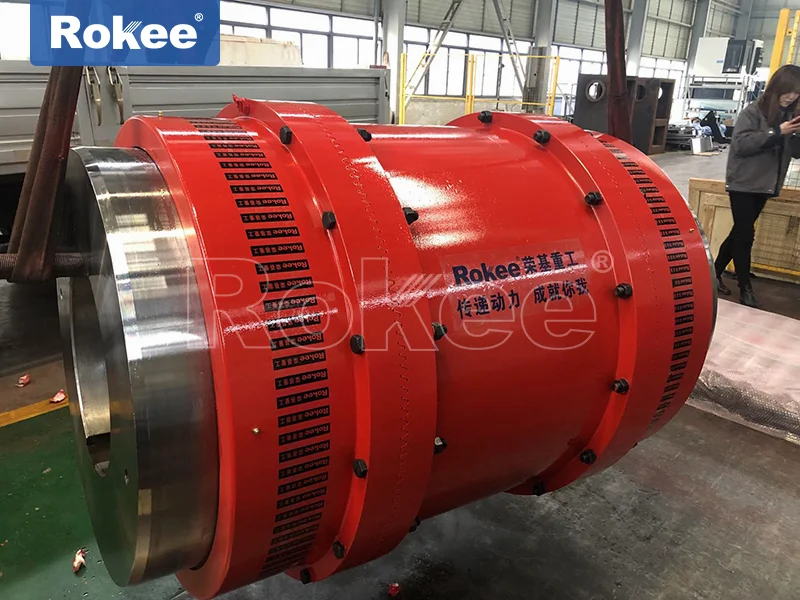
Teeth couplings serve as indispensable transmission components in hydraulic oil pump systems, undertaking the core task of connecting driving and driven shafts to realize stable torque and rotational power transmission. Unlike traditional flexible and rigid couplings, this gear meshing-based coupling structure integrates high transmission efficiency, strong load-bearing capacity and excellent misalignment compensation performance, perfectly matching the continuous and stable operation requirements of hydraulic oil pumps in complex industrial working conditions. Hydraulic pump systems often face variable load impacts, tiny shaft position deviations and long-term continuous operation wear during service, and teeth couplings can effectively adapt to these operating characteristics. They reduce power transmission loss, buffer mechanical vibration and avoid abnormal wear of pump body and motor components.
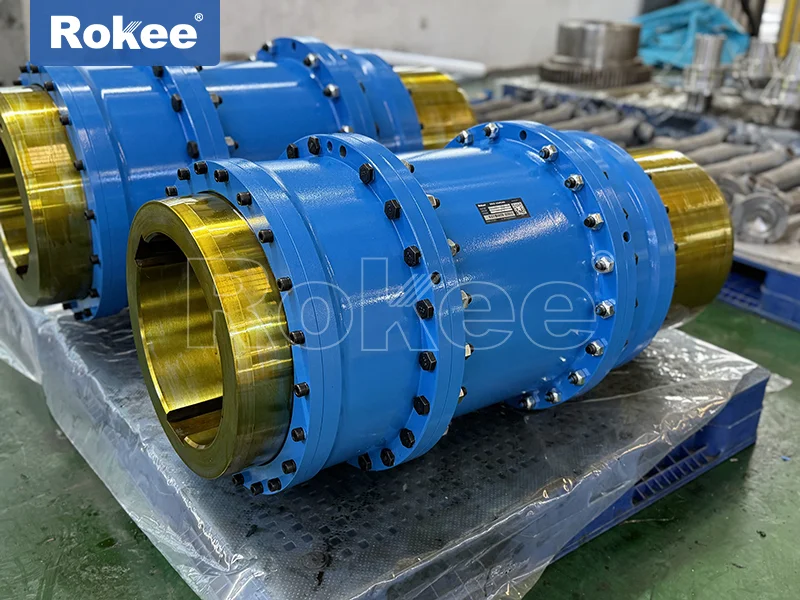
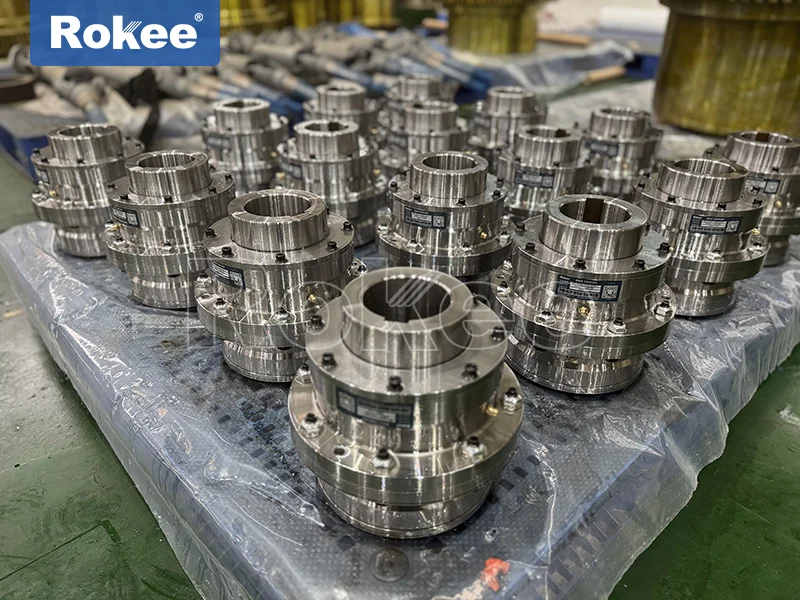
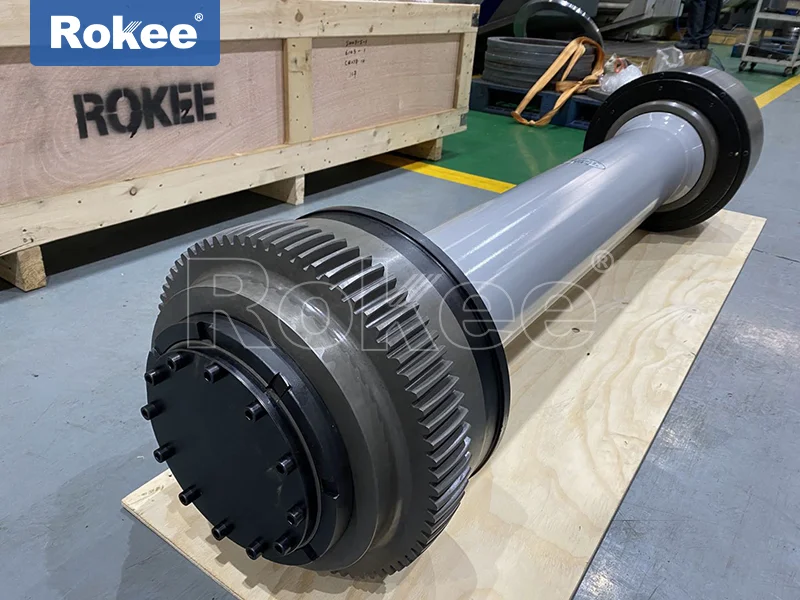
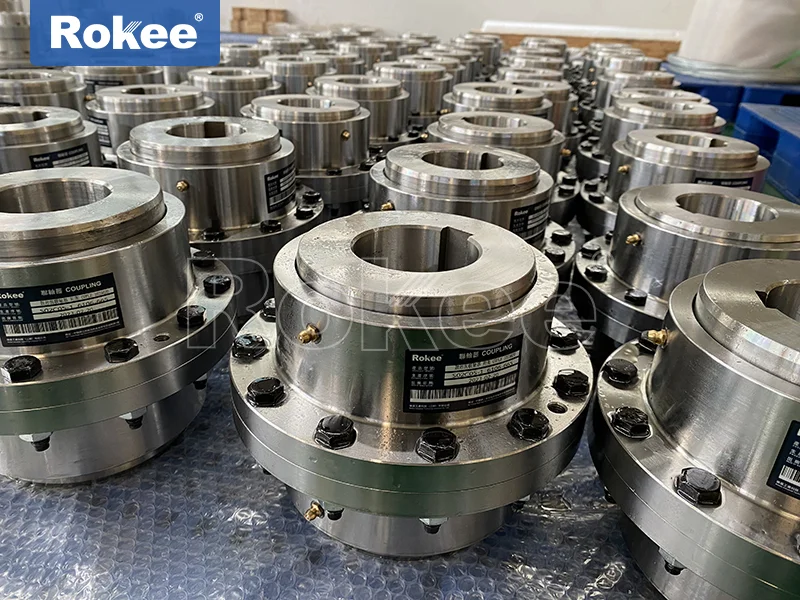
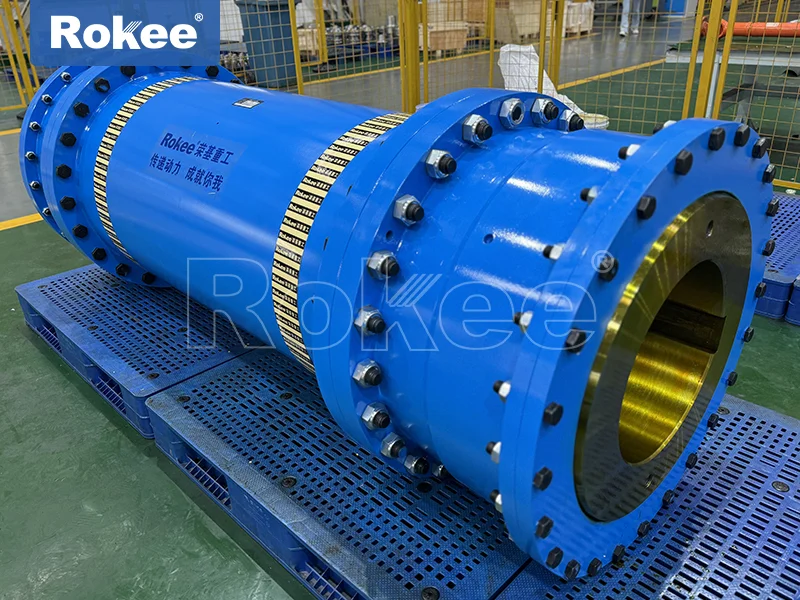
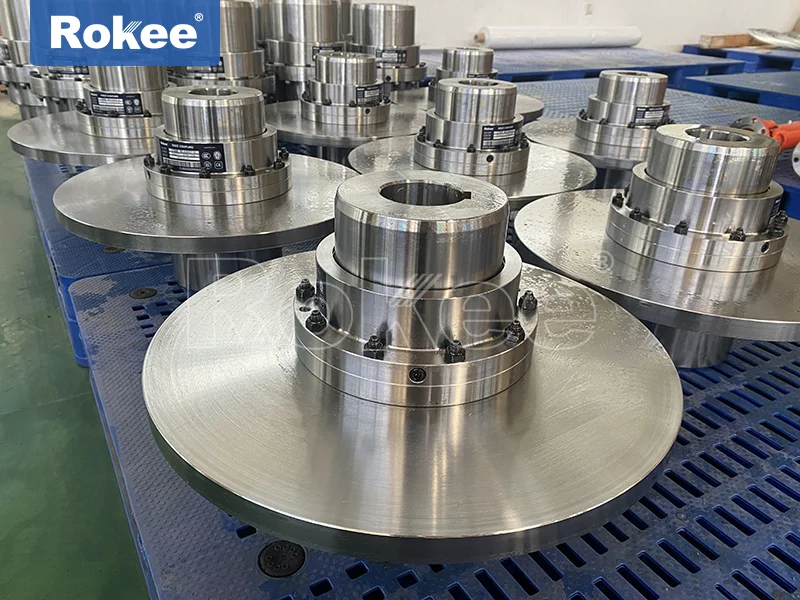
The working principle of teeth couplings for hydraulic oil pumps is based on precise internal and external gear meshing, which realizes non-slip positive power transmission between the motor driving shaft and the hydraulic pump driven shaft. The basic structure consists of two outer gear sleeves fixed on the two shafts and a middle inner gear ring for meshing connection. When the hydraulic system starts, the driving shaft drives the outer gear sleeve to rotate, and the meshing action between the outer gear teeth and the inner gear ring accurately transmits rotational torque to the driven shaft connected to the hydraulic oil pump. In the whole transmission process, the close fitting of gear teeth eliminates the slipping phenomenon common in friction-type couplings, ensuring that the power output of the motor is efficiently converted into the operating power of the hydraulic pump. More importantly, the special tooth profile design reserves a tiny gap between meshing gear teeth, which can automatically adapt to slight parallel, angular and axial misalignments between the two shafts caused by equipment installation errors, mechanical vibration and long-term operation deformation. This adaptive adjustment function avoids additional mechanical stress on the hydraulic pump shaft and bearing parts, effectively preventing shaft deflection, abnormal noise and local wear failure caused by shaft misalignment, and maintaining the dynamic balance of the hydraulic transmission system during long-term operation.
The unique structural design of teeth couplings makes them highly compatible with the operating characteristics of hydraulic oil pump systems, forming significant structural advantages over other types of transmission couplings. First of all, the overall structure of the teeth coupling is compact and lightweight, with a small axial and radial occupied space, which is very suitable for the integrated and miniaturized design of modern hydraulic pump equipment. It can complete stable high-torque transmission in a limited installation space without increasing the overall volume and structural burden of the hydraulic system. Secondly, the gear meshing structure has extremely high structural rigidity, which can bear instantaneous impact loads and cyclic variable loads frequently generated during the start-stop and load adjustment of hydraulic oil pumps. This rigid bearing capacity ensures that the coupling will not produce elastic deformation or power attenuation under high-load operating conditions, maintaining stable hydraulic power output. In addition, the tooth surface contact area of the teeth coupling is uniform during operation, and the stress distribution of each gear tooth is balanced, avoiding local stress concentration and excessive wear of individual parts. The modular structural form also enables the coupling to be disassembled and assembled independently without disassembling the hydraulic pump body and motor equipment, which greatly simplifies the later maintenance and replacement process of transmission components and improves the overall operation efficiency of hydraulic equipment.
Teeth couplings bring multiple core performance advantages to the stable operation of hydraulic oil pump systems, which are key to their wide application in industrial hydraulic equipment. The most prominent advantage is ultra-high transmission efficiency. The positive meshing transmission mode almost eliminates power loss in the transmission link, ensuring that the hydraulic oil pump can obtain sufficient and stable power input, which helps improve the working efficiency of the entire hydraulic system and reduce invalid energy consumption. Meanwhile, the coupling has excellent vibration and noise reduction performance. The tiny gap between meshing gear teeth can buffer the high-frequency vibration and mechanical impact generated during the operation of the hydraulic pump, isolate the vibration transmission between the motor and the pump body, and reduce the operating noise of the equipment. For hydraulic systems that need long-term continuous operation, this vibration buffering effect can effectively reduce fatigue wear of various mechanical parts and prolong the service life of the whole machine. In addition, teeth couplings have strong environmental adaptability. They can maintain stable working performance in complex working environments such as variable temperature, slight dust and oil pollution in hydraulic workshops, and are not prone to failure due to environmental interference. Their good wear resistance and fatigue resistance also enable them to adapt to long-term cyclic operation, reducing the frequency of equipment failure and downtime maintenance.
Standardized and standardized installation operation is the key to giving full play to the performance of teeth couplings for hydraulic oil pumps and avoiding early failure of components. Before installation, it is necessary to comprehensively check the dimensional accuracy and surface integrity of each component of the coupling, confirm that there are no burrs, abrasions, deformation and other defects on the gear tooth surface and assembly journal, and clean the residual dust, oil stains and impurities on the parts to ensure the precision fit of the meshing parts. In the assembly process, the coaxiality of the motor shaft and the hydraulic pump shaft must be strictly calibrated to control the shaft misalignment within a reasonable range. Excessive misalignment will cause uneven stress on the gear teeth, accelerated wear and even tooth breakage failure during high-speed operation. After the shaft body is positioned, the outer gear sleeves are fixed on the driving and driven shafts respectively, and the clamping force of the fixing parts is adjusted uniformly to avoid deflection and loosening of the gear sleeves caused by uneven locking force. After the assembly is completed, manual rotation inspection is required to ensure that the coupling rotates flexibly without jamming and abnormal friction. Finally, no-load trial operation is carried out to observe the operating state of the coupling, check for abnormal noise, vibration and temperature rise, and confirm that the transmission system operates stably before putting it into formal load operation.
Scientific daily maintenance and regular inspection can effectively extend the service life of teeth couplings for hydraulic oil pumps and maintain the long-term stable operation of hydraulic transmission systems. Daily maintenance mainly focuses on the lubrication management of meshing parts. The gear meshing area of the coupling needs to be kept in a good lubrication state for a long time. Appropriate lubricating oil can reduce friction and wear between gear teeth, buffer meshing impact, and take away the heat generated by friction during operation to avoid high-temperature oxidation and aging of component materials. It is necessary to regularly check the lubricating oil state, replace deteriorated and contaminated lubricating oil in time, and supplement lubricating oil according to the operating cycle to ensure continuous and effective lubrication performance. Regular inspection work includes checking the fastening state of coupling fixing parts to prevent loosening and displacement caused by long-term vibration, observing the wear degree of gear tooth surfaces to find slight abrasion and tooth surface peeling in advance, and detecting the operating vibration and noise of the coupling to judge whether there is abnormal meshing state. In addition, during the shutdown maintenance of hydraulic equipment, the internal structure of the coupling should be cleaned regularly to remove metal wear debris and dirt accumulated in the meshing gap, so as to avoid abrasive wear of gear teeth caused by impurities and ensure the precision of meshing transmission.
Teeth couplings are widely applicable to various types of hydraulic oil pump systems in industrial fields, covering multiple scenarios such as mechanical processing, engineering machinery, automated production equipment and hydraulic transmission equipment. In industrial production lines that require long-term continuous operation, such as automated hydraulic conveying and pressing equipment, teeth couplings can adapt to uninterrupted cyclic operation, maintain stable power transmission, and reduce equipment downtime caused by transmission component failure. In engineering machinery hydraulic systems with frequent load changes and impact loads, such as hydraulic pumps of lifting and excavating equipment, the high rigidity and impact resistance of teeth couplings can effectively resist instantaneous load impact and avoid transmission failure under variable working conditions. For precision hydraulic equipment with high requirements for transmission accuracy and stability, the low-slip and high-precision meshing characteristics of teeth couplings ensure the accurate output of hydraulic power, guarantee the precise action of hydraulic actuators, and meet the precision operation requirements of precision processing equipment. In addition, due to their compact structure and strong space adaptability, teeth couplings are also suitable for small and integrated hydraulic pump equipment with limited installation space, realizing efficient and stable transmission in narrow structural space.
With the continuous upgrading of industrial hydraulic equipment towards high efficiency, high precision and long life, the performance optimization of teeth couplings for hydraulic oil pumps has become an important direction of transmission component upgrading and iteration. Modern optimization technologies mainly focus on tooth profile optimization design, material performance improvement and surface treatment enhancement. Optimizing the gear tooth profile can make the meshing contact between gear teeth more sufficient and uniform, further reduce meshing friction and stress concentration, improve transmission efficiency and wear resistance, and reduce operating noise and vibration. The application of high-strength and wear-resistant alloy materials effectively improves the overall structural rigidity and fatigue resistance of the coupling, enabling it to adapt to higher load operating conditions and longer service cycles. Advanced surface treatment processes can enhance the hardness, oxidation resistance and corrosion resistance of the gear tooth surface, avoid tooth surface wear, rust and aging caused by long-term oil immersion and environmental contact, and maintain the long-term precision and stability of meshing transmission. At the same time, the structural lightweight optimization design further reduces the self-weight of the coupling, reduces the rotational inertia during operation, lowers the energy consumption of the transmission system, and better meets the energy-saving and efficient operation requirements of modern hydraulic oil pump systems.